
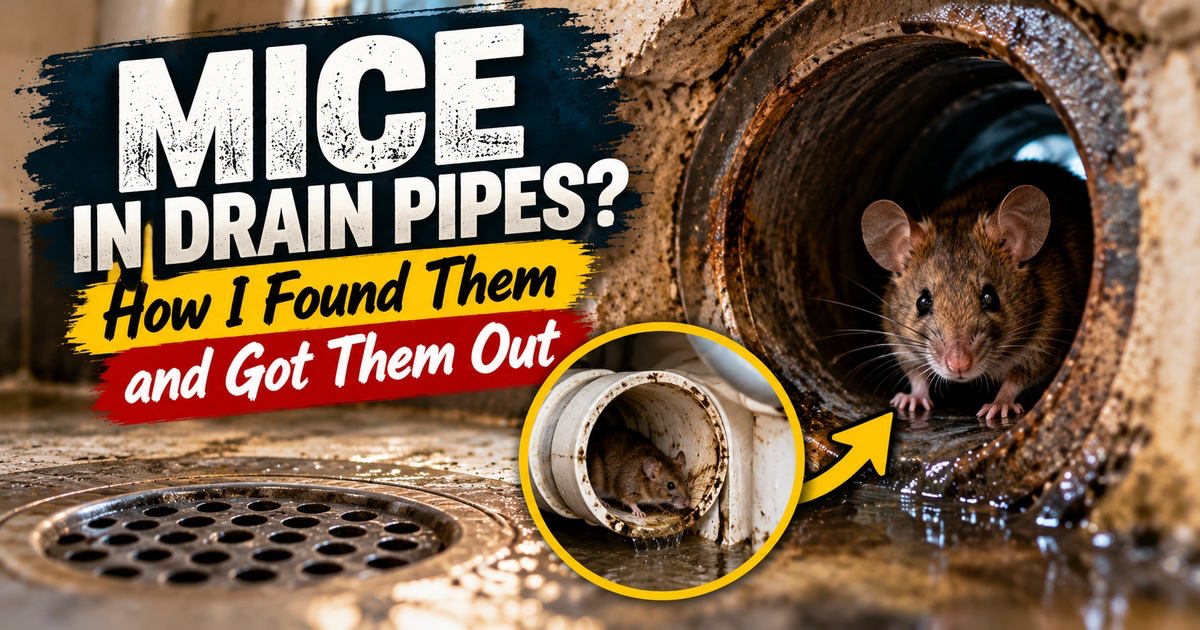
I didn’t find this mouse behind a refrigerator, inside a feed bag, or running along a basement wall.
I flushed it out of a drain pipe.
We have an outbuilding with a sink along a concrete wall. The sink drains through roughly 12 feet of 3-inch PVC pipe that runs horizontally along that wall before the open end empties above an in-ground trench drain.
One day I ran water through the sink and noticed something strange coming out of the other end.
Debris.
And not just a little bit.
More stuff kept washing out of that long PVC pipe as the water ran. It looked like material had collected or been packed inside the pipe.
Then the explanation came out with it.
A mouse came rolling out of the end of the drain pipe with the water.
Apparently, that long section of pipe had become protected space for mice, complete with what appeared to be nesting material inside.
I’d dealt with mice in ordinary places before, but seeing one come tumbling out of a 3-inch drain pipe was a new one for me.
It also answered a question people genuinely search for:
Can mice live in pipes, and how do you get them out?
They absolutely can use accessible pipes as sheltered spaces under the right conditions. But before you start pouring things down a drain or plugging openings, you need to figure out exactly what kind of pipe problem you have.
My Drain Setup Made a Pretty Good Mouse Hideout
Once I thought about the setup from the mouse’s perspective, it wasn’t quite as crazy as it first seemed.
The pipe was approximately:
3 inches in diameter
12 feet long
Horizontal
Inside an outbuilding
Dark inside
Protected on every side
And its discharge end was accessible above the trench drain.
For a mouse looking for somewhere protected, that is essentially a long artificial tunnel.
House mice build nests from shredded paper and other fibrous material and prefer sheltered locations. They can live remarkably close to people when they have food, water, and cover available.
A long PVC pipe that isn’t constantly carrying water can potentially provide exactly the kind of protection they like.
Until somebody turns on the faucet.
How I Realized Something Was Inside the Pipe
The first clue wasn’t the mouse.
It was the debris.
When water started running through the pipe, material kept washing out of the discharge end.
That should get your attention.
Normal sink use shouldn’t suddenly flush a bunch of nesting-looking material from the middle of a drain line.
Then the mouse itself came out.
At that point there wasn’t much mystery left about what had been occupying the pipe.
If you ever have debris mysteriously coming from an accessible drain pipe, especially in a garage, barn, shop, shed, or outbuilding where mice are possible, don’t immediately assume it’s ordinary plumbing buildup.
Look at what is coming out.
Shredded material can be a clue that an animal has been using the space.



Can Mice Really Live Inside PVC Pipes?
My experience says yes, when the pipe is accessible and provides usable shelter.
That’s different from saying mice routinely live inside every household drain system.
They don’t.
The important question is how the mouse can access the pipe.
In my situation, the long PVC run ended openly above the trench drain. That gave me a very different plumbing arrangement from a normal bathroom sink disappearing into a closed sanitary drain system.
If you find a mouse in or around a pipe, inspect the entire setup before assuming it traveled through miles of sewer line.
Can Mice Come Through Drains?
They can potentially use drain-related openings, but this question gets oversimplified online.
There are at least three different things people mean when they say a mouse “came through the drain.”
The Mouse Is Actually Inside an Accessible Pipe
That’s what happened to me.
The pipe itself was accessible and apparently provided shelter.
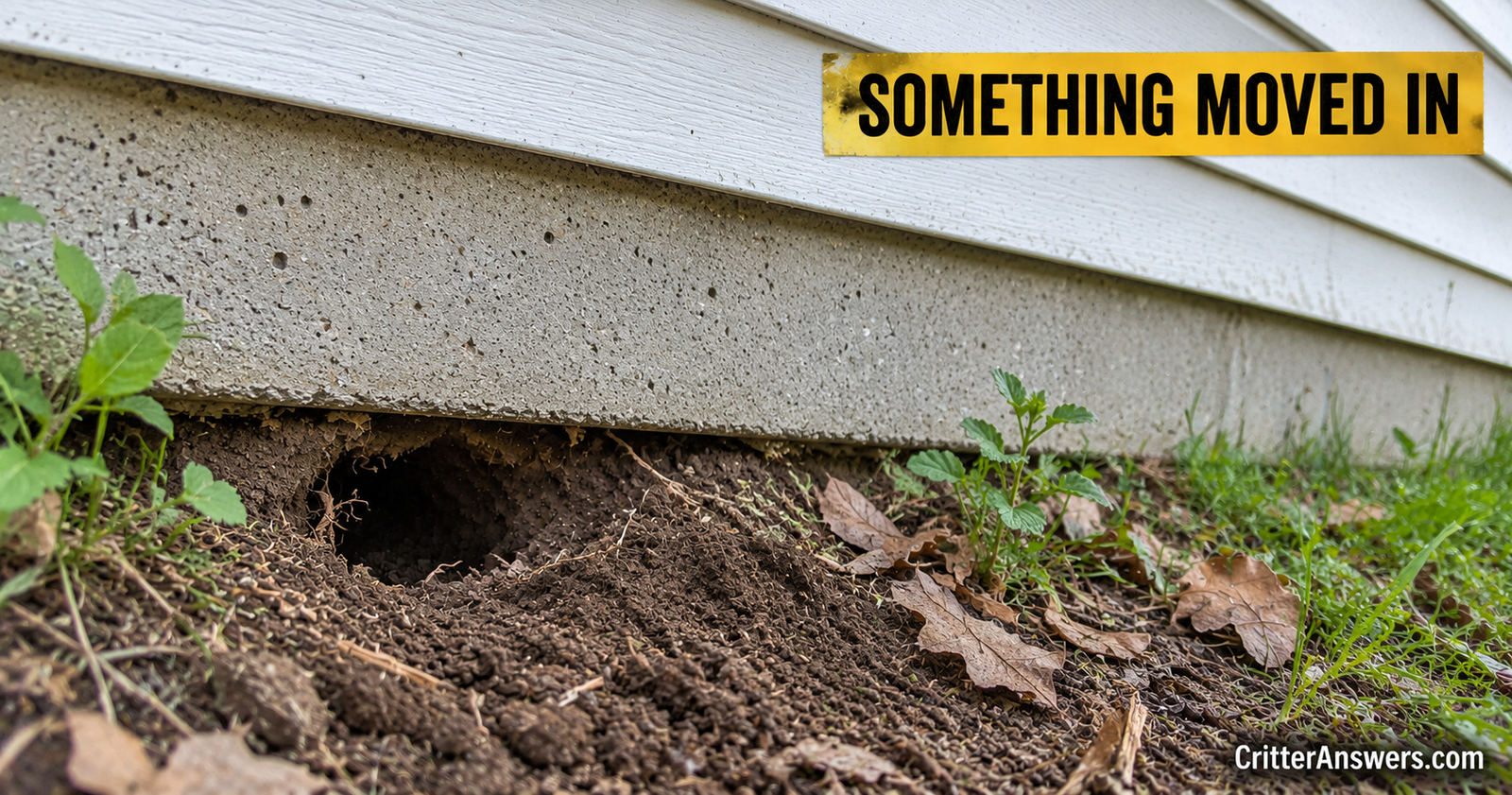
The Mouse Is Coming Through a Gap Around the Pipe
This is extremely important.
Sometimes the mouse isn’t traveling inside the plumbing at all.
It’s coming through the oversized hole where the pipe passes through a wall, cabinet, floor, or foundation.
Mice can squeeze through openings only about 1/4 inch wide, so plumbing penetrations deserve very close inspection.
If you’re finding mice beneath a sink, don’t just look down the drain.
Look around the pipes too.

Our guide on how mice get into your house and which spots to check goes deeper into those entry points.
A Rodent Is Using a Drain or Sewer System
This can happen too, particularly with rats.
Rodent-control guidance specifically recommends protecting floor drains and sewer pipes with tight-fitting grates and addressing plumbing-related openings because rodents can use these routes.
But I wouldn’t see one mouse near a sink and immediately assume it swam through the sewer.
First inspect the obvious access points.


Why Would Mice Pick a Pipe Instead of a Normal Nesting Spot?
Because mice don’t care whether something was designed to be a home.
They care whether it works.
A pipe can provide:
- Darkness
- Protection from predators
- Protection from people
- A narrow enclosed space
- Stable indoor temperatures
- Nearby food or water
- An easy route through a building
That’s really not much different from why mice use wall voids, boxes, cabinets, insulation, equipment, or spaces behind appliances.
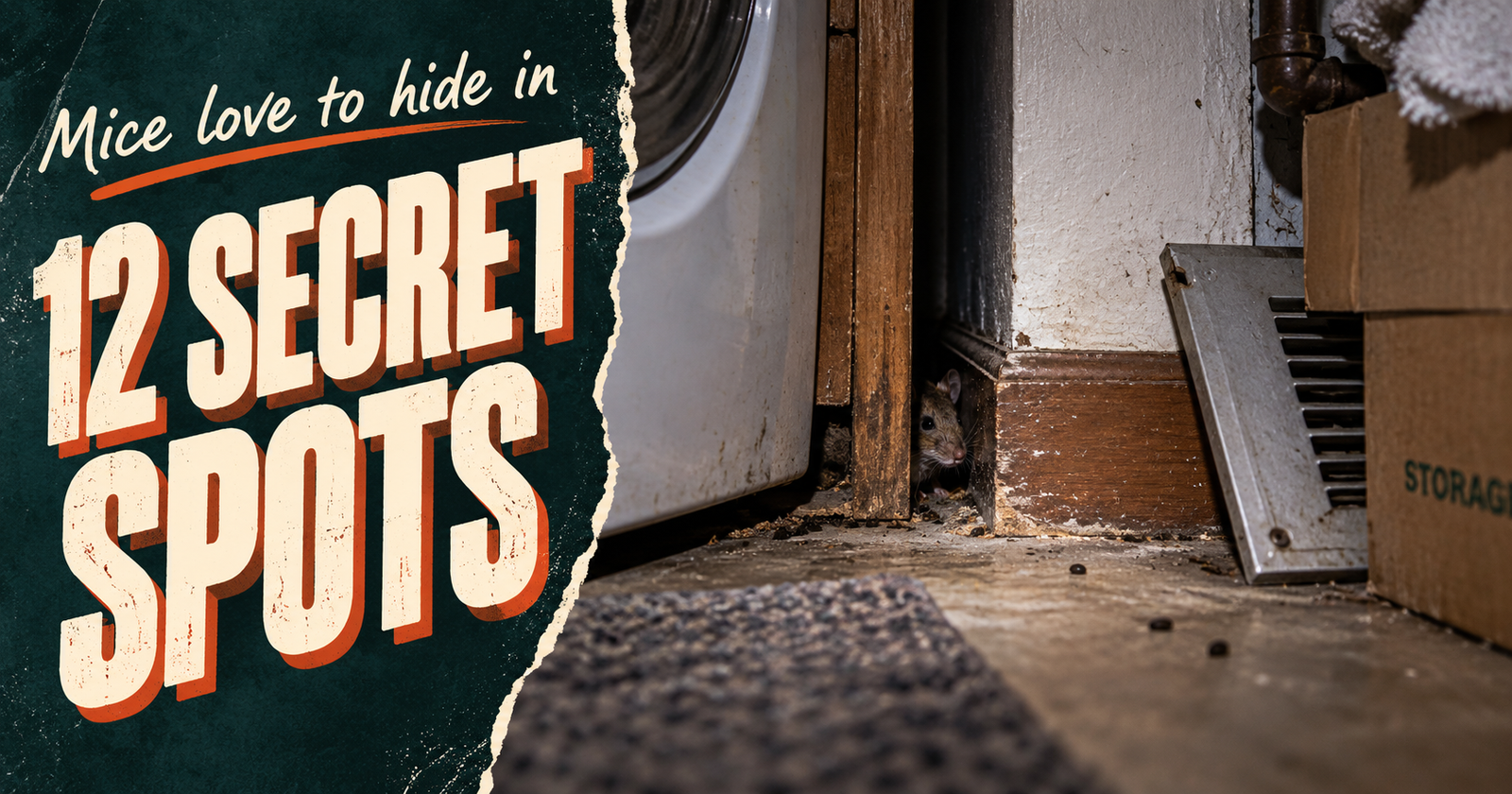
Our guide to where mice hide around a house covers the more familiar hiding places.
My pipe was just the weird version.
Is a 3-Inch Pipe Big Enough for a Mouse?
More than big enough.
Remember that a mouse can fit through an opening roughly 1/4 inch wide.
A 3-inch pipe is enormous compared with the opening a mouse needs.
In fact, MU Extension even describes pipe sections in the 2-to-3-inch range being used in rodent bait-station designs because mice readily enter pipe-like enclosed spaces.
That doesn’t mean every 3-inch pipe attracts mice.
It does show that a pipe that size is certainly not too small for one.
Running Water Revealed My Problem, But I Wouldn’t Use Flooding as Mouse Control
In my case, water is how I accidentally discovered the mice.
I turned on the sink.
Debris started coming out.
Then the mouse came out.
That makes a great story, but I wouldn’t recommend deliberately flooding a pipe as your main method for getting mice out.
You don’t know:
How many mice are inside.
Whether babies are present.
Whether the pipe has another exit.
Whether water will back up.
Whether there’s a clog.
Whether you’re dealing with a proper plumbing system where adding large amounts of water could create another problem.
My situation revealed itself through normal sink use.
If you’ve confirmed mice are using a pipe, I’d approach it as a rodent-exclusion problem rather than trying to pressure-wash them out.
First Figure Out Where They’re Getting Into the Pipe
This is the most important step.
Look at both ends.
Check fittings.
Inspect connections.
Look where the pipe passes through walls.
Check nearby floor or trench drains.
Inspect openings around plumbing.
Look for droppings or nesting material near the suspected access point.
In my setup, the open discharge end above the trench drain was an obvious place worth investigating.
Your setup may be completely different.
A mouse beneath a kitchen sink may actually be entering through a gap around the plumbing rather than the drain itself.



Get the Mice Out Before You Seal Anything
Don’t seal a mouse inside a pipe, wall, or other enclosed space.
If you know mice are active, deal with the animals first.
For ordinary mouse problems, trapping remains one of the simplest methods.
CDC recommends snap traps placed where rodent activity is actually occurring, while MU Extension emphasizes putting traps along walls and other active routes.
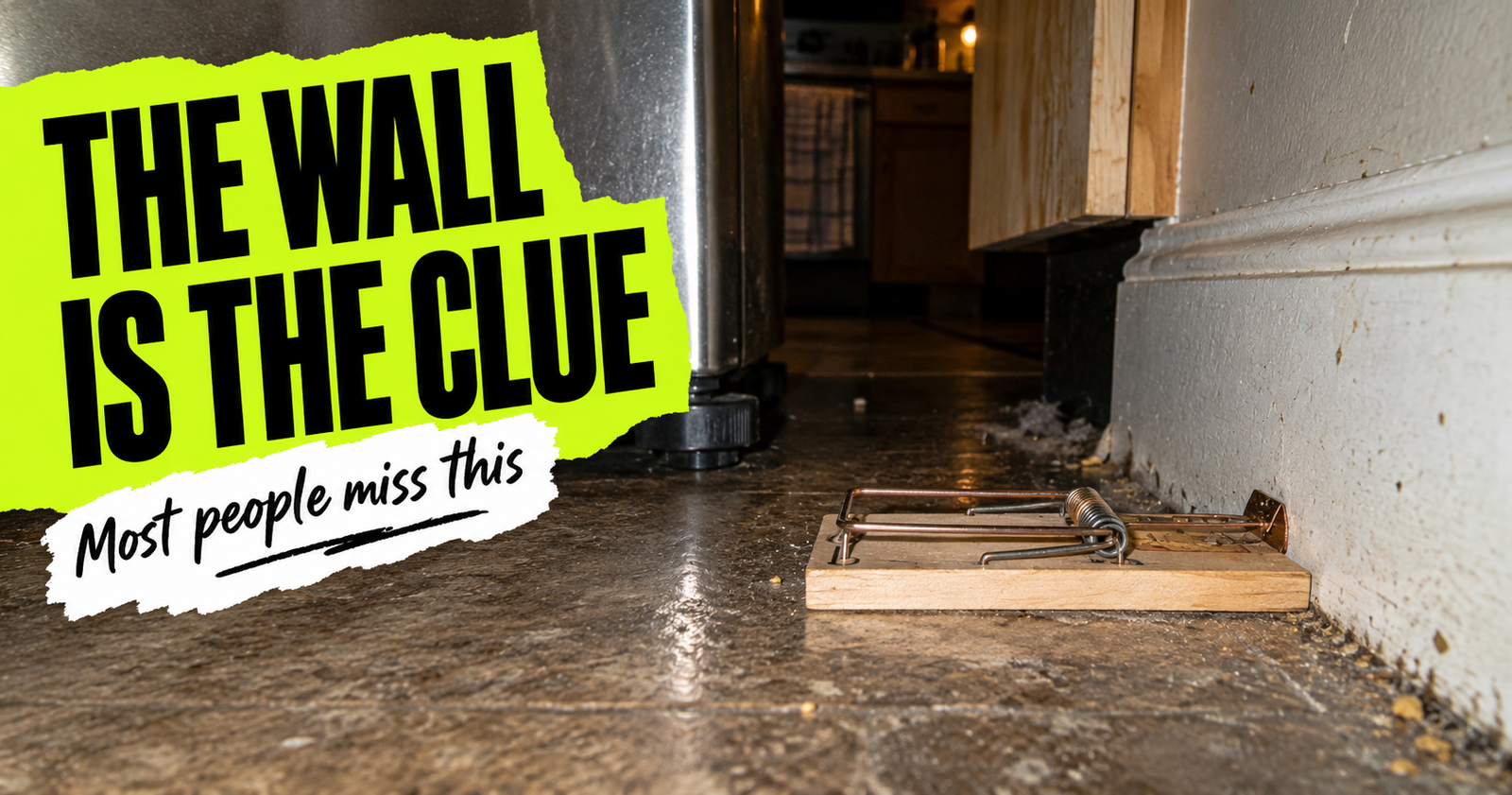
Our guide on where to put mouse traps explains how I approach trap placement.
If mice are emerging from a pipe, I’d look for an accessible travel route immediately outside that opening where traps can safely be placed.
Don’t Put a Mouse Trap Inside a Drain Pipe You Can’t Reach
I want traps where I can inspect and retrieve them.
Putting a trap deep inside a 12-foot pipe creates obvious problems.
You need to:
Know whether it fired.
Retrieve the mouse.
Reset or remove the trap.
Inspect the area afterward.
I’d rather intercept the mouse where it comes out of the pipe.
How Do You Keep Mice Out of a Drain Pipe?
The answer depends heavily on what the pipe actually does.
You can’t simply plug a functioning drain.
Water still has to go somewhere.
The goal is to create a rodent-resistant termination or barrier that doesn’t interfere with the drainage system.
For appropriate drain and sewer openings, rodent-exclusion guidance recommends tight-fitting grates with openings smaller than 1/4 inch.
That doesn’t mean you should grab random hardware cloth and stuff it into every drain.
The correct solution depends on:
Pipe diameter.
Drainage volume.
Whether solids pass through the pipe.
Whether the opening needs service access.
Local plumbing requirements.
Whether the line is part of a sanitary plumbing system.
Whether a grate, drain cover, trap, valve, or professionally designed fitting is appropriate.
If you’re unsure, a plumber can help you protect the opening without creating a clog or drainage restriction.
Don’t Accidentally Build Yourself a Clogged Drain
This is worth emphasizing.
Mouse exclusion and plumbing have to work together.
A screen with openings small enough to stop mice may also collect hair, debris, food particles, sludge, or other material.
If it clogs, water can back up.
That’s why I wouldn’t recommend blindly attaching fine mesh to a drain opening just because it keeps mice out.
Whatever you install needs to be suitable for the actual drain.
The rodent problem matters.
So does the water.
Also Seal the Gaps Around the Pipe
Even if you protect the pipe opening itself, inspect where the plumbing penetrates the structure.
CDC specifically recommends inspecting around pipes beneath sinks, washing machines, water heaters, furnaces, sewer lines, and floor drains.
For larger structural holes around pipes, durable rodent-resistant materials such as metal, hardware cloth, cement, or similar materials are preferable to materials mice can easily gnaw through.
A perfectly protected drain opening doesn’t help much if there’s a half-inch gap beside the pipe.
Don’t Rely on Spray Foam Alone for an Active Mouse Hole
Foam is useful in some sealing jobs, especially combined with more durable material.
But I wouldn’t trust a big blob of ordinary foam by itself where mice are actively chewing.
MU Extension specifically recommends metal or concrete for durable mouse-proofing and warns against relying on easily gnawed materials.
For a mouse-prone opening, think durable first.
Clean Out Old Nesting Material Carefully
If mice have been living inside a pipe or nearby protected area, you may also be dealing with nesting material, urine, or droppings.
Don’t dry-sweep rodent waste and send dust everywhere.
CDC recommends wet-cleaning rodent-contaminated material with disinfectant rather than sweeping or vacuuming it dry.
If you’re dealing with a heavily contaminated inaccessible pipe or a large infestation, that’s another situation where professional help may make sense.
Look for the Reason Mice Were There in the First Place
The pipe gave them shelter.
But what else was nearby?
Check for:
Feed.
Bird seed.
Pet food.
Trash.
Stored grain.
Spilled food.
Water.
Boxes.
Fabric or paper nesting material.
Clutter.
Outbuildings are especially easy places for mice to establish themselves because they often combine shelter with stored materials and food.
You don’t have to make a shop or barn sterile.
You do want to remove the easiest rewards.
Outbuildings Need Mouse-Proofing Too
One mistake is focusing every exclusion effort on the house while ignoring the garage, shed, barn, or shop.
CDC specifically includes garages and outbuildings in rodent sealing recommendations.
My weird drain-pipe mouse happened in an outbuilding.
That’s a good reminder that mice don’t care which building is the “main” one.
If it provides food and shelter, they’ll use it.
Watch the Pipe After You Fix the Access Point
Once you’ve removed the mice and addressed how they were entering, keep checking the area.
Look for:
Fresh nesting material.
New droppings.
Gnawing.
Debris appearing from the pipe again.
Mouse sightings.
Trap activity.
If you safely clean old evidence first, new evidence becomes much easier to recognize.
That same principle is useful anywhere you’ve had mice.

Our guide on keeping mice from coming back after you get rid of them goes deeper into long-term monitoring.
What If You Hear Mice but Can’t Reach Them?
If activity appears to be deep inside plumbing chases, walls, ceilings, or inaccessible structural spaces, don’t start cutting pipes or tearing walls apart randomly.
Try to identify where the mice emerge.
Droppings and trap activity can help map their route.
If you can’t determine how they’re accessing the pipe or building, that’s a reasonable time to bring in a pest-control professional, plumber, or both depending on what you’re seeing.
Plumbing problem and rodent problem can overlap.
Sometimes you need someone who understands each side.
Can Mice Climb Pipes?
Yes, mice are excellent climbers.
MU Extension notes that house mice can climb rough vertical surfaces and use wires and similar routes around buildings.
So don’t assume a pipe is inaccessible just because it’s off the floor.
Look at everything connected to it.
Walls.
Brackets.
Cables.
Nearby shelving.
Drain structures.
A mouse may have more routes to that opening than you initially realize.
I Wouldn’t Have Believed This One Without Seeing It
This is one of those mouse problems that sounds ridiculous until it happens in front of you.
I ran water through a sink.
Nesting-looking debris started washing out of a roughly 12-foot-long, 3-inch PVC drain line.
Then an actual mouse came out with it.
At that point, there wasn’t much debate about whether mice could use the inside of a pipe.
They had.
The bigger lesson for me was that mice will use whatever protected space works, even when that space was built for something completely different.
If you’ve already confirmed mice somewhere unusual, don’t limit your inspection to the classic places behind appliances and inside cabinets.
Follow the evidence.
Look at pipes.
Look around the pipes.
Look at drain openings.
Look at utility penetrations.
And figure out what gave the mouse access before you simply kill one and assume the problem is solved.

If you’re dealing with a broader mouse problem beyond the pipe itself, start with our complete guide to getting rid of mice in your house for good.
The mouse that came rolling out of my drain was memorable.
The real fix is making sure another one can’t move back into the same 12-foot mouse tunnel.
About the author: Caleb Rourke researches how mice and other rodents get into homes, outbuildings, and other unexpected spaces, and the practical steps property owners can use to identify and prevent them. He writes straightforward rodent-control guides for Critter Answers.