
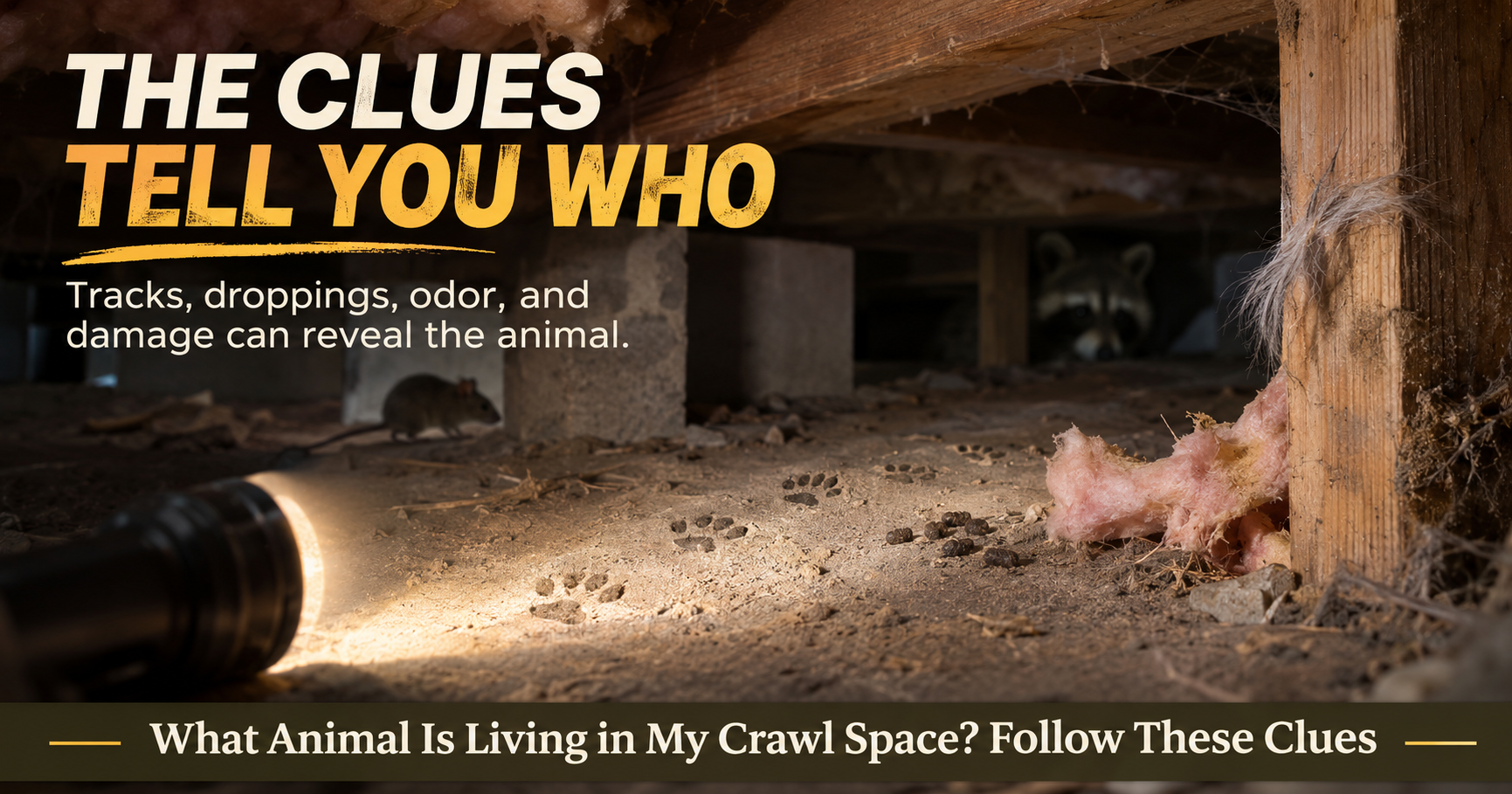
Hearing something move underneath your floor can make your imagination run wild.
A scratch.
A thump.
Something moving near the ductwork.
Then silence.
Before crawling underneath the house with a flashlight, I’d start by gathering clues from the outside.
The animal’s sounds, timing, droppings, tracks, smell, and the size of the opening can often narrow down what’s living in your crawl space without getting face-to-face with it.
Common possibilities include mice, rats, raccoons, opossums, skunks, and other small wildlife that find an opening beneath the house.
Missouri Extension specifically lists crawl spaces beneath homes as shelter used by skunks, opossums, and other small mammals.
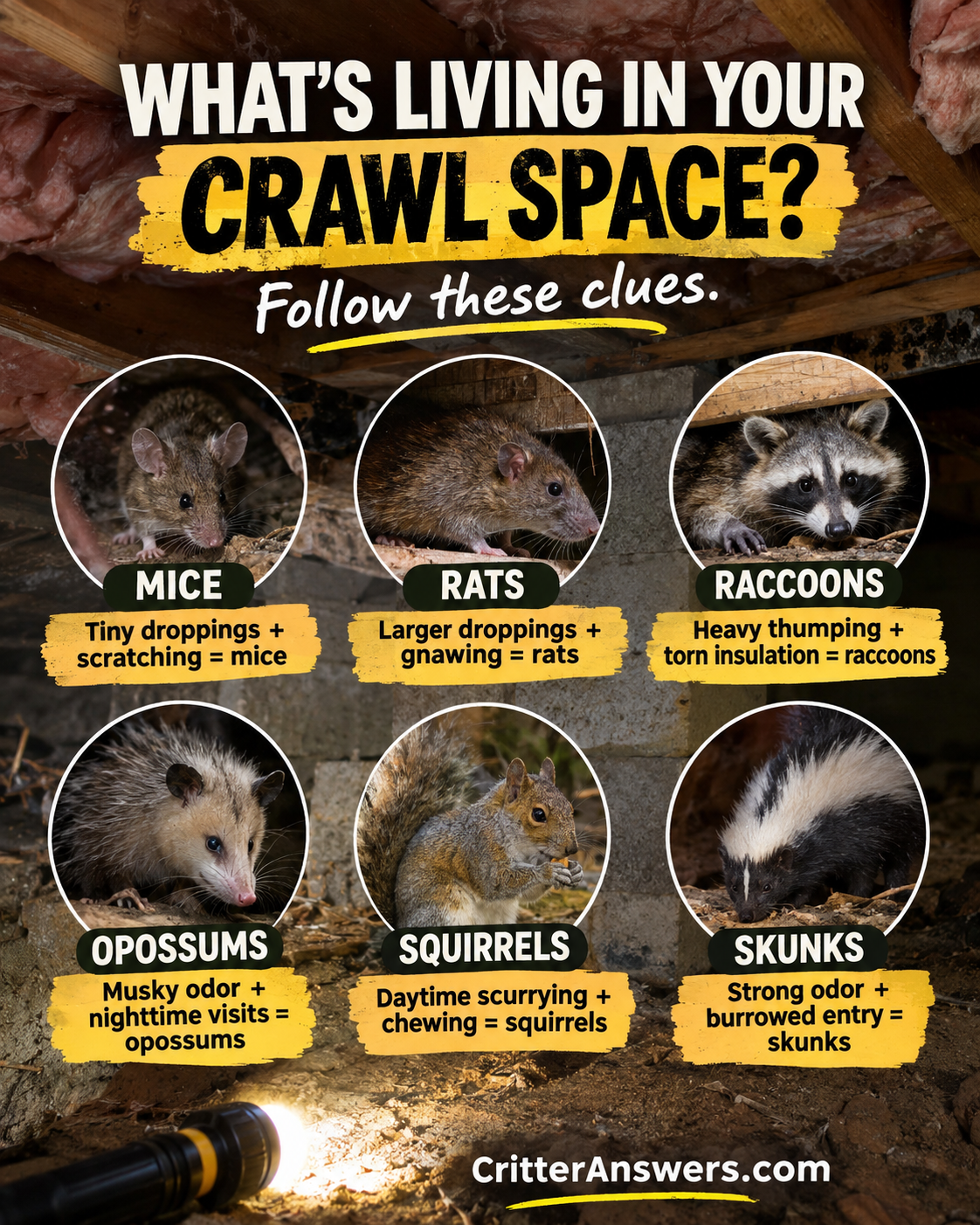
What Animals Commonly Live in Crawl Spaces?
The animals I’d consider first are:
- Mice
- Rats
- Raccoons
- Opossums
- Skunks
- Squirrels or chipmunks
- Other small mammals using the space temporarily
Not every animal underneath the house has built a permanent den.
Some may simply be traveling through.
Others find the crawl space so comfortable that they settle in.
The clues around the entrance usually tell you more than the noise alone.
Light Scratching and Fast Movement
Light scratching or rapid scurrying makes me think about rodents first.
Mice can sound surprisingly loud when they’re moving across ductwork, plastic, pipes, or floor framing.
A tiny animal beneath a quiet bedroom can sound much bigger than it really is.
CDC specifically recommends checking crawl spaces when looking for rodent activity and placing traps in areas where rodents or their signs are present.
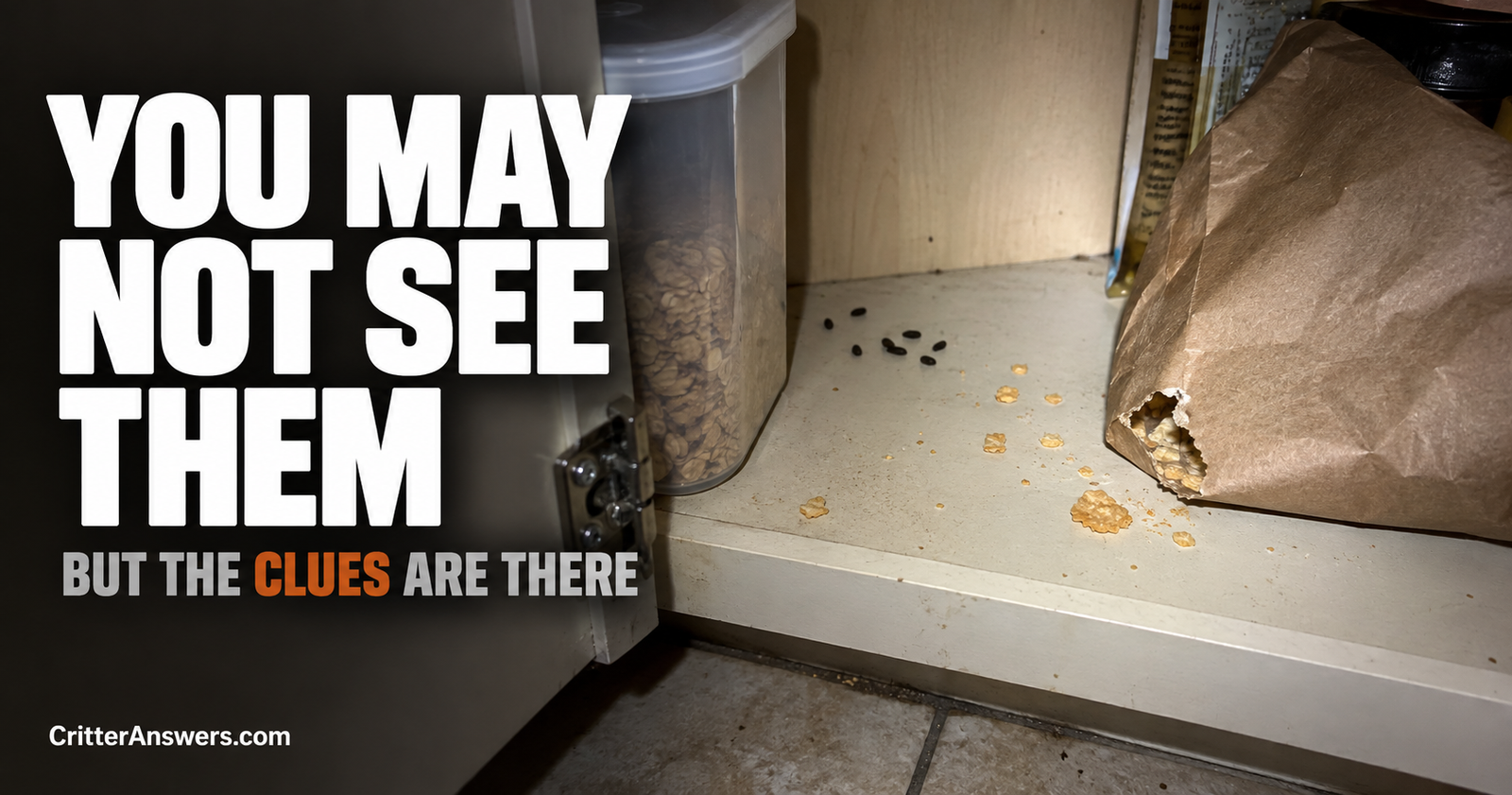
If you suspect mice, our guide on how to know if you have mice in your house covers the other signs to look for.
Heavier Thumping Points Toward Something Bigger
A raccoon, skunk, or opossum moving underneath a house usually sounds different from a mouse.
You may hear:
Slow footsteps.
Scraping.
Heavier bumps.
Material shifting.
Something pushing against the floor or ductwork.
But I still wouldn’t identify an animal based only on how heavy it sounds.
Go outside and look for evidence.
Inspect the Crawl Space Opening First
Walk around the whole foundation.
Check:
- Crawl-space vents
- Access doors
- Foundation openings
- Gaps beneath siding
- Plumbing and utility penetrations
- Soil around the foundation
- Areas hidden behind steps or decks
Look for bent screens, tracks, disturbed soil, hair, mud, droppings, or obvious paths leading into an opening.
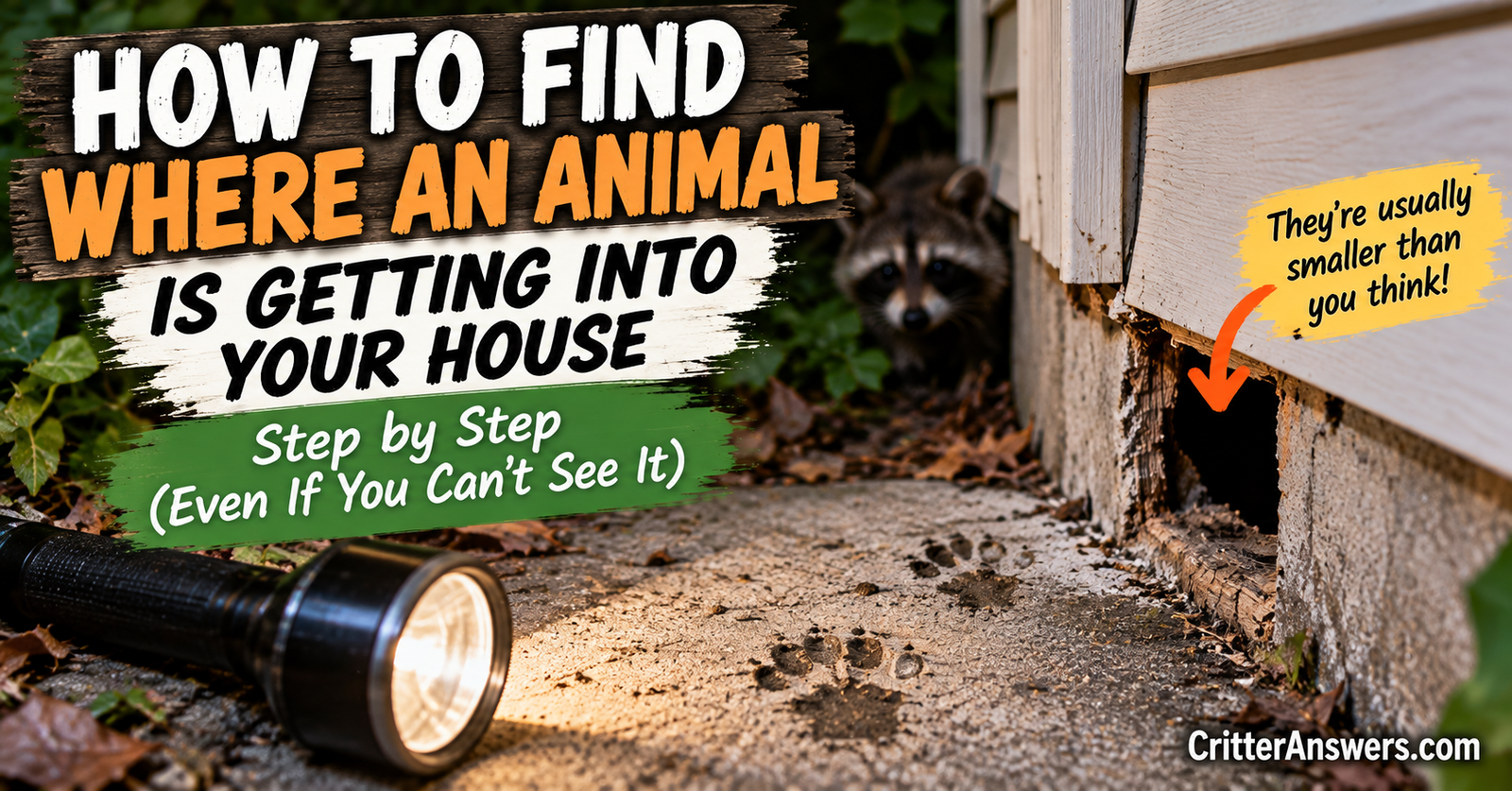
Our broader guide on finding where an animal is getting into your house is useful here.
The Size of the Hole Matters
A tiny opening makes mice much more likely.
CDC says mice can fit through a hole about 1/4 inch wide, roughly the width of a pencil.
That means openings around plumbing, utilities, vents, and foundation gaps deserve close inspection.
A raccoon obviously needs substantially more room.
If an entire vent has been bent or pulled loose, I’d start considering larger wildlife.
Don’t Forget the Plumbing
This one is worth mentioning because mice can show up in places you’d never expect.
I recently documented a real case where mice had been nesting inside a roughly 12-foot section of 3-inch PVC drain pipe in an outbuilding.
Running water through the sink started flushing nesting material out until an actual mouse came rolling out of the end.
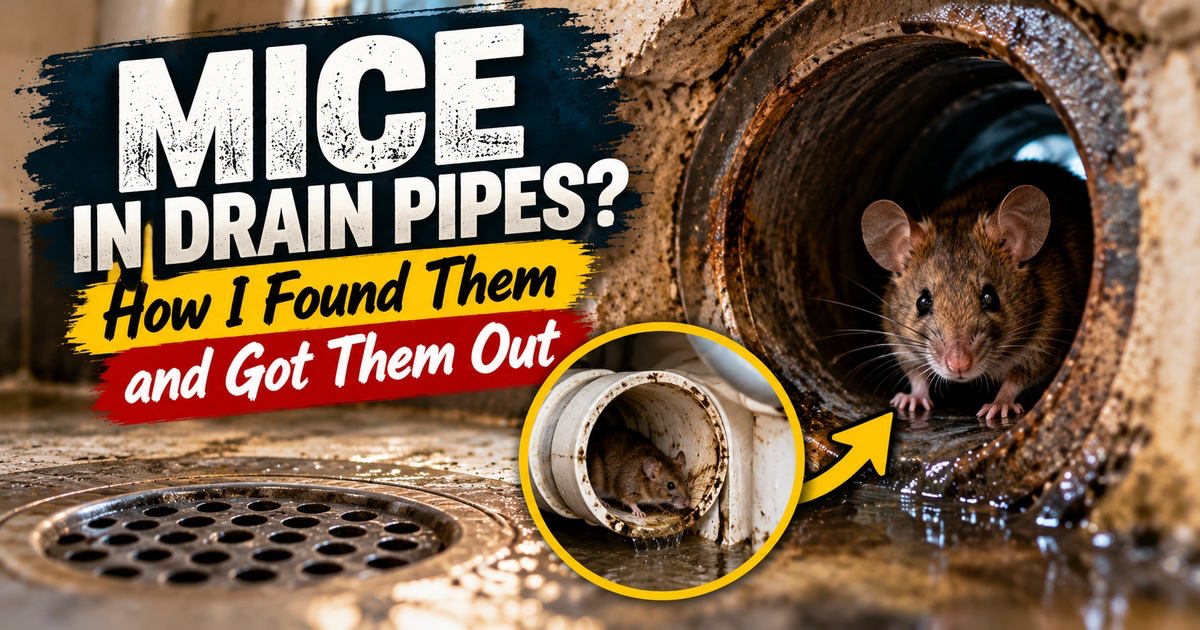
You can read the whole firsthand story in Mice in Drain Pipes? How I Found Them and Got Them Out.
CDC specifically recommends checking around pipes, sewer lines, floor vents, and plumbing penetrations when looking for rodent entry points.
So if you’re finding rodent activity in a crawl space, don’t just look at the foundation vents.
Look at the plumbing too.
Digging Around the Foundation Is Another Big Clue
Freshly disturbed dirt can point toward an animal that is actively creating or enlarging a den.
Skunks deserve particular attention here.
Missouri Extension notes that skunks can den beneath houses and other structures and may dig beneath foundations to gain access.
Look for:
Loose soil.
A tunnel-like opening.
Fresh tracks.
Repeated disturbance in the same spot.
If you’re smelling skunk strongly near that opening too, your suspect list gets shorter quickly.
Smell Can Tell You a Lot
Sometimes the first clue isn’t noise.
It’s odor.
A musky animal smell can mean something has been living underneath the house for a while.
A strong skunk odor puts skunk high on the list.
A rotten smell may mean an animal died somewhere in the crawl space.
Urine and feces can create their own persistent odor as well.
Our guide on why your house smells like an animal can help separate some of those possibilities.
Droppings Are One of the Best Identification Clues
Droppings can narrow things down considerably.
Mouse droppings are small.
Rat droppings are larger.
Raccoon and opossum waste looks very different from either.
But don’t crawl under the house and start sweeping everything up.
CDC recommends wet-cleaning rodent waste with disinfectant instead of sweeping or vacuuming dry droppings because contaminated material can become airborne.
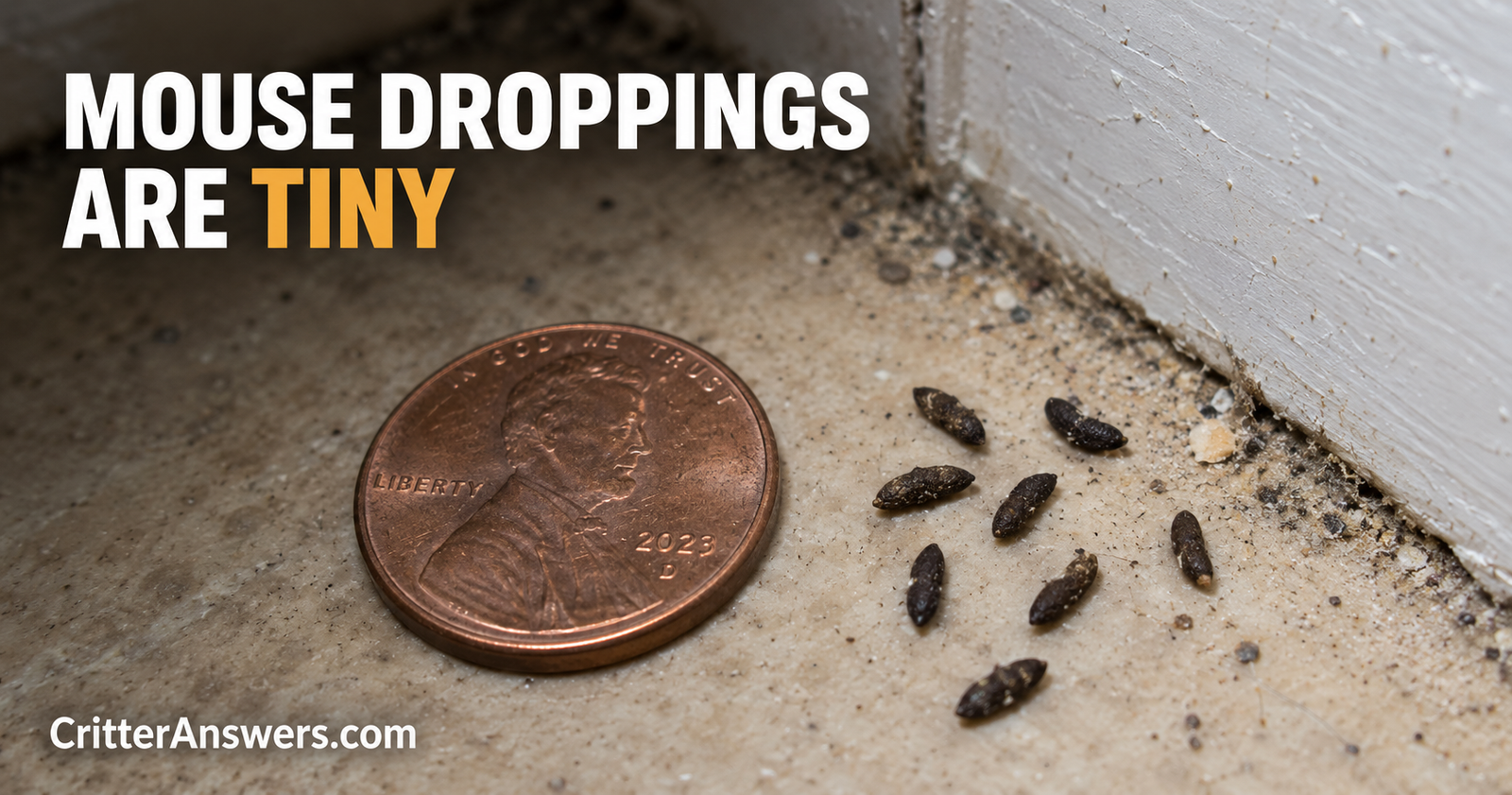
If what you’re seeing looks mouse-sized, compare it with our mouse dropping identification guide.
Tracks Near the Opening Can Solve the Mystery
Soft soil or mud around the crawl-space entrance can work like a natural tracking pad.
Before walking through it, look closely.
Tracks may show:
Small rodent feet.
Five-toed raccoon prints.
Opossum tracks.
Skunk tracks.
Claw marks.
A repeated path leading to the opening.
Take pictures before disturbing the area.
Even imperfect tracks can become useful when combined with the other evidence.
What About Raccoons?
I’d put raccoons higher on the list if you have:
A large damaged opening.
Heavy nighttime movement.
Large tracks.
Significant droppings.
Material pulled around the entrance.
Raccoons may use protected spaces for denning, and this becomes especially important if a female has young.
Do not seal the entrance just because the adult leaves.
You could trap babies underneath the house.
That’s one situation where professional wildlife removal makes a lot of sense.
What About Opossums?
Opossums readily use existing shelter.
Missouri Extension specifically includes crawl spaces as shelter used by opossums and other small mammals.
If the opening is large enough and you’re hearing slow nighttime movement, an opossum is possible.
Tracks and droppings will usually help more than sound alone.
What About Skunks?
A skunk beneath the house is one animal I would not go crawling toward.
Missouri Extension notes that skunks commonly den beneath structures and recommends exclusion only after determining the animal has left.
Strong odor plus fresh digging around the foundation is an obvious combination to take seriously.
Give the animal space.
What About Mice or Rats?
Rodents exploit much smaller gaps than larger wildlife.
Common access points include:
Plumbing.
Utility penetrations.
Foundation gaps.
Damaged crawl-space vents.
Doors.
Openings around ducts.
CDC specifically recommends inspecting crawl spaces and sealing openings around utilities and plumbing to prevent rodents from entering.
If mice are the problem, trapping the animals already inside is only half the job.
You also have to close the opening.
Don’t Crawl Into an Unknown Animal’s Den
This is one of those situations where curiosity can create unnecessary risk.
A crawl space may contain:
Wild animals.
Rodent waste.
Parasites.
Standing water.
Damaged wiring.
Mold.
Sharp debris.
Contaminated insulation.
And very little room to get away from an upset animal.
Gather as much information as you can from outside first.
You do not need to meet the raccoon personally to prove it’s there.
Never Seal the Hole While the Animal Is Still Inside
This is probably the most important mistake to avoid.
Closing an occupied crawl space can cause the animal to:
Damage the structure trying to escape.
Move farther into the house.
Die underneath the floor.
Leave young trapped behind.
Before permanently closing an entrance, you need reasonable confidence that the animals are gone.
Be Careful With One-Way Exclusion
A one-way door can sometimes let an adult animal leave while preventing reentry.
That sounds perfect until there are babies inside.
For raccoons, skunks, squirrels, and similar wildlife, breeding season matters.
Don’t blindly install a one-way device without considering dependent young.
Seal the Crawl Space After the Animals Are Gone
Once you’re confident the space is empty, repair the access point.
Replace broken vents.
Secure doors.
Repair screening.
Close foundation openings.
Seal rodent-sized plumbing gaps.
Use materials strong enough for the animal you’re excluding.
For skunks, Missouri Extension recommends sturdy hardware cloth and, where digging is possible, burying the barrier to prevent animals from simply going underneath it.
Don’t Stop After Fixing One Hole
Walk around the entire structure again.
If one crawl-space vent failed, another may be loose.
If one utility penetration has a gap, there may be several.
Look at every:
Vent.
Pipe.
Cable.
Door.
Foundation corner.
Transition between materials.
Mice especially don’t need much.
One overlooked pencil-width opening can undo an otherwise good exclusion job.
Clean Up Safely
After the animals are gone, you may still have droppings, urine, nesting material, or contaminated insulation.
For rodents, CDC recommends ventilating enclosed buildings where appropriate, wearing gloves, soaking contamination with disinfectant, and avoiding dry sweeping or vacuuming.
Heavy contamination is different from cleaning up a couple mouse droppings.
If the crawl space is badly contaminated, professional cleanup may be worth considering.
When I’d Call a Wildlife Professional
I’d seriously consider professional help when:
- You suspect a mother with young
- You can’t identify the animal
- A skunk has established a den
- The crawl space is difficult or unsafe to access
- There is heavy fecal contamination
- The animal appears trapped or injured
- You can’t determine the entry point
- The problem keeps returning after exclusion
Simple rodent problems can often be handled yourself.
Crawling under a house toward an unidentified animal is a different situation.
What I’d Do First
If you’re hearing something beneath the floor tonight, don’t start tearing into the crawl space.
Walk around the exterior first.
Look for openings.
Listen near the foundation.
Check for tracks.
Look for disturbed soil.
Notice odors.
Inspect vents.
Check plumbing penetrations.
Photograph anything unusual.
Then put the clues together.
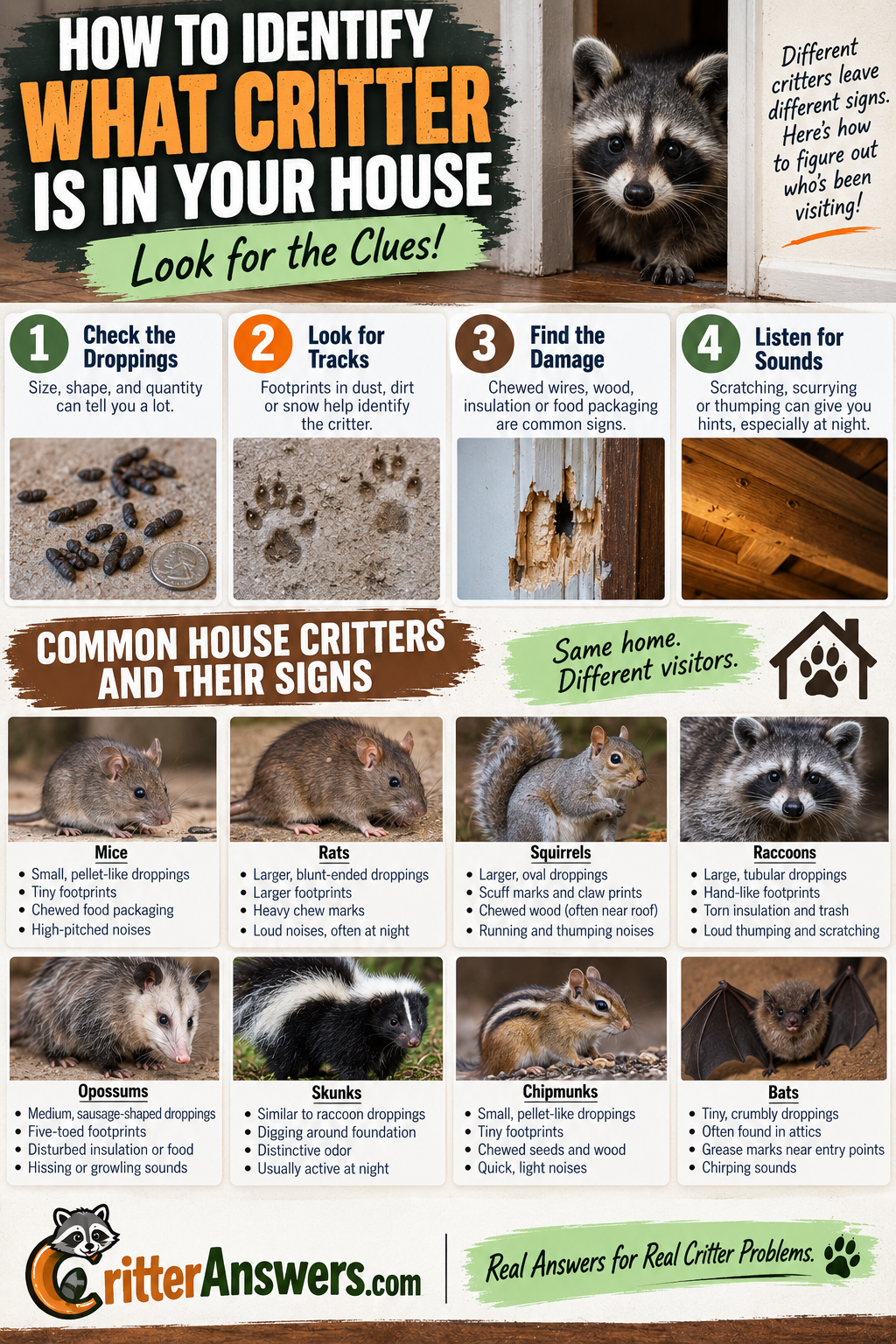
If you still can’t tell what you’re dealing with, our guide to identifying what critter is in your house gives you a broader starting point.
The important thing is to identify the animal before deciding how to remove it.
A mouse slipping through a plumbing gap requires a very different solution from a skunk raising young beneath the house.
About the author: Grant Harlow researches the signs wildlife leaves around homes, crawl spaces, sheds, porches, and other structures. He writes practical identification and exclusion guides for Critter Answers, focusing on helping homeowners identify the animal first and solve the problem without creating a bigger one.