
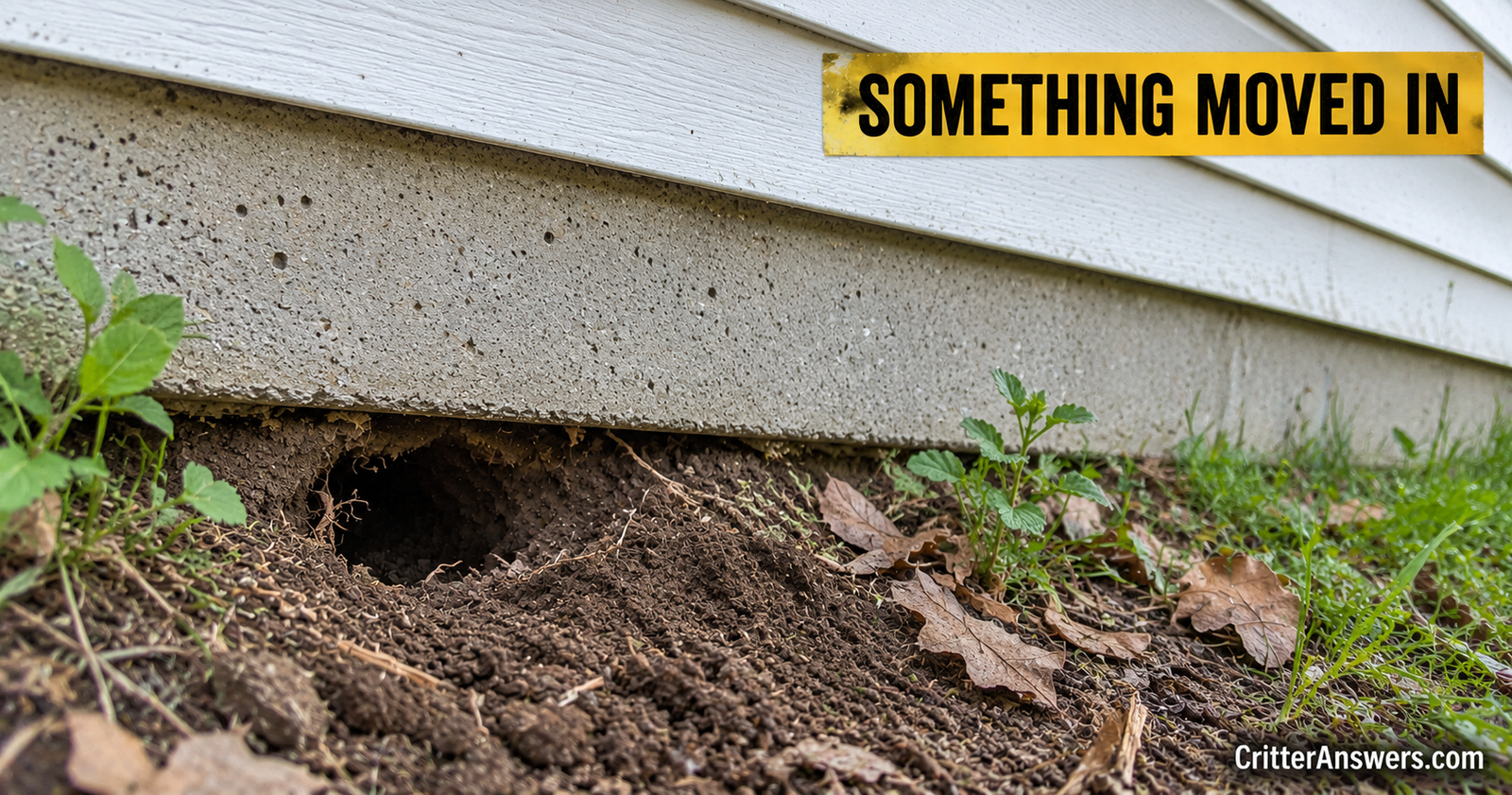
Finding a hole in the middle of the yard is one thing.
Finding one that disappears under your house gets my attention a lot faster.
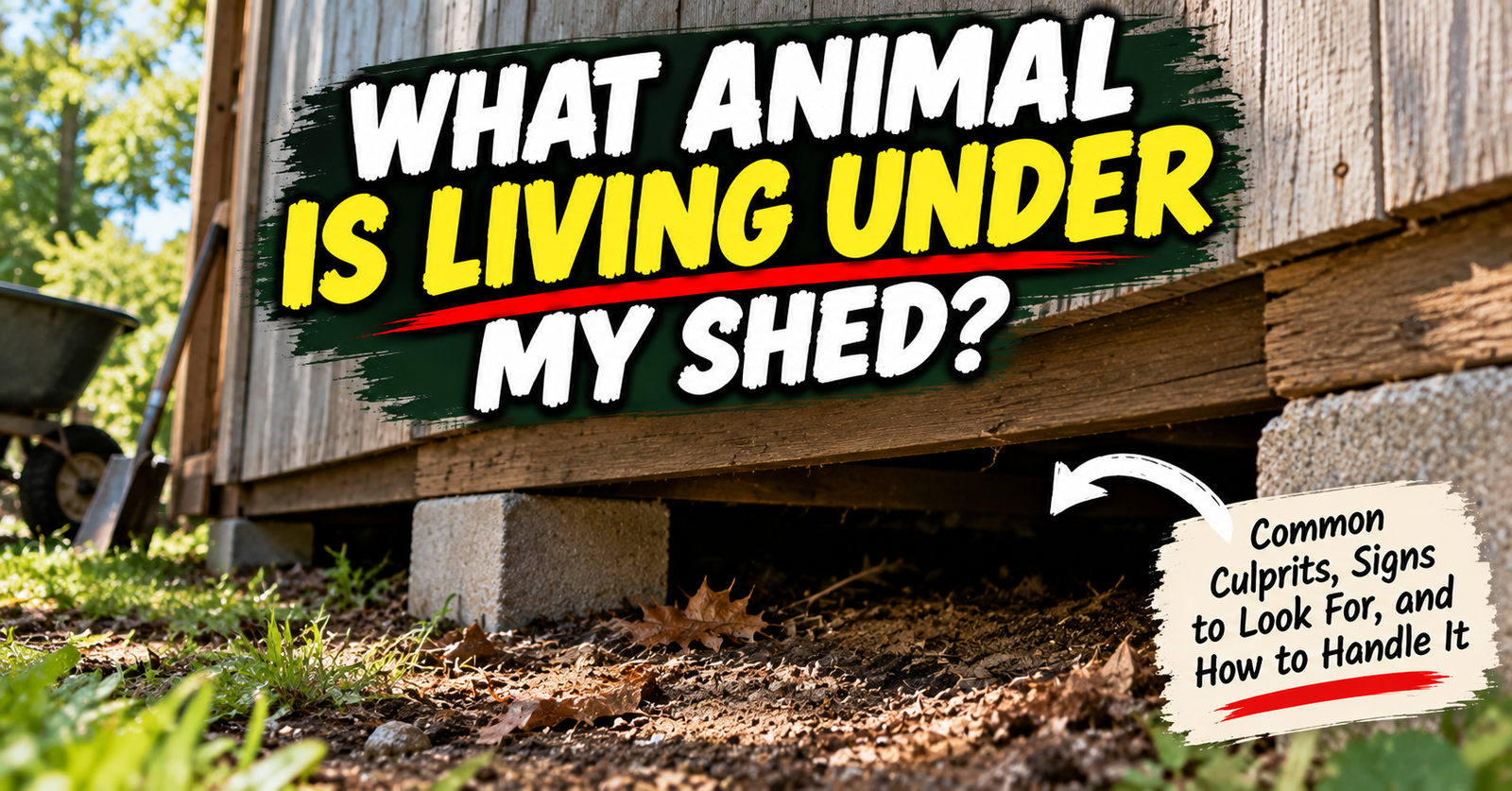
Maybe there’s fresh dirt piled against the foundation. Maybe you noticed a dark opening beneath the siding. Maybe something has excavated its way beneath the edge of a crawl space, slab, or foundation.
So what animal is digging a hole under your house?
Some of the most likely suspects include skunks, groundhogs, chipmunks, and Norway rats, depending on the size and shape of the opening. Other wildlife may use existing spaces beneath houses without necessarily being the animal that originally dug them.
That’s an important distinction.
The animal living in the hole isn’t always the animal that made the hole.
Before filling anything, I want to know how big the opening is, whether fresh soil is present, whether tracks lead into it, and whether the animal appears to be actively living underneath the structure. Those same observations are useful when fresh soil, tracks, and animal activity rather than guessing from the hole alone.
Start With the Size of the Hole
Get a rough measurement.
You don’t need to stick your hand beside it or reach into anything.
Just estimate or measure safely from outside.
Ask:
- Is it only a couple of inches across?
- Is it several inches wide?
- Is it large enough for a groundhog?
- Is there excavated soil?
- Is the opening neat or messy?
- Does it descend sharply?
- Does it disappear horizontally beneath the house?
- Are there multiple entrances?
Hole size doesn’t give you a perfect identification.
But it can eliminate some pretty ridiculous possibilities.
A little 2-inch opening beside the foundation and a groundhog-sized burrow beneath the house shouldn’t be treated as the same problem.
A Small Neat Hole With Almost No Dirt Can Point to a Chipmunk
Chipmunks are surprisingly good at hiding their excavation work.
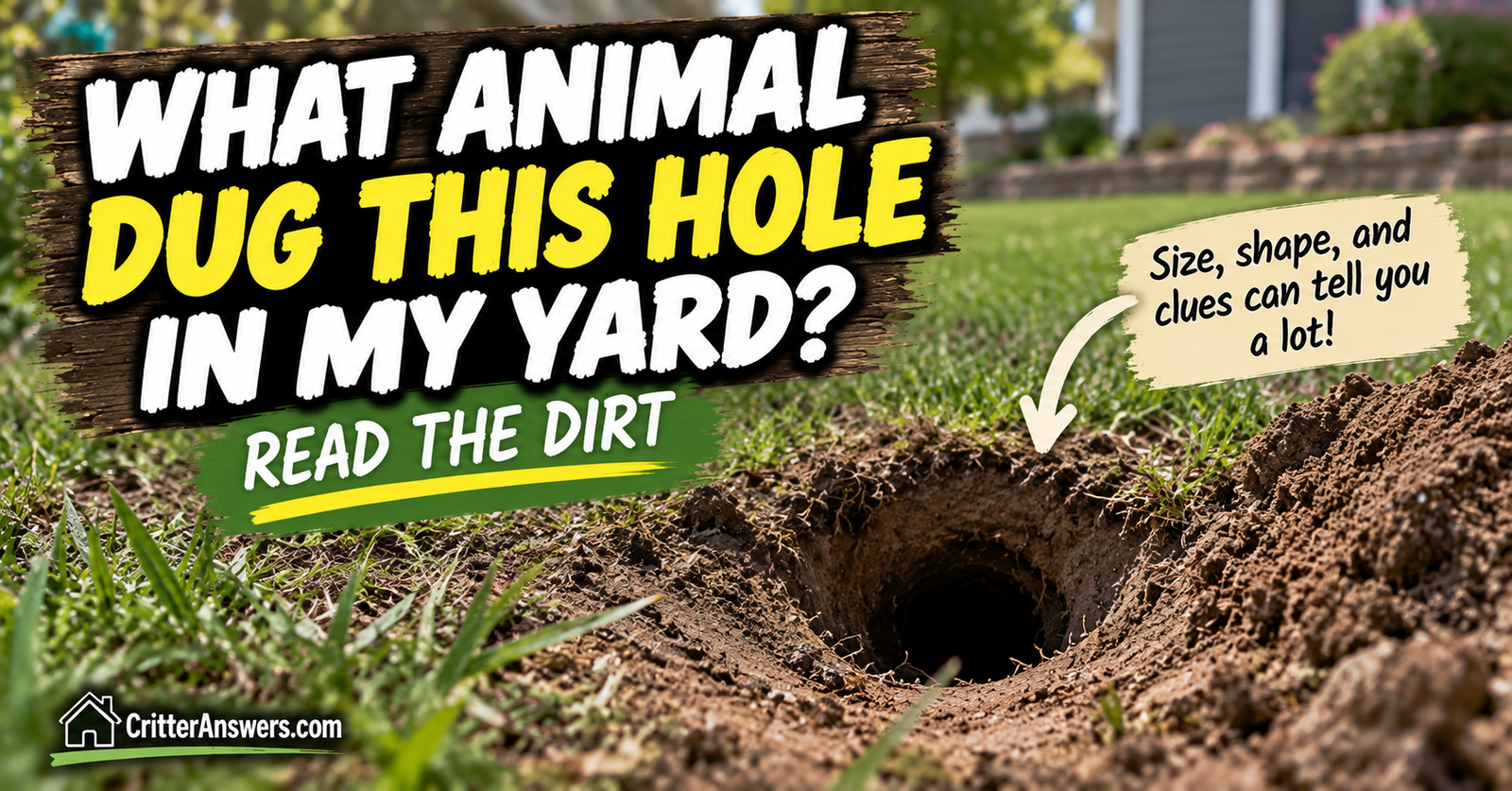
If I find a small, neat opening roughly 2 to 3 inches across with very little obvious excavated soil around it, chipmunk moves high on my list.
That’s because chipmunks don’t necessarily leave a big dirt pile announcing their burrow.
Their burrows can descend nearly vertically, and the animals carry excavated soil away from the entrance.
That creates a very tidy little opening.
And don’t let the tiny entrance fool you into thinking the burrow must be tiny too.
A chipmunk tunnel system can extend 20 to 30 feet and contain nesting areas, food-storage chambers, side pockets, and escape tunnels.

Chipmunks Really Do Burrow Under Foundations
This isn’t just something chipmunks do out in the woods.
They readily live around homes.
Foundation edges can provide exactly the kind of protected location they like.
So if you have:
A neat little opening.
Little or no dirt pile.
Chipmunks running around during the day.
Nearby landscaping, rock walls, shrubs, or bird seed.
the evidence starts fitting together.
Don’t identify from the hole alone.
But that’s a pretty convincing combination.
A Larger Burrow Can Mean Groundhog
Now suppose the hole is much bigger.
We’re no longer talking about a little chipmunk entrance.
A mature groundhog, also called a woodchuck, can create a substantial burrow system.
Groundhog entrances can eventually approach a foot across, and their burrows commonly have multiple entrances.
They can also move a considerable amount of soil.
If you’re looking at an opening big enough that you’re wondering whether your dog could stick its head into it, chipmunk probably isn’t the direction I’d go.
Look for a Dirt Pile Around a Groundhog Burrow
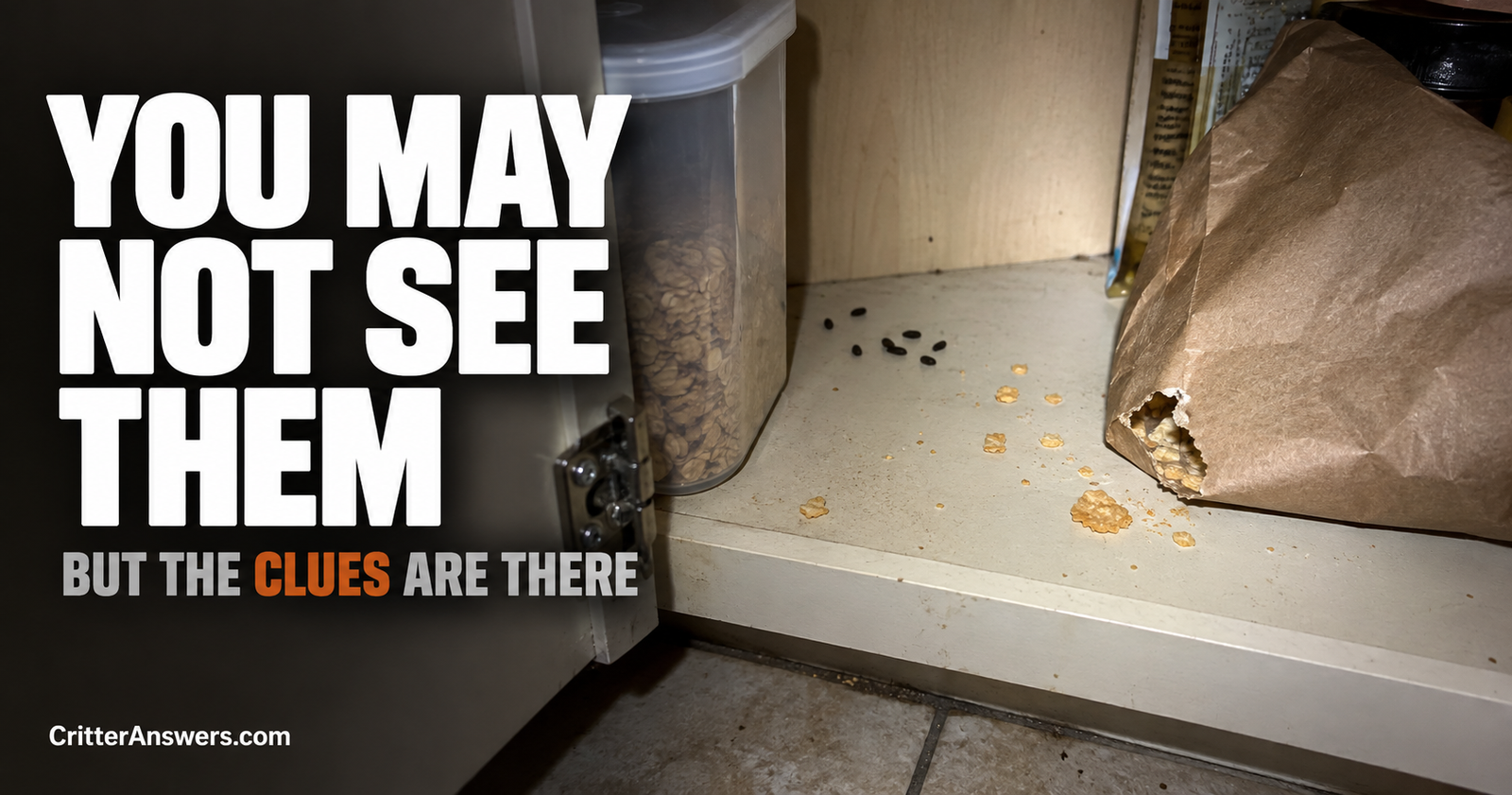
Groundhog burrows commonly have obvious excavated soil around the main entrance.
That helps separate them from the clean little entrance typical of a chipmunk.
Look for:
- A large opening
- Considerable excavated soil
- Multiple entrances nearby
- Trails through vegetation
- Groundhog sightings
- Feeding damage in a garden
- Gnawed or eaten plants
- A burrow near open grassy areas
A large burrow beside a foundation deserves attention even if you haven’t actually seen the animal.
Groundhog Burrows Can Be Much Bigger Underground Than They Look
The visible hole is just the front door.
Groundhog tunnel systems can extend many feet underground and include more than one entrance.
That’s why I wouldn’t treat a substantial burrow beneath a house as something to casually fill with a shovel of dirt.
You don’t know where the tunnel goes.
You don’t know whether the animal is inside.
And depending on the season, young may be present.
The burrow may also be used by another species later.
The Animal Using a Groundhog Burrow May Not Be a Groundhog
This is one of my favorite wildlife clues because it explains so many confusing observations.
Groundhog burrows can be reused by other animals.
So imagine this:
You see what looks like a groundhog-sized burrow.
Then your camera catches a skunk going inside.
Did the skunk excavate the entire tunnel?
Not necessarily.
It may simply be using somebody else’s real estate.
That’s why I separate two questions:
What animal made this hole?
and
What animal is using this hole right now?
Those can have different answers.
Skunks Are a Major Suspect Under Houses
If something has taken up residence beneath the house, especially around a crawl space or foundation, skunk deserves serious consideration.
Skunks use protected underground dens and can establish themselves beneath houses, porches, and other buildings.
And unlike a chipmunk, you may get a pretty memorable additional clue.
The smell.
If you have a suspicious opening under the foundation plus recurring skunk odor, that’s useful evidence.
But don’t make the opposite mistake.
No smell does not prove there isn’t a skunk.
A skunk doesn’t spray every time it walks through its front door.
Skunks Can Dig Under a Foundation
Sometimes a skunk simply uses an existing opening.
Sometimes it digs.
If there’s enough accessible soil along the foundation, a skunk can excavate its way underneath a structure.
Look for:
- An opening large enough for a skunk
- Freshly disturbed soil
- Tracks
- Skunk odor
- Nighttime activity
- Lawn digging nearby
- Garbage disturbance
- A camera showing the animal entering
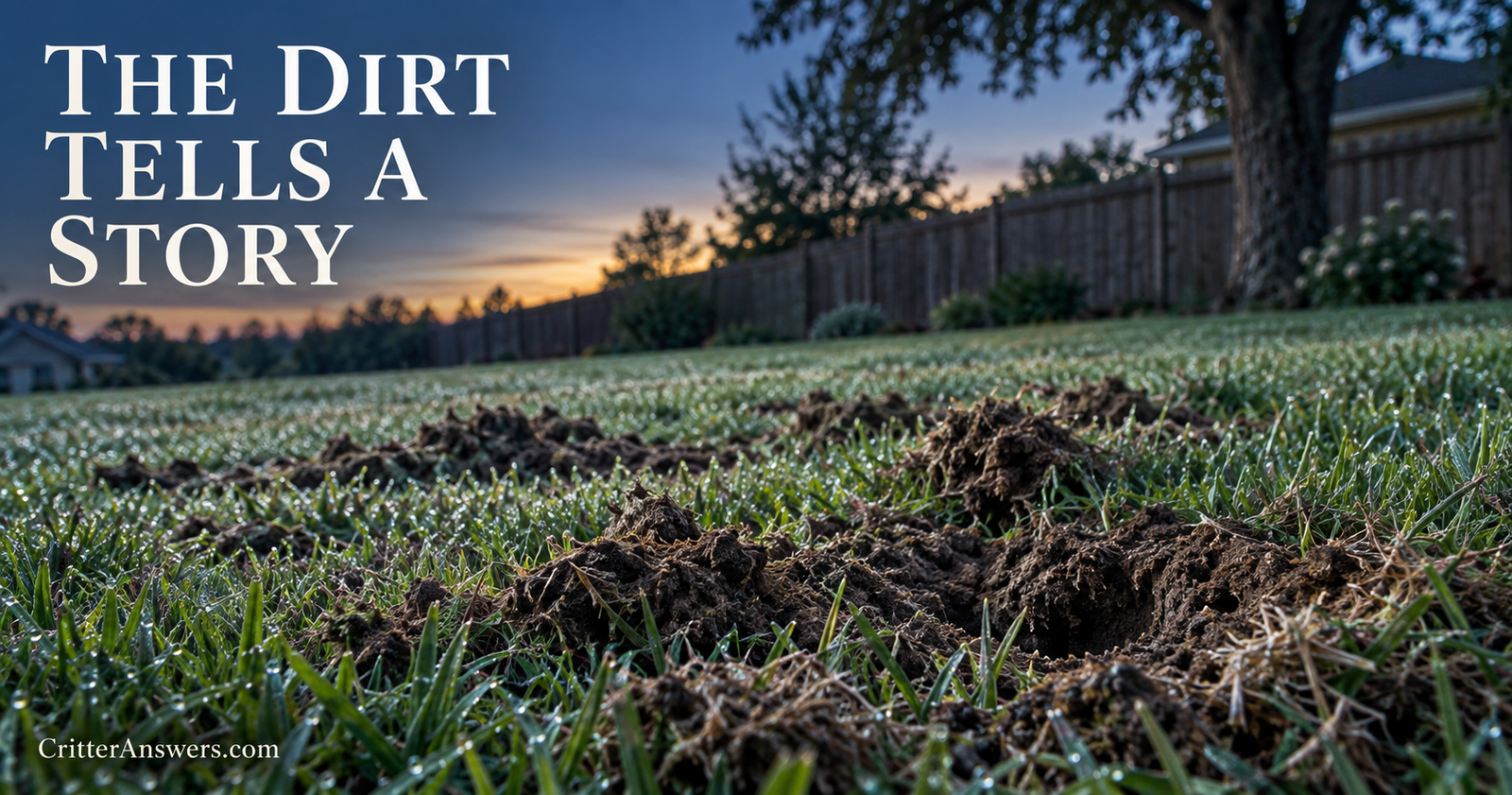
We’ve already covered what animal may be digging up your lawn at night, and this is a perfect example of two clues supporting each other.
Cone-shaped feeding holes throughout the lawn plus an active opening under the house make skunk considerably more interesting.
Look for Tracks at the Entrance
Soft dirt around a burrow is one of the best places to find tracks.
Don’t immediately stomp all over it.
Look first.
You may find footprints entering and leaving.
If the existing ground doesn’t preserve prints well, a thin layer of fine sand around the area can sometimes help reveal activity.
You’re not trying to bait the animal.
You’re simply creating a surface that records footprints.
A camera is even better.
Norway Rats Can Burrow Right Beside Buildings
Not every foundation burrow belongs to obvious wildlife.
Rats are important here.
Norway rats are strong burrowers and commonly establish burrows:
- Along foundations
- Under buildings
- Beneath concrete slabs
- Near garbage
- Under debris
- Around outdoor structures
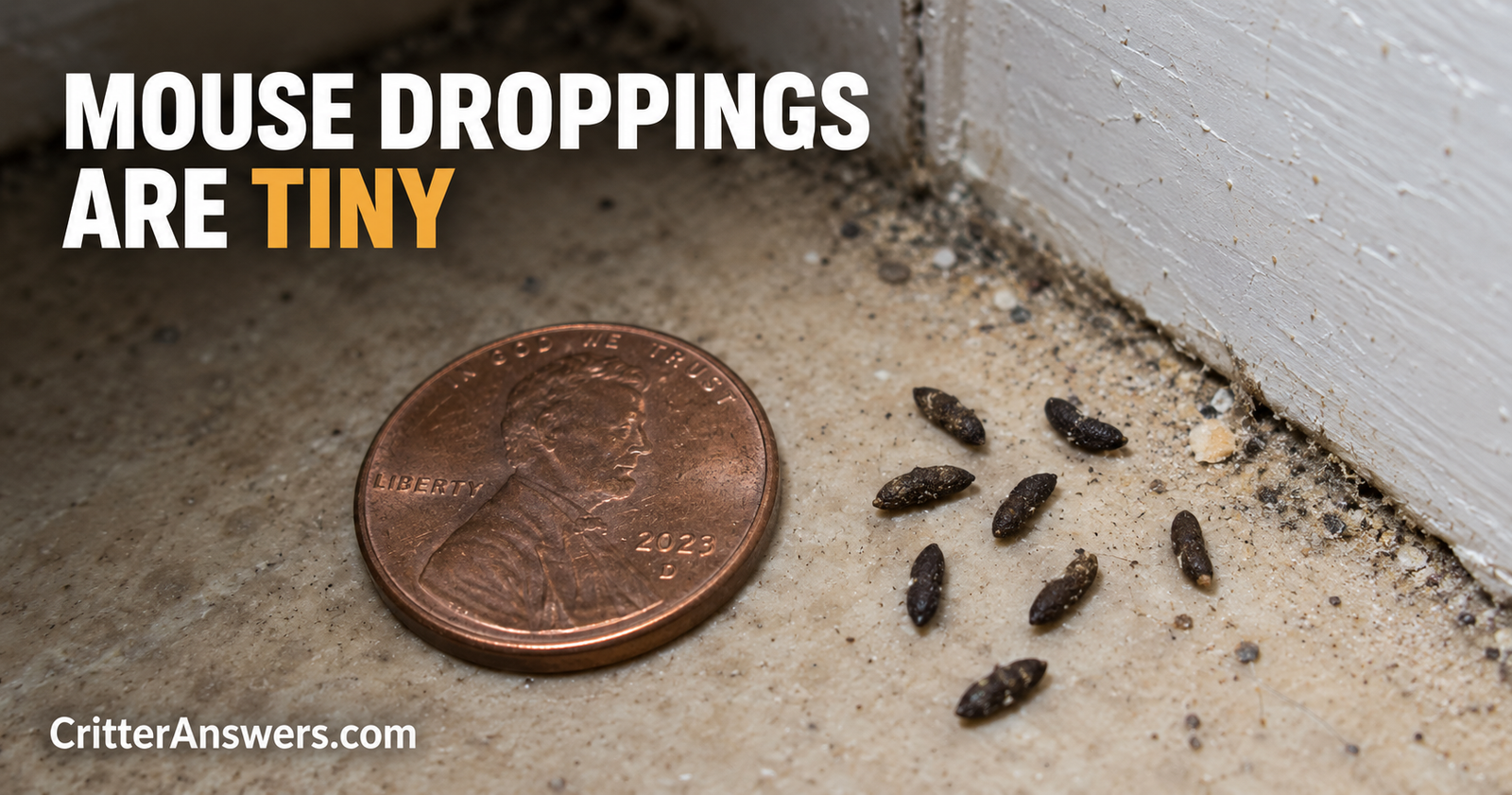
If the hole is much smaller than a groundhog burrow and you also find rat droppings, gnawing, greasy travel marks, or nighttime rodent activity, investigate rats. Comparing the waste itself with rat droppings, gnawing, greasy travel marks can help distinguish mouse evidence from the larger signs associated with rats.
Rat Burrows Usually Come With Other Rat Evidence
This is where I’d look beyond the opening.
Walk around the building.
Check for:
Droppings.
Gnawing.
Runways along walls.
Food sources.
Garbage.
Pet or livestock feed.
Burrows beneath stored material.
Noises inside the structure after dark.
Rats tend to use established travel routes.
A foundation burrow plus obvious rat signs nearby is much more meaningful than a mystery hole by itself.
A Rat Hole Near the Foundation Can Become an Indoor Problem
This is one reason I wouldn’t ignore rat evidence just because the animals currently appear to be outside.
A rat living against the house is already very close to everything it needs to investigate the structure.
Look for possible entry points around:
- Doors
- Utility penetrations
- Foundation gaps
- Vents
- Pipes
- Damaged siding
- Crawl-space openings
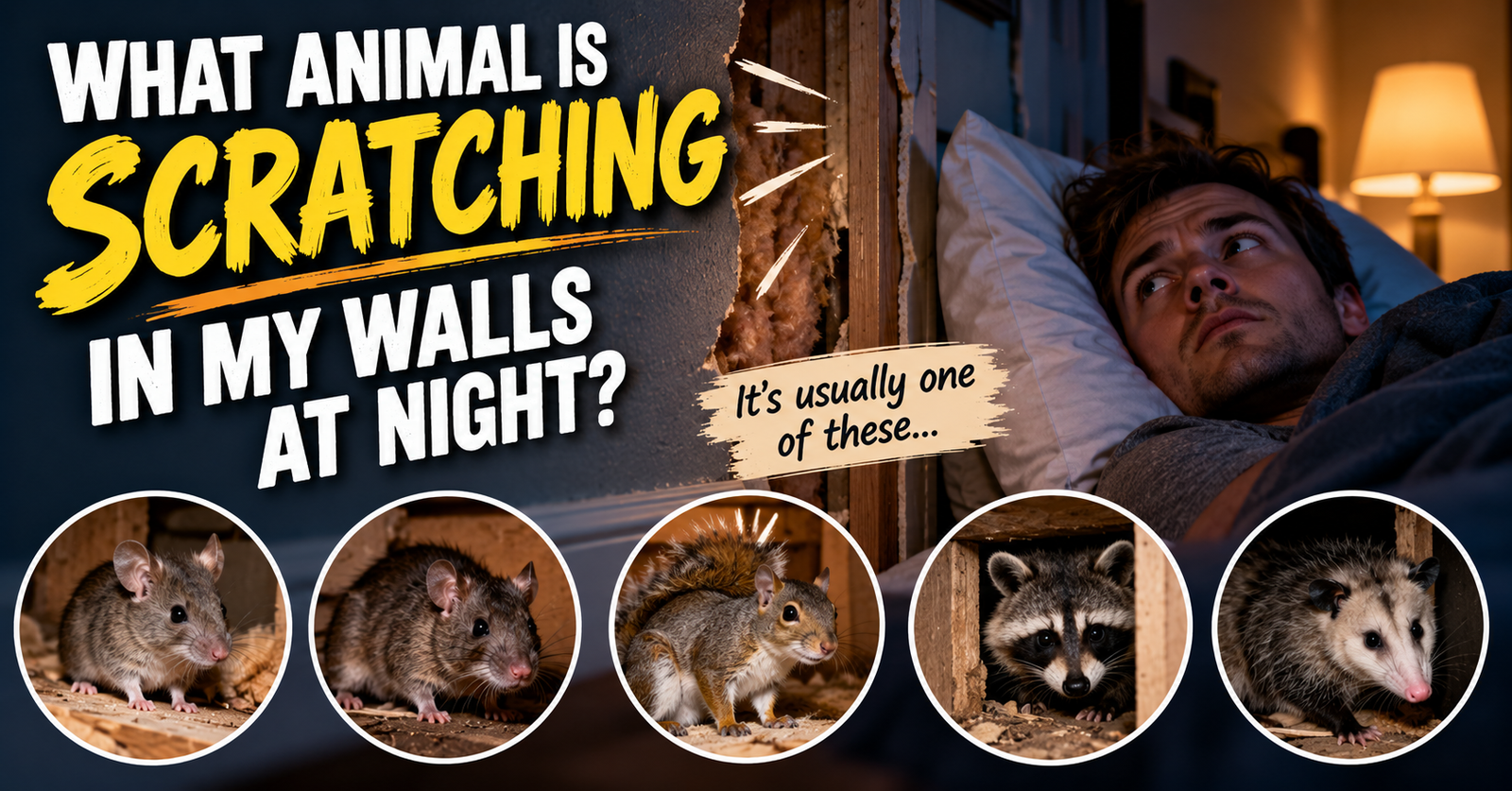
If you’re hearing activity inside too, our guide to identifying what animal is scratching in your walls at night can help connect the exterior and interior evidence.
This is also exactly the type of problem we’ll go much deeper into when we start our mouse and rodent clusters.
What About Opossums?
Opossums absolutely use sheltered spaces around homes.
But there’s an important nuance.
An opossum found beneath a house doesn’t necessarily mean an opossum excavated a substantial new burrow.
Existing crawl spaces and abandoned dens can provide shelter without the animal having to engineer an underground tunnel system from scratch.
So if a camera shows an opossum disappearing through a foundation opening, you’ve identified the current occupant.
You haven’t necessarily identified the original excavator.
That distinction matters when you’re interpreting the hole.
Raccoons Can Use Spaces Beneath Structures Too
Same basic idea.
Raccoons may use sheltered spaces beneath buildings when they can gain access.
But if I’m looking at a freshly excavated underground burrow, I wouldn’t automatically assume raccoon simply because a raccoon later appears there.
Look at the construction of the burrow.
Look at tracks.
Look at the opening size.
Look at the surrounding damage.
And use a camera if necessary.
Wildlife will happily reuse good shelter.
They don’t care who built it.
Could It Be an Armadillo?
Depending on where you live, yes.
Nine-banded armadillos are powerful diggers and construct burrows for shelter.
That makes them worth considering in regions where they’re established.
But again, separate their substantial shelter burrows from the many shallow feeding holes they can leave while searching for food.
If you’re seeing dozens of little divots across the lawn, that’s feeding activity.
If you’re seeing a larger opening disappearing beneath a protected structure, that’s a different clue.
Geography matters tremendously here.
If armadillos don’t occur where you live, don’t force them onto the suspect list because an online photo looks similar.
Could It Be a Snake?
This one needs an important correction.
People find a hole and then see a snake near it.
So they conclude:
The snake dug the hole.
Most snakes aren’t excavating elaborate mammal-style burrows beneath your foundation.
They commonly take advantage of existing holes and sheltered spaces.
So if you see a snake entering a hole beside the house, you may have learned what’s using the opening.
You haven’t necessarily learned what created it.
Rodent burrows are particularly attractive because they provide protected underground space.
And where rodents are present, snakes may also be following prey.
A Snake Using the Hole Can Point Back Toward Rodents
This is worth thinking about.
You see a snake disappear into a little foundation opening.
Your immediate thought is:
Snake problem.
Maybe.
But why is that hole there?
And what else is inside?
If rats, mice, chipmunks, or another small mammal created or regularly uses that space, a snake may simply be taking advantage of the shelter or food source.
Don’t stop your investigation at the most dramatic animal you happened to see.
Is It Actually Going Under the House?
Here’s another surprisingly common issue.
Perspective can fool you.
An opening right beside the foundation may look like it travels underneath the house when it actually turns and follows the foundation.
You don’t need to dig it open to find out.
Look for other entrances.
Watch animal movement.
Use a camera.
Check accessible crawl-space areas safely.
Don’t start excavating around your foundation merely to satisfy curiosity.
Check the Crawl Space if You Can Do It Safely
If you have an accessible crawl space, it may provide additional evidence.
But I’m not telling you to crawl blindly into a dark space with an unidentified wild animal.
From a safe accessible area, look for:
- Droppings
- Tracks
- Nesting material
- Disturbed insulation
- Digging
- Odor
- Gnawing
- Hair
- Trails
- Daylight through an opening
If the space is tight, unsafe, contaminated, or clearly occupied by larger wildlife, that’s a good point to stop and bring in a professional.
Droppings Can Narrow the Suspects Quickly
If you find feces near the entrance or in an accessible crawl space, pay attention to them.
Size and shape can help narrow the animal.
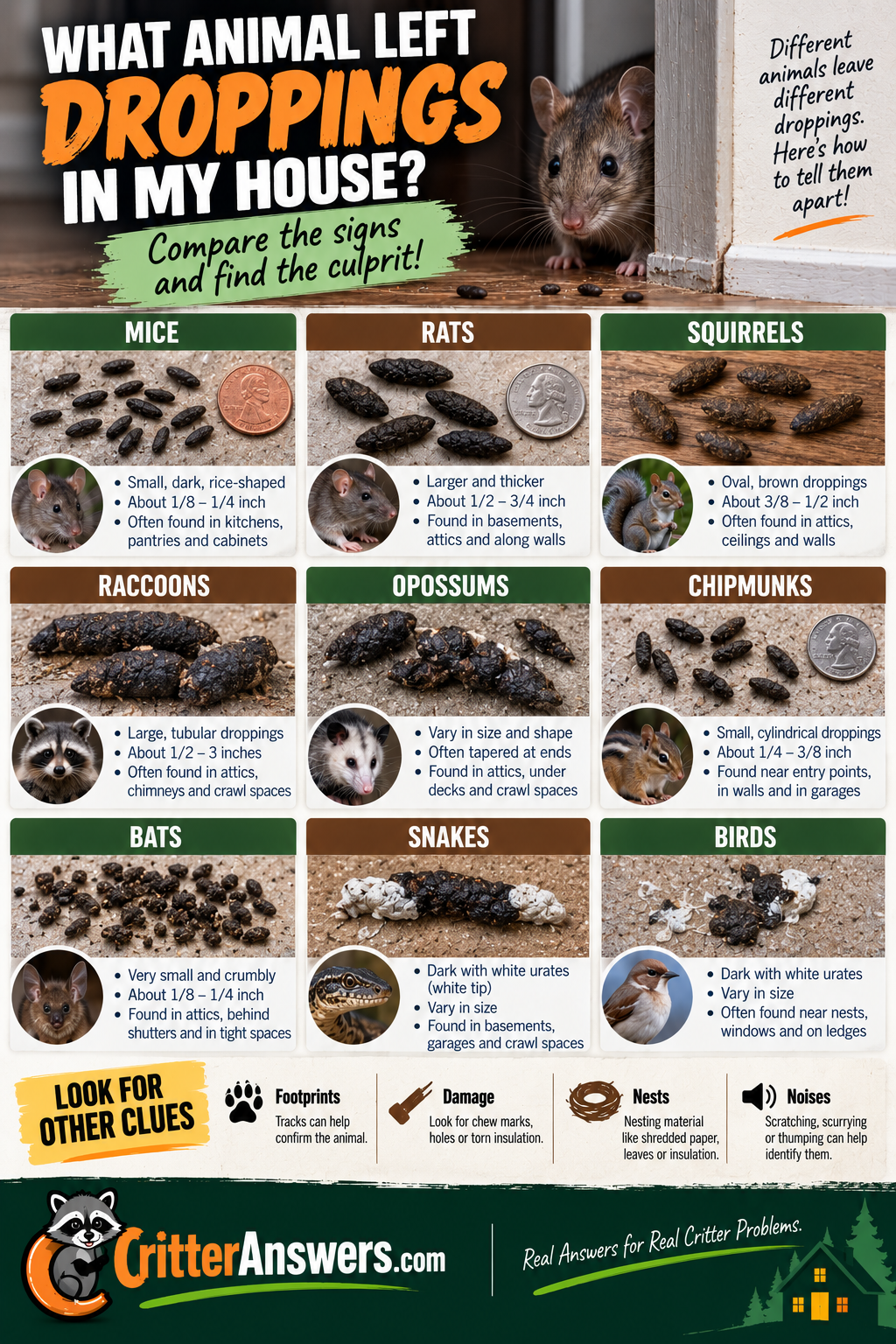
We’ve already built a complete guide to identifying what animal left droppings in your house.
Use the droppings together with the burrow.
A tiny entrance plus rodent droppings tells one story.
A large burrow plus groundhog sightings tells another.
An opening plus strong skunk odor tells another.
That’s how these identification articles are supposed to work together.
A Trail Camera Is Probably the Easiest Answer
For a mystery opening beneath the house, I’d seriously consider a wildlife camera.
Point it toward the entrance.
Don’t put food beside the hole.
You don’t need bait if something already lives there.
You want to record normal activity.
Over a couple of nights you may see:
8:14 p.m. — skunk leaves.
2:37 a.m. — skunk returns.
Or:
6:48 a.m. — chipmunk exits.
7:20 a.m. — chipmunk returns with food.
Or:
11:52 p.m. — rat enters.
Now you’re making decisions from evidence instead of hole-size guesses.
Watch When the Animal Appears
Timing helps.
Chipmunks are typically active during daylight, particularly morning and later afternoon.
Skunks are primarily nocturnal.
Norway rats are generally nocturnal.
Groundhogs are normally active during daylight.
So if you never see the animal, a camera timestamp becomes another clue.
Again, don’t use timing alone.
But combine it with hole size, tracks, dirt, and physical appearance and it becomes powerful.
Fresh Dirt Means Something Different From an Old Opening
Look at the soil.
Freshly excavated dirt tends to look different from soil that has sat through several rains.
If new dirt appears overnight, something may be actively enlarging or maintaining the burrow.
If the entrance looks old and weathered but animals still move through it, they may simply be using an established space.
Take pictures.
Compare them later.
You’ll quickly learn whether the opening is changing.
Mark the Hole Without Blocking It
If you’re uncertain whether an opening is active, don’t immediately fill it.
Instead, monitor it.
A camera is best.
Tracks are useful.
You can also observe whether loose natural material placed near the entrance gets disturbed without actually blocking or trapping an animal inside.
The goal is to establish activity.
Not to secretly seal the animal in.
Don’t Fill an Active Hole With Concrete
This is exactly the kind of reaction I want readers to avoid.
Hole under foundation?
Get concrete.
Not yet.
If an animal is inside, you may trap it beneath the house.
If dependent young are inside, you’ve created an even worse problem.
If there are multiple entrances, the animal may simply dig another way out.
And if you haven’t identified the cause, you may repair the wrong area.
Identify first. Exclude correctly. Then repair.
Don’t Stuff the Hole With Expanding Foam Either
Foam has its uses around appropriate building gaps.
It isn’t a universal wildlife burrow solution.
An animal may chew through it.
It may dig beside it.
And again, you risk trapping an animal inside if you don’t know whether the space is occupied.
Foundation-level wildlife exclusion usually requires something much more durable than spraying a blob into a mystery hole.
Be Especially Careful During Baby Season
A burrow can be a nursery.
Groundhogs raise young underground.
Skunks use dens for raising kits.
Chipmunks have nesting chambers in their burrow systems.
Other animals using the space may have dependent young too.
That means a mother leaving the hole does not prove the burrow is empty.
If you’re considering exclusion, make sure you aren’t separating an adult from young that cannot leave. For the broader reasoning behind careful exclusion, see Critter Answers’ exclusion and animal-welfare principles.
This is one of the biggest reasons I dislike immediate hole-filling.
Could Digging Damage My Foundation?
Potentially, but don’t assume every chipmunk hole means your house is about to collapse.
The risk depends on the animal, extent of excavation, soil, foundation type, drainage, and exactly where the burrow runs.
A substantial groundhog burrow is very different from a single small opening.
Repeated tunneling beneath slabs, steps, retaining walls, patios, or structural areas can cause problems.
If you see:
- Soil washing away
- A slab settling
- New cracking
- Voids beneath concrete
- Foundation movement
- Significant erosion
- Large or extensive burrows directly beneath structural elements
I’d involve an appropriate foundation or structural professional rather than trying to diagnose structural damage from the animal hole alone.
Sometimes Water Is Part of the Problem
Not every void beside a foundation starts with wildlife.
Poor drainage can erode soil and create gaps.
Then an animal may enlarge or occupy them.
Look at where downspouts discharge.
Look for washouts.
Check whether soil slopes toward the house.
Notice whether the opening appeared after heavy rain.
If water is removing soil beneath a slab or foundation edge, wildlife control alone won’t fix the underlying problem.
That’s a home-maintenance issue too.
Why Does the Animal Want to Live Under My House?
Because from an animal’s perspective, it can be excellent real estate.
It’s protected.
It’s shaded.
It’s hidden from predators.
It may stay relatively dry.
And your property may provide food nearby.
Look around for:
- Bird seed
- Pet food
- Garbage
- Livestock or chicken feed
- Fallen fruit
- Gardens
- Insects
- Rodents
- Dense vegetation
- Brush piles
- Wood piles
An animal may have both shelter and dinner within a few yards.
That’s a pretty good deal.
Remove Food Sources Along With Fixing the Hole
Once you’ve identified and appropriately excluded the animal, look at why it was comfortable there.
If rats are living beneath the house because chicken feed spills nearby, repairing the hole without fixing the feed problem leaves the attraction.
If skunks have abundant rodents and insects around an outbuilding, that’s worth addressing.
If chipmunks have dense cover, rock piles, and spilled bird seed beside the foundation, you’re giving them excellent habitat.
Exclusion works better when the property becomes less rewarding too.
What If the Hole Is Actually an Entry Into the House?
That’s another important distinction.
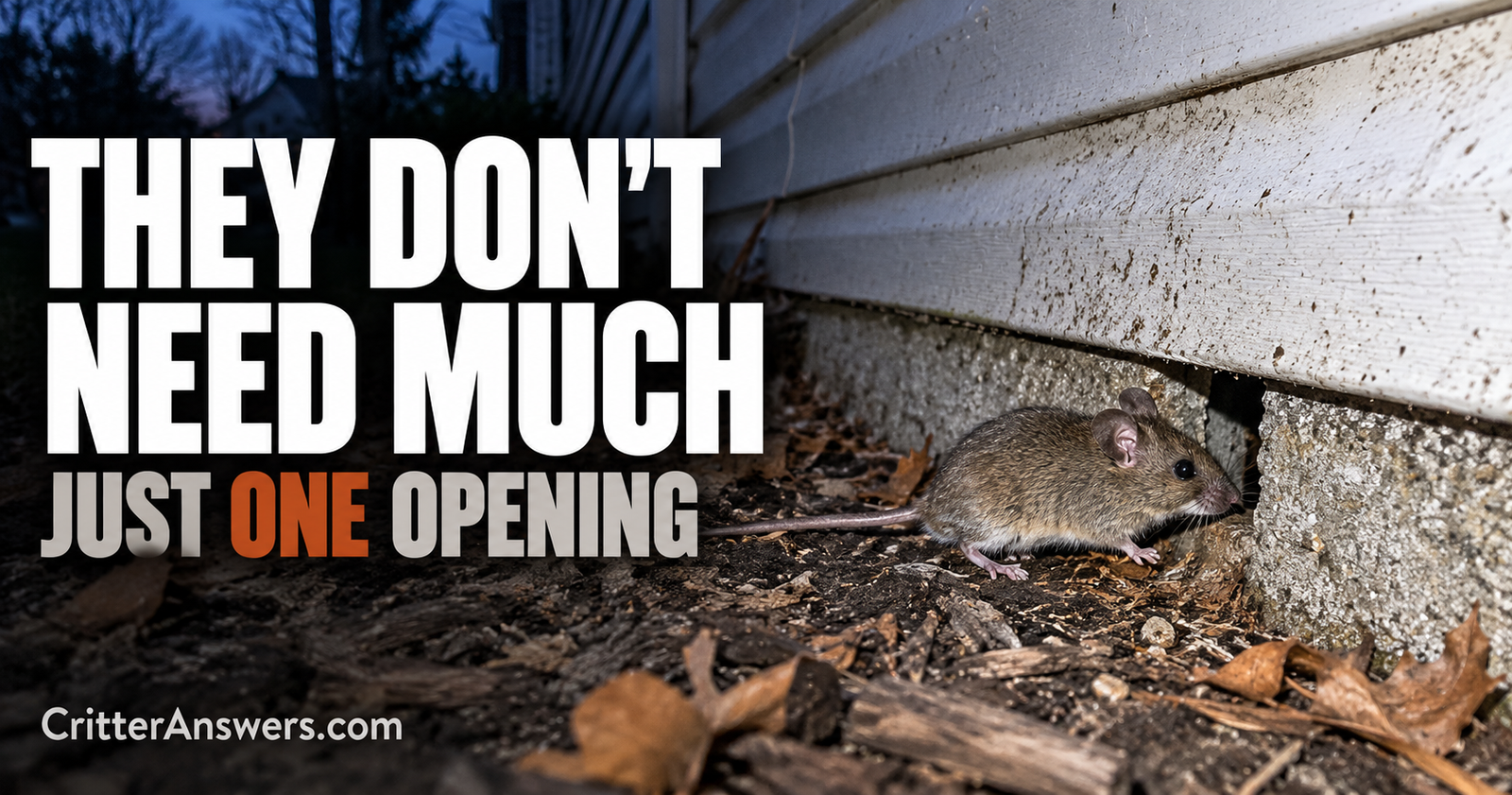
An underground burrow beneath the foundation and a gap that leads directly into the crawl space aren’t necessarily the same thing. If the opening may connect to the structure, inspect gaps that lead into the crawl space and nearby foundation transitions before sealing anything.
If you suspect the animal is moving from outside into the structure, use our guide to finding where an animal is getting into your house to inspect the rest of the building.
You may have both:
A burrow.
And an actual structural entry point.
Fixing only one can leave the problem half solved.
Should I Trap Whatever Is Under the House?
Not until you know what it is.
We’ve spent several articles reinforcing this because it’s important.
The right approach for a chipmunk isn’t automatically the right approach for a skunk.
A rat problem isn’t a groundhog problem.
A snake using an old rodent hole isn’t solved by pretending the snake excavated it.
And wildlife regulations vary by species and location.
Identify first.
Then choose the appropriate legal management method.
If Live Trapping Is Appropriate, Plan Ahead
If you’ve positively identified an animal for which live trapping is an appropriate and legal option, don’t set the cage until you know what happens after capture.
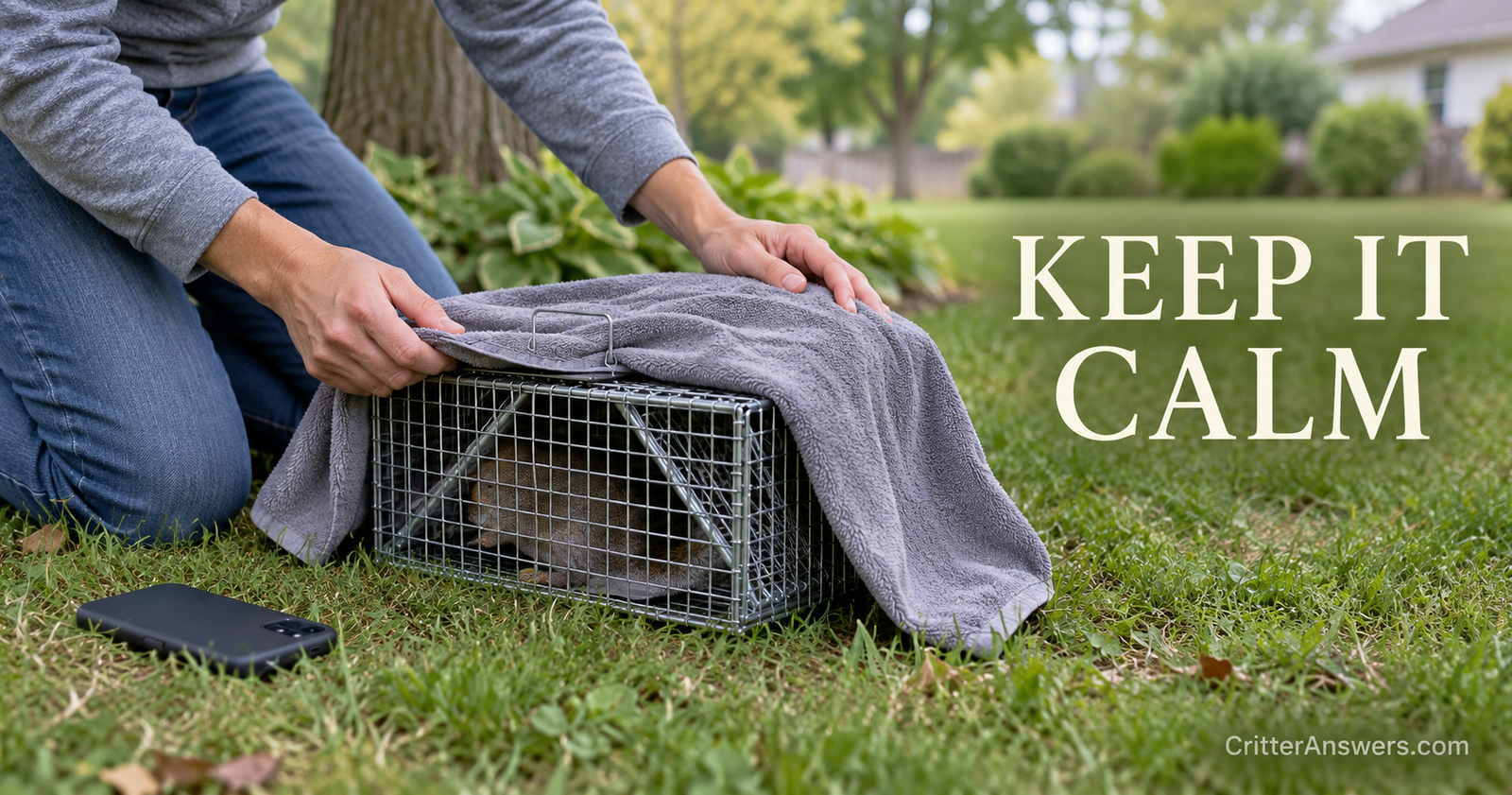
We’ve already covered what to do after catching an animal in a live trap.
Read that before the door closes.
The worst time to research wildlife regulations, dependent young, handling, and relocation rules is while a frightened animal is already sitting inside your cage. The site's guidance on handling trapped wildlife brings those legal and safety considerations together before trapping begins.
Exclusion Is What Prevents the Next Animal
Removing one animal doesn’t repair the opportunity.
Once you’re confident the space is empty and exclusion is appropriate, close the access with durable materials suited to the species and structure.
For example, skunk exclusion commonly uses buried sturdy wire mesh because simply blocking the visible opening above ground may allow the animal to dig underneath again.
Small rodents require much tighter exclusion.
That’s why identifying the species first matters even when the ultimate goal is simply:
Keep animals out.
Different animals defeat different barriers.
Check More Than the One Obvious Hole
Before declaring victory, walk the entire foundation.
Look behind:
- Shrubs
- Steps
- Decks
- HVAC equipment
- Utility penetrations
- Stored materials
- Downspouts
- Porches
A burrowing animal may have more than one entrance.
A building may also have several vulnerable openings.
Closing one hole while leaving another ten feet away isn’t much of an exclusion project.
My Under-the-House Hole Cheat Sheet
Here’s how I’d start reading the evidence.
Small neat opening around 2 to 3 inches with little or no excavated dirt:
Chipmunk moves high on the list.
Small burrow near foundation plus droppings, gnawing and nighttime activity:
Investigate Norway rats.
Larger opening plus skunk odor, nighttime activity or skunk tracks:
Investigate skunk.
Large burrow approaching groundhog size with substantial excavated soil and possibly multiple entrances:
Groundhog becomes a strong suspect.
Large opening currently used by an opossum or raccoon:
You may know the occupant without knowing who originally excavated the space.
Snake disappearing into an existing hole:
Don’t automatically credit the snake with digging the burrow.
Void beside foundation appearing with erosion or drainage problems:
Investigate water and soil movement in addition to wildlife.
And if the evidence doesn’t fit?
Put up a camera.
Don’t Fix the Hole Until You Understand the Hole
That’s the part I’d remember.
The opening beside your house is only the visible clue.
You still need to figure out:
How large is it?
Is it active?
What animal is using it?
Did that animal actually dig it?
Are there young inside?
Does it lead beneath the foundation or directly into the crawl space?
Is water contributing to the void?
Are there other entrances?
Once you know those answers, the solution gets much easier.
A neat little chipmunk burrow doesn’t require the same thinking as a groundhog tunnel.
A rat burrow beside a garbage area doesn’t tell the same story as a skunk den beneath the house.
And an opossum walking through an old opening may not have excavated anything at all.
So resist the urge to grab a shovel and immediately make the hole disappear.
Read the hole first.
Because when the opening is directly beneath your house, figuring out what made it — and what’s still inside it — matters a lot more than simply covering it up.
About the author: Nolan Mercer researches the holes, tracks, droppings, sounds, nests, and other clues wildlife leaves around homes and yards. At Critter Answers, he focuses on helping homeowners identify the animal behind the problem before deciding how to remove or exclude it.