
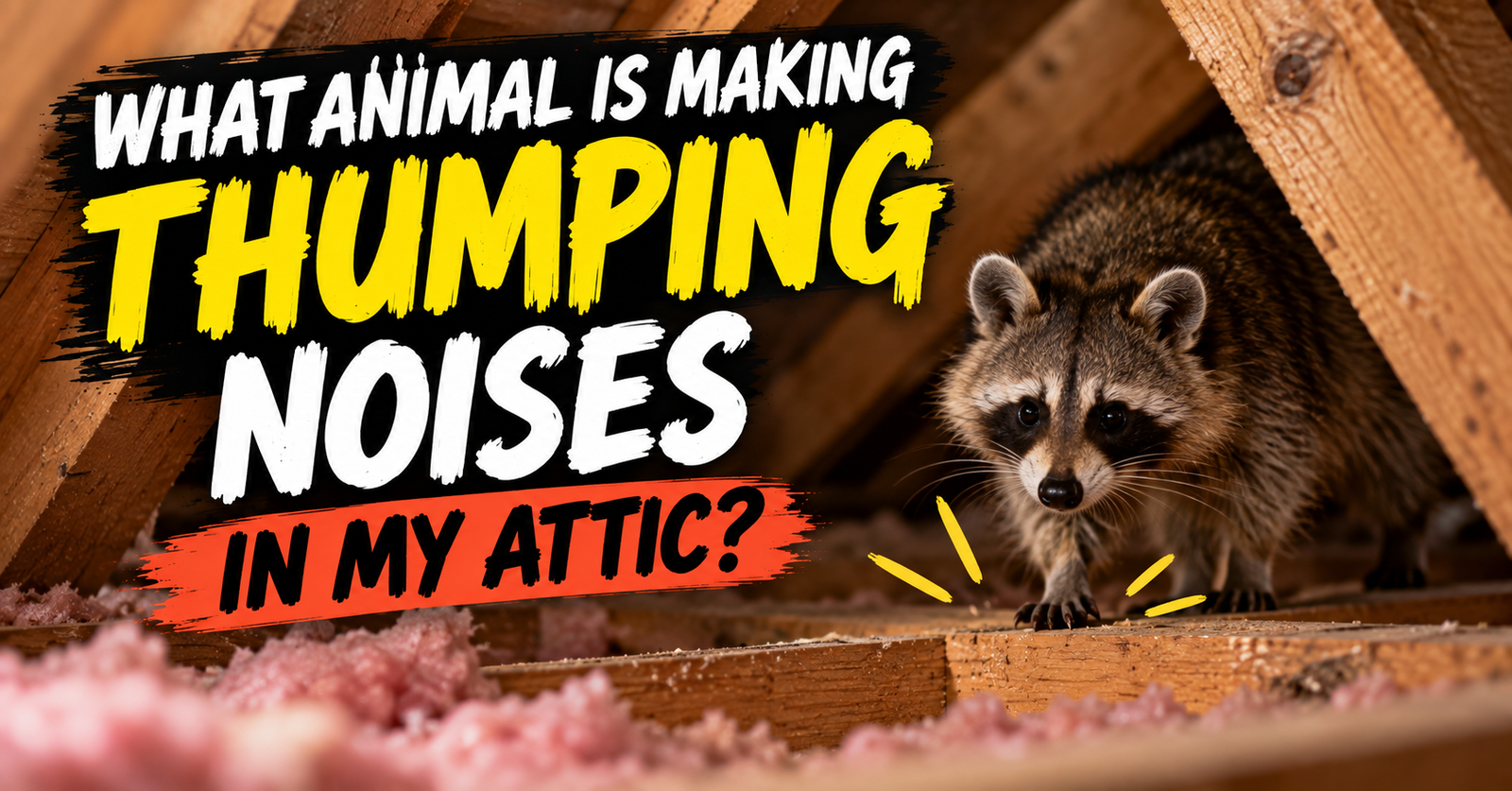
A heavy thump from the attic is different from hearing a little scratching in the wall. When it sounds like something just dropped a bowling ball over your bedroom, it’s pretty hard to ignore.
Raccoons and opossums are two animals I’d consider early when the noise really sounds like heavy walking or thumping. Squirrels can make surprisingly loud attic noises too, and even smaller animals can sound much bigger when they’re directly above the ceiling. For similar wildlife questions outside the attic, raccoons and opossums as possibilities uses entrance size, activity time, and other evidence to separate likely species.
So I wouldn’t identify the animal based on volume alone.
I want to know when the thumping happens, how it moves, whether there are other sounds, and what physical evidence the animal is leaving behind.
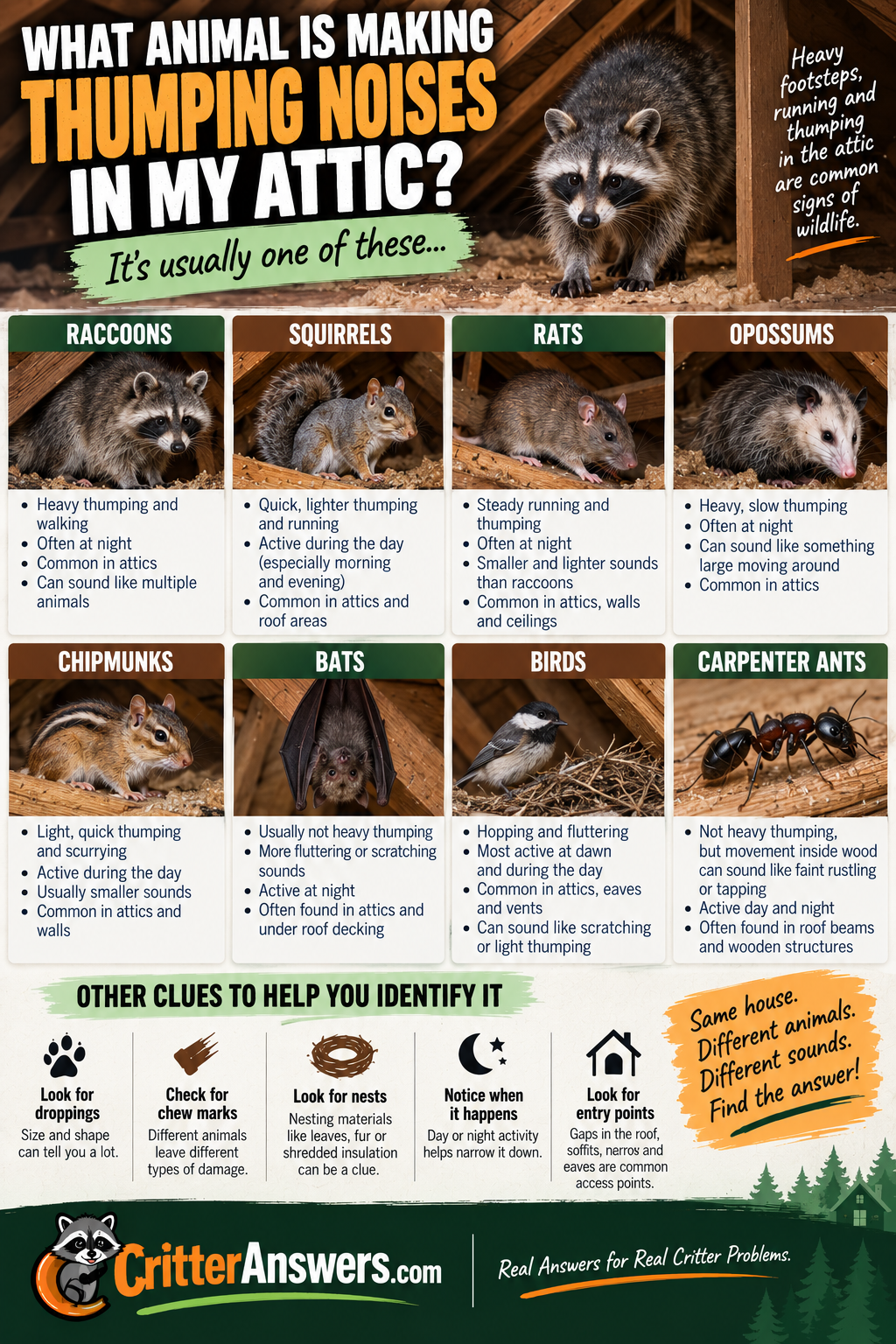
Heavy Thumping Is Different From Fast Scampering
The first thing I’d figure out is what you actually mean by “thumping.”
Fast footsteps racing from one end of the attic to another aren’t quite the same thing.
Neither is light scratching in one spot.
I’m thinking more along the lines of:
- Slow footsteps overhead
- Individual heavy bumps
- A thud followed by movement
- Shuffling through insulation
- Something that sounds like it’s dragging or moving material
- A heavy landing followed by footsteps
- Repeated movement that sounds substantial
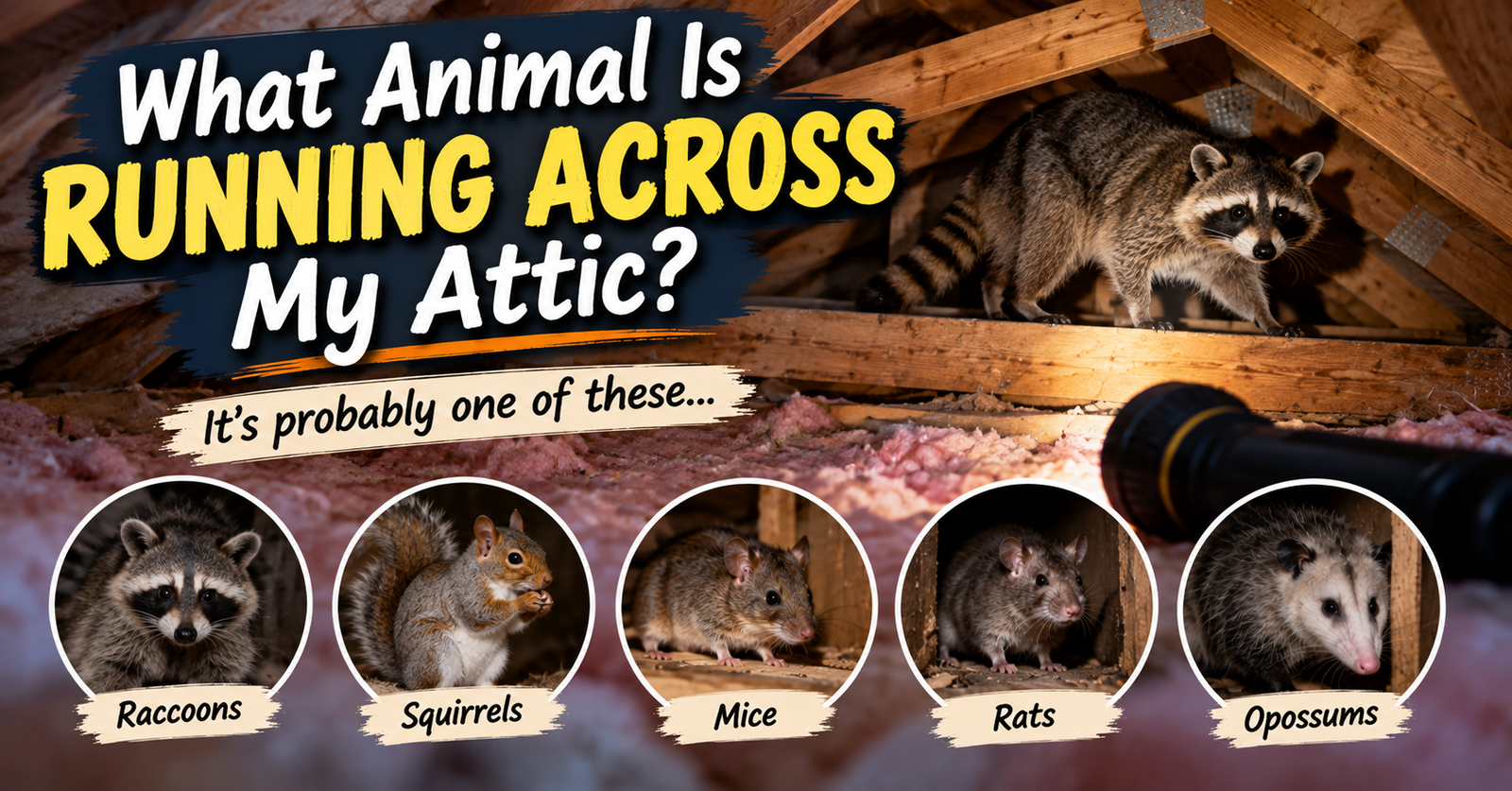
If instead you’re hearing something sprinting across the ceiling, I’ve covered that separately in my guide to figuring out what animal is running across your attic.
With true heavy thumping, I start thinking about larger wildlife.
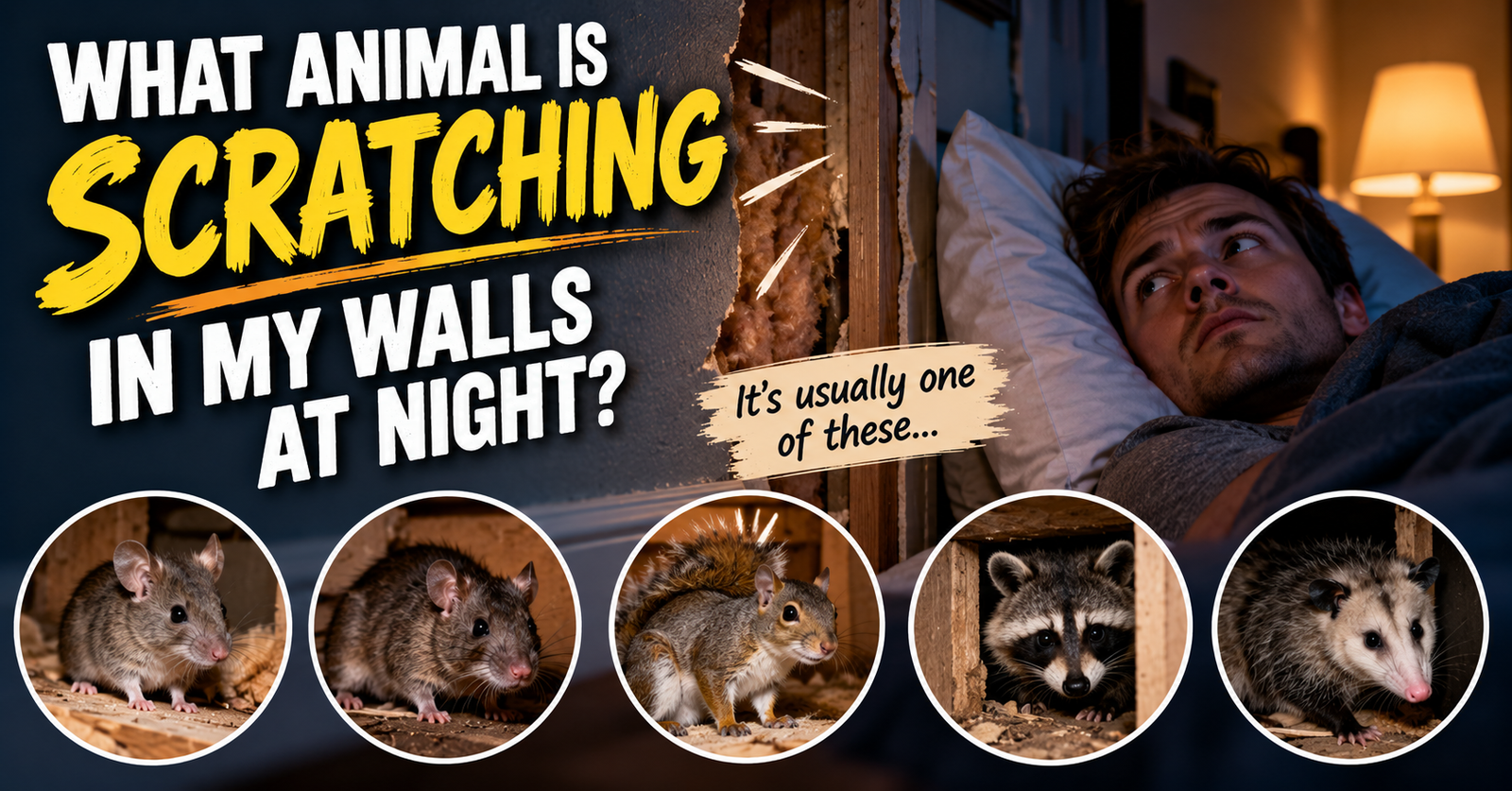
Raccoons Are High on My List for Heavy Attic Noises
If the activity is heavy and mostly happens after dark, raccoons deserve serious consideration.
A raccoon is substantially larger than the mice, rats, and squirrels that commonly enter houses. When one moves across framing, shifts around in insulation, or climbs through an opening, you may hear real footsteps and thumps rather than faint scratching.
Raccoons are primarily nocturnal, so nighttime activity fits too.
But the sound isn’t the only evidence I want.
Look for other clues that support the raccoon theory:
- Damage around soffits or fascia
- A damaged attic vent
- A substantial roofline opening
- Disturbed insulation
- Larger tracks
- Larger droppings
- Concentrated areas of waste
- Scratching or claw marks
- Growling, whining, chittering, or other vocal sounds
Raccoons can damage shingles, fascia, vents, and other materials while gaining access to an attic.
If you have heavy nighttime thumping plus obvious roofline damage, the evidence becomes much more convincing.
Opossums Can Get Into Attics Too
Opossums don’t get blamed for attic noises nearly as quickly as raccoons, but they shouldn’t be forgotten.
They can enter attics and other sheltered portions of buildings when access is available.
An opossum moving around overhead may produce heavier, slower movement than you’d expect from mice or squirrels.
Again, the clock helps.
Opossums are primarily active at night.
So if you’re hearing slow, substantial movement after dark, an opossum belongs on the list along with raccoons.
What I wouldn’t do is try to separate those two animals solely by deciding:
“That sounded more raccoon-ish.”
We need better evidence than that.
Could a Squirrel Really Make a Thumping Noise?
Absolutely.
This is where attic acoustics make things confusing.
A squirrel is much smaller than a raccoon, but that doesn’t mean every noise it makes is quiet.
Imagine a squirrel jumping from one piece of framing onto another directly above drywall. You may hear a distinct bump or thud.
Then it runs.
That pattern is useful.
Thump followed by rapid scampering during daylight makes me think differently than slow heavy footsteps moving around after midnight.
Common tree squirrels are generally active during the day, which gives us another clue.
If the activity repeatedly occurs in the morning or afternoon and includes fast running, squirrels move higher on my list.
What About Mice and Rats?
I wouldn’t completely eliminate rodents just because something sounds big.
This is especially true with rats.
Rats can produce surprisingly noticeable movement inside a quiet structure, and mice can sound absurdly loud when they’re directly against the ceiling below you.
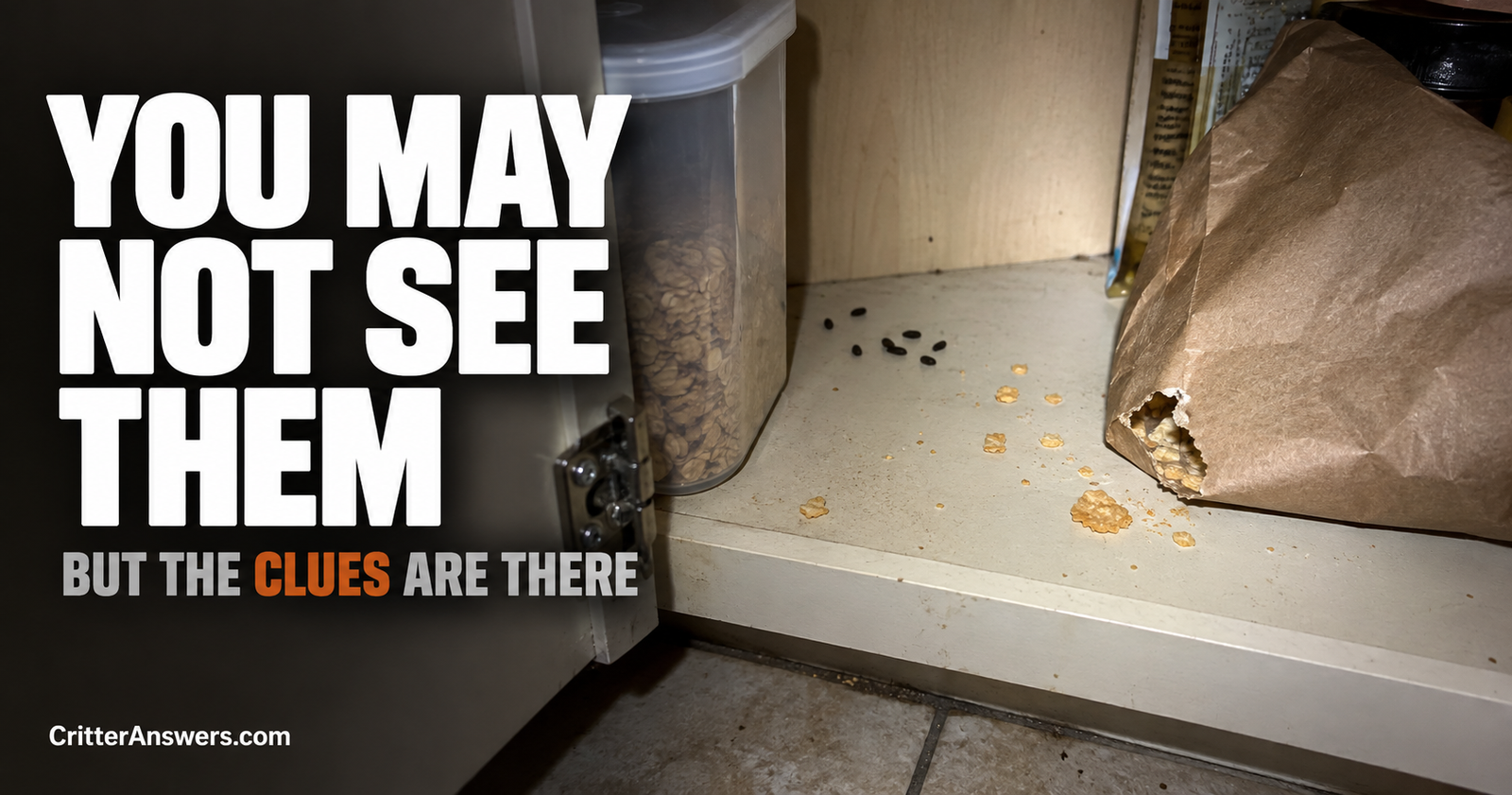
But their activity tends to be described more often as:
- Scratching
- Scurrying
- Gnawing
- Light running
- Repetitive movement
rather than slow, heavy footsteps.
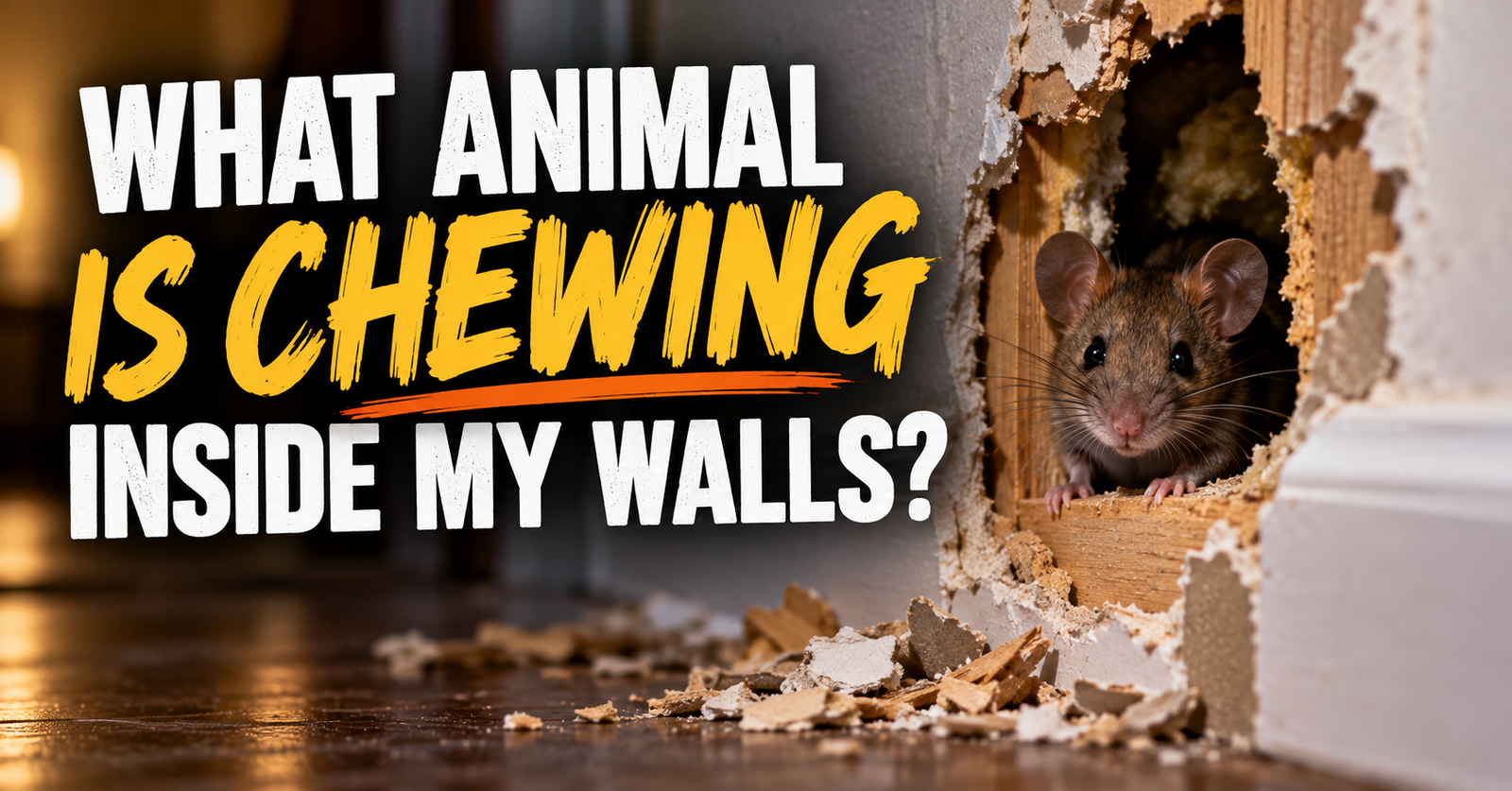
If you’re hearing chewing along with the movement, my guide to animals chewing inside walls covers mice, rats, squirrels, and the evidence that helps separate them.
Don’t rule rodents out because of volume alone, but don’t let them distract you from evidence pointing toward something larger either.
The Time of Night Can Tell You Quite a Bit
Start writing down when you hear the noise.
You don’t need anything complicated.
Just note the time on your phone.
Heavy activity shortly after dark
Raccoons and opossums become more interesting.
An animal using your attic as shelter may begin moving around as it prepares to leave for the night.
Activity in the middle of the night
Nocturnal animals remain high on the list.
Mice and rats are possibilities too, particularly if the heavy noise is mixed with lighter scurrying or gnawing.
Activity just before daylight
You may be hearing a nocturnal animal returning to a den or resting area.
Thumping in the middle of the day
Now I wouldn’t automatically blame a raccoon.
Daytime squirrel activity becomes more interesting, and I’d also start questioning whether the noise is actually wildlife.
The pattern over several days is far more useful than one thump at 2 a.m.
Don’t Forget That Houses Make Their Own Thumping Noises
Not every bump above your ceiling has feet.
This is an easy rabbit hole to fall into once you become convinced there’s an animal upstairs.
You hear one thump.
Then you listen for everything.
Suddenly every pop, crack, and bump in the house sounds alive.
HVAC ductwork can expand and contract. Plumbing can move. Wood framing can make noises as temperatures change. Wind can move loose exterior materials. Branches can strike a roof.
I pay particular attention to consistency.
If the thump occurs every time the HVAC system starts, I become suspicious of the HVAC system.
If it only happens during strong wind, check outside.
If the sound changes locations and is followed by footsteps, scratching, or vocalizations, wildlife becomes more plausible.
Listen for Vocal Sounds
This can be a valuable additional clue with raccoons.
Raccoons don’t just walk around.
They can growl, whine, chatter, squeal, and make other vocalizations. Young raccoons can be particularly noisy.
If you’re hearing heavy movement plus obvious animal vocalizations, that’s much more useful than the thumping alone. For a vocalization that sounds more like a chirp than a thump, animal vocalizations offers a more targeted way to narrow the possibilities.
It can also raise the possibility that you’re dealing with a mother and young rather than one animal wandering through. When that is possible, determining whether an attic nest is active is an important step before blocking an opening or removing materials.
That matters before you start thinking about sealing anything.

Baby Animals Can Change the Sounds Completely
An attic can become a den.
That’s one reason I don’t recommend finding a hole and immediately closing it.
A mother may be leaving the structure to find food while dependent young remain behind.
The young may scratch, chirp, whine, move around, or stay relatively quiet for stretches of time.
You may only see one adult outside and assume there’s only one animal involved.
That’s not necessarily true.
If the activity suddenly includes vocalizations or seems concentrated around one nesting area, I become more cautious about the possibility of young.
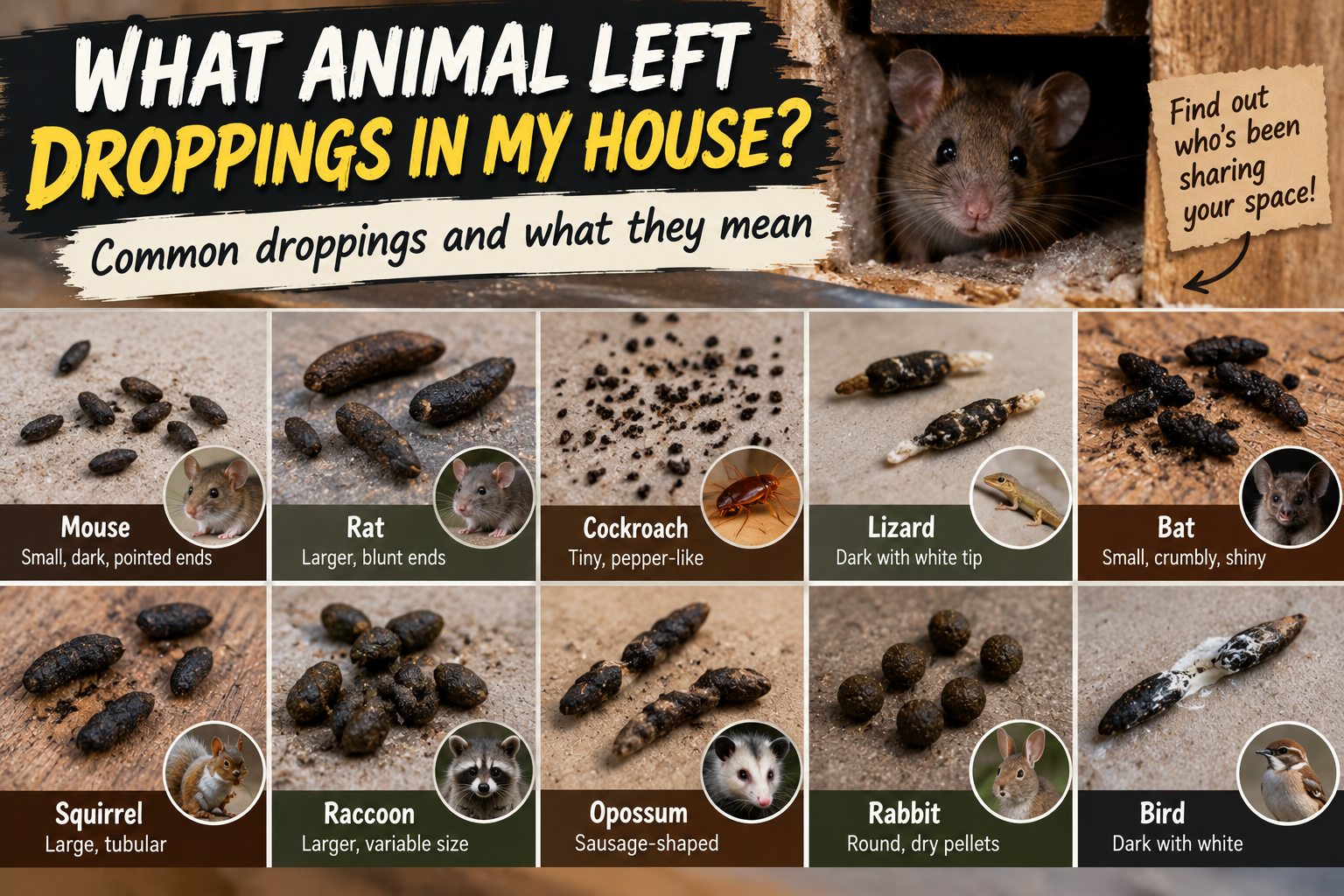
Check for Droppings Without Disturbing Them
Droppings are another way to test your theory.
If you can safely inspect an accessible part of the attic without approaching the animal or crawling across exposed joists, look for waste.
The size, shape, quantity, and location can help narrow the possibilities.
Raccoons may repeatedly deposit waste in particular locations, creating what are known as latrines.
Small scattered droppings would point the investigation in a very different direction.
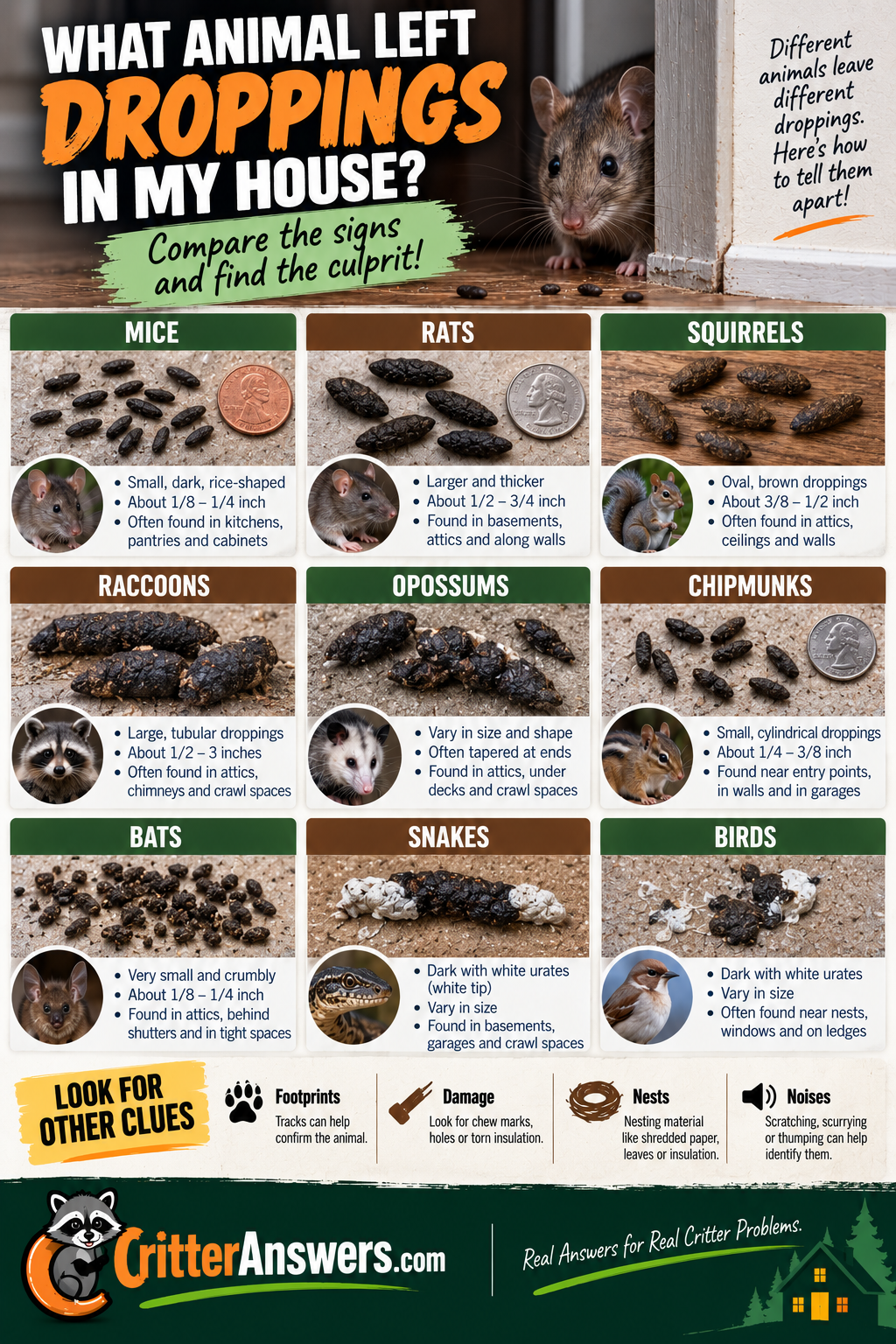
If you find waste and aren’t sure what you’re looking at, my guide to identifying animal droppings inside your houseexplains how I use size, shape, location, quantity, and surrounding evidence together.
Don’t handle mystery droppings with bare hands just to get a closer look.
Look at the Insulation
Attic insulation can tell a story.
A mouse-sized animal traveling through insulation won’t necessarily leave the same disturbance as a raccoon repeatedly using an area.
From a safe location, look for:
- Flattened insulation
- Obvious travel paths
- Large disturbed areas
- Nesting material
- Droppings
- Tracks
- Areas that appear repeatedly used
A large flattened resting area combined with heavy nighttime movement is more meaningful than either clue alone.
Don’t wander across an unfinished attic trying to follow tracks.
If there isn’t a safe walkway, stay out.
Drywall isn’t designed to support you, and falling through your ceiling would be an impressively bad way to confirm that something lives upstairs.
Look for Tracks
Dusty attic surfaces sometimes preserve tracks.
If you find clear ones, photograph them before walking through them.
Raccoon tracks are particularly distinctive because their long toes can make the prints look surprisingly hand-like.
Opossum tracks are different, especially the hind foot, which has an opposable toe.
But you don’t need to become an expert tracker overnight.
A clear photograph with something nearby for scale can be extremely helpful.
Tracks can also tell you where the animal is traveling.
Follow their general direction visually and you may find the area where it enters.
Inspect the Outside During Daylight
I would rather spend time investigating outside than chase a mystery animal through an attic.
Walk around the house when you can see clearly.
From the ground, look at:
- Soffits
- Fascia
- Attic vents
- Gable vents
- Roof edges
- Chimneys
- Damaged screens
- Loose exterior materials
- Areas where shingles appear disturbed
- Tree limbs providing roof access
You’re looking for something that doesn’t belong.
A bent vent, torn soffit, displaced material, obvious gap, or damaged fascia can be a major clue.
Raccoons are strong enough to exploit and enlarge vulnerable areas around roofs and attics.
A large damaged entrance also makes a mouse considerably less convincing as the explanation for your heavy footsteps.
Don’t Climb Onto the Roof Just to Investigate
You can do quite a bit from the ground.
Use binoculars or your phone’s camera zoom to inspect areas you can’t see well.
If the suspected entry point is high, steep, wet, icy, or otherwise difficult to reach, don’t turn wildlife identification into a roofing accident.
Photograph what you can.
A professional can inspect inaccessible areas if necessary.
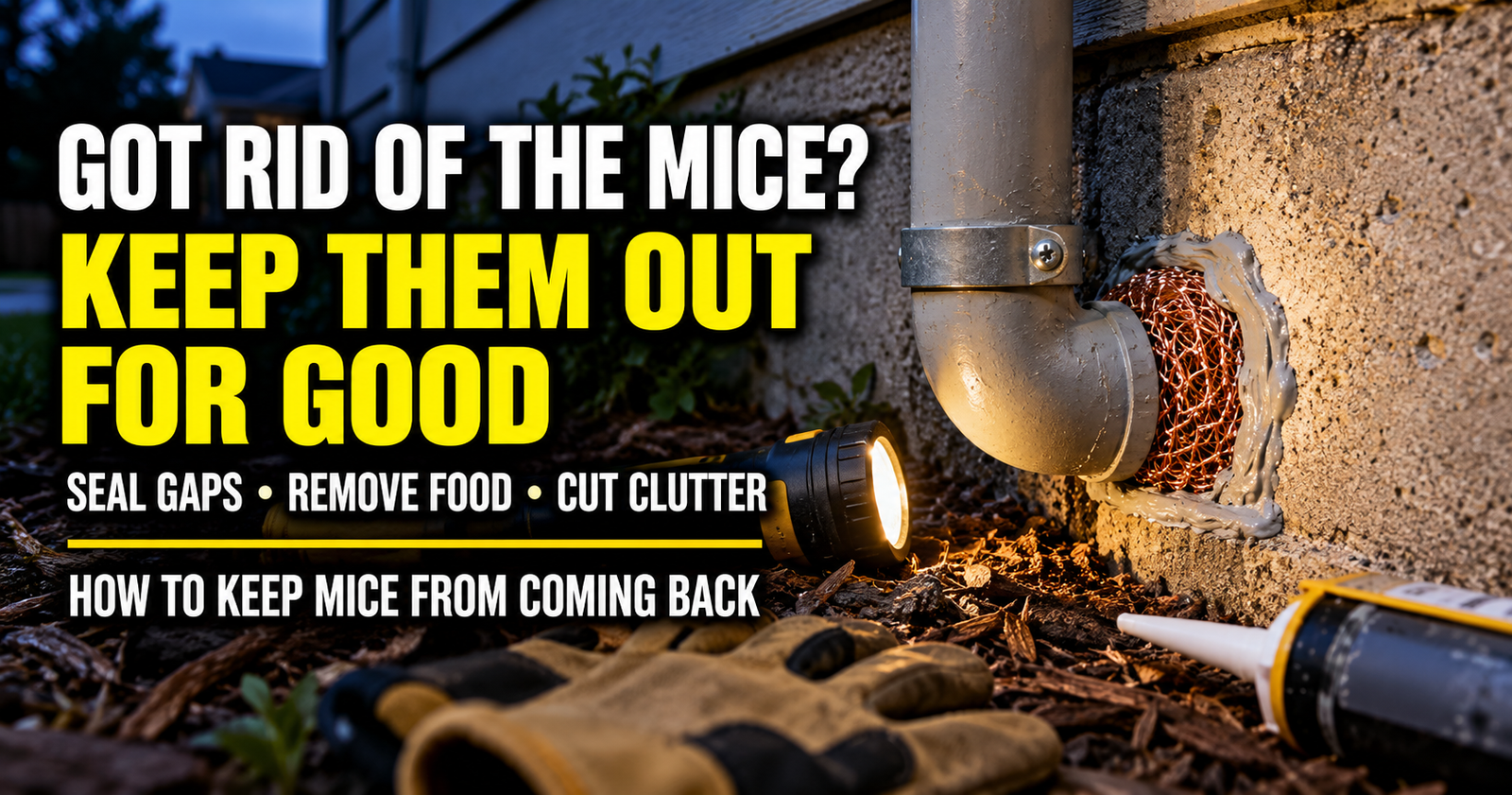
Don’t Seal the Hole the Moment You Find It
Finding an opening feels like solving the problem.
Not quite.
You still need to know what’s using it.
If you permanently seal an active entrance while the animal is inside, you can trap it.
If a mother is outside and dependent young remain in the attic, you can separate them.
Either situation can make the problem worse.
An animal trapped inside may desperately search for another exit, potentially creating additional damage.
Identification comes before permanent exclusion.
A Trail Camera Can Settle the Argument
If the clues still don’t agree, a camera can be incredibly useful.
You may not even need to put it inside the attic.
If you’ve identified a likely exterior route, a motion-activated camera aimed at that area can show what’s entering and leaving.
This is particularly useful when you’re trying to decide between raccoons and opossums.
Instead of another night of:
“That definitely sounded like a raccoon.”
“No, I think it was a possum.”
you can actually see your tenant.
Wildlife guidance commonly recommends cameras as an identification tool when the animal itself isn’t easily observed.
What If the Thump Only Happens Once?
One isolated thump isn’t enough for me to declare an infestation.
Something could have landed on the roof.
A branch could have fallen.
The building could have shifted or popped.
An animal could have crossed the roof without entering the attic.
I become much more interested when the noise repeats.
Especially when it:
- Happens at similar times
- Moves across the attic
- Includes footsteps
- Includes scratching
- Includes vocalizations
- Is accompanied by droppings
- Comes with disturbed insulation
- Matches visible exterior damage
Patterns turn a weird noise into evidence.
Why Sound Alone Isn’t Enough
This is important because the whole article starts with a sound.
You generally can’t identify attic wildlife with certainty from noise alone.
Insulation changes sound. Drywall changes sound. Wood framing transmits vibration. Your location in the house changes what you hear.
A smaller animal close to the ceiling can sound louder than a larger animal farther away.
That’s why I keep coming back to the same method:
sound + timing + droppings + tracks + damage + entry point.
When those clues start agreeing, the identification becomes much more convincing.
What I’d Do the Next Time You Hear the Thumping
Don’t rush upstairs while the animal is active.
Instead:
- Write down the time.
- Listen for slow footsteps versus fast running.
- Notice where the movement begins and ends.
- Listen for scratching, chewing, chirping, whining, or growling.
- Check accessible areas for droppings when the animal isn’t active.
- Look for tracks and disturbed insulation if the attic can be inspected safely.
- Walk around the exterior during daylight.
- Photograph suspected entry points.
- Use a camera if you still can’t identify the animal.
- Don’t permanently seal an active entrance until you know what’s going on.
You may solve most of the mystery without ever getting close to the animal.
When Heavy Attic Noises Need Professional Help
I’d be more inclined to call a wildlife professional for heavy attic activity than for one faint scratching sound.
A large wild animal in a confined space isn’t something I’d intentionally corner.
Professional help makes sense when you suspect a raccoon, can’t safely access the attic, find significant contamination, see major structural damage, suspect young are present, can’t identify the entrance, or aren’t comfortable dealing with the animal.
I’d also act sooner if the activity suddenly becomes frantic or you suspect an animal has become trapped.
And if you’re standing in your bedroom wondering how a 40-pound animal could possibly be walking above your ceiling, remember one thing:
It may not actually be 40 pounds.
Attics are remarkably good at turning ordinary wildlife movement into something that sounds like somebody is rearranging furniture upstairs.
Use the heaviness of the sound as your first clue, not your final answer. Then let the timing, tracks, droppings, damage, and entry point tell you the rest of the story.
About the author: Nolan Mercer researches the signs nuisance wildlife leaves around homes and turns them into practical identification guidance for homeowners. His work for Critter Answers focuses on combining real evidence instead of trying to identify an animal from one mysterious bump in the night.