
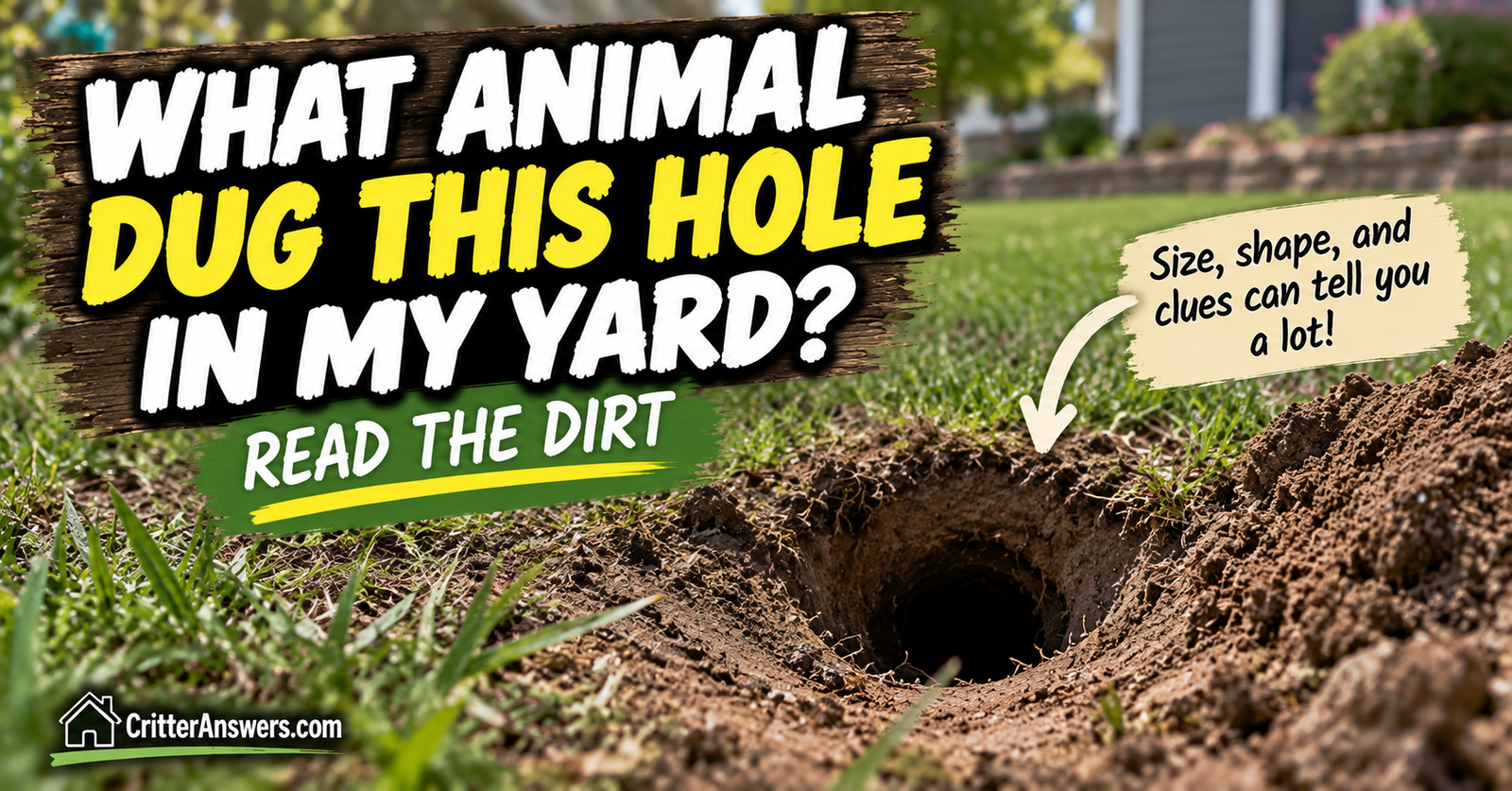
You walk across the yard and there’s a hole that definitely wasn’t part of the landscaping plan.
Maybe it’s the size of a golf ball. Maybe you could almost stick your boot into it. Maybe there’s a mountain of fresh dirt beside it.
The natural question is: What animal dug this hole in my yard?
Before you blame a mole, look at the dirt.
That’s one of the most useful lessons I’ve found for identifying mystery holes. The opening matters, but so does what happened to all the soil the animal removed.
Is there a mound?
What shape is it?
Is the entrance still open?
Are there raised tunnels?
Is there a runway through the grass?
Was the sod peeled back rather than actually burrowed into?
Those details can separate a groundhog burrow from a mole tunnel, a pocket gopher mound from a vole runway, and a skunk’s feeding hole from an animal that actually lives underground.
Don’t Start With the Animal. Start With the Hole.
I know that’s backwards from how most of us think.
You see a hole and start running through animals in your head.
Mole?
Groundhog?
Rabbit?
Snake?
Skunk?
Instead, forget the animal for a minute and document the scene.
I want to know:
- How wide is the opening?
- How deep does it appear?
- Is the entrance round, oval, or irregular?
- Is loose dirt piled nearby?
- Is the dirt shaped like a mound, fan, or crescent?
- Is there no visible entrance at all?
- Are raised ridges running through the lawn?
- Are narrow pathways pressed into the grass?
- Is the turf peeled or flipped over?
- Are there tracks?
- Is there more than one hole?
- Is the hole beside a structure or out in the open?
That’s your evidence.
Now we can start naming suspects.
Here’s the Fastest Way I’d Narrow It Down
Before getting into each animal, here’s my quick field read.
Huge open burrow with lots of excavated dirt: think groundhog.
Volcano-like mound with no obvious open hole: think mole.
Fan or crescent-shaped dirt mound with a plugged opening: pocket gopher becomes interesting.
Small holes connected by narrow surface runways: look closely at voles.
Small, neat opening with surprisingly little dirt: chipmunk is worth considering.
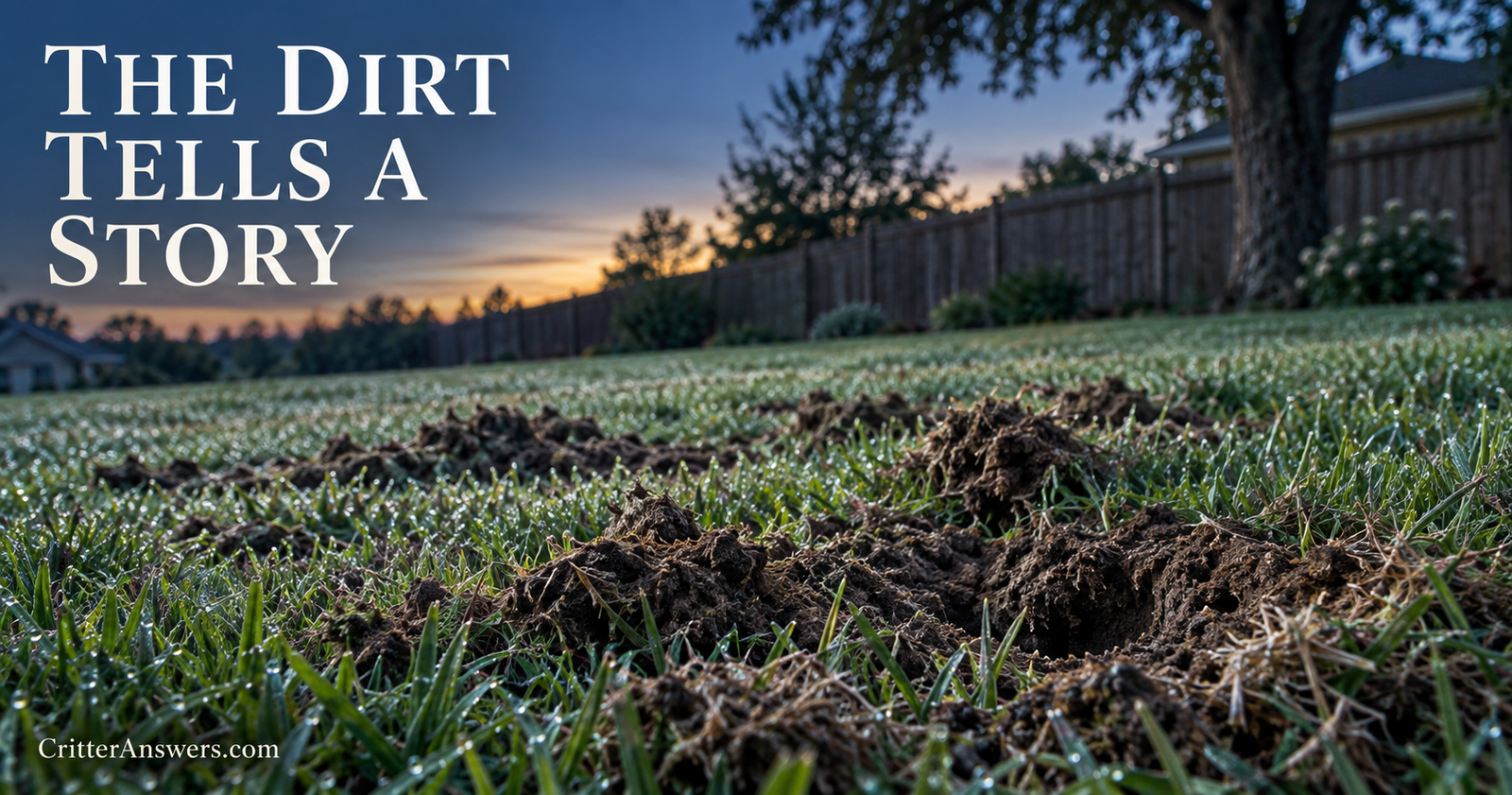
Clusters of shallow cone-shaped holes: skunk may have been feeding rather than building a home.
Sod lifted or rolled back overnight: raccoon becomes much more interesting.
Those aren’t verdicts.
They’re the beginning of the investigation.

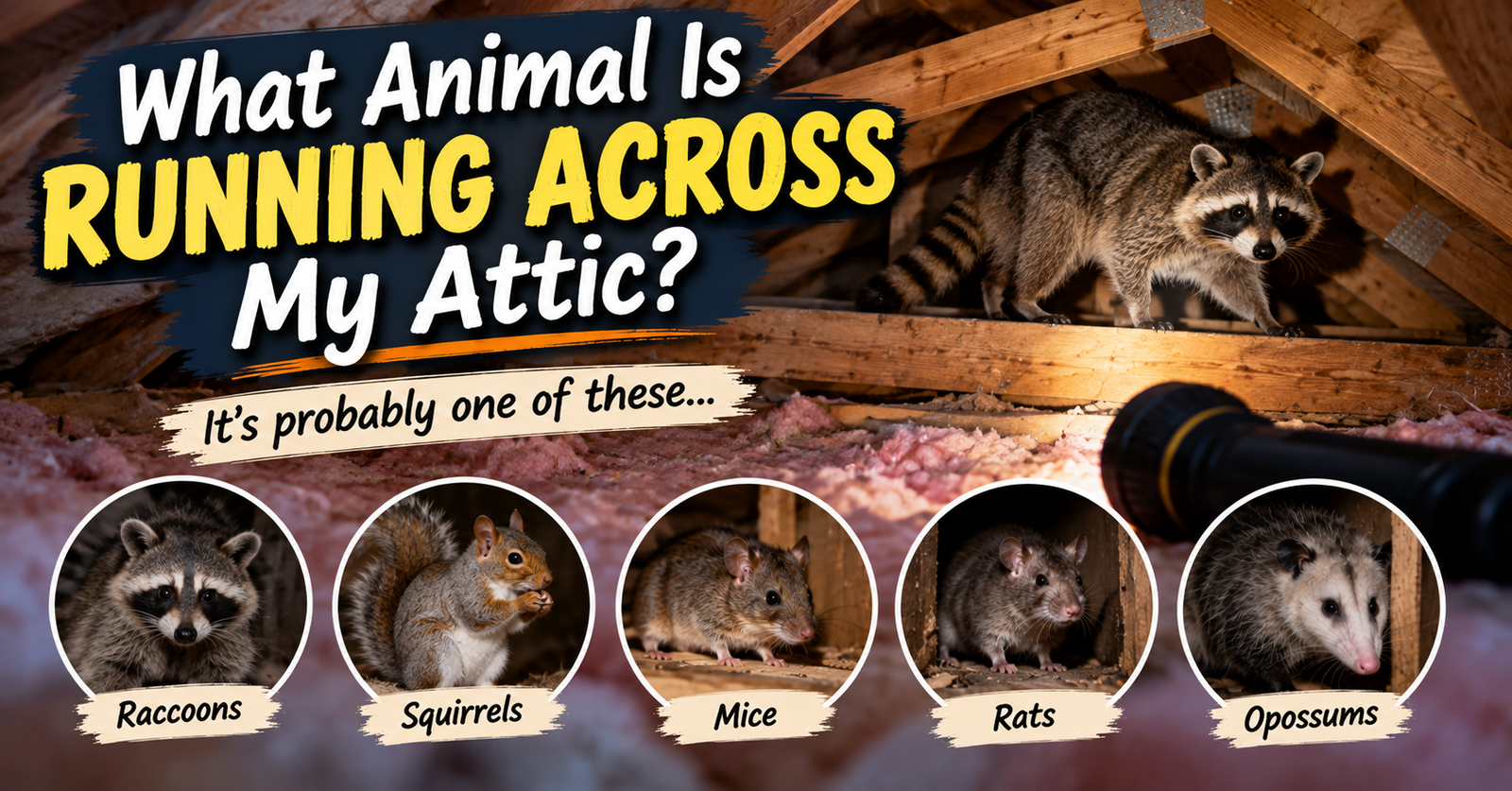

A Big Open Hole Can Practically Shout Groundhog
Groundhog holes are difficult to confuse with mole activity once you’ve seen the difference.
A groundhog, also called a woodchuck, excavates a real burrow system. The main entrance is large, commonly roughly 8 to 12 inches across, and there can be a substantial amount of soil outside it.
That’s not a little divot in the grass.
It’s a doorway.
Look for a groundhog burrow around:
- Field edges
- Brushy areas
- Gardens
- Fence rows
- Rock piles
- Sheds
- Porches
- Other protected edges
You may also find additional entrances without the dramatic pile of dirt found at the main opening.
And because groundhogs are active during the day, you have a decent chance of eventually seeing the homeowner.
If you’ve already found a substantial burrow disappearing beneath an outbuilding, my guide to figuring out what animal is living under your shed covers that situation separately.
The Dirt Beside a Groundhog Hole Is a Major Clue
Imagine digging a tunnel large enough for a groundhog.
That soil has to go somewhere.
The main entrance may have a noticeable pile of excavated dirt around it.
Fresh dirt is particularly useful.
If the soil looks loose and newly turned, the burrow may be active or recently expanded.
Look at it again the following morning.
Has anything changed?
New dirt is evidence.
Old dirt covered with leaves and vegetation tells a different story.
Mole Holes Usually Aren’t Really “Holes”
This is where homeowners get tricked.
People often say:
“I have mole holes everywhere.”
But the classic mole evidence isn’t a yard covered with open little doorways.
Moles spend most of their lives underground.
What you’re more likely to notice is what they push upward.
Moles can leave:
- Raised ridges through the lawn
- Soft or spongy soil above tunnels
- Volcano-shaped mounds
- Areas where turf is pushed upward
The deeper tunnel excavation produces soil mounds, while shallow feeding tunnels can create those unmistakable raised lines wandering through the lawn.
If it looks like somebody pushed a garden hose underneath your sod, mole becomes much more interesting.
A Mole Mound Usually Doesn’t Have an Open Door in the Middle
This is an especially useful distinction.
A mole pushes excavated soil upward.
The result can look like a little volcano of dirt without an obvious open entrance in the center.
That differs from an animal maintaining an open burrow entrance that it regularly walks through.
So don’t dig through the mound looking for a doorway just to prove it’s a mole.
The absence of an obvious open hole is part of the clue.
Pocket Gophers Make a Different Kind of Dirt Pile
Here’s where looking only for “mounds” gets you into trouble.
Moles make mounds.
Pocket gophers make mounds.
They don’t usually make the same-looking mound.
Pocket gopher mounds tend to be fan- or crescent-shaped, and the entrance is generally plugged with soil rather than left standing wide open. Their underground tunnel systems can be extensive even though you rarely see the animal itself.
Think:
Mole = volcano.
Pocket gopher = fan or crescent.
That’s a much more useful distinction than simply saying both animals leave dirt in the yard.
Pocket Gopher or Mole? Look Between the Mounds
The rest of the yard can break the tie.
Moles commonly create visible raised surface ridges.
Pocket gopher tunnel networks generally don’t produce the same network of raised surface runways.
Pocket gophers can also damage vegetation because they’re herbivores that feed on roots, grasses, bulbs, and other plant material. Moles are after invertebrate prey such as earthworms and insects instead.
So if you have fan-shaped mounds plus disappearing or damaged plants, the evidence starts leaning away from mole.
Voles Leave Little Holes With Highways Between Them
Voles are another animal that gets mixed up with moles because the names sound alike and both can leave evidence around lawns.
Their signs are quite different.
Voles are small rodents.
A particularly useful vole clue is a network of narrow runways through the grass, often about 1 to 2 inches wide, leading between small burrow openings and feeding areas.
These aren’t raised dirt ridges.
They’re more like tiny paths worn or clipped through the vegetation.
After snow melts, vole runway systems can suddenly become extremely obvious.
Look at Your Trees and Shrubs When You Suspect Voles
Don’t stop at the holes.
Voles eat vegetation and can damage roots, bulbs, stems, and bark.
In winter they may gnaw around the lower trunks of trees and shrubs.
So this combination catches my attention:
small openings + surface runways + low bark damage = vole evidence worth investigating.
That’s very different from a mole tunneling underground in search of worms.
One letter separates their names.
Their dining preferences are considerably farther apart.
Chipmunk Holes Can Look Suspiciously Clean
Here’s one that can make you wonder where all the dirt went.
Chipmunks excavate underground burrows, but their entrances can be surprisingly tidy.
You may see a relatively small opening with little obvious soil piled around it.
They can carry excavated soil away from the entrance, which helps make the burrow less conspicuous.
Look around:
- Stone walls
- Steps
- Patios
- Foundations
- Wood piles
- Landscaping
- Porch edges
- Shed edges
Chipmunks are active during the day, so visual confirmation can be easier than with nocturnal wildlife.
If you keep seeing a chipmunk dive into the same little hole, you probably don’t need a forensic investigation of the dirt.
Squirrels Dig Holes Too, But They May Not Be Burrows
This is an important distinction.
A squirrel can dig in your yard without living underground in that hole.
Tree squirrels commonly bury and retrieve nuts and other food.
That can leave small depressions in lawns and gardens.
So when you find a small, shallow hole with no tunnel system, no mound, and no evidence of a den, consider whether you’re simply looking at a food cache.
Not every hole is a front door.
Some are pantries.
Skunks Can Make a Yard Look Like Someone Poked It Repeatedly
Skunks give us another completely different kind of hole.
They’re often digging for food, not building a burrow.
Skunks eat insects and other foods they find in and beneath lawns. When foraging, they can leave shallow, cone-shaped holes, often several in the same area. Maryland Extension describes skunk feeding holes at roughly 3 inches wide and deep.
So if you wake up and find a bunch of shallow holes scattered through the turf, don’t automatically assume you suddenly have 30 underground dens.
You may have had one hungry visitor.
Skunk Feeding Holes Usually Come With a Timing Clue
Skunks are primarily active at night.
That makes a freshly perforated lawn appearing overnight more interesting.
You may also notice:
- Tracks
- Occasional skunk odor
- Areas of turf disturbed repeatedly
- An animal captured on a camera after dark
But skunks aren’t the only animals that dig lawns for food.
Raccoons can leave surprisingly similar damage.
That’s why #13 in this cluster will deal specifically with animals digging up lawns at night rather than trying to cram that entire search intent into this article.
Here, we’re identifying the hole itself.
Raccoons Are More Likely to Tear and Flip the Turf
A raccoon searching for food can do more than poke individual holes.
Those dexterous front paws can lift and peel pieces of sod while the animal searches underneath.
Maryland and Iowa State Extension both distinguish this from the more individual cone-shaped feeding holes commonly associated with skunks. Raccoon damage may look like turf has been pulled, flipped, or rolled back.
That’s a fantastic clue.
Little cone-shaped excavations: skunk moves upward.
Chunks of sod flipped like somebody started removing the lawn: raccoon becomes more convincing.
Neither necessarily means the animal lives beneath that exact spot.
It may just be breakfast.
A Hole and a Feeding Dig Are Not the Same Thing
This distinction can save a lot of confusion.
When I inspect a mystery hole, I ask:
Does this look like an entrance or an excavation?
A true burrow entrance should lead somewhere.
An animal may repeatedly enter and exit it.
The surrounding ground may become worn.
Tracks may lead toward it.
A feeding excavation can be shallow and abandoned as soon as the food is gone.
That means your yard may contain animal holes without containing an underground animal home.
Could a Rabbit Have Dug the Hole?
Possibly, depending on the rabbit species and location.
But don’t blame rabbits automatically because you see them in your yard.
For example, eastern cottontails generally use shallow depressions or forms for resting and construct shallow nests for young rather than the kind of elaborate underground burrow system people often picture when they hear “rabbit hole.”
Other rabbit species behave differently.
That’s why location and species matter.
If you have cottontails hopping around the lawn and find a huge underground tunnel, I’d keep investigating.
The most visible animal isn’t always the animal responsible for the hole.
What About a Snake Hole?
This phrase gets used constantly:
“There’s a snake hole in my yard.”
The problem is that snakes generally aren’t the original excavators of the mammal-style burrows homeowners find.
They can use holes and tunnels created by rodents and other animals.
So seeing a snake disappear into a hole tells you something important:
the snake uses the hole.
It doesn’t necessarily tell you:
the snake dug the hole.
That’s a meaningful difference.
If rodents are using tunnels around your property, those same spaces may become useful shelter or hunting territory for snakes.
Sometimes the Animal Digging Is a Predator Looking for Another Animal
Here’s another reason the scene can become confusing.
A predator may excavate an existing burrow while trying to reach prey.
Iowa State notes that animals including raccoons, skunks, foxes, coyotes, dogs, and others may dig for underground prey such as moles.
That means a torn-up tunnel doesn’t automatically identify the animal that originally built it.
You can have two layers of evidence:
- The underground animal created the tunnel.
- Something larger dug into the tunnel later.
Wildlife rarely bothers to make our identification puzzles tidy.
Don’t Forget Insects
Not every hole in a yard was made by a mammal.
This is especially important with small holes.
Ground-nesting bees, wasps, ants, cicada killers, and other insects can excavate soil.
If the opening is tiny compared with the mammal holes we’ve been discussing, watch it from a safe distance.
Flying insects repeatedly entering and leaving can solve the mystery quickly.
Be especially careful around an unknown ground nest if you see wasp-like insects.
You don’t need to put your face six inches away to determine whether anybody’s home.
Hole Size Helps, but Don’t Treat It Like a Ruler-Based DNA Test
I like measuring mystery holes.
I don’t like pretending the measurement proves the species.
Animals can enlarge old holes.
Different animals can reuse burrows.
Soil can collapse.
Rain changes entrances.
Predators dig into them.
Young and adult animals differ in size.
Use diameter to narrow the suspects, not convict one.
A 10-inch entrance makes a vole unlikely.
A 1-inch hole makes a groundhog unlikely.
That’s useful.
Trying to identify the exact animal because a weathered opening measured 2.4 inches is false precision.
Location in the Yard Matters More Than People Realize
Where did you find the hole?
Middle of an open lawn
Moles, voles, pocket gophers, feeding wildlife, and small burrowers become interesting depending on the other evidence.
Beside a shed
Think about animals that value structural cover and actual burrows beneath buildings.
Under a porch
Larger denning wildlife becomes more relevant.
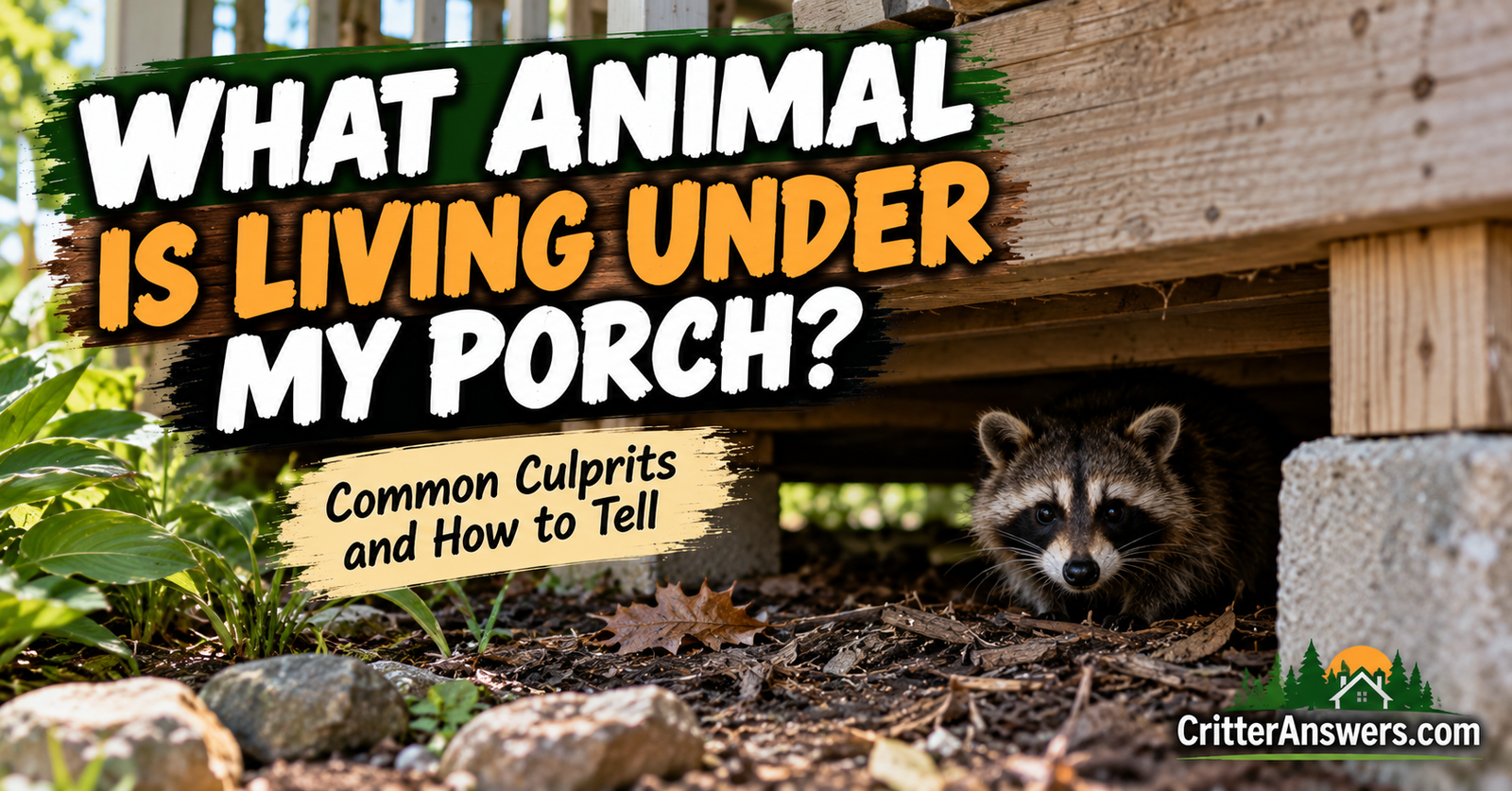
If that’s where your mystery is, I’ve written a separate guide to identifying what animal is living under your porch.
Beside landscaping or a retaining wall
Chipmunks and small rodents deserve attention.
Near a garden
Look for both the hole and feeding damage.
The animal may be telling you why it chose that location.
Look for More Than One Hole
One opening rarely tells the whole story.
Walk the surrounding area.
Groundhog burrows can have multiple entrances.
Voles can have multiple small openings connected by surface runways.
Pocket gophers can create numerous mounds along an underground system.
Chipmunks can have complex burrows with multiple chambers.
Mapping the pattern may be more useful than studying the first hole you found.
Take a few photos from farther back.
Sometimes the system becomes obvious when you stop staring straight down into one opening.
Tracks Can Break a Tie
Soft soil around a hole can preserve excellent footprints.
Photograph them before walking through the area.
Don’t worry if you can’t identify the species instantly.
Even the size can help.
A set of substantial mammal tracks approaching an 8-inch burrow supports a different theory than tiny rodent tracks along a narrow runway.
If you use something for scale in a photo, place it beside the track without destroying the print.
A good photograph is much easier to study than the memory of a muddy footprint you saw yesterday.
Droppings Are Another Piece of the Puzzle
Look around the hole and nearby travel routes.
Don’t handle unknown droppings barehanded.
Their size, shape, quantity, and placement can help narrow your suspects.
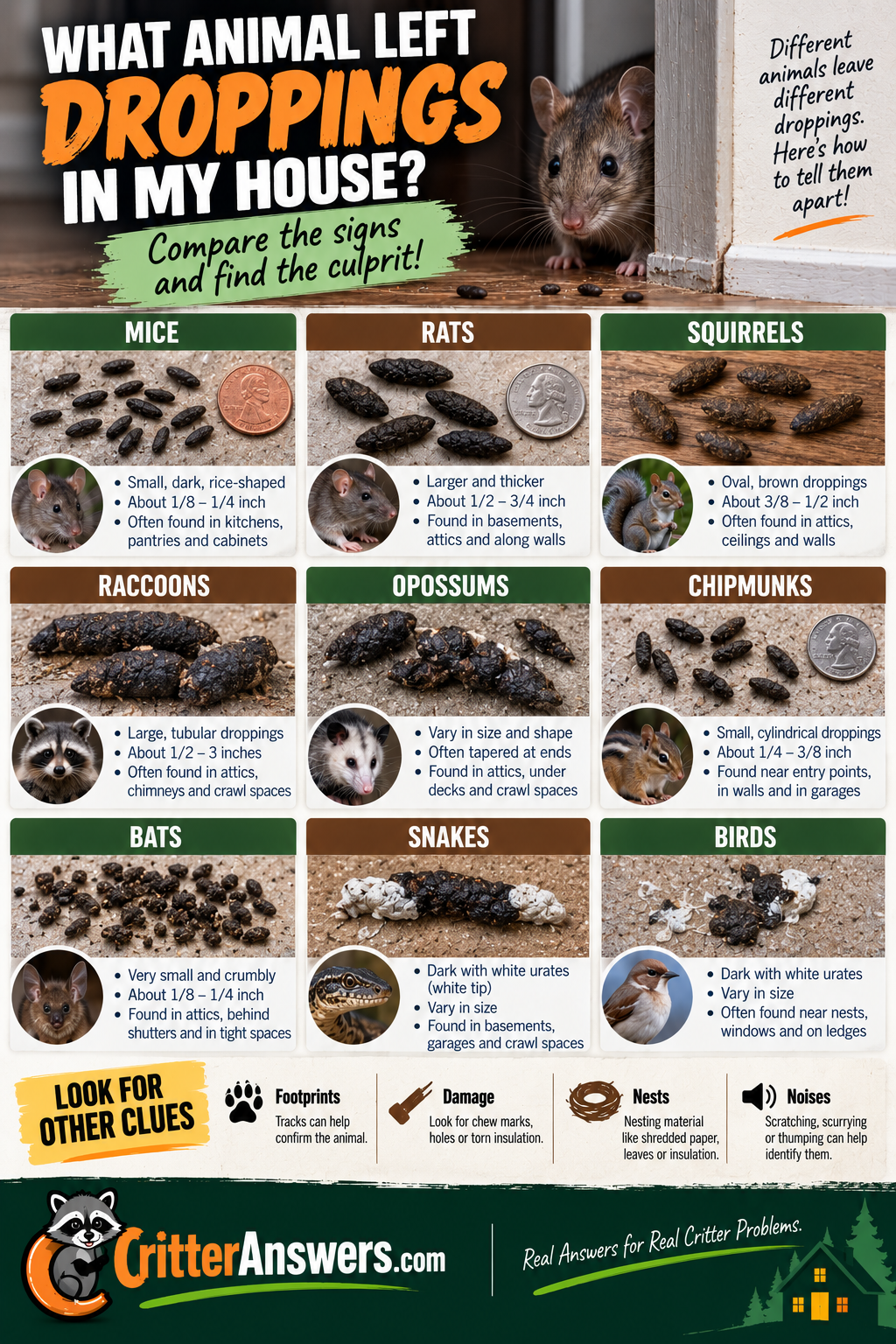
If you find waste and aren’t sure what you’re looking at, my guide to figuring out what animal left the droppings explains how I combine scat with the other evidence rather than identifying an animal from one dropping.
The same principle applies outdoors.
Hole + tracks + droppings is considerably better than hole alone.
Is the Hole Actually Active?
This question matters before you start thinking about control.
An old groundhog burrow can remain visible after the groundhog is gone.
Another animal may reuse it.
A mole tunnel can stop being actively used.
A chipmunk entrance can be abandoned.
Look for freshness.
Signs that catch my attention include:
- Fresh loose soil
- New tracks
- New droppings
- Recently clipped vegetation
- Freshly disturbed grass
- An entrance that stays clear of leaves and debris
- New dirt appearing from one day to the next
- An animal actually entering or leaving
Old doesn’t mean irrelevant.
It just means don’t assume somebody’s currently home.
A Camera Can Answer the Question Without Destroying the Clues
For a larger burrow, a motion-activated wildlife camera positioned away from the entrance can be extremely useful. Those observations can then inform using a camera to study animal routes before you move or rebait the cage.
Don’t jam it into the hole.
Aim it toward the area.
Then leave the site alone.
You may discover that the animal using the burrow isn’t the animal you expected.
That’s especially valuable with reused dens.
The dirt may tell you how the hole was made.
The camera tells you who’s using it now.
Don’t Pour Water Down an Unknown Animal Hole
This is one of those ideas that sounds clever for about five seconds.
“I’ll fill it with water and see what comes out.”
Please don’t.
You don’t know:
- What species is inside
- Whether young are present
- How extensive the tunnel is
- Where another exit goes
- Whether the burrow runs beneath a structure
- Whether anything dangerous may emerge
Flooding a mystery burrow isn’t identification.
It’s just provoking something you haven’t identified yet.
Don’t Pour Gasoline or Other Chemicals Into It Either
Same answer, but stronger.
Never pour gasoline, fuel, bleach, pesticides not specifically labeled for the situation, or random household chemicals into an animal burrow.
You can contaminate soil, harm non-target animals, create fire or health hazards, and still fail to solve the original problem.
Identify first.
Then use a legal, species-appropriate management method if control is actually necessary.
Don’t Seal a Burrow Until You Know What’s Inside
An open hole feels like something that should be filled.
Sometimes eventually it should be.
But not while an animal is inside.
And definitely not when dependent young may be underground.
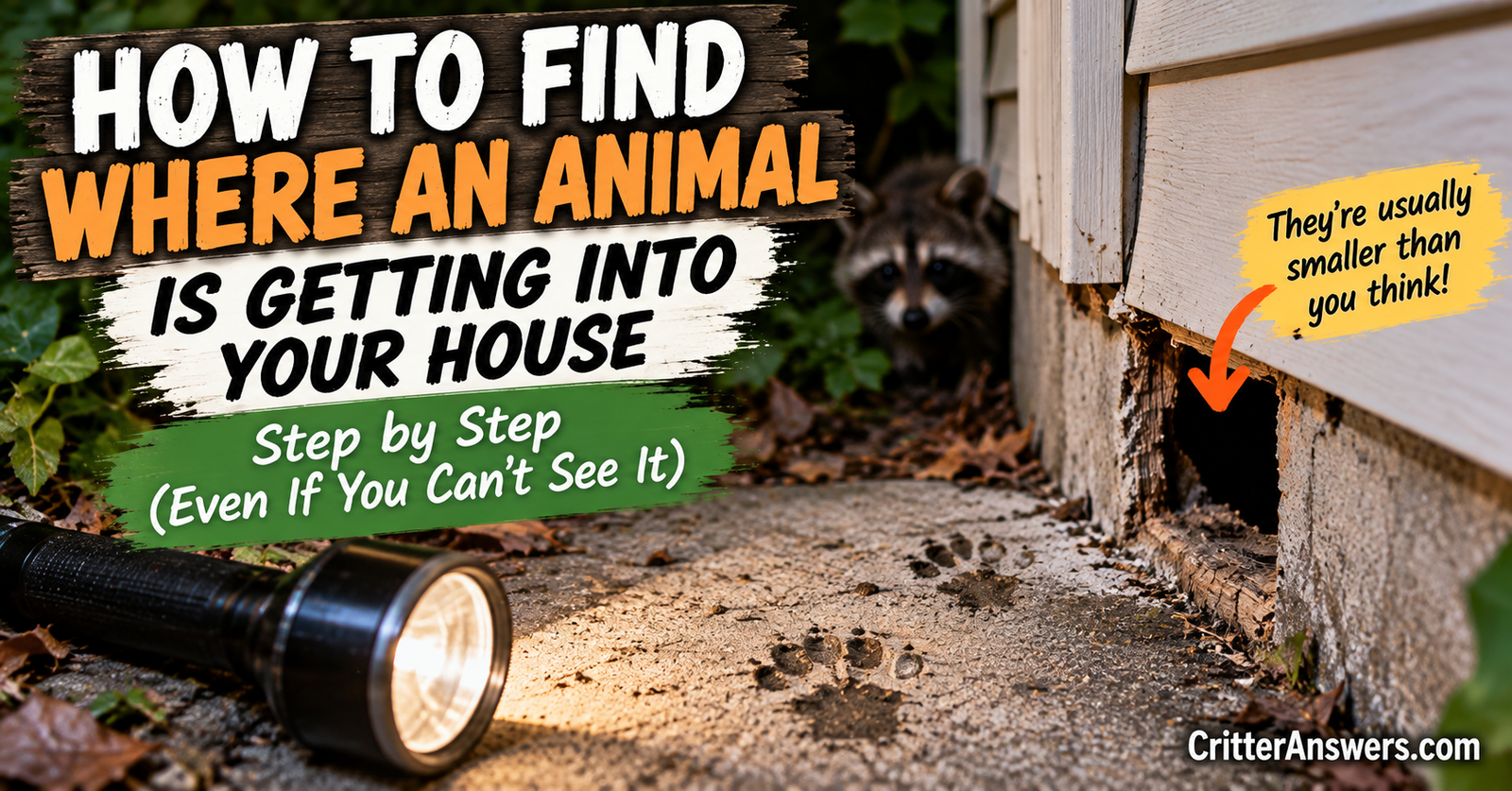
If the burrow is near your home or another structure, the same basic principle applies as it does when finding where an animal is getting into a house: confirm what is using the opening and whether it’s active before permanently closing access.
Otherwise you may trap wildlife or cause an animal to create another exit.
Do You Even Need to Get Rid of It?
Not every hole requires a war.
A mole tunnel in a back corner of a large property may be cosmetic.
A chipmunk burrow far from structures may not matter much.
A groundhog excavating beneath a slab is a different situation.
A vole girdling young fruit trees is different.
A skunk den directly beneath the front steps is different.
Consider:
What damage is actually occurring?
That question should come after identification and before control.
Sometimes the correct response to a mystery hole is simply learning what made it and leaving it alone.
When the Hole Is Close to a Structure, Take It More Seriously
Burrowing immediately beside or beneath:
- Foundations
- Concrete slabs
- Shed supports
- Porches
- Retaining walls
- Walkways
- Steps
deserves closer attention.
Large burrowing animals can move substantial amounts of soil.
If you see settling, cracking, shifting, or unsupported structural components, the problem has moved beyond identifying wildlife.
Resolve the animal issue appropriately and have structural concerns evaluated separately.
My Mystery-Hole Cheat Sheet
If I walked into a yard without seeing the animal, here’s how I’d start reading it:
8-to-12-inch open burrow with a big dirt pile: groundhog.
Volcano-shaped soil mound with no obvious open entrance: mole.
Fan- or crescent-shaped mound with a plugged entrance: pocket gopher.
Small holes plus narrow surface runways through grass: vole.
Small tidy burrow near landscaping with little obvious excavated soil: chipmunk.
Shallow cone-shaped holes scattered through turf: skunk feeding activity.
Sod peeled, flipped, or rolled back: raccoon feeding activity.
Small shallow depressions without a real tunnel: possibly squirrel food caching.
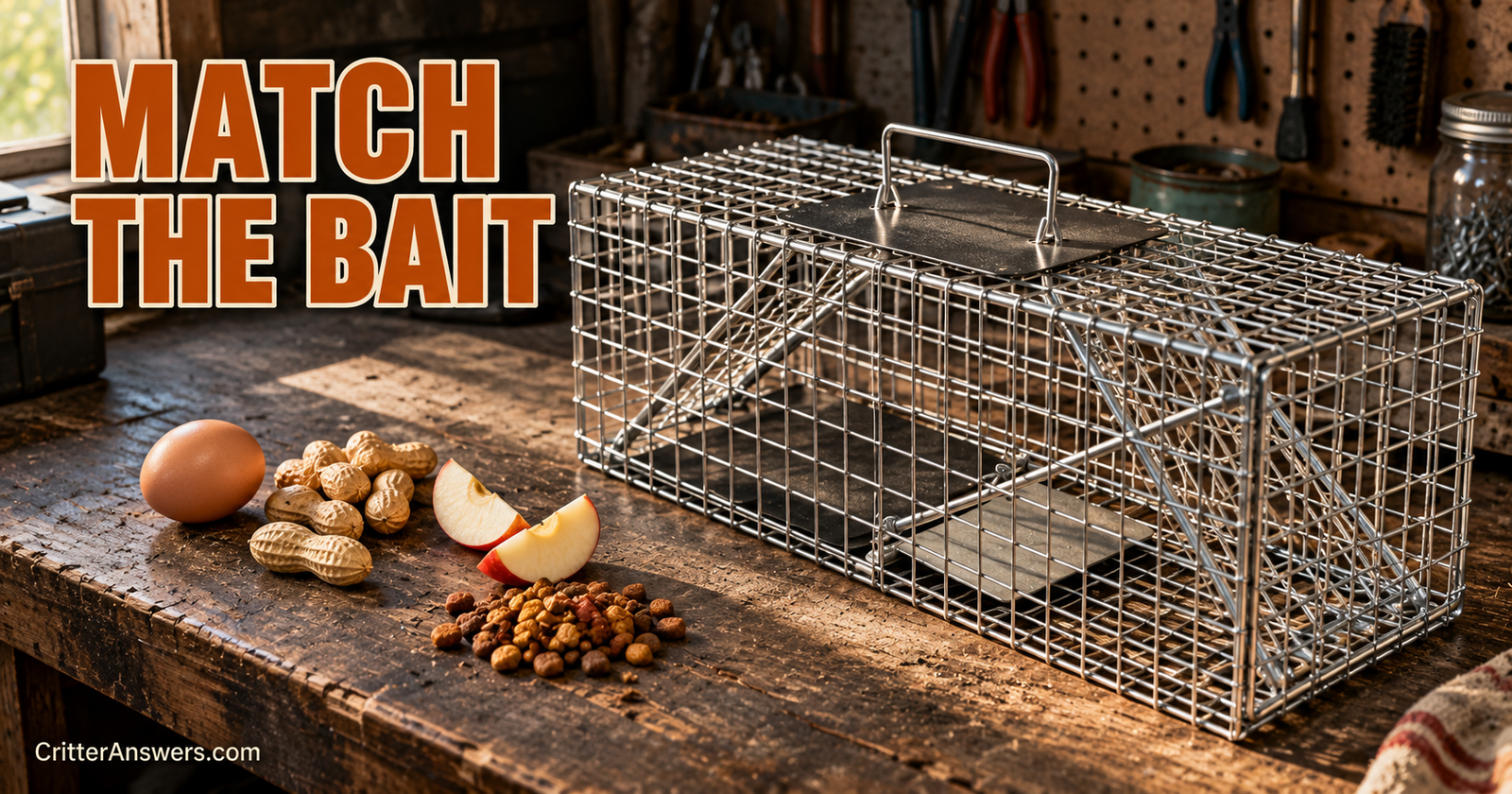
Then I’d use tracks, droppings, plant damage, time of activity, and a camera to test that first impression. When those clues point to a species that may need to be trapped, match bait to the identified animal.
The Dirt Usually Tells More Than the Hole
When you find a mystery hole, don’t just measure the opening and Google the diameter.
Back up.
Look at the whole scene.
Where did the dirt go?
That’s the question people skip.
A mole pushes soil upward into a mound.
A pocket gopher leaves a different-shaped mound and plugs its entrance.
A groundhog moves enough soil to create a substantial open burrow.
A vole leaves little openings connected by surface highways.
A skunk may dig a shallow hole, eat what’s underneath, and walk away without ever living there.
Once you learn to look at the dirt, tunnels, grass, tracks, and surrounding damage together, a random hole becomes much less random.
And if you still can’t tell?
Photograph it, measure it, leave it undisturbed, and see what shows up.
Sometimes the best wildlife detective work is simply giving the culprit enough time to introduce itself.
About the author: Nolan Mercer studies the tracks, burrows, droppings, damage, and other clues wildlife leaves around homes and yards. At Critter Answers, he turns those clues into practical ways homeowners can identify the animal before deciding what, if anything, needs to be done.