
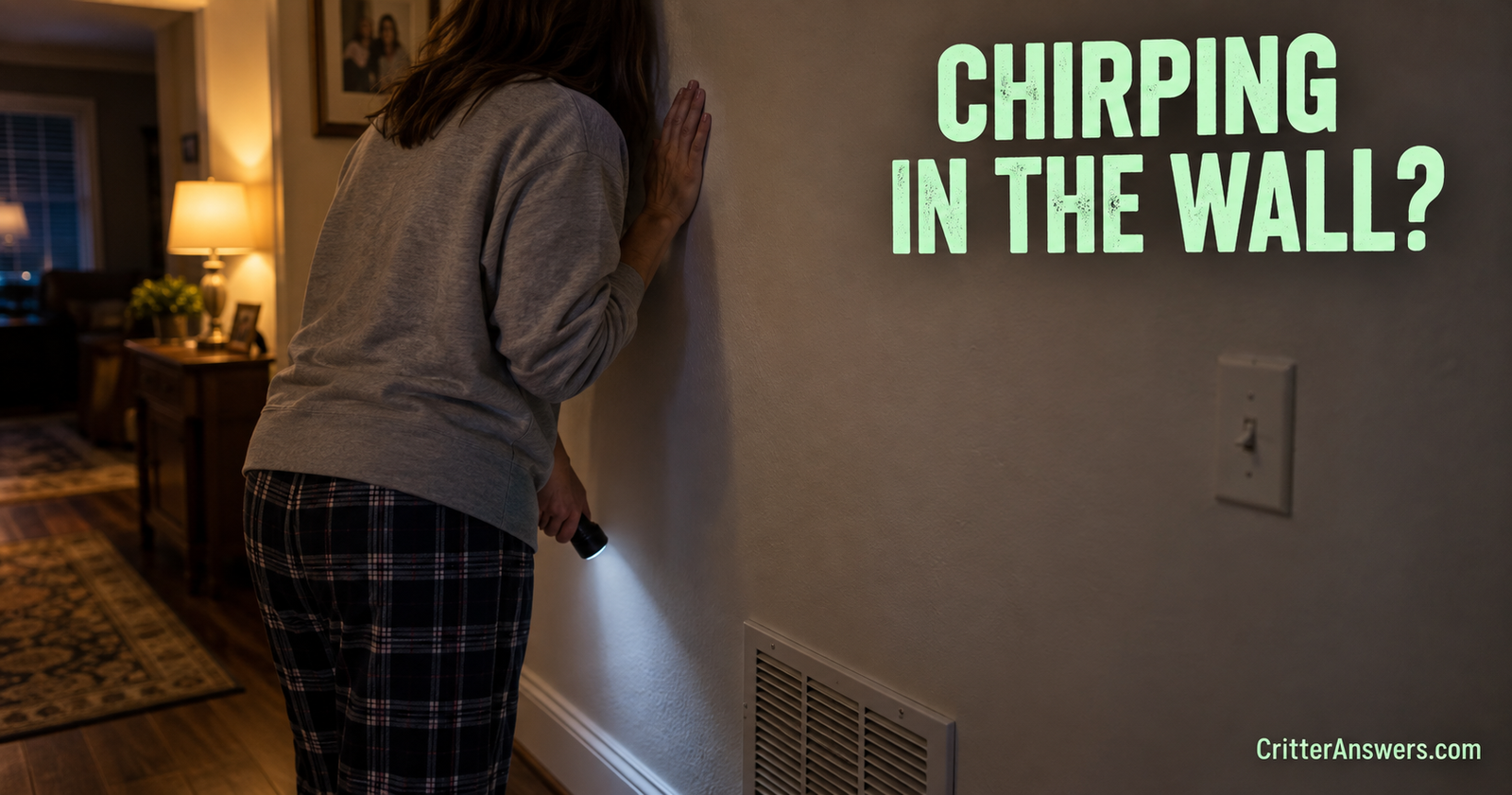
A scratching noise inside a wall is creepy enough.
A chirping noise is somehow stranger.
You hear two or three little chirps behind the drywall. Then silence.
Five minutes later, there it is again.
It sounds almost like a bird, except there shouldn’t be a bird between your bedroom and the hallway.
So what animal is making chirping sounds inside your wall?
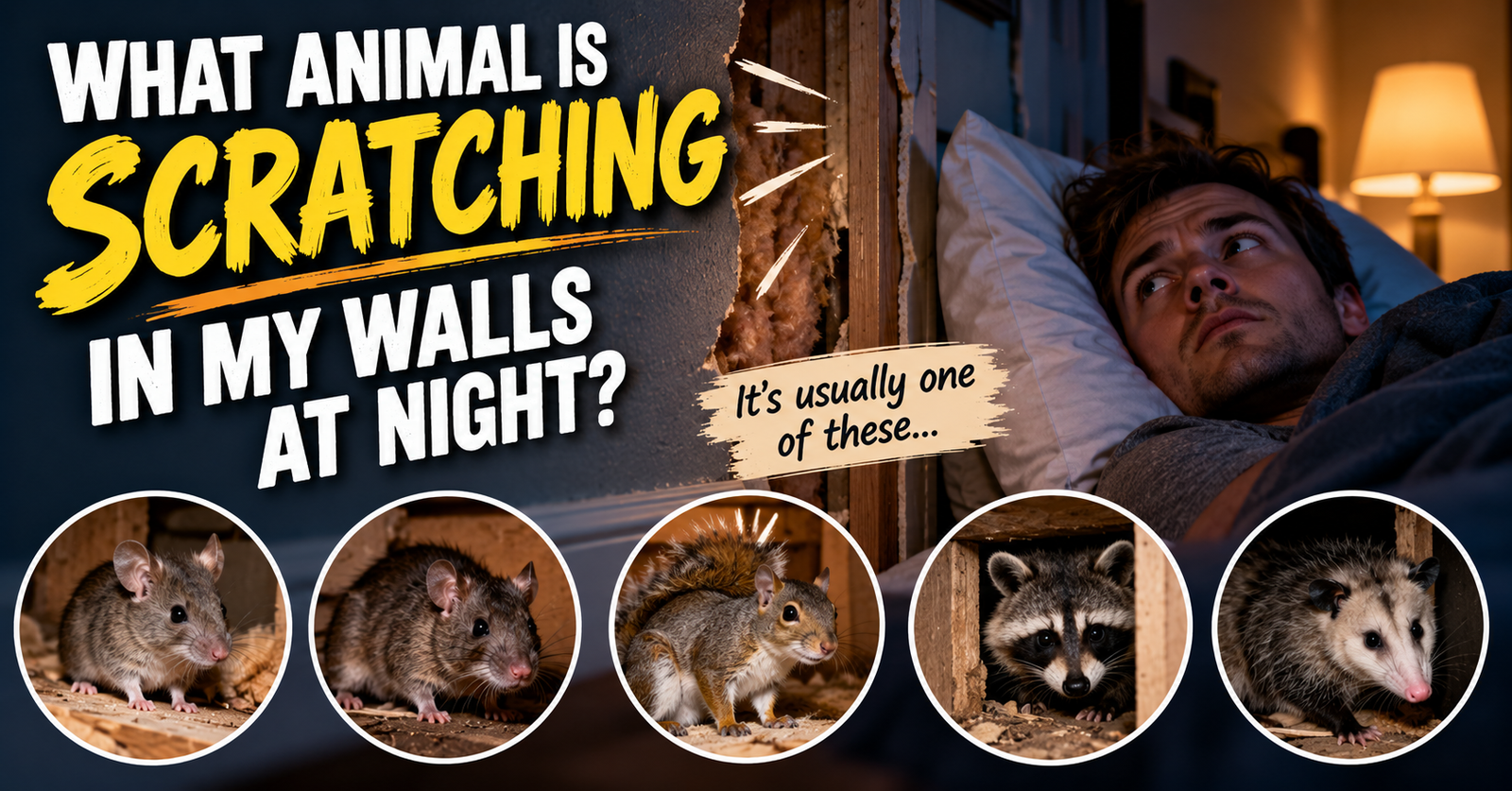
Several animals can make noises homeowners describe as chirping, squeaking, cheeping, chattering, or twittering. Bats, mice, rats, birds, squirrels, and young raccoons are all possibilities depending on the sound, location and time of day.
The word “chirping” alone isn’t enough to identify the animal.
Instead, I want to know:
When does it chirp?
What other noises happen with it?
Where in the wall is it coming from?
Are there droppings, gnawing, odors or an exterior opening nearby?
Those extra clues are usually much more useful than trying to describe the chirp perfectly.
First, Figure Out Whether It Is Actually an Animal
This is easy to overlook.
A noise inside a wall doesn’t automatically mean something is alive in there.
Homes make noises.
Pipes move.
Ductwork expands and contracts.
Materials rub against each other.
A mechanical squeak or repeated click can sound surprisingly animal-like when drywall muffles it.
So before assuming you have a family of bats behind the television, pay attention to when the noise occurs.
Does it happen when:
- The furnace starts?
- The air conditioner turns off?
- Someone uses hot water?
- A toilet flushes?
- The dishwasher runs?
- Wind hits one side of the house?
- The sun heats the exterior wall?
If the chirp perfectly follows a mechanical event in the house, investigate that possibility too.
If you hear chirping plus scratching, scurrying, fluttering or gnawing, an animal becomes much more likely.
Chirping Around Dusk or Dawn Makes Me Think About Bats
Bats deserve serious consideration when high-pitched squeaking or chirping comes from an upper wall, soffit or attic area.
Penn State Extension notes that homeowners with bat colonies may hear squeaking or scurrying associated with the roost. Bats commonly hide in narrow crevices around attic walls and rafters rather than sitting conspicuously in the middle of an attic.
Timing can provide another clue.
If the activity becomes noticeable around dusk when bats leave to feed, or around dawn when they return, I’d pay attention.
You might hear:
Chirping.
Then light movement.
Then fluttering.
Then quiet.
That pattern is more interesting to me than an isolated squeak at 2 p.m.


Bats Aren’t Usually Chewing Your Wall
Here’s another useful distinction.
Bats aren’t rodents.
Penn State Extension notes that bats do not damage property by gnawing or chewing.
So if you’re hearing:
chirp… chirp… flutter…
that’s one pattern.
If you’re hearing:
chirp… scratch… gnaw… gnaw… gnaw…
I’d investigate rodents more seriously.
This is why combining sounds works better than identifying an animal from one noise.
Look for Bat Droppings Below a Suspected Roost
If bats are using the wall or attic, droppings may provide another clue.
Bat droppings can accumulate beneath areas where bats roost. Penn State describes them as dry, black droppings roughly around the size of a grain of rice and notes that they may accumulate in piles below roosting areas.
Don’t start handling mystery droppings with your bare hands.
Observe where they’re appearing.
A concentration beneath a suspected upper-wall or attic roost strengthens the bat possibility.
Scattered rodent droppings throughout travel areas tell a different story.
Watch the Outside of the House at Dusk
This is one of my favorite ways to investigate suspected bats because you don’t have to start opening walls.
Missouri Extension recommends inspecting the exterior and watching around dusk to determine whether bats are leaving a building. Common entry areas include roof-and-wall joints, loose fascia, damaged attic vents and cracks in the structure.
Stand outside where you can safely see the roofline.
Watch:
- Eaves
- Soffits
- Fascia
- Roof intersections
- Attic vents
- Gable areas
- Exterior gaps near the noisy wall
If bats begin emerging from one little gap around dusk, your mystery just became considerably less mysterious.
Don’t Immediately Seal a Bat Opening
Finding the hole is not permission to plug it tonight.
This is especially important when a maternity colony may be present.
If flightless young remain inside and you seal adults out, you’ve created a serious animal-welfare problem and potentially a much worse problem inside the house.
Bat exclusion also has wildlife-law and seasonal considerations that vary by location.
Once you’ve confirmed bats, use appropriate bat-exclusion guidance or a qualified wildlife professional rather than simply filling the opening while animals may still be inside.
Could Mice Make a Chirping Sound Inside a Wall?
Yes.
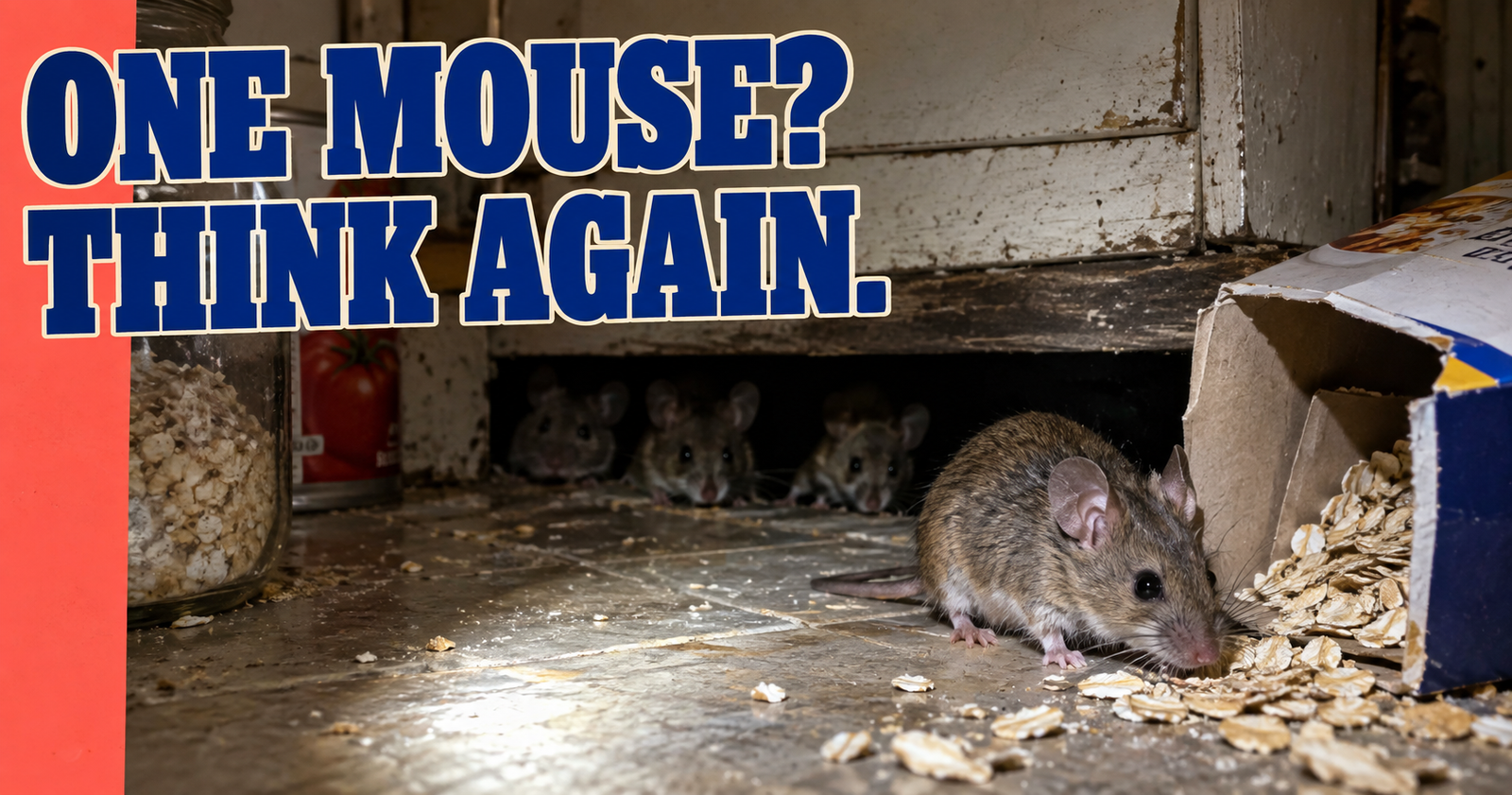
People associate mice with squeaking, but “chirping” is subjective.
One person’s squeak is another person’s chirp.
Wildlife Illinois specifically describes mice and rats as possible sources of quiet squeaking and cheep-like vocalizationsin walls and attics.
University of Nebraska guidance also notes that house mice produce high-pitched squeaks and that gnawing, climbing in walls and running across ceilings can accompany a mouse problem.
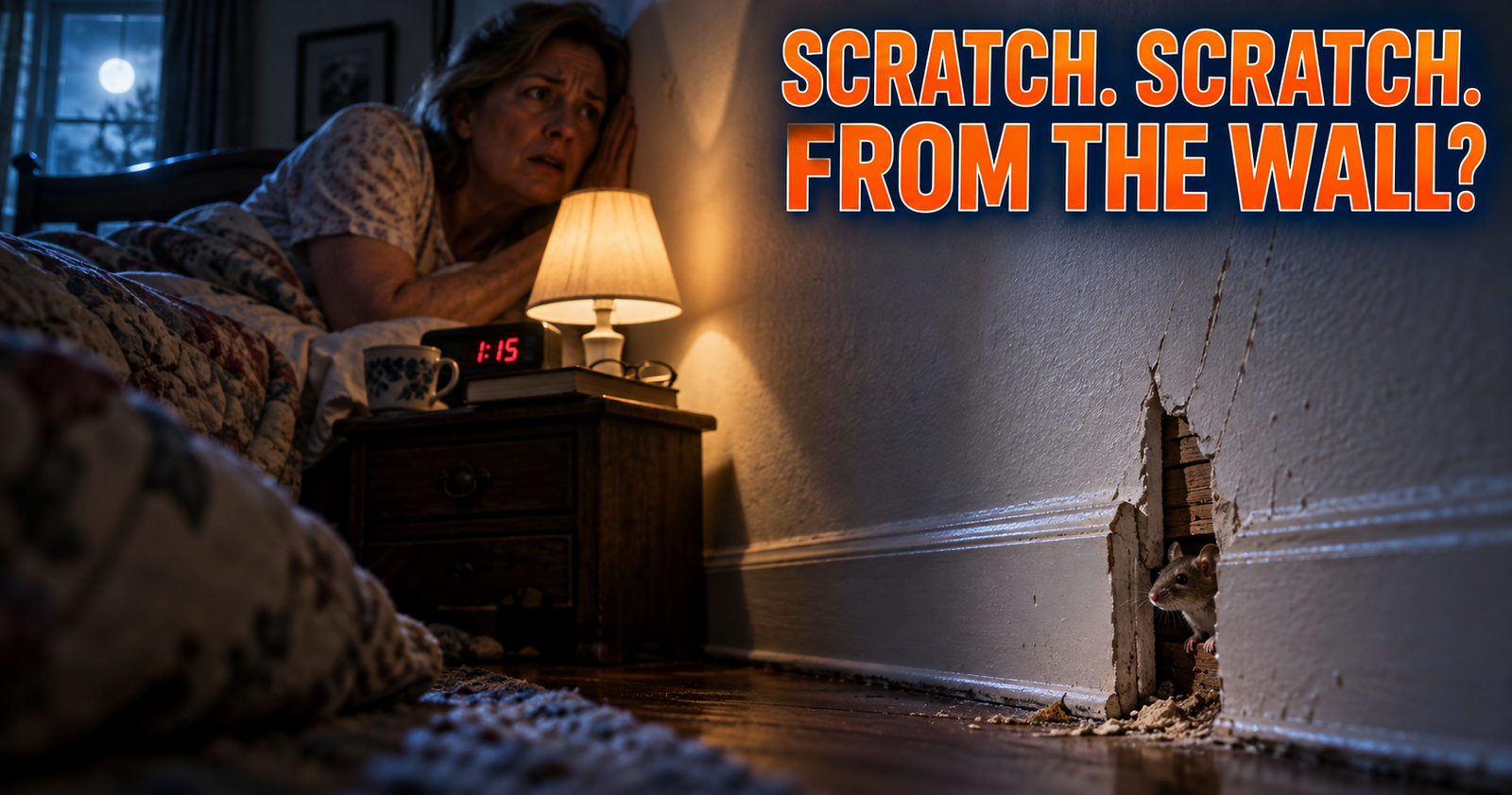
So if the chirping happens primarily at night and you also hear faint movement, don’t rule mice out just because the sound reminds you of a bird. That combination is worth comparing with the broader clues in hear faint movement.
Mouse Activity Usually Gives You More Than Chirping
With mice, I wouldn’t stop at the sound.
Look for:
- Small droppings
- Gnawed food packages
- Gnaw marks
- Nesting material
- Scratching
- Light scurrying
- Activity around kitchens or pantries
- Small exterior openings
- Evidence around utility penetrations
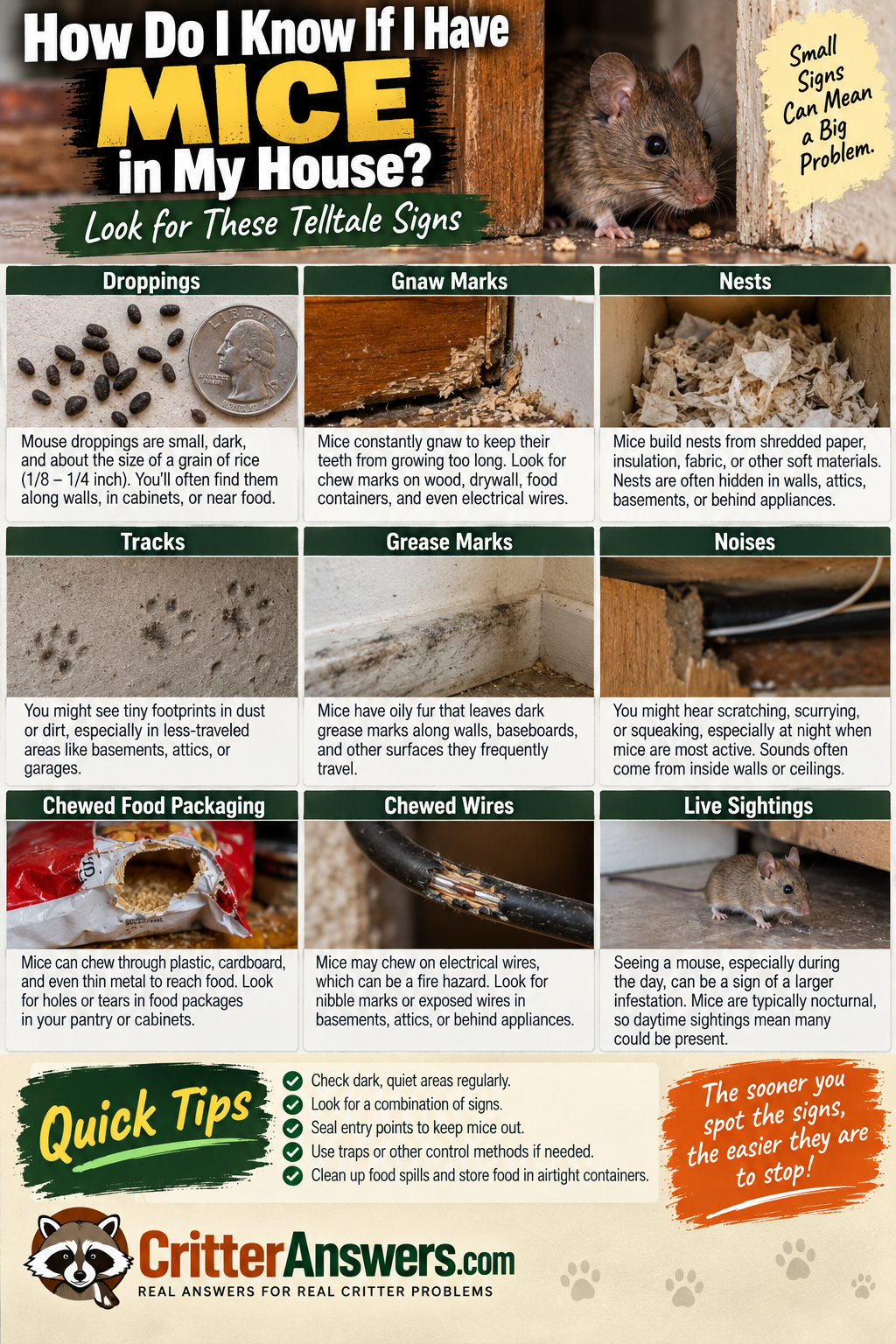
If you find mouse droppings in the kitchen and hear tiny squeaks and scratching in the wall behind it every night, that’s much stronger evidence than the chirp itself. multiple signs of mice explains how to evaluate combinations of droppings, sounds, and other clues when deciding whether mice are present.
This is also why our upcoming mouse cluster is going to be worthwhile.
There are a lot of different clues homeowners encounter before they ever actually see the mouse.
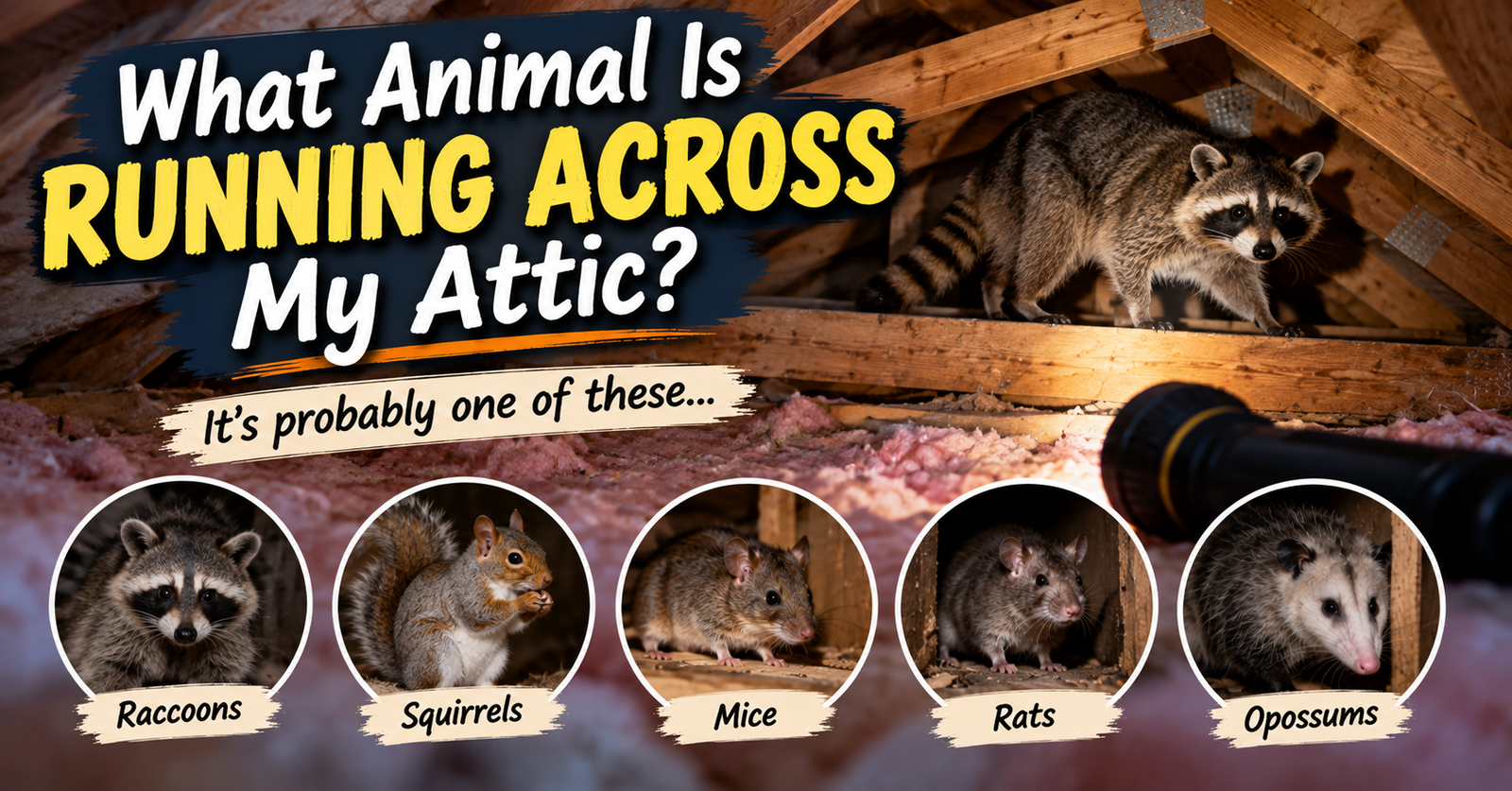
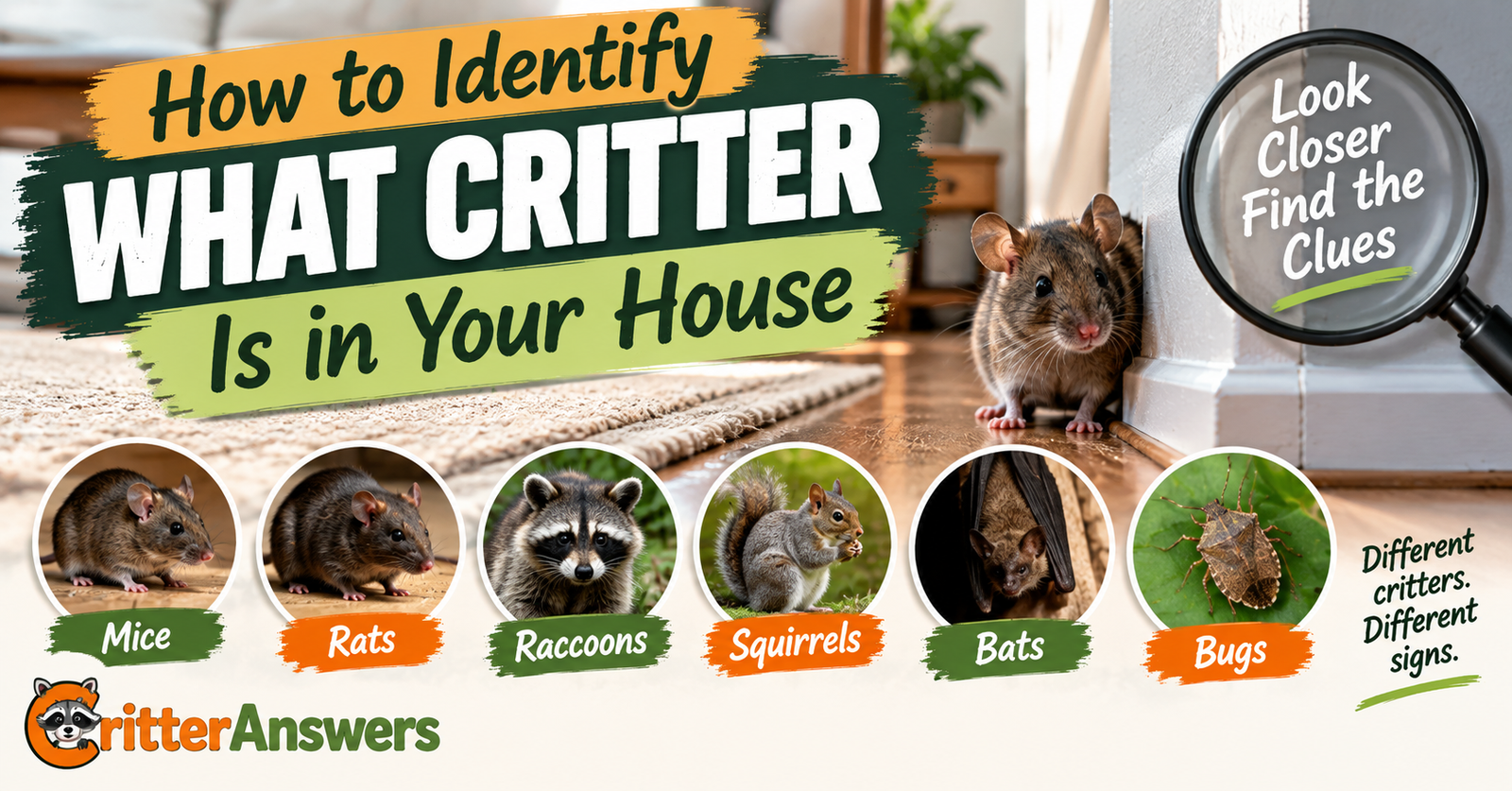
Rats Can Vocalize Too
Rats belong in the rodent category as well.
Like mice, they can make vocal sounds and physical noises as they move through structures.
But their movement may sound heavier than a mouse.
I’d compare:
Size of droppings.
Strength of movement.
Gnaw marks.
Where activity occurs.
Entry-point size.
Don’t attempt to distinguish a mouse from a rat solely because one chirp sounded slightly deeper than another.
Walls distort sound too much for that kind of precision.
If You Hear Chirping Plus Gnawing, Pay Attention
Gnawing is a valuable clue because it points us toward animals equipped to chew.
If you hear repetitive chewing from the same area, inspect accessible areas for actual gnaw marks.
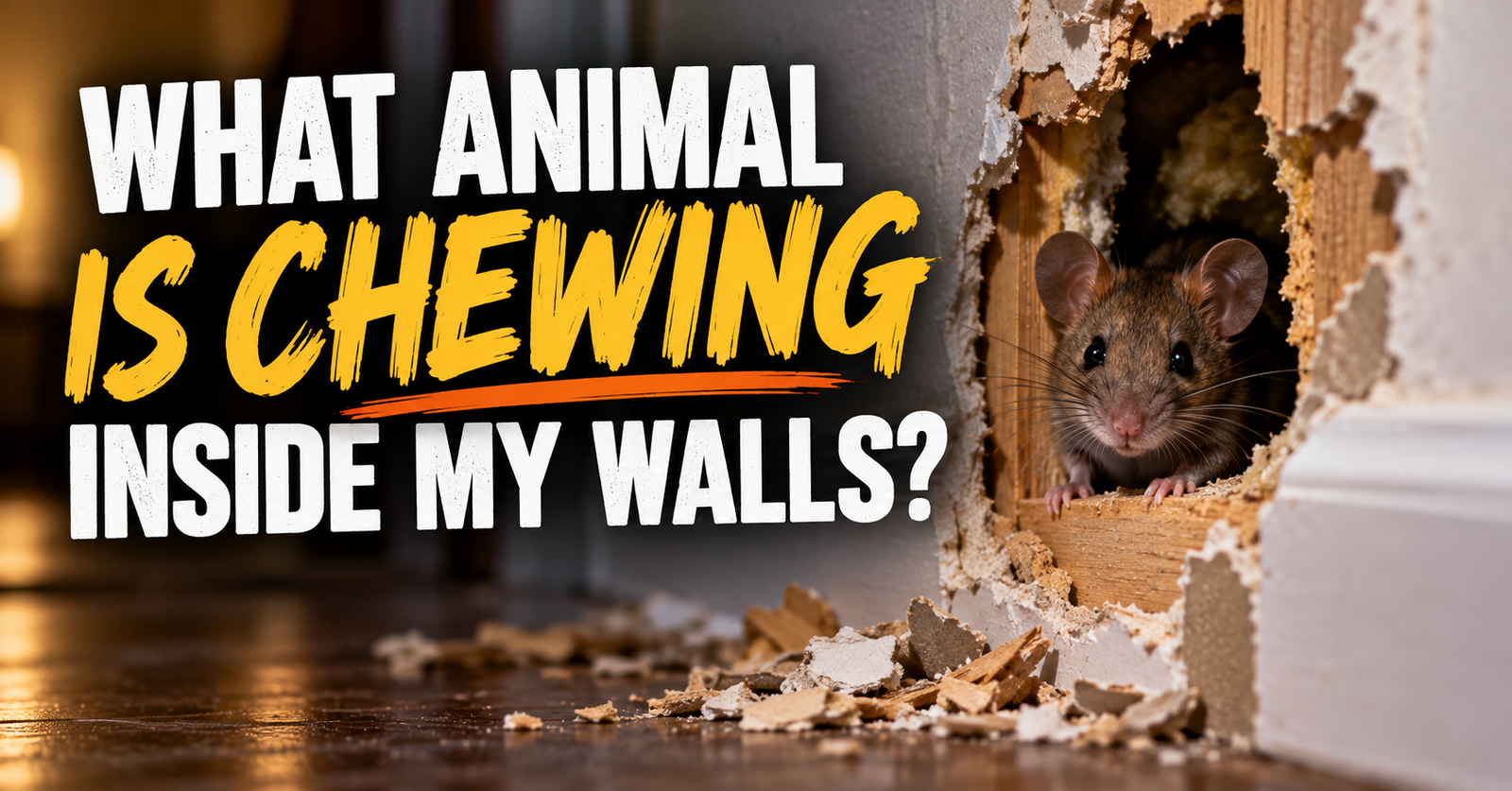
Our guide to identifying what animal is chewing inside your walls goes deeper into that evidence.
That article and this one answer different questions.
Here we’re identifying the vocalization.
There we’re identifying the chewing damage.
When both happen together, the clues become much stronger.
What If It Really Does Sound Exactly Like a Baby Bird?
Then a bird deserves consideration.
Birds can nest or become trapped in structural cavities.
Listen for:
- Repeated begging-type chirps
- Fluttering
- Scratching
- Activity concentrated during daylight
- Noise close to an exterior vent
- Activity near a chimney
- A visible nest outside
- Adult birds repeatedly approaching one spot
That last clue can be extremely revealing.
Go outside and watch the wall from a distance.
If an adult bird repeatedly flies to the same vent or gap carrying food, there’s a pretty obvious reason to investigate that area.
Check Bathroom and Dryer Vents
Exterior vents can create opportunities for birds depending on the design and condition of the vent.
If the chirping seems concentrated around a bathroom exhaust vent or another exterior vent, inspect the outside first.
Don’t immediately reach into ductwork.
Look for:
Nesting material.
Feathers.
Repeated adult bird activity.
A damaged or missing exterior vent cover.
And if you suspect a bird nest, don’t assume you can simply pull it out.
Native birds, nests and eggs can be legally protected depending on species and circumstances.
Identify what you’re dealing with before disturbing an active nest.
Chimneys Can Produce Bird-Like Sounds Too
If the chirping or twittering seems to come from a wall near the fireplace or chimney, consider the chimney itself.
Missouri Extension specifically notes that rustling and twittering sounds from old chimneys may be caused by chimney swifts.
That’s a great example of why location matters.
A person in the room may swear:
“It’s inside that wall.”
But the sound may actually be traveling through a chimney cavity beside the wall.
Before cutting drywall, figure out what’s on the other side.
Young Raccoons Can Sound Surprisingly Bird-Like
This one catches people off guard.
Young raccoons can produce high-pitched vocalizations.
Wildlife Illinois describes raccoon vocalizations as including chattering, growls, chirps and grunts, while young animals may remain in a den as the adult comes and goes.
If the noise is coming from an upper wall beside an attic and you also hear:
heavier movement,
shuffling,
thumping,
or an adult-sized animal moving overhead,
then I’d take raccoons much more seriously.
A tiny mouse isn’t producing heavy footsteps that shake the ceiling.
Baby Wildlife Changes What You Should Do Next
This is one of the most important parts of the article.
High-pitched chirping, crying or squeaking can sometimes mean young animals are present.
That makes aggressive exclusion risky.
If Mom leaves and you immediately seal the entrance, the young may remain trapped inside.
Then you can end up with:
- Dead animals inside the structure
- Odor
- Flies
- Desperate adult animals trying to regain entry
- Damage around the sealed opening
- An avoidable animal-welfare problem
If the evidence suggests a nest or dependent young, identify the species before closing anything.
Could It Be a Squirrel?
Yes, especially if the activity occurs during the day.
Squirrels can vocalize and make a variety of chattering noises.
But I wouldn’t identify squirrel from chirping alone.
Timing is useful here.
Tree squirrels are primarily active during daylight, while mice and rats are much more likely to create the classic nighttime wall-noise complaint.
If you’re hearing fast movement, scratching and chattering every morning shortly after sunrise, squirrel becomes more interesting.
If the same sounds start after the house gets quiet at midnight, I’d look harder at nocturnal animals.
Flying Squirrels Complicate the Daytime Rule
Here’s why I don’t like absolute wildlife rules.
Not every squirrel follows the same schedule.
Flying squirrels are nocturnal.
So:
“It happens at night, therefore it cannot be a squirrel”
is too simplistic.
This is another reason you should combine timing with physical evidence rather than treating the clock as proof.
Listen for the Weight of the Animal
Walls exaggerate sound, so don’t try to calculate body weight from your bedroom.
Still, there’s a meaningful difference between:
tiny rapid scratching
and
heavy shuffling and thumping.
If something sounds substantial enough that you can follow it across the ceiling, that’s useful.
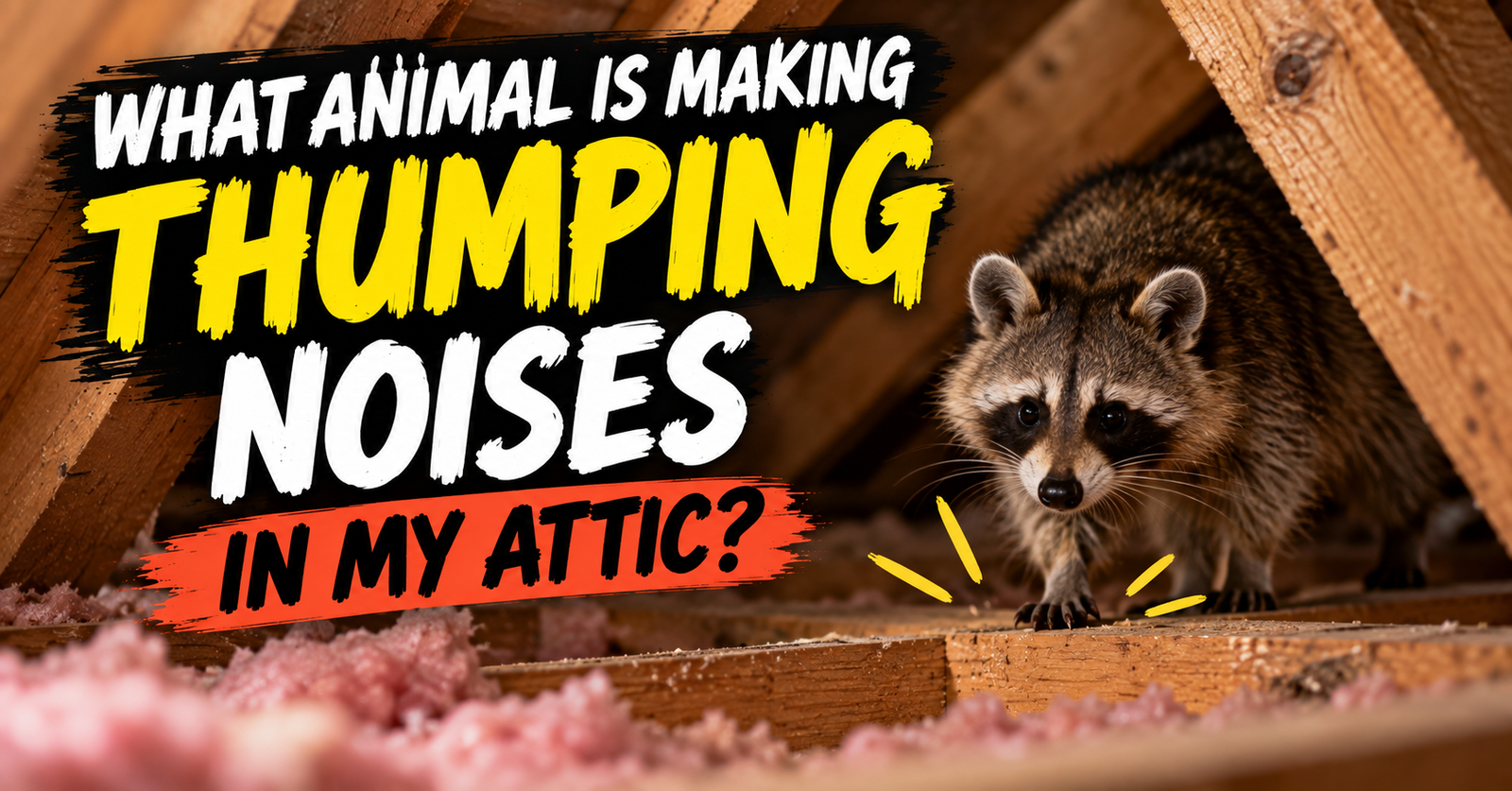
Our guide to what animal is making thumping noises in your attic covers those heavier noises specifically.
If all you have is faint chirping behind one section of drywall, start smaller.
What Time Does the Chirping Happen?
Keep a simple record for two or three days.
You don’t need a spreadsheet.
Just write down:
6:10 a.m. — chirping and fluttering
1:30 p.m. — nothing
8:22 p.m. — chirping again
2:00 a.m. — quiet
That’s useful.
Compare that with:
11:40 p.m. — squeak and scratching
1:15 a.m. — scurrying
3:30 a.m. — gnawing
Those two patterns suggest different suspects.
Timing won’t identify the animal by itself.
But it can shrink the list quickly.
Where in the Wall Do You Hear It?
Location is just as useful.
High exterior wall near the roof
Think about bats, birds and animals entering through soffits, fascia or roofline gaps.
Wall beside the attic
Consider whether the sound actually originates in the attic and travels downward.
Wall near a chimney
Investigate birds and other chimney-related activity.
Lower wall near the kitchen
Rodents become more interesting, especially with food nearby.
Wall near plumbing or utilities
Look for rodent entry points, but also rule out mechanical noises.
Wall beside the garage
Inspect the garage for droppings, gnawing, food sources and exterior gaps.
Don’t treat every wall cavity as identical.
Look Outside Before You Open Anything Inside
This can save a tremendous amount of trouble.
If the chirping consistently comes from one wall, inspect the exterior corresponding to that location.
Look for:
- Loose fascia
- Damaged soffit
- Gaps at roof intersections
- Broken vents
- Missing screens
- Openings around pipes
- Utility penetrations
- Damaged siding
- Nest material
- Grease or rub marks
- Hair
- Droppings below an opening
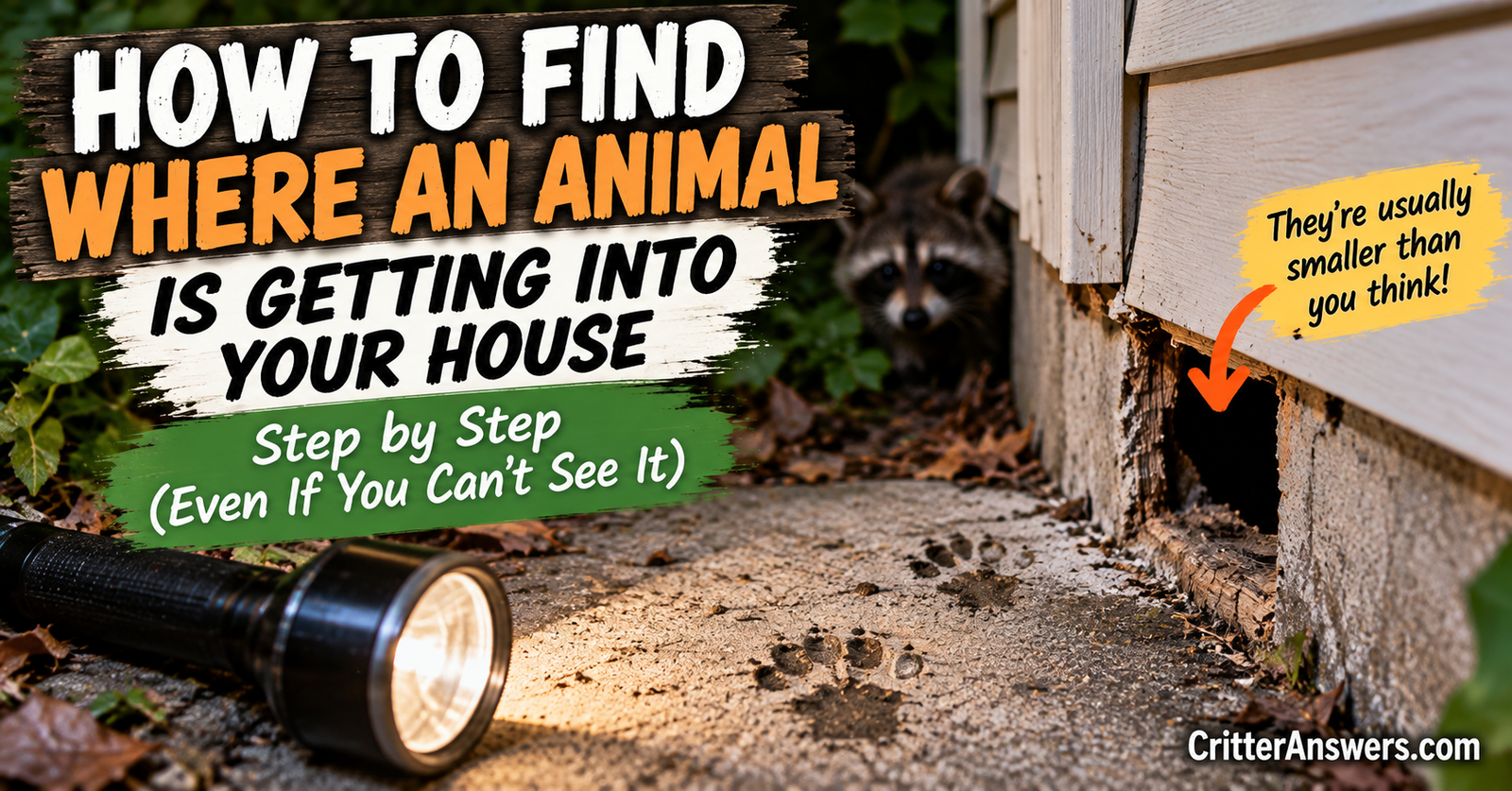
We’ve already built a full guide to finding where an animal is getting into your house.
That’s the next article I’d use once you’ve narrowed down the noisy area.
Don’t Seal the First Hole You Find
This deserves its own section because it’s such an easy mistake.
You hear chirping.
You find a gap.
You grab expanding foam.
Problem solved?
Maybe not.
First, you don’t know whether that gap is actually the entrance.
Second, you don’t know what’s inside.
Third, you don’t know whether young animals are present.
Fourth, some animals can chew or tear through inappropriate repairs.
The correct sequence is:
Identify.
Confirm activity.
Determine whether dependent young are present.
Use the appropriate exclusion method.
Then permanently repair the opening.
That’s much safer than playing whack-a-hole with a can of foam.
Don’t Cut Open the Wall as Your First Move Either
I wouldn’t start by putting a saw through drywall.
You’re introducing a whole new set of problems.
You don’t know exactly where the animal is.
You don’t know whether electrical wiring or plumbing is behind the drywall.
And you may turn a contained animal into a loose animal inside the living space.
Start non-destructively.
Listen.
Inspect.
Watch the exterior.
Check the attic if it’s safe and appropriate.
Look for droppings and entry points.
Use cameras where they can help.
Only escalate when you actually know what you’re dealing with.
What If the Chirping Suddenly Stops?
Don’t automatically assume the animal left.
Maybe it did.
Maybe it’s sleeping.
Maybe young animals stopped calling.
Maybe activity shifted to another part of the structure.
Maybe a nocturnal animal went outside.
If you’ve been hearing consistent animal activity and it suddenly disappears, continue monitoring before sealing anything.
You want evidence that the space is clear.
What If the Chirping Becomes Constant?
Frequent or distressed vocalization deserves attention.
An animal may be:
- Trapped
- Injured
- Separated from an adult
- Confined in a duct or cavity
- Part of a nest or litter
- Unable to exit
If the animal seems trapped rather than simply living in the structure, I’d move toward professional help sooner.
Opening random sections of the house while guessing at the animal isn’t a great rescue strategy.
What If I Find a Bat Inside the Living Space?
That becomes a different situation from merely hearing bats behind a wall.
Avoid bare-handed contact.
Keep people and pets away from the bat.
If there is any possibility that a bat had direct contact with a person or pet — or was found in a room with someone who may not reliably know whether contact occurred — seek appropriate public-health or medical guidance rather than simply releasing it and forgetting about it. The site’s broader health and safety boundaries are described in Critter Answers’ health and safety boundaries.
That matters because bat bites can be small and difficult to recognize.
Don’t Use Poison Just Because Something Is Inside the Wall
This is another shortcut I don’t like.
You don’t even know the species yet.
And killing an animal somewhere inaccessible inside a wall can create a second problem:
odor from a dead animal you can’t reach.

We’ve already covered how animal odors inside a house can help identify what’s happening.
Don’t turn a chirping problem into an odor problem because you skipped identification.
Don’t Set a Live Trap Until You Know What You’re Targeting
Same principle.
Our live-trap cluster is there for situations where live trapping is an appropriate and legal option.
It is not a recommendation to put a random cage in the attic whenever something chirps.
Bats require completely different management from mice.
Birds are different from squirrels.
Raccoons require equipment and handling considerations very different from small rodents.
Identify first.
Then choose the method.
A Camera May Help, but Put It in the Right Place
If you have safe access to an attic or another open area adjacent to the noisy wall, a camera may reveal movement.
Exterior cameras can be even more useful.
For suspected bats, watch the exterior around dusk.
For birds, watch for adults visiting an opening during daylight.
For larger mammals, a camera near the suspected entry can show arrivals and departures.
The goal isn’t to collect cool wildlife footage.
It’s to answer:
What is using this opening?
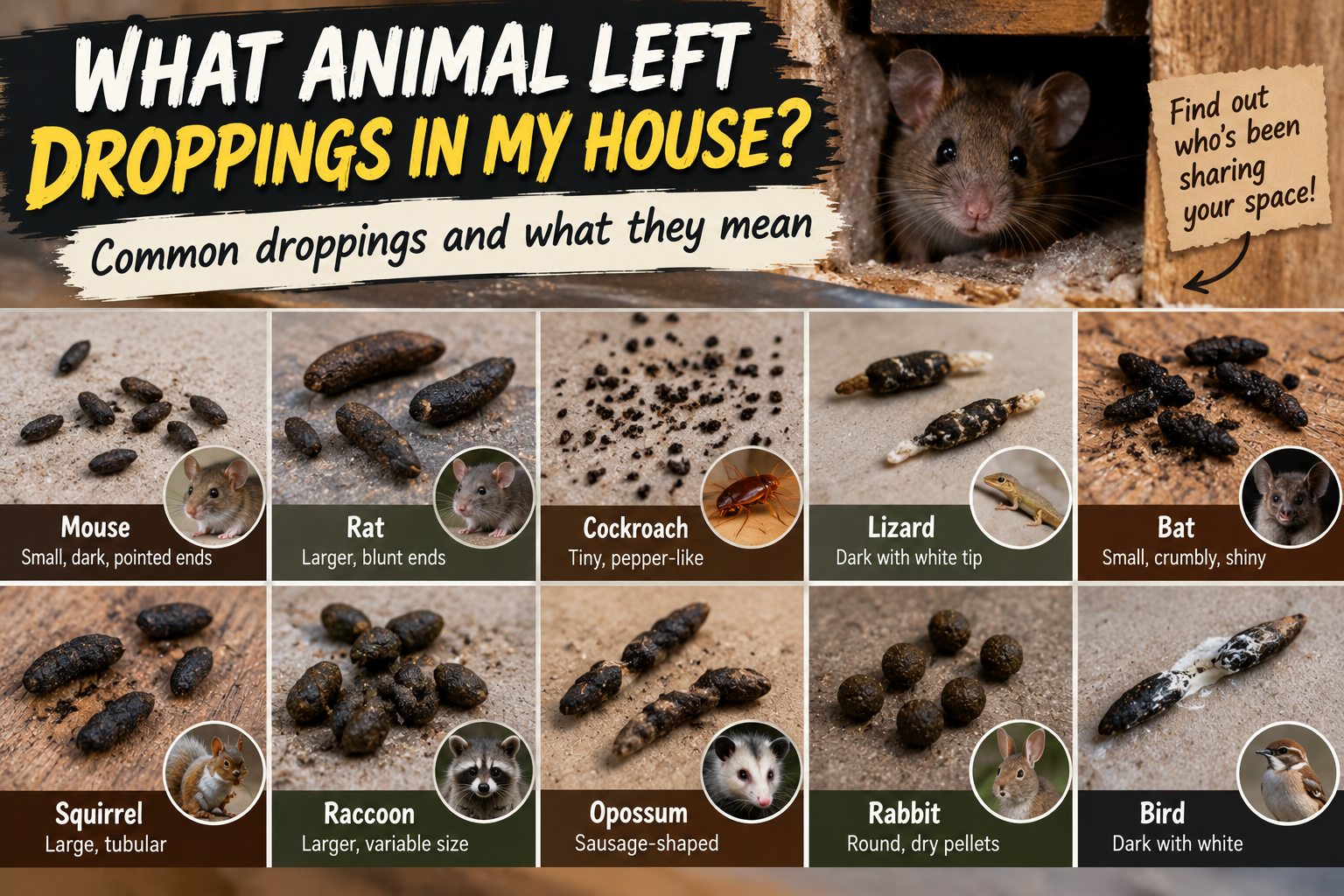
Droppings Can Be One of Your Best Clues
If you find droppings somewhere accessible, don’t ignore them.
Their:
- Size
- Shape
- Quantity
- Location
- Distribution
can help narrow the animal.
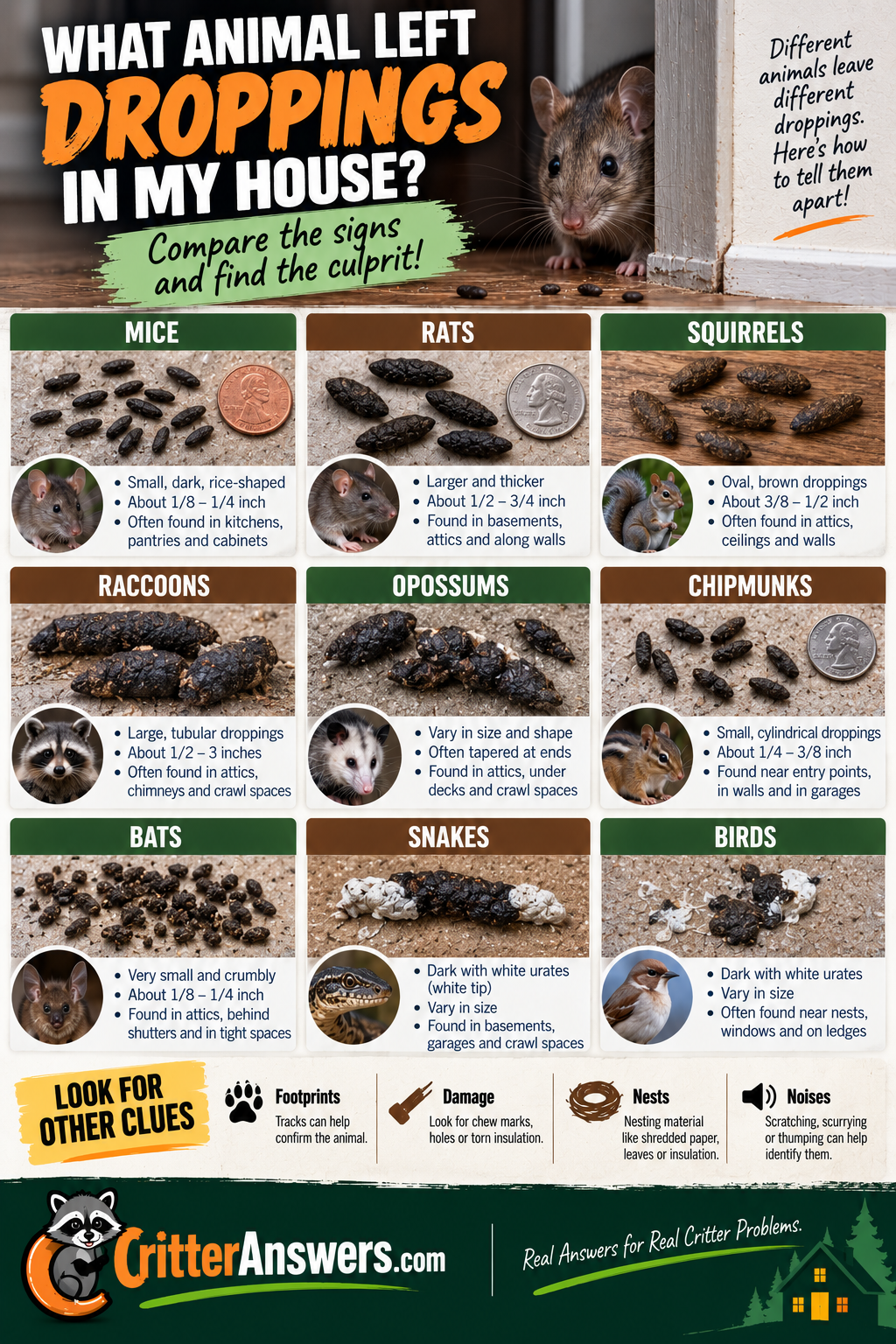
Our guide to identifying what animal left droppings in your house is designed specifically for that step.
And don’t sweep or vacuum mystery rodent droppings dry.
Use appropriate cleanup precautions once you’ve identified what you’re dealing with.
Chirping Plus Fluttering
This combination moves birds and bats higher on my list.
Now look at timing.
Daytime activity with adult birds visiting an exterior opening?
Bird becomes more interesting.
Upper-wall activity around dusk or dawn with bats visibly emerging?
Bat becomes much stronger.
Don’t identify either solely from the word “flutter.”
Confirm it outside if possible.
Chirping Plus Gnawing
Rodents move higher.
Look for mouse or rat evidence.
Droppings.
Chewed food packaging.
Gnaw marks.
Entry gaps.
Nighttime activity.
Again, the secondary clue is doing most of the identification work.
Chirping Plus Heavy Thumping
Now I’m thinking about a larger animal or young wildlife associated with a larger adult.
Raccoons become much more interesting in an attic or upper-wall situation.
A mouse shouldn’t sound like somebody slowly walking across your ceiling.
Use the weight and movement as supporting evidence.
Chirping Plus Fast Daytime Scurrying
Squirrels become more interesting.
Check the attic and exterior roofline.
Look for gnawing around openings.
Watch for squirrels entering or leaving.
The chirp didn’t identify the squirrel.
The whole pattern did.
Chirping Plus a Bad Animal Smell
Now investigate more urgently.
Persistent urine or fecal contamination may indicate an established roost or nest.
A sudden decomposition odor may mean an animal has died inside the structure.
Don’t simply mask the smell.
Find the source.
My Wall-Chirping Cheat Sheet
Here’s how I’d narrow it down.
High-pitched chirping/squeaking near an upper wall around dusk or dawn, possibly with fluttering:
Investigate bats.
Bird-like chirping during daylight near a vent, chimney or exterior opening:
Investigate birds or an active nest.
Quiet squeaks or cheeps at night with scratching, scurrying, gnawing or rodent droppings:
Investigate mice or rats.
Chattering/chirping associated with fast daytime movement:
Consider squirrels.
High-pitched young-animal sounds plus heavier shuffling or thumping overhead:
Consider raccoons or another larger animal with young.
Perfectly repetitive chirp that follows HVAC, plumbing or temperature changes:
Don’t forget the house itself.
And if none of those fits?
Keep gathering evidence rather than forcing an identification.
The Chirp Is Only Your First Clue
This is really the lesson behind our entire mystery-critter cluster.
A sound gets your attention.
It doesn’t necessarily give you the answer.
Chirping + time of day + location + movement + droppings + entry point is much more powerful.
If the sound comes from an upper wall around sunset and bats emerge from the fascia ten minutes later, you have a strong answer.
If it happens at midnight beside the kitchen and you find mouse droppings and gnawed food the next morning, that’s a very different answer.
If adult birds repeatedly fly into the exterior vent beside the noisy wall, that’s different again.
Don’t cut open the wall.
Don’t poison something you haven’t identified.
Don’t plug the hole while young animals may remain inside.
And don’t convince yourself it must be a bird simply because your brain calls the sound a chirp.
Read all the clues the house is giving you.
That’s how you turn a weird noise behind the drywall into an animal you can actually identify — and a problem you can solve correctly.
About the author: Nolan Mercer researches the sounds, tracks, droppings, entry points, nests, and other clues wildlife leaves around homes. At Critter Answers, he focuses on helping homeowners identify what’s actually there before deciding how to remove or exclude it.