
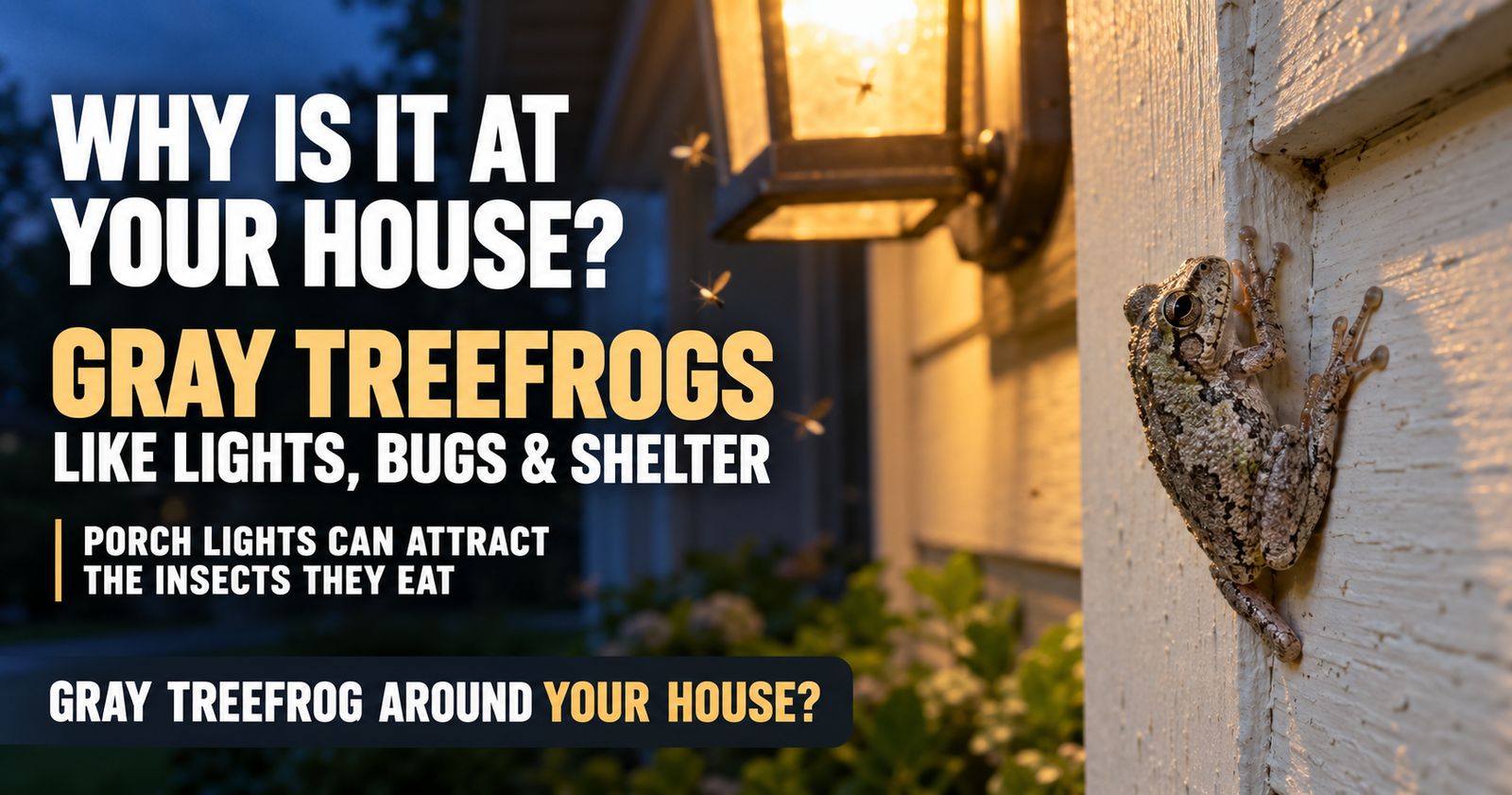
Finding a gray treefrog sitting on your porch, siding, deck, or fence can seem strange if there isn’t a pond anywhere nearby.
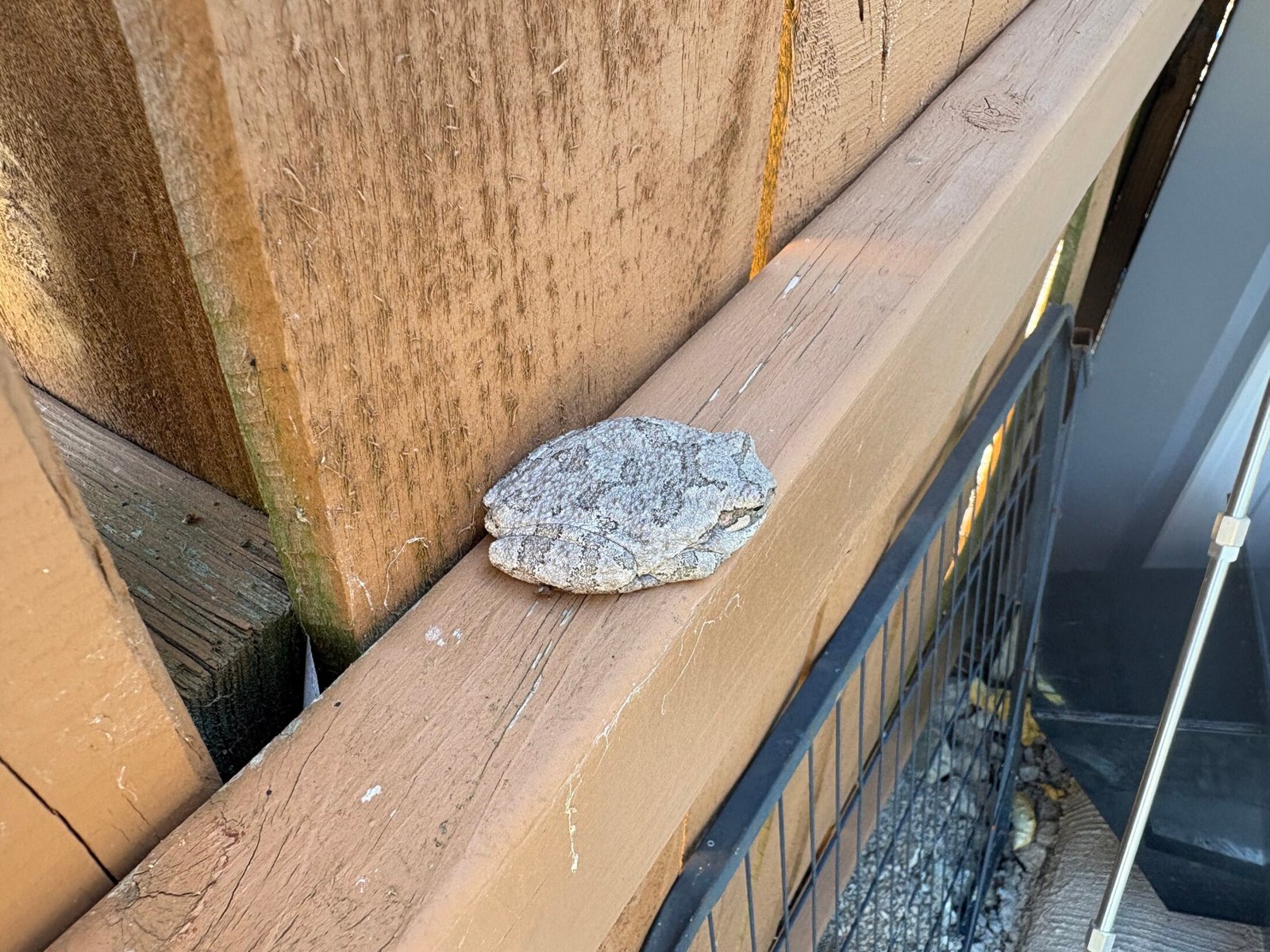
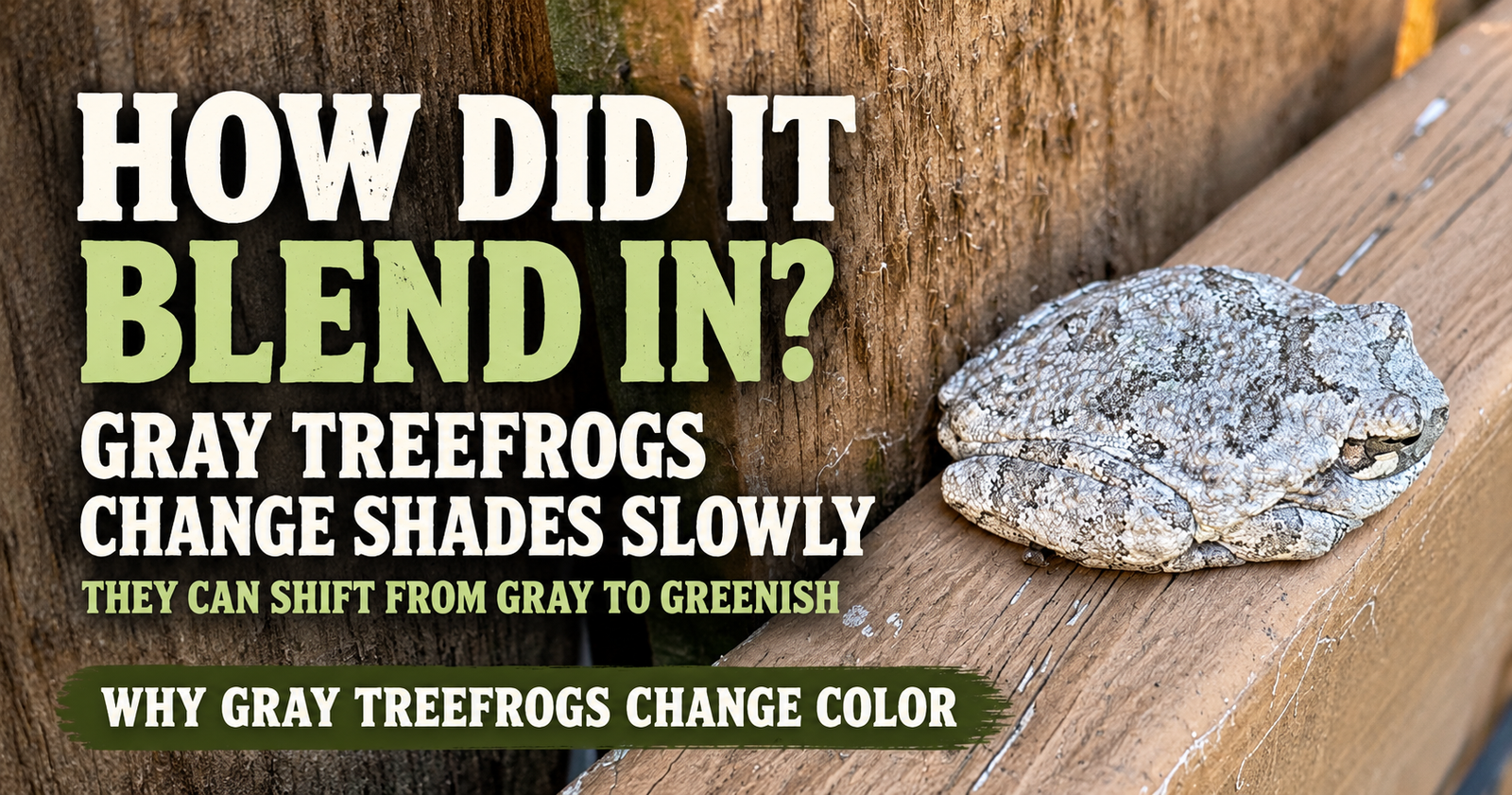
I recently found one sitting quietly on the horizontal board of a wooden fence on a cool fall day. It was in the shade, barely moving, and its mottled gray coloring blended into the weathered wood so well that I could have walked right past it.
That actually wasn’t an unusual place to find one.
Gray treefrogs commonly show up around houses, porches, decks, windows, gutters, birdhouses, fences, and other structures. Your property can provide resting spots, shade, hiding places, and one especially important thing: bugs.
Missouri Department of Conservation specifically notes that gray treefrogs are often found around human structures and may perch near porch lights at night to hunt insects attracted to the light.
So if one of these little frogs keeps appearing around your house, it usually isn’t a problem you need to solve.
Your house may simply be a pretty good place to be a treefrog.
Why Was Mine Sitting on a Wooden Fence?
The camouflage was the first thing I noticed.
The frog’s mottled gray body looked remarkably similar to the weathered wood underneath it.
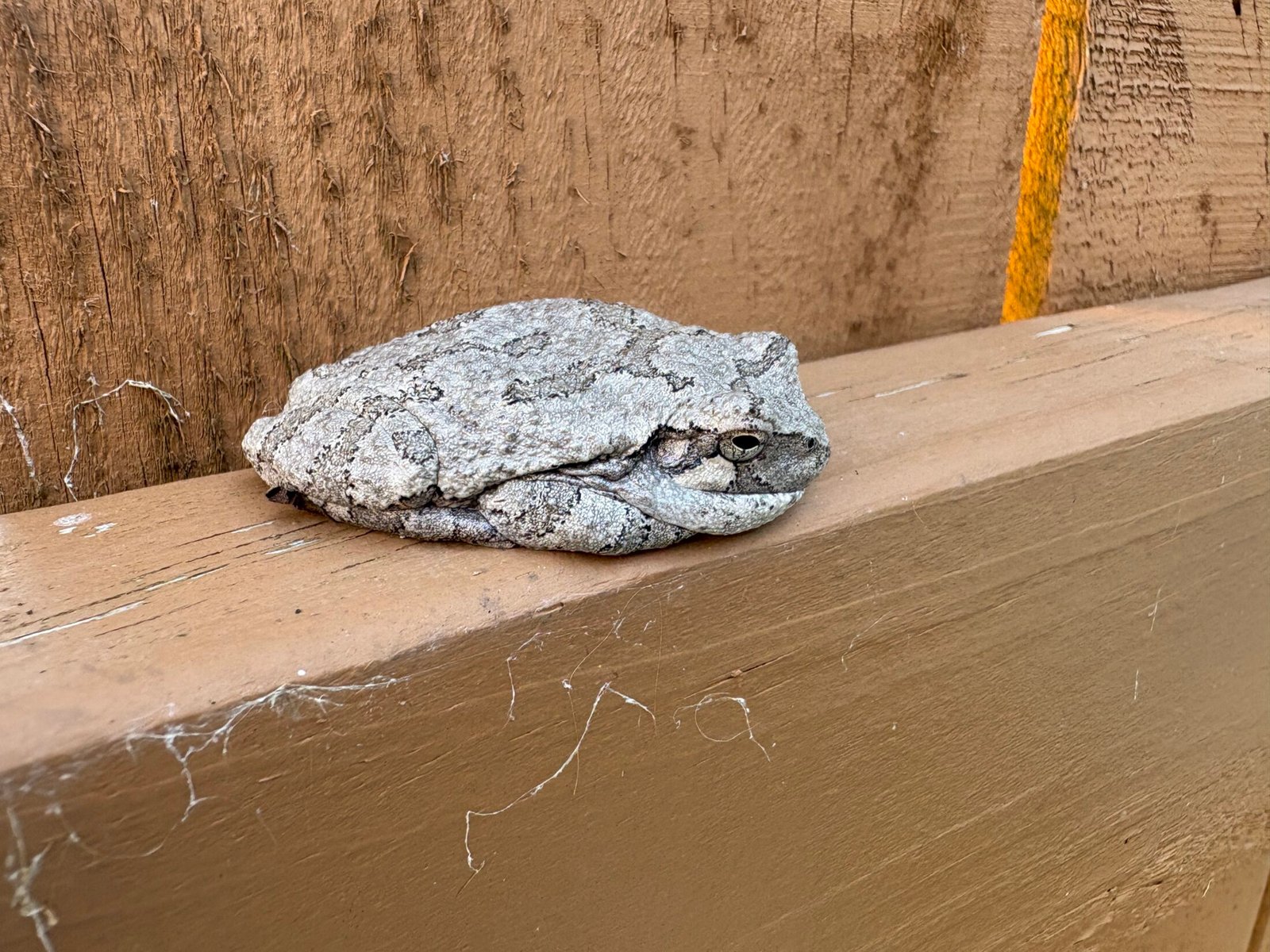
Gray treefrogs can vary from gray and brownish shades to green, and their coloration helps them blend into their surroundings. Missouri Department of Conservation describes them as capable of appearing gravel-gray, bark-brown, or leaf-green.
We’ve already taken a closer look at why gray treefrogs change color and how their camouflage works.
The frog I found was a great real-world example.
On that gray wooden fence, it almost disappeared.
Gray Treefrogs Are Built to Climb
Despite their chunky appearance, these frogs are excellent climbers.
They have enlarged adhesive toe pads that let them cling to trees, vegetation, windows, and other surfaces. Missouri’s gray treefrogs can climb vertically and move across surfaces that would be impossible for an ordinary ground-dwelling frog.
That’s why finding one several feet up your house isn’t surprising.
To the frog, your deck railing, wooden fence, siding, or window isn’t necessarily much different from another climbable surface in its environment.
Why Do Gray Treefrogs Like Porches?
One of the biggest reasons may be flying around your porch light.
Insects.
Outdoor lights attract moths, beetles, and other small insects.
Gray treefrogs eat insects, spiders, and other invertebrates. Missouri Department of Conservation specifically notes that they often perch near porch lights and hunt the insects attracted there.
That’s an incredibly convenient arrangement for a frog.
Instead of searching through vegetation for food, it can sit near a predictable place where insects keep arriving.
If your gray treefrog appears beside the porch light night after night, I’d look at the cloud of bugs before wondering what’s so special about the porch itself.
Window Screens Can Become Hunting Spots Too
The same thing happens around illuminated windows.
Light from inside attracts insects outside.
Some land on the screen.
A gray treefrog has sticky toe pads and can climb right up after them.
MDC specifically mentions gray treefrogs climbing on windows at night around homes.
So a frog stuck to your kitchen window may not be lost at all.
It may be having dinner.


Why Would One Sit on a Deck?
Decks provide a mixture of things treefrogs can use:
- Shade and protected resting areas
- Railings and vertical surfaces they can easily climb
- Nearby vegetation
- Insects
- Moist areas after rain
- Crevices and protected spaces
- Outdoor lights that attract prey
MDC specifically lists decks and porches among the structures where gray treefrogs are frequently found.
A deck beside trees or landscaping basically becomes another piece of usable habitat.
Shade Matters
The frog I found was sitting in the shade, which makes sense.
Amphibians need to avoid excessive water loss through their skin. Protected, shaded places can provide much better daytime resting conditions than a surface baking in direct sun.
Gray treefrogs naturally spend daylight hours tucked into protected locations such as tree cavities, cracks, crevices, and other sheltered spots.
A shaded nook around a house can provide something similar.
Why Do They Sometimes Sit Still for So Long?
Sitting still is part of what makes their camouflage work so well.
A mottled frog against bark or weathered wood is already difficult to see.
A mottled frog that doesn’t move is even harder to notice.
So I wouldn’t assume a healthy-looking treefrog is in trouble simply because it has been sitting in one spot for a while.
It may be resting, hiding, waiting for prey, or avoiding the heat.
Do You Need a Pond to Have Gray Treefrogs Around Your House?
No.
They need suitable water for breeding, but adult gray treefrogs spend much of their lives away from breeding ponds.
In Missouri, they live in forests, woodlots, wooded stream corridors, bottomland forests, and other wooded habitats. They also adapt surprisingly well to human structures.
So finding one around your house doesn’t mean there must be a hidden pond behind the garage.
Suitable breeding water can be somewhere else in the surrounding habitat.


Why Do Gray Treefrogs Show Up After Rain?
Moist conditions are generally much friendlier to amphibians than hot, dry conditions.
Rain and humidity can also increase insect activity.
That means a damp evening can give a treefrog two good reasons to move around:
Better conditions for the frog.
More opportunities to eat.
If you suddenly notice treefrogs on your deck after warm rain, they may have been around the property all along and simply become easier to see.
Is It the Same Gray Treefrog Coming Back?
Possibly.
MDC notes that gray treefrogs may repeatedly use the same cavities and sheltered resting places.
But unless an individual has a distinctive marking you can reliably recognize, I wouldn’t assume every frog appearing on the same porch is the exact same animal.
What repeated sightings do tell you is that the location offers something useful.
Maybe insects.
Maybe shade.
Maybe shelter.
Maybe all three.
Are Gray Treefrogs Trying to Get Inside Your House?
Usually, I wouldn’t assume that.
A frog sitting on your siding isn’t the amphibian version of a mouse looking for a hole into the pantry.
It’s an outdoor animal using an outdoor structure.
Occasionally a treefrog can accidentally end up indoors through an open door, garage, damaged screen, or another opening.
But one sitting peacefully outside isn’t evidence of an infestation.
Can Gray Treefrogs Damage Your House?
This is one of the nicest things about finding this particular critter.
They’re not chewing your house apart.
They’re not rodents.
They’re not gnawing electrical wires.
They’re not excavating beneath the foundation.
They’re not eating insulation.
A gray treefrog sitting on your porch or fence isn’t something I’d consider a structural pest.
Most of the time, I’d leave it alone.
Are Gray Treefrogs Good to Have Around?
I think so.
They’re native predators that eat insects, spiders, and other small invertebrates. Missouri’s conservation department notes that ants and beetles can make up a large portion of their diet.
I wouldn’t exaggerate that into saying one gray treefrog will solve your mosquito problem.
But it’s certainly eating small creatures around the property.
Compared with many of the animals we identify on Critter Answers, this is one visitor I’m pretty happy to see.
Should You Move a Gray Treefrog?
If it’s sitting somewhere safe outside, I’d leave it alone.
That’s exactly what I did with the frog on the fence.
I photographed it and let it keep doing whatever gray treefrog business brought it there.
Unnecessary handling doesn’t benefit the frog.
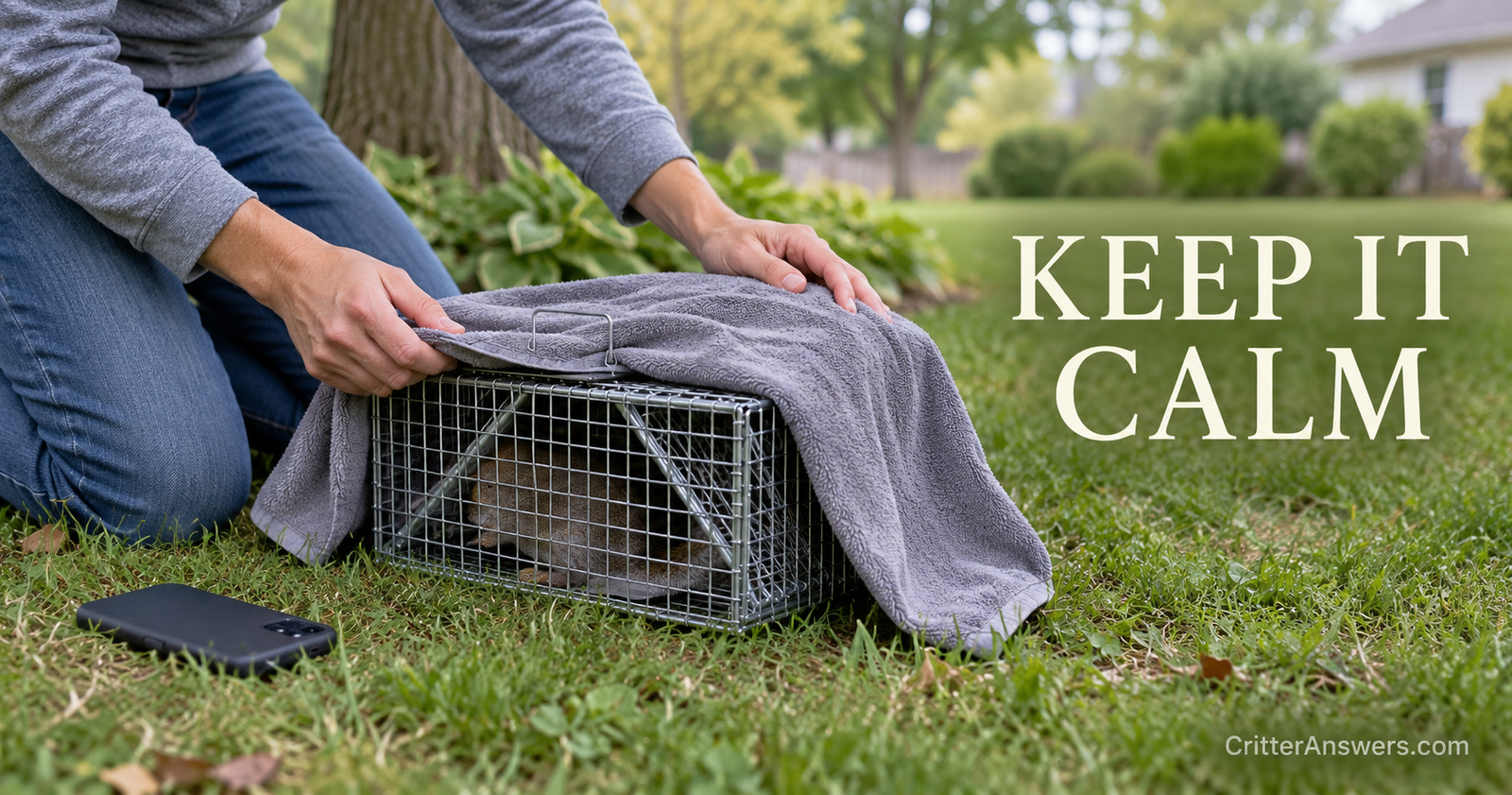
If one is in immediate danger or accidentally gets inside, that’s different. But a frog resting on your deck railing doesn’t need rescuing simply because you noticed it.
Be Careful if You Have to Handle One
Amphibian skin is sensitive, so I wouldn’t casually pick up a treefrog just to show somebody.
If moving one becomes necessary for its safety, keep handling minimal.
And wash your hands afterward.
Wild amphibians can carry germs, so normal hygiene matters after contact.
Most encounters don’t require touching the frog at all.
Look at it. Take your pictures. Let it be.
What If Your Dog or Cat Finds It?
I wouldn’t let pets harass wild frogs.
A dog pawing or mouthing a small treefrog can injure it quickly.
Keeping the pet away also prevents unnecessary contact with wildlife.
If a pet actually eats a wild frog or develops unusual symptoms after mouthing one, contact your veterinarian rather than relying on an online species guess.
What If You Don’t Want Frogs by the Front Door?
Look at your lighting first.
If an exterior light is attracting a swarm of insects every night, you’ve created a reliable feeding location for insect predators.
Extension guidance for treefrogs around porches recommends reducing unnecessary nighttime lighting or using motion-activated lighting when frogs repeatedly gather near a porch light because of insects.
That’s a much better approach than treating the frog itself like a pest.
Remove the attraction and the location becomes less interesting.
Don’t Spray the Frog
I wouldn’t spray pesticides, repellents, bleach, salt, or other chemicals onto a treefrog to make it leave.
Amphibians have sensitive, permeable skin.
And in this situation, there’s usually no reason for chemical control anyway.
A gray treefrog outside is not an infestation.
What If the Frog Looks Green Instead of Gray?
That’s still possible.
The name gray treefrog causes a lot of confusion because these frogs aren’t always gray.
They can appear gray, brownish, greenish-gray, or green.
MDC notes that their coloration can change, and background and environmental conditions influence their appearance.
So don’t eliminate gray treefrog simply because the frog on your siding is green.
Can You Tell Whether It’s a Gray Treefrog or Cope’s Gray Treefrog?
Usually not from appearance alone.
Missouri has both species, and they are extremely difficult to distinguish visually. Their calls are one of the best ways to separate them in the field.
That’s why I remain careful with the frog I photographed.
I can confidently identify it as belonging to the gray treefrog pair, but I wouldn’t claim the photograph alone proves which of the two species it is.
We’ll cover that distinction separately in this cluster.
My Fence Frog Wasn’t Lost After All
When I first noticed that little gray frog sitting on a wooden fence, it looked like an unusual place for a treefrog.
The more you understand their behavior, the less unusual it becomes.
Gray treefrogs climb extremely well.
They use human structures.
They rest in protected places.
They hunt insects around porch lights and windows.
And their incredible camouflage makes weathered wood an awfully good place to disappear.
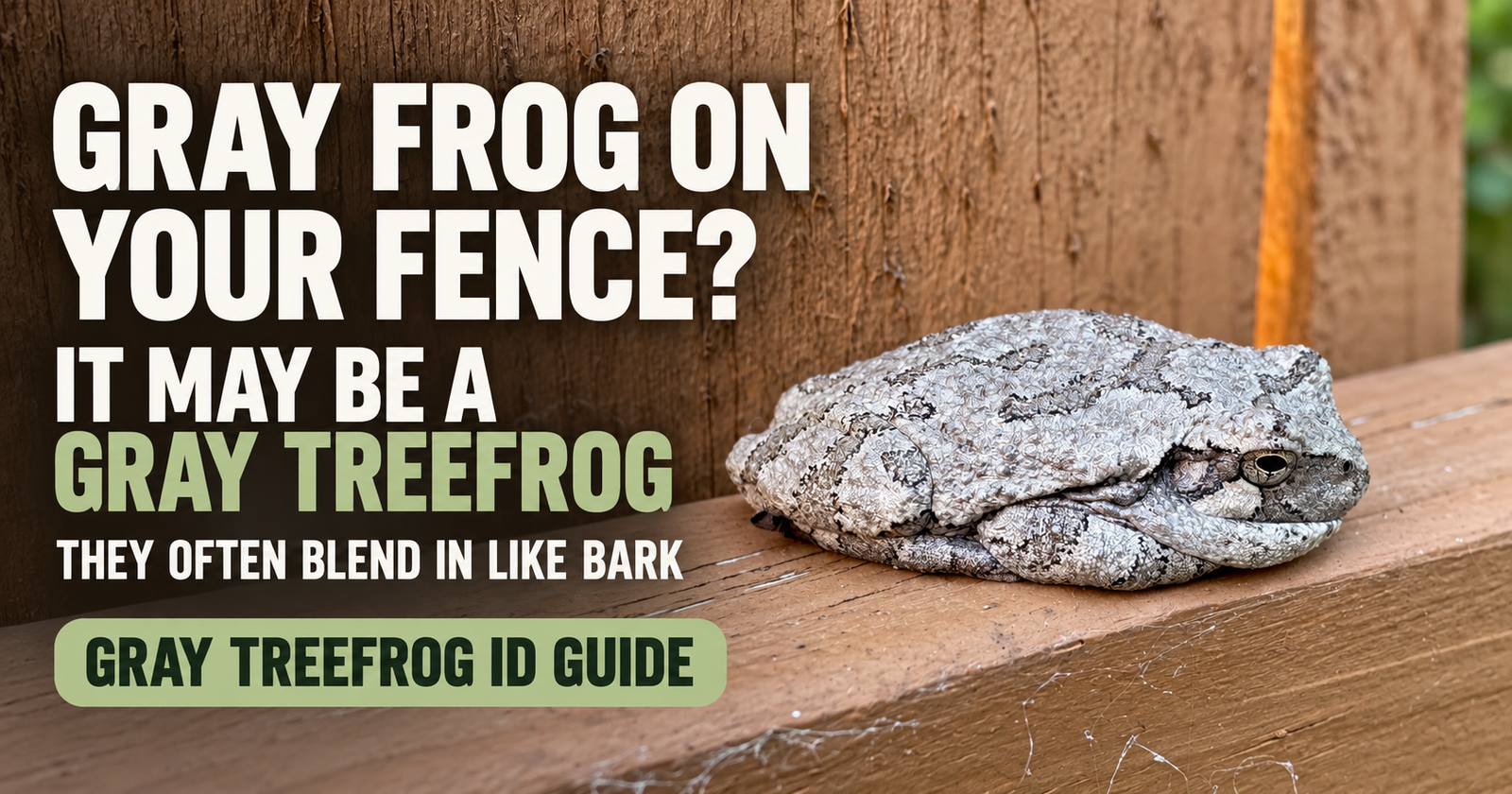
If you haven’t seen the original encounter, here’s the gray frog I found sitting on our fence and how I identified it.
If you find one doing the same thing on your porch, deck, fence, or siding, you probably don’t need to do anything.
Sometimes the best Critter Answer really is:
Leave the little dude alone.
About the author: Mason Hollis writes about the frogs, toads, and other small wildlife people unexpectedly find around their homes and yards. At Critter Answers, he focuses on identifying what showed up, understanding why it’s there, and knowing when the best response is simply to leave wildlife alone.