
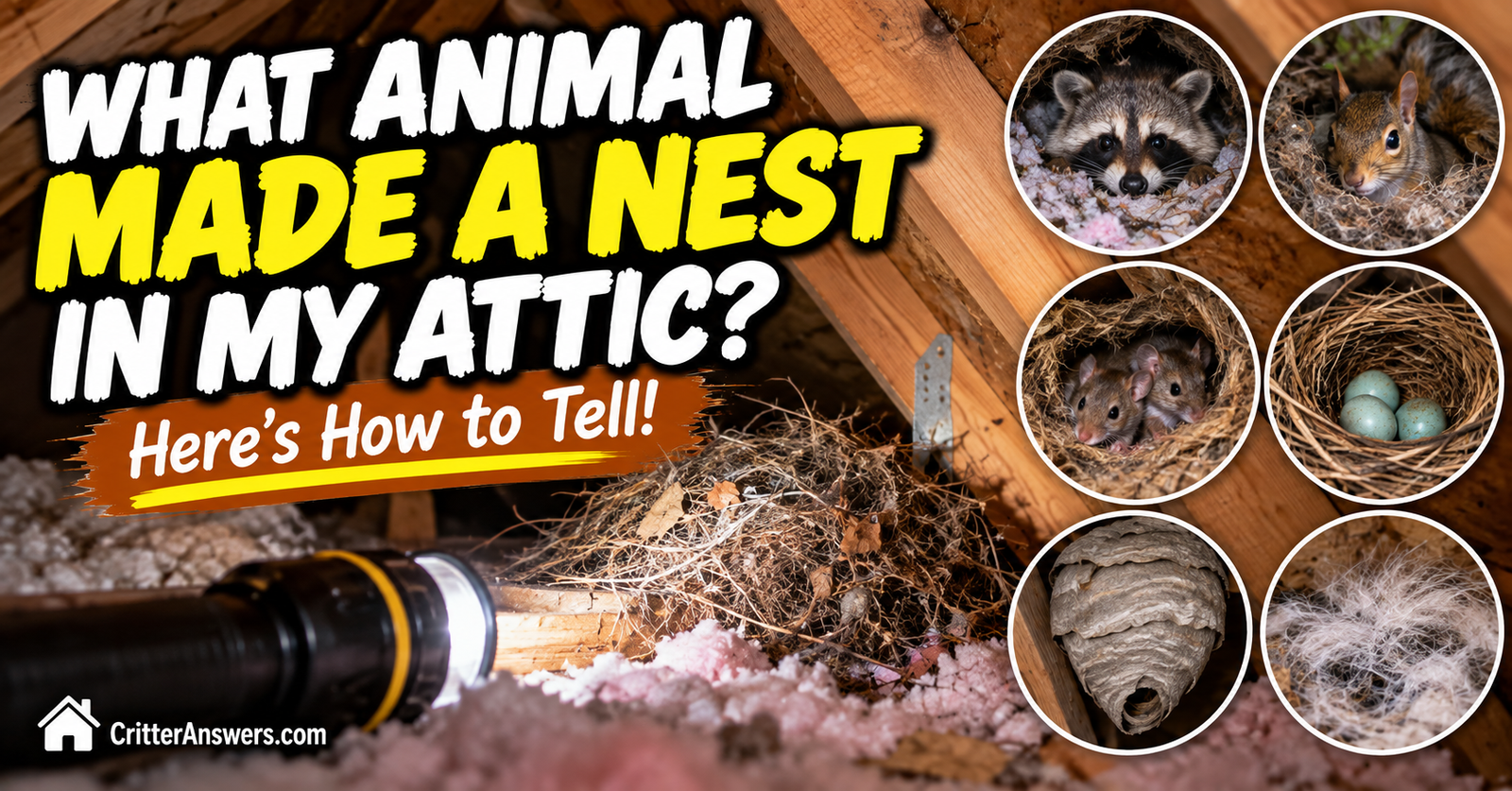
Finding a nest in the attic tells you considerably more than hearing one mysterious scratch above the ceiling. Something has probably been spending enough time up there to turn part of your house into shelter.
But don’t assume every attic nest belongs to a squirrel.
Mice and rats can build nests in protected attic spaces. Squirrels can bring in leaves, twigs, and other material. Birds may nest around attic openings, vents, or eaves. Larger wildlife can also use an attic as a den, particularly when raising young.
The best way to identify an attic nest is to look at what it’s made from, where it is, how large the disturbed area is, what droppings are nearby, and when you hear activity. Those same clues can help you identify what critter is in your house when the animal itself remains hidden.
And before removing anything, make sure you aren’t dealing with a nest that still contains young.
First, Don’t Tear the Nest Apart
I understand the temptation.
You find a wad of shredded material in your attic and immediately want it gone.
I wouldn’t start there.
An active nest may contain young animals that aren’t obvious from where you’re standing. Even if the adult isn’t present, it may simply be outside feeding.
There can also be urine, feces, fleas, or other contamination associated with nesting material.
If rodents are involved, the CDC specifically advises against sweeping or vacuuming rodent nesting material, urine, or droppings before proper disinfection because disturbing contaminated material can put particles into the air. The rodent cleanup limitations also explains why cleanup decisions can depend on the extent of contamination and the conditions involved.
For now, look before you touch.
A few good photographs can be more useful than pulling the nest apart.
What Is the Nest Made From?
This is one of the first things I’d study.
Don’t dig through it. Just look at the visible material.
You might see:
- Dry leaves
- Twigs
- Grass
- Shredded paper
- Cardboard
- Fabric
- Fiberglass insulation
- String
- Plastic
- Feathers
- Plant material
- A mixture of several things
Different animals use different materials, but there’s enough overlap that I wouldn’t identify the animal from material alone.
Instead, use the material to narrow your possibilities.
A Squirrel Nest May Contain Leaves and Twigs
Squirrels are one of the more obvious suspects when a substantial nest appears in an attic.
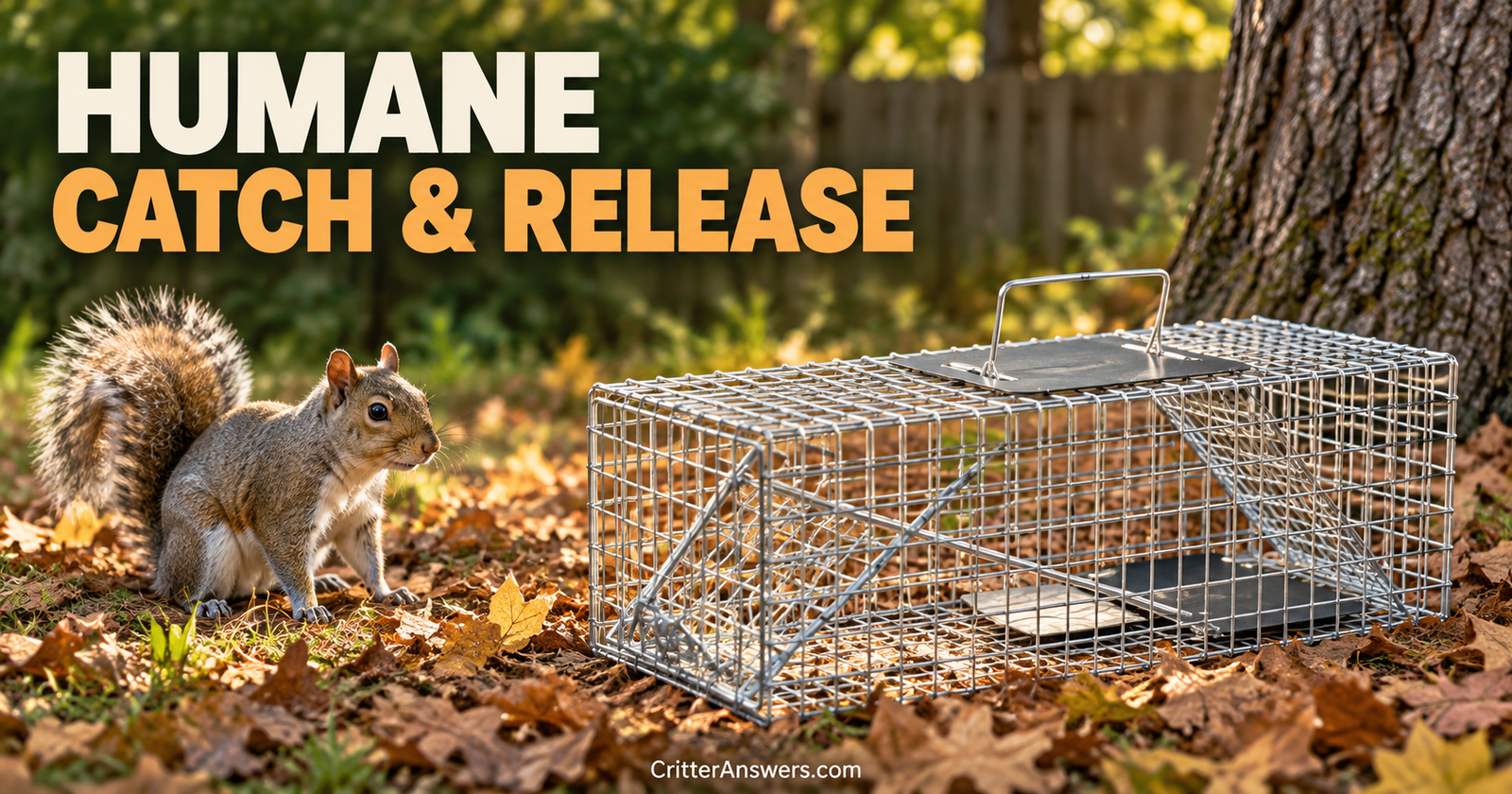
Tree squirrels naturally use tree cavities and leaf nests, but they can also enter buildings and construct nests in attics. Missouri Extension specifically notes that squirrels enter buildings, build attic nests, and may damage insulation and wiring while there. When a confirmed squirrel needs to be removed from an accessible area, a humane squirrel live trap may be worth evaluating before taking action.
A squirrel nest may contain leaves, twigs, bark, grass, insulation, or other soft material the animal can gather.
The nest itself becomes more convincing when the rest of the evidence agrees.
For example:
Leafy nest + daytime scampering + roofline opening + squirrel-sized droppings makes squirrels considerably more likely.
That’s much stronger than simply seeing leaves in the attic and declaring it a squirrel nest.
Time of Day Can Help Confirm Squirrels
If you’re finding a nest and also hearing activity, write down when the noises happen.
Common gray and fox squirrels are active primarily during daylight.
So a nest accompanied by fast morning or afternoon movement is useful evidence.
Flying squirrels complicate this slightly because they’re nocturnal.
That’s why time isn’t proof by itself.
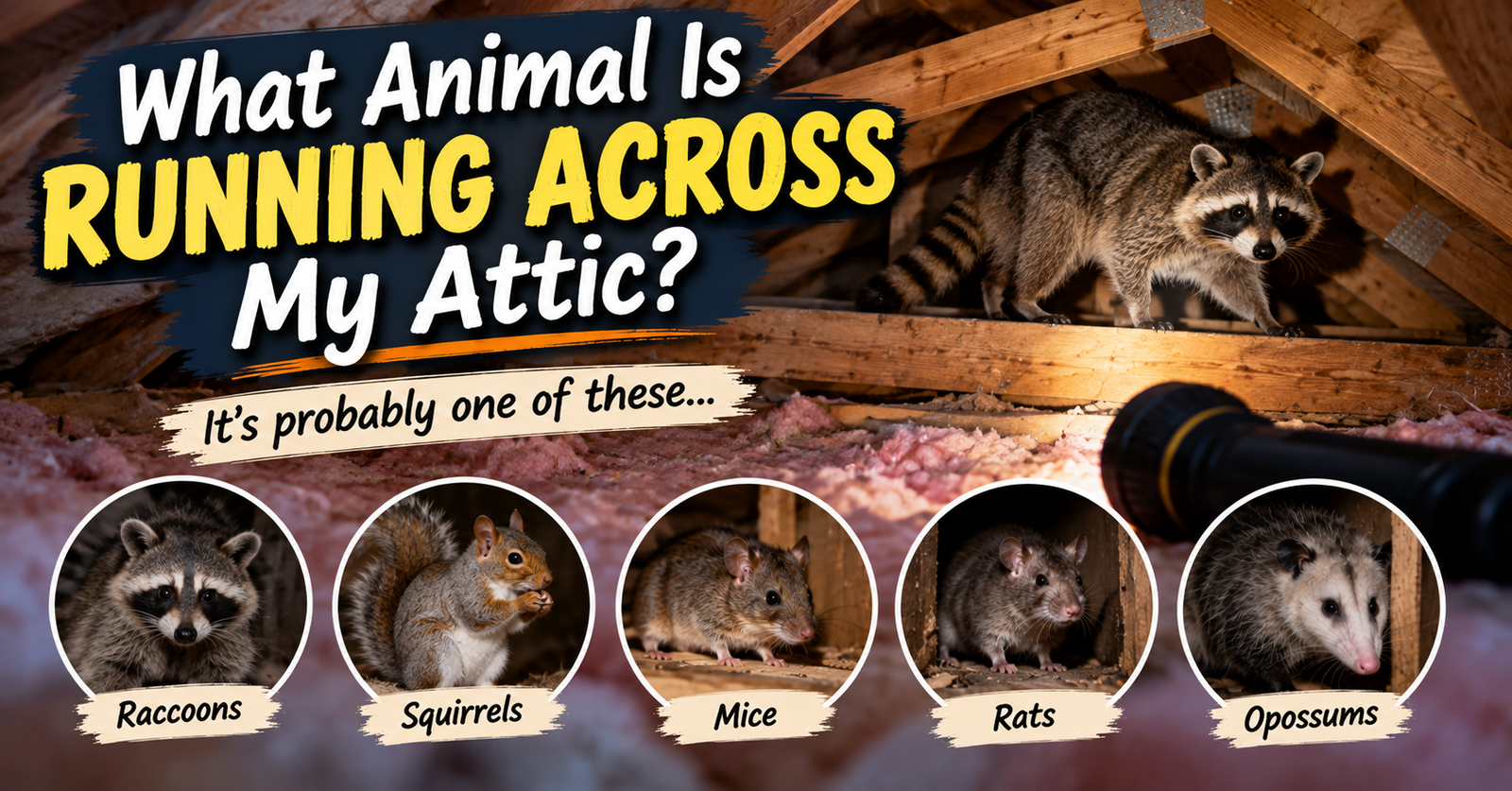
If you’re hearing fast movement and trying to determine what it means, my guide to identifying an animal running across your attic goes deeper into using activity time and movement patterns.
The nest now gives you another clue to add to that investigation.
Mouse Nests Can Be Much Less Impressive
A mouse doesn’t need to haul half a tree into your attic.
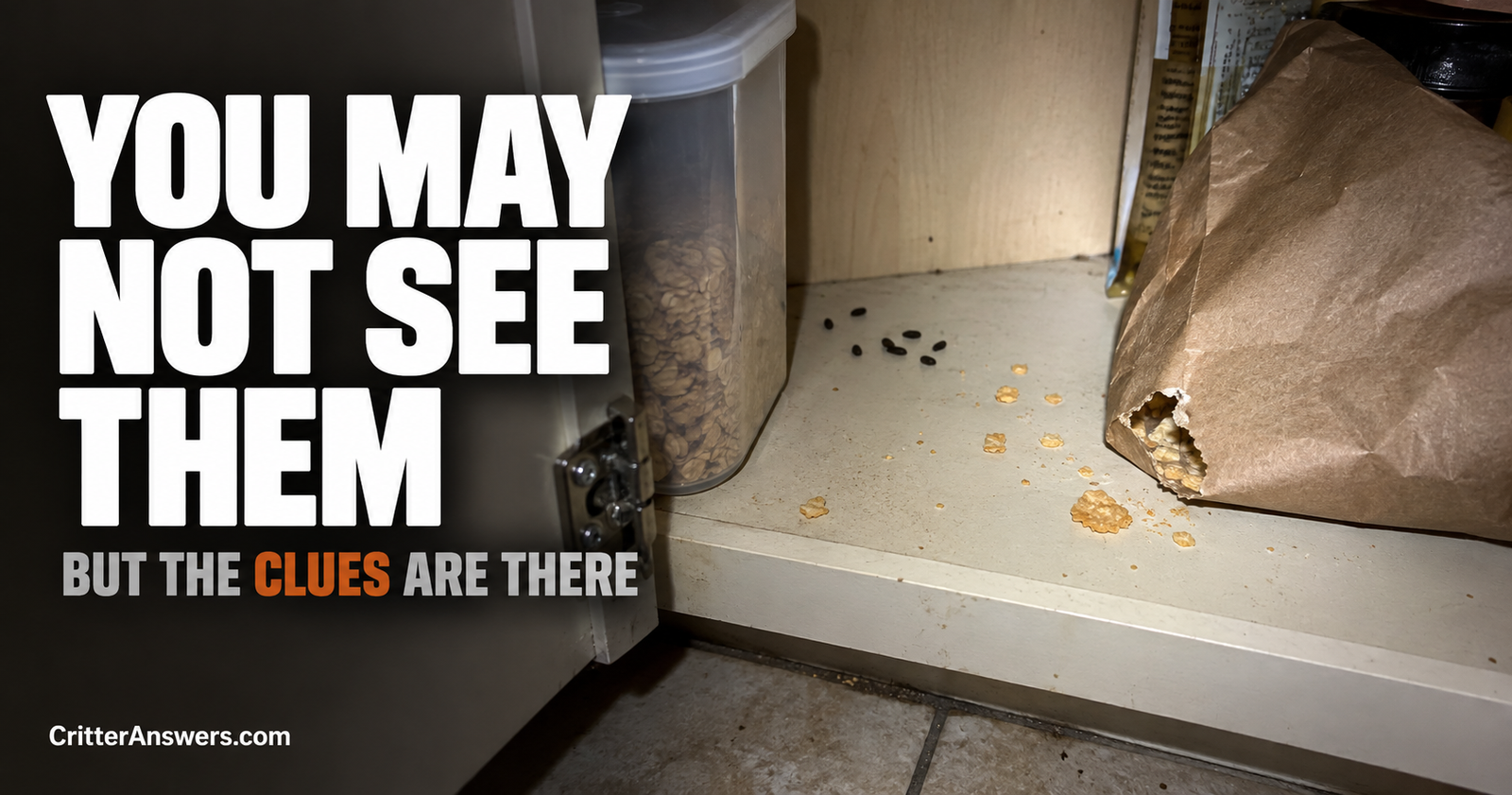
Mouse nests are generally made from soft, shredded materials.
That might include:
- Paper
- Fabric
- Insulation
- Fibrous material
- Other easily shredded items
They tend to build nests in protected, relatively undisturbed places near resources they need.
An attic provides plenty of hiding opportunities.
You may find a small concentrated nest tucked into insulation, beside framing, near stored belongings, or in another protected area.
But the nest itself isn’t enough.
Look around it.
Small Droppings Around a Nest Are an Important Clue
This is where the investigation starts becoming much easier.
A little wad of shredded material could be lots of things.
A little wad of shredded material surrounded by small rodent droppings is considerably more interesting.
Look without disturbing the area.
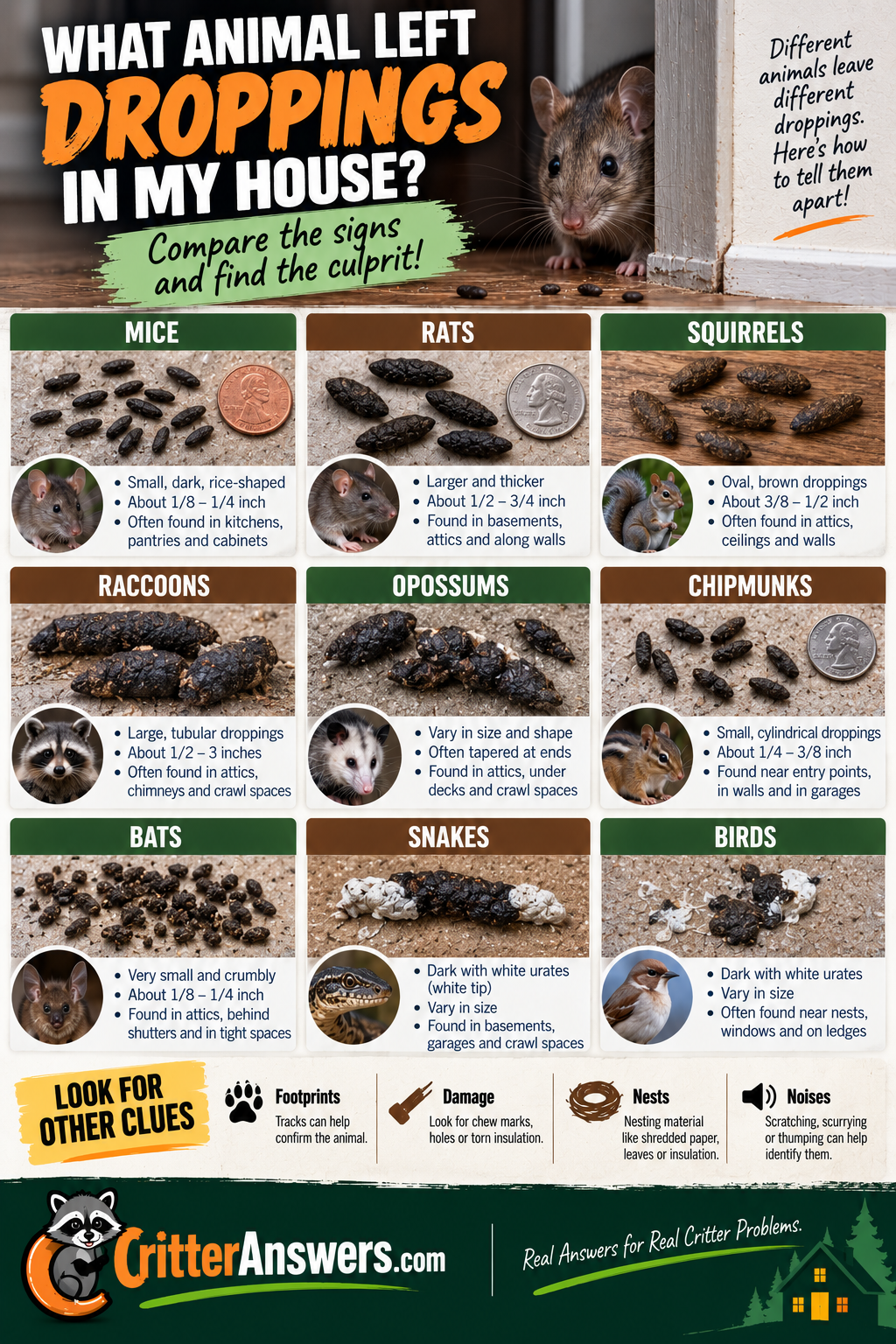
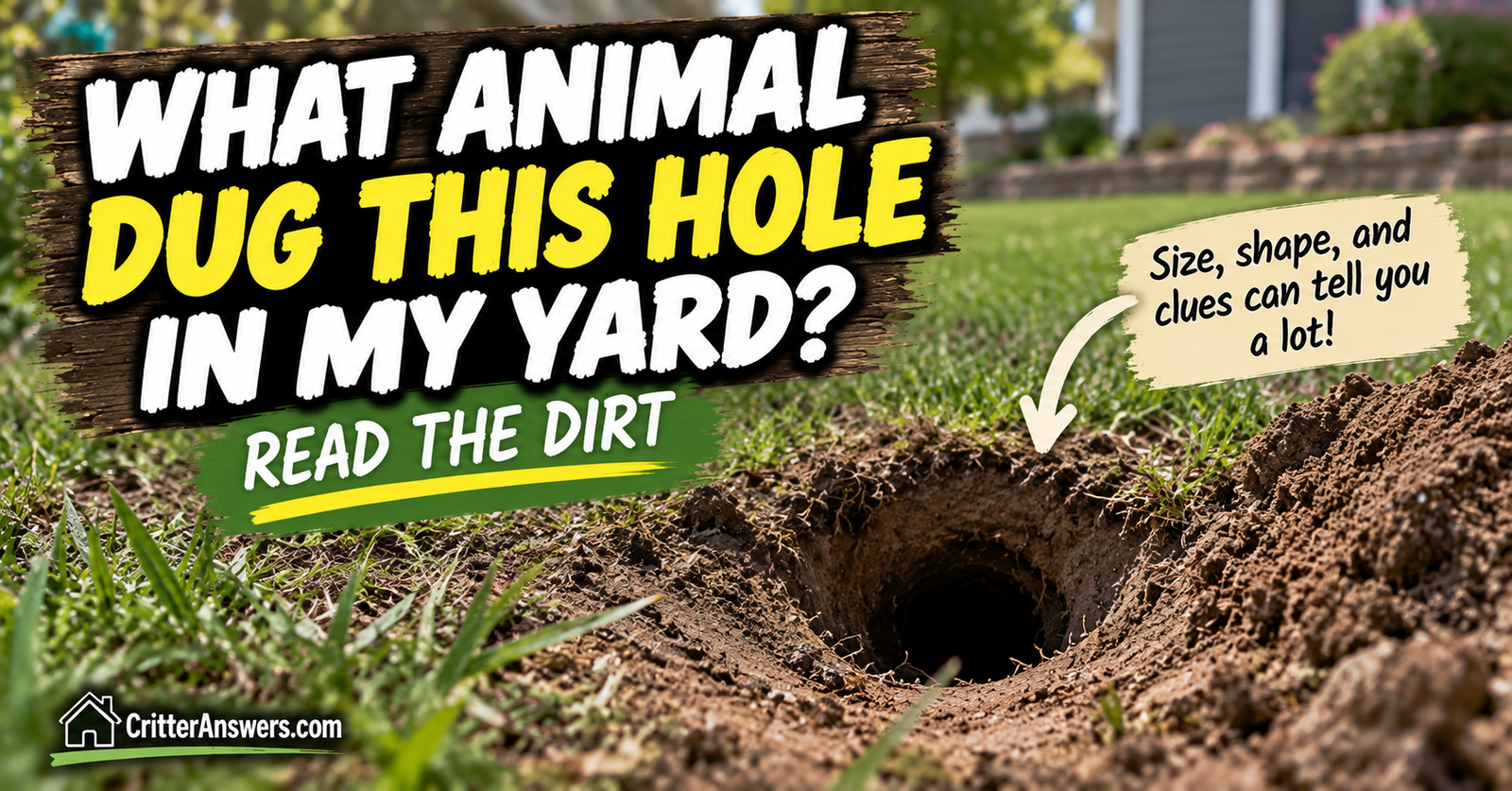
If you’re not sure what kind of waste you’re seeing, my guide to identifying animal droppings found inside a houseexplains how size, shape, location, quantity, and surrounding evidence can help narrow the possibilities.
Also look for gnawing.
A suspected rodent nest near droppings and fresh gnaw marks gives you several pieces of evidence pointing in the same direction.
Rats Can Nest in Attics Too
Rats shouldn’t be overlooked, particularly when you’re finding rodent evidence but the scale seems larger than you’d expect from mice.
Rats may use shredded paper, fabric, insulation, and other available materials for nesting.
Depending on the rat species and building, attic spaces can be suitable habitat.
Again, I want supporting evidence:
- Larger rodent droppings
- Gnaw marks
- Greasy rub marks
- Nighttime activity
- Travel routes
- Food evidence
- An entry point
- A larger nest or nesting area
Don’t try to identify a mouse versus rat by staring at one piece of shredded insulation.
Look at everything around it.
Gnawing Around the Nest Points Toward Rodents
Mice, rats, and squirrels are all rodents.
All three gnaw.
That means chew marks around a nest are important, although they don’t automatically tell you which rodent is responsible.
Look at accessible wood, stored boxes, plastic, wiring, openings, and nearby building materials.
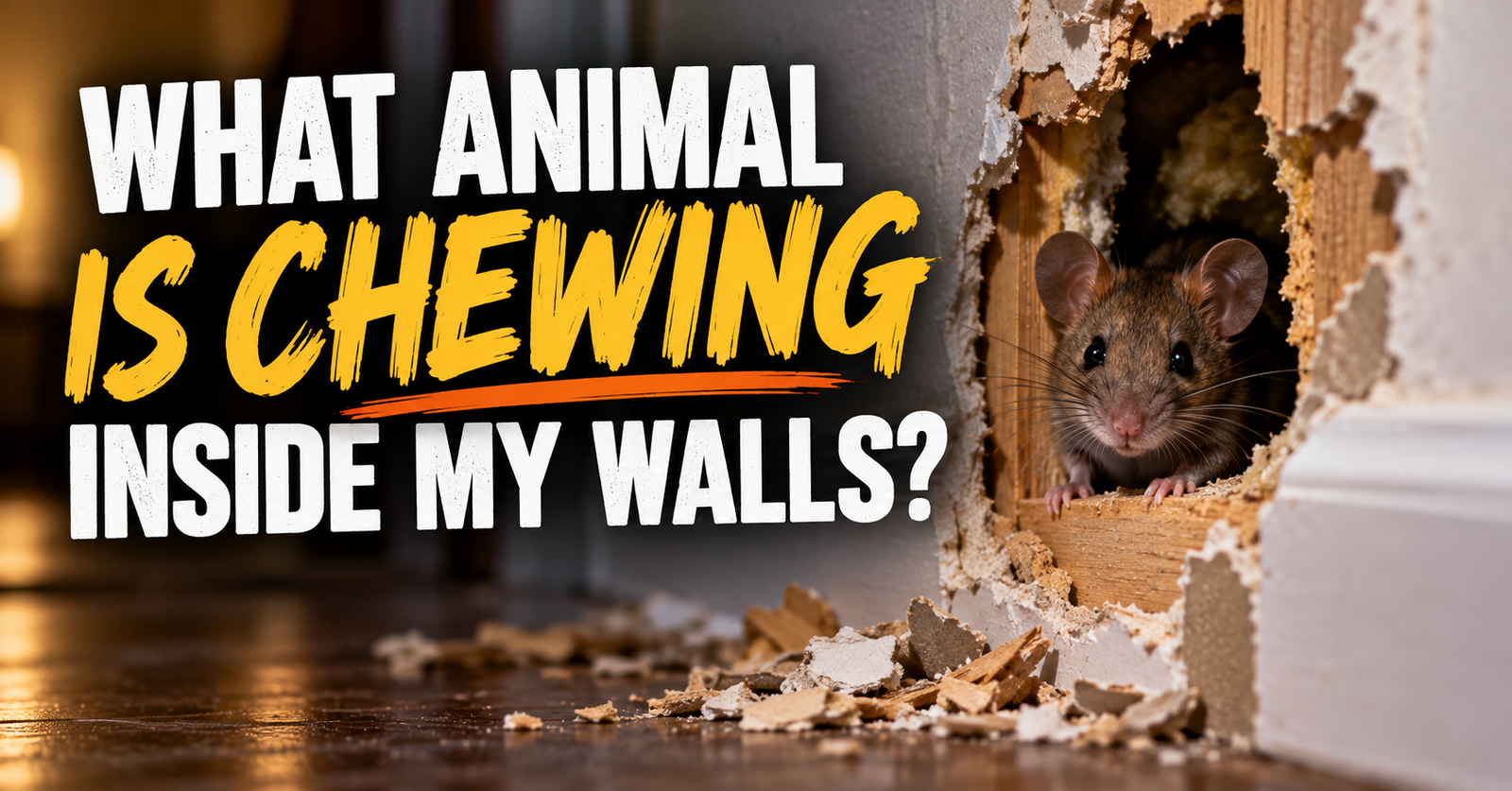
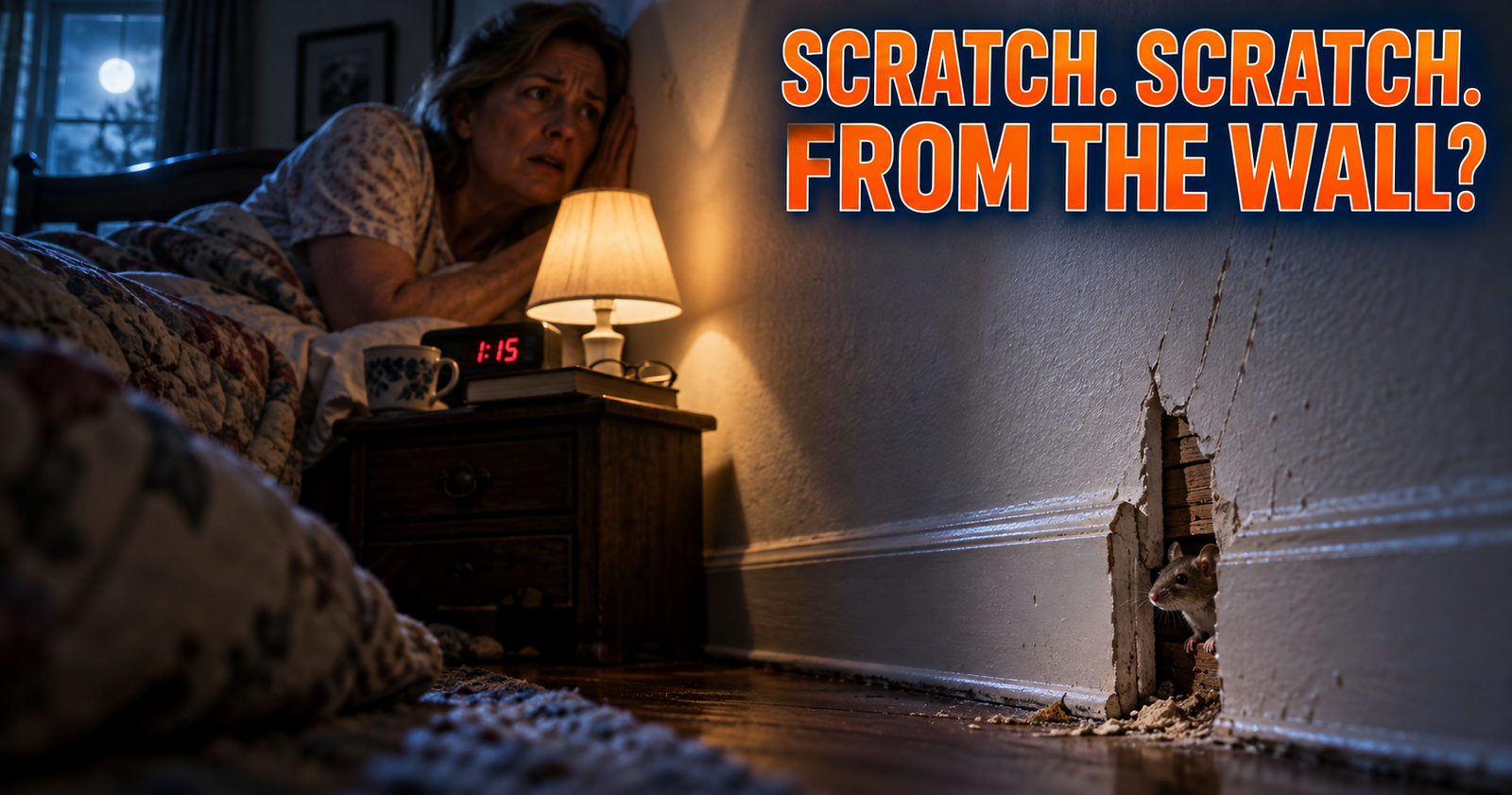
If you’ve been hearing actual grinding or chewing rather than ordinary scratching, I’ve covered that clue separately in what may be chewing inside your walls.
The location of the nest may help connect the two.
An animal could be nesting in the attic while traveling through adjacent wall cavities.
What Does a Bird Nest in an Attic Look Like?
Birds introduce a different set of clues.
A bird nest may contain grasses, twigs, feathers, plant fibers, and other materials depending on the species.
But location becomes particularly important.
Bird activity is often associated with an exterior opening, vent, eave, soffit, chimney, or another cavity connected to the outside.
You may hear:
- Chirping
- Fluttering
- Scratching
- Pecking
- Young birds calling
- Adults repeatedly entering and leaving
Watch the exterior from a safe distance during daylight.
If birds repeatedly fly into the same opening, you’ve obtained much better evidence than the nest material alone could provide.
Don’t Automatically Remove a Bird Nest
This is important.
Many native birds are protected under federal law, and active nests, eggs, or young may be protected as well.
The exact situation depends on the species.
So if you believe you’ve found an active bird nest, identify the bird before deciding what to do with the nest.
Watching adults enter and leave from a distance may be enough to identify the species without touching anything.
If you’re unsure, wildlife authorities or an appropriate professional can help determine what you’re dealing with.
Raccoons Don’t Build a Little Bird-Like Nest
When a raccoon uses an attic, I think of the space more as a den than the kind of carefully constructed nest people picture.
A female raccoon may use an attic as a protected place to raise young.
That’s especially important when you’ve also been hearing heavy movement.
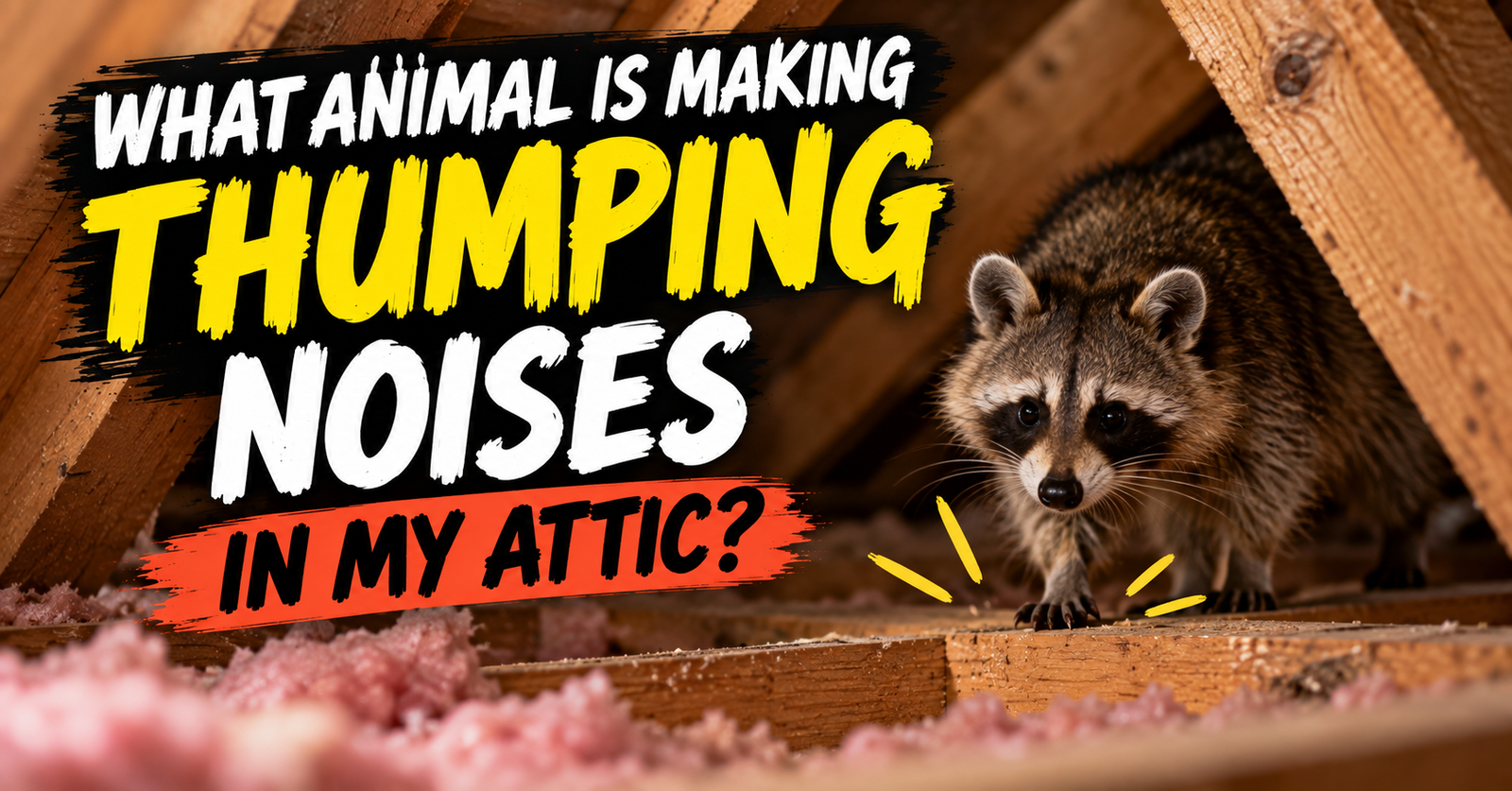
If you’ve noticed thumping and heavy footsteps in the attic, look at the scale of the disturbed area.
A large flattened section of insulation, substantial droppings, strong odor, and heavy nighttime movement point toward a very different animal than a tiny nest of shredded paper.
Don’t approach a raccoon family in an attic.
And don’t assume the adult being gone means the attic is empty.
Young Animals Change the Entire Removal Plan
This is probably the most important point in the article.
Finding the nest doesn’t mean it’s time to seal the entrance.
If a female squirrel, raccoon, or other animal has dependent young inside, sealing the adult outside can strand the young.
Sealing the entire family inside isn’t any better.
Extension wildlife guidance specifically warns that squirrel entrances shouldn’t simply be blocked when a mother and babies may still occupy the attic. Young squirrels can remain dependent for weeks before they’re able to leave on their own.
Similar caution applies when other wildlife is using a structure to raise dependent young.
Figure out whether the nest is active first.
How Can You Tell if the Nest Is Active?
This isn’t always obvious.
Start by observing rather than disturbing.
Look for:
- New droppings
- Freshly disturbed insulation
- Recent gnawing
- New nesting material
- Regular noises
- Adults entering or leaving
- Tracks
- Fresh food remains
- Vocalizations from young
- Odor that seems to be increasing
A motion-activated camera can also help.
If you’ve identified a suspected exterior entrance, watching that route can tell you whether animals are still using it.
An Old Nest Doesn’t Always Mean You Have an Animal Now
This distinction matters.
You may discover a nest that has been sitting unnoticed in the attic for a long time.
Finding it proves that something used the area.
It doesn’t automatically prove that the animal is there tonight.
That’s why fresh evidence matters.
Are new droppings appearing?
Are you hearing current activity?
Is the nest being disturbed?
Is an animal entering the house?
If not, you may be dealing with evidence from an older problem.
Don’t create a panic over a nest that hasn’t been occupied in years.
Smell Can Tell You the Nest Area Is Heavily Used
A strong animal odor near the nest is another clue.
Urine, feces, nesting material, or an animal itself can create noticeable smells in an attic.
If the odor is substantial, contamination may extend beyond the visible nest.
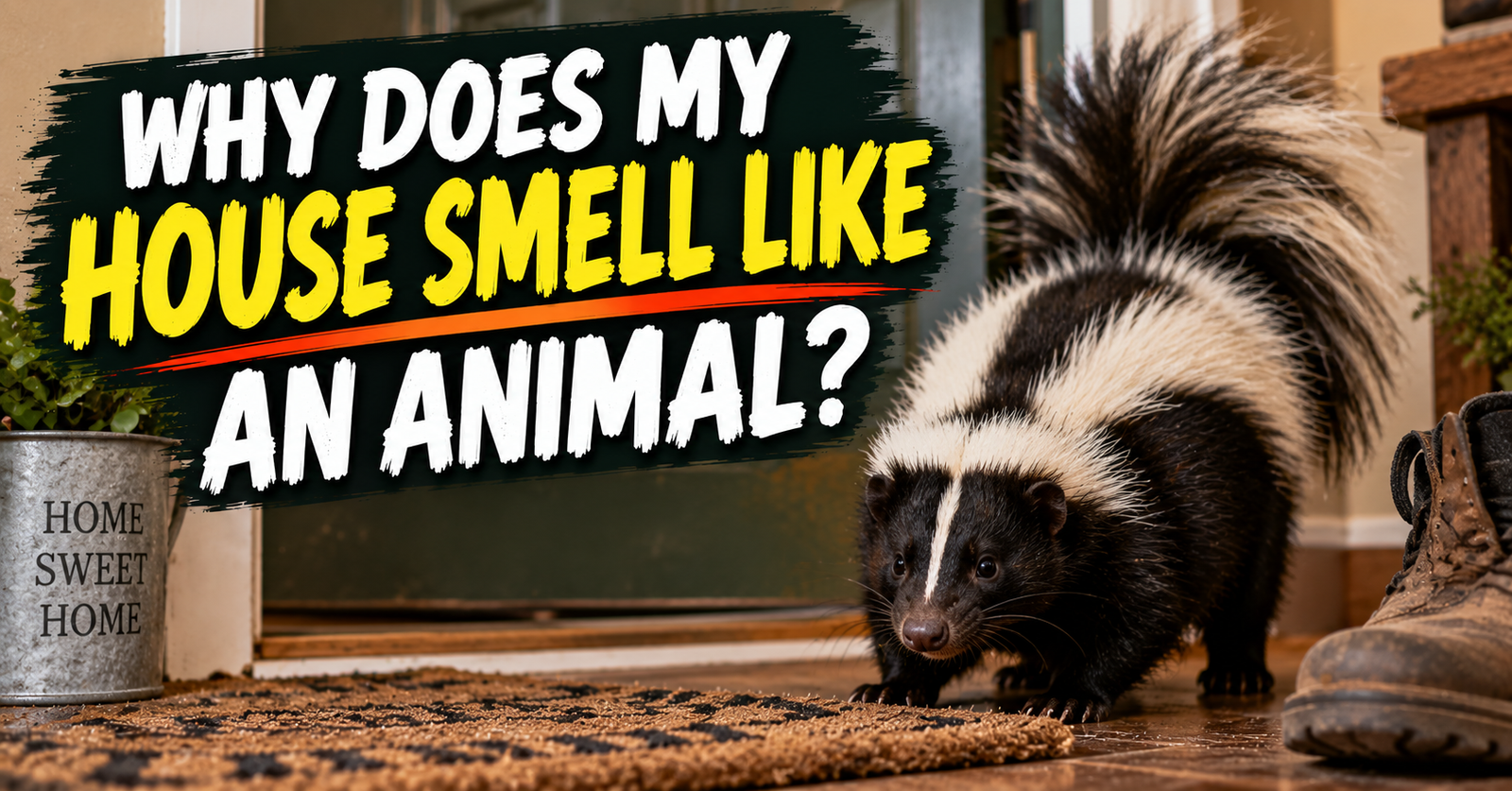
Our guide to tracking down an animal smell inside your house covers urine odors, waste, dead animals, skunk smells, and other possibilities in more detail.
A nest plus odor plus fresh droppings gives you a very different situation from finding a clean, dry, abandoned pile of leaves.
Don’t Assume Every Pile of Material Is a Nest
Attics are messy places.
Insulation shifts.
Air moves lightweight material.
Old construction debris gets left behind.
Previous homeowners store strange things.
A pile of leaves near an attic vent could have blown in.
A clump of insulation could simply have been displaced.
What makes me think nest is organization plus supporting animal evidence.
Does the material form a protected resting area?
Is there a depression in it?
Are there droppings nearby?
Are there travel paths leading to it?
Have you heard animal activity?
Is nesting material different from what’s naturally present in the attic?
Those questions help prevent false alarms.
Look for a Food Cache
This can be a surprisingly good clue.
Squirrels and rodents may move food into protected locations.
Finding nuts, seeds, pet food, or other cached material near a suspected nest strengthens the animal explanation.
But don’t identify the animal from one acorn.
An acorn can roll into an attic.
A collection of food deliberately stored beside a nest is different.
Look for a pattern.
Look at the Insulation Around the Nest
Insulation can preserve evidence.
You may see:
- Small tunnels
- Compressed pathways
- Flattened resting areas
- Droppings
- Tracks
- Nest depressions
- Material dragged from one area to another
The scale is useful.
A mouse moving through insulation creates a different disturbance from a raccoon repeatedly occupying the same section of attic.
Photograph what you see before walking through it.
And if the attic doesn’t have a safe floor or walkway, don’t walk across exposed ceiling joists just to inspect the evidence.
Find the Entrance Before You Remove the Evidence
If an animal built a nest in your attic, the nest isn’t really the underlying problem.
The animal found a way inside.
Eventually, you need to find that route.
During daylight, inspect the exterior from the ground.
Pay particular attention to:
- Soffits
- Fascia
- Roof edges
- Gable vents
- Attic vents
- Chimney areas
- Damaged screens
- Roof intersections
- Utility penetrations
- Gaps around building materials
For rodents, openings can be surprisingly small. CDC guidance notes that mice can fit through an opening about 1/4 inch wide and specifically recommends checking attics, eaves, soffits, vents, utility penetrations, and other structural gaps.
Don’t forget that the opening you find may still be active.
Don’t Seal First and Ask Questions Later
This is one of the biggest mistakes I’d avoid.
You find a chewed soffit.
You patch it.
Problem solved?
Maybe not.
The animal could still be inside.
Young could be inside.
There could be another entrance you haven’t found.
Or an animal trapped inside may start trying very hard to create a new exit.
The right order is generally:
- Identify what is using the attic.
- Determine whether the nest is active.
- Consider whether dependent young are present.
- Identify the entrances.
- Remove or exclude the animals appropriately.
- Permanently repair the openings.
- Address contaminated nesting material.
That’s much less likely to turn one wildlife problem into three.
Be Careful Cleaning Up a Rodent Nest
Once you’ve confirmed that a rodent nest is abandoned and the rodent problem has been addressed, cleanup still deserves care.
Don’t dry sweep or immediately vacuum rodent nesting material.
CDC guidance recommends wetting contaminated rodent nesting material and surrounding areas with an appropriate disinfectant before removal and using gloves during cleanup. More extensive infestations require additional precautions.
If contamination is widespread through attic insulation, professional cleanup may make more sense.
There’s a major difference between removing one small nest and dealing with an attic that has been occupied and contaminated for years.
When I’d Call a Wildlife Professional
An unknown nest isn’t automatically a professional job.
But I’d be much more inclined to get help when:
- A large animal is still present.
- You suspect raccoons.
- You hear young animals.
- The attic isn’t safely accessible.
- You can’t identify the animal.
- You can’t locate the entrance.
- There’s extensive urine or fecal contamination.
- Electrical wiring appears damaged.
- Bats may be involved.
- An active bird nest may involve a protected species.
- You’re unsure how to exclude the animal without trapping it or separating a mother from young.
A professional doesn’t just remove the nest.
The useful part is identifying what made it, whether it’s still there, how it’s getting inside, and how to keep the problem from happening again.
What I’d Do After Finding a Mystery Nest
If I found an unknown nest in my attic tonight, I wouldn’t touch it yet.
I’d take photographs from a safe distance.
I’d note the material it’s made from and look for droppings, tracks, gnawing, food caches, disturbed insulation, and other nearby evidence.
Then I’d think about the noises I’ve been hearing.
Daytime scampering?
Nighttime scratching?
Heavy thumps?
Chirping?
Nothing at all?
Next, I’d inspect the outside of the house during daylight and watch suspected entry points.
Once those clues start agreeing, the animal becomes much easier to identify.
The nest is valuable evidence. Don’t destroy your best clue before you’ve figured out who built it.
And above all, make sure you’re not looking at a nursery rather than an abandoned pile of nesting material. Finding babies after you’ve sealed their mother outside is a much harder problem than taking a little extra time to identify the nest correctly in the first place.
About the author: Nolan Mercer researches the clues wildlife leaves in and around homes and turns them into practical identification guidance for homeowners. His work for Critter Answers focuses on using nests, sounds, droppings, damage, activity patterns, and other evidence together rather than guessing from a single sign.