
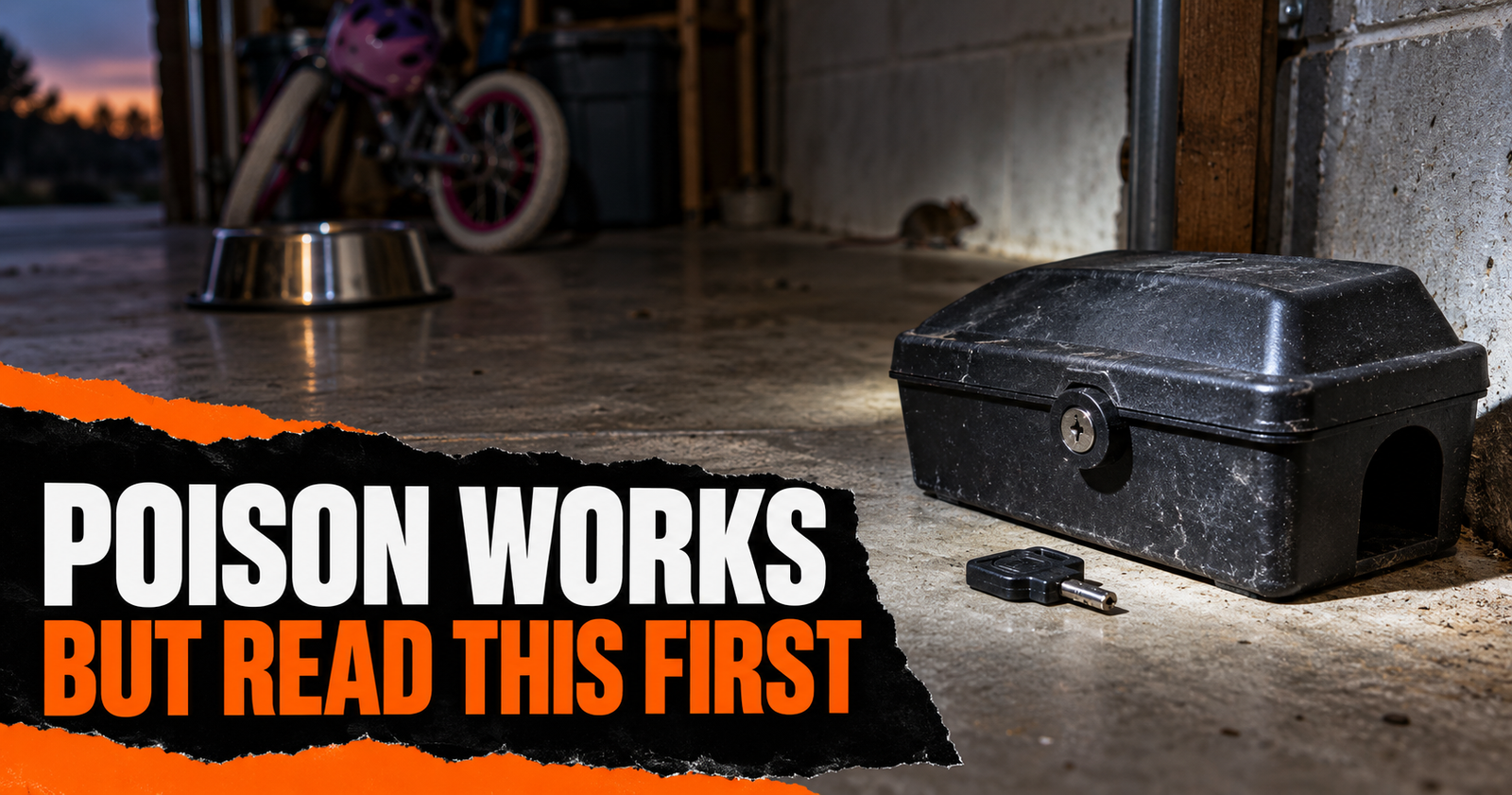
Mouse poison sounds like the easiest solution to a mouse problem.
Put bait where mice are active.
They eat it.
The mice die.
Problem solved.
And to be fair, rodenticide can absolutely have a place in mouse control.
But I don’t think homeowners are helped when an article talks about mouse poison as if there are no tradeoffs.
There are.
Poison can reach mice that aren’t cooperating with traps. It can be useful when an infestation persists. Bait stations can protect bait and allow rodents to feed from a controlled location.
On the other hand, poison introduces risks to children, pets, and wildlife if it’s used incorrectly. A poisoned mouse can die somewhere you can’t retrieve it. You don’t get the same immediate confirmation of a kill that you get from a trap. And putting poison around the house does absolutely nothing to close the hole that allowed mice inside.
So my answer isn’t “mouse poison is bad.”
It also isn’t “just put poison everywhere.”
It’s this:
Mouse poison is a legitimate control tool, but I would use it deliberately, according to the exact product label, and as one part of a larger mouse-control plan.
Here’s what I’d consider before deciding whether it belongs in yours.
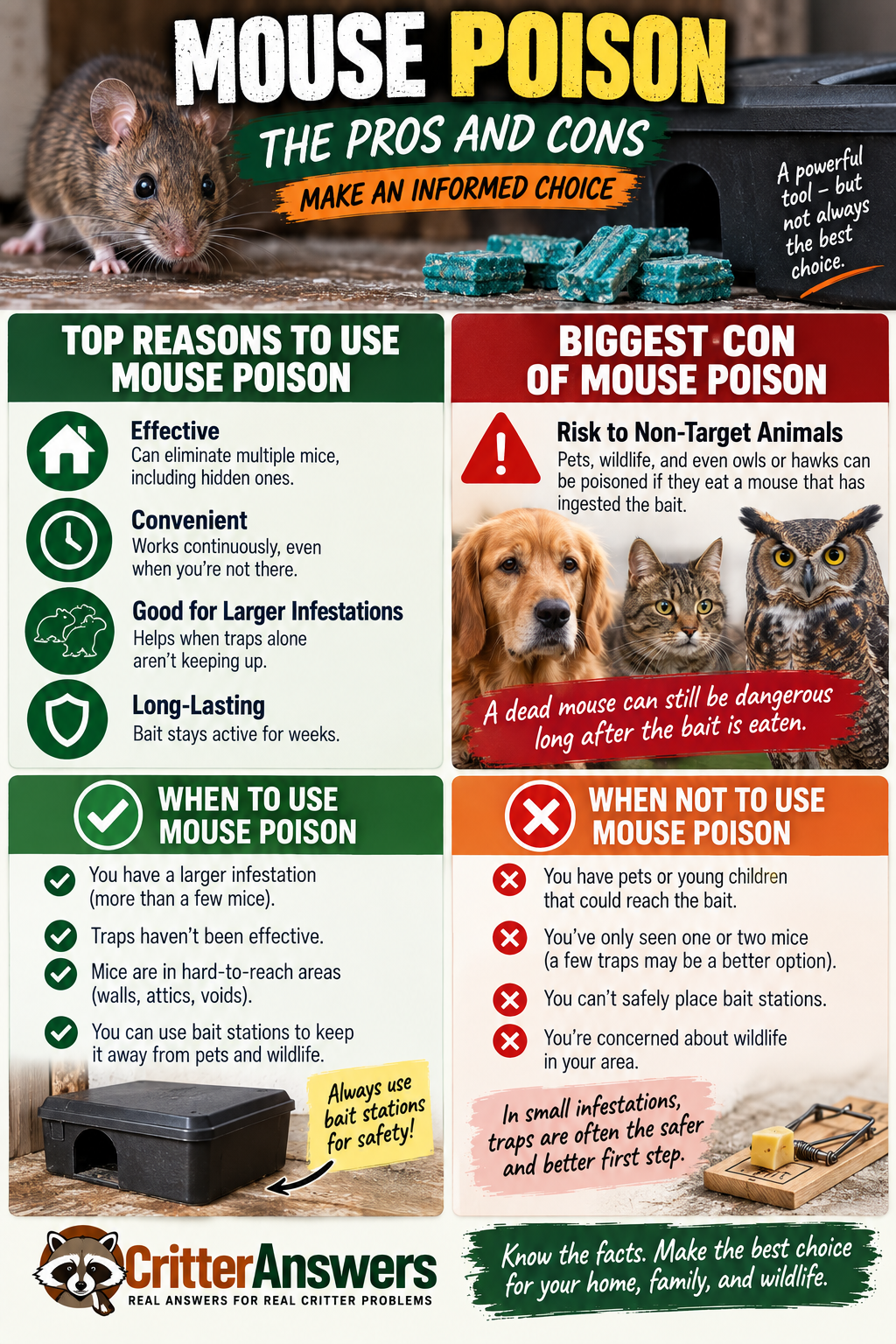
The Quick Pros and Cons of Mouse Poison
Let’s start with the simple version.
Pros
- Can kill mice without requiring them to trigger a mechanical trap
- Useful for persistent mouse infestations
- Can provide ongoing control while properly maintained
- Bait can be secured inside an appropriate bait station
- Useful in certain agricultural, outbuilding, commercial, or difficult mouse situations when the product is specifically labeled for that use
- Doesn’t require resetting a snap trap after every successful feeding
Cons
- Poison is inherently toxic
- Incorrect use can expose children, pets, livestock, or wildlife
- Poisoned mice may die somewhere inaccessible
- Dead rodents can create odor problems
- You may not know exactly how many mice consumed bait
- You may not immediately know where poisoned mice ended up
- Some rodenticides can create risks to animals that eat poisoned rodents
- It doesn’t identify or seal mouse entry points
- It doesn’t remove food or shelter attracting mice
- The exact label matters enormously because not every rodenticide product is intended for the same users or locations
That last point deserves much more attention than it normally gets.
Not All Mouse Poison Is the Same
When someone says “mouse poison,” they’re grouping several different rodenticides together.
That’s misleading.
Different active ingredients kill rodents in different ways and come with different risks and labeling requirements.
One of the products we’re looking at here uses bromethalin.
Bromethalin is not an anticoagulant.
EPA describes bromethalin as a nerve toxicant.
That’s important because people sometimes assume every mouse poison is basically the same old blood-thinning rat poison.
It isn’t.
You need to know what you’re buying.
The Tomcat Bait Chunx Product We’re Looking At
One option available on Amazon is:
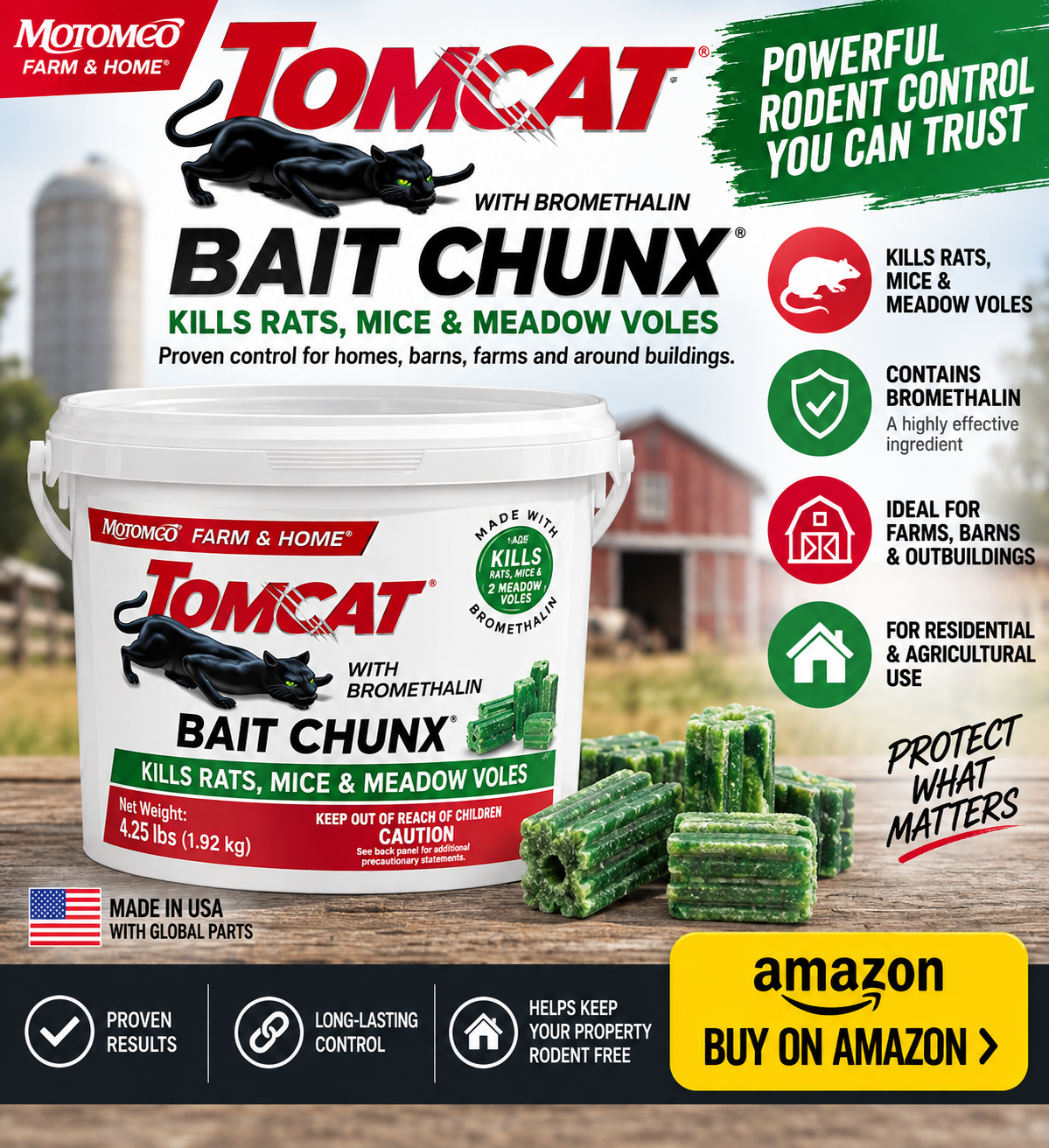
Tomcat with Bromethalin Bait Chunx Pail, 4.25 lbs.
The EPA registration information for Tomcat Bait Chunx lists bromethalin at 0.01% active ingredient and identifies uses involving house mice and several rat species.
But here’s the part I don’t want to bury underneath a Buy button:
This particular 4.25-pound product is marketed for agricultural use and professional applicators rather than being the typical ready-to-use consumer mouse-poison package.
That matters.
If your situation and the product label make this an appropriate product for you, you can check the current Amazon listing here:
Check Tomcat Bromethalin Bait Chunx on Amazon
Before buying it, read the listing and actual EPA-approved product label carefully and make sure your intended use is allowed.
Don’t buy a 4.25-pound pail simply because you found one mouse behind the stove.
Pro: Poison Can Work When Mice Aren’t Cooperating With Traps
This is probably the biggest reason people turn to bait.
Sometimes mice aren’t being caught.
Maybe trap placement isn’t good.
Maybe there are competing food sources.
Maybe the infestation is larger than expected.
Maybe you’re dealing with an environment where maintaining enough traps becomes difficult.
CDC currently recommends traditional snap traps as the first choice for reducing rodent populations around a home, but it also says poison or bait stations can be considered when an infestation persists.
That’s about where I land.
I wouldn’t automatically start with poison for one mouse sighting.
But I wouldn’t pretend poison has no legitimate role either.
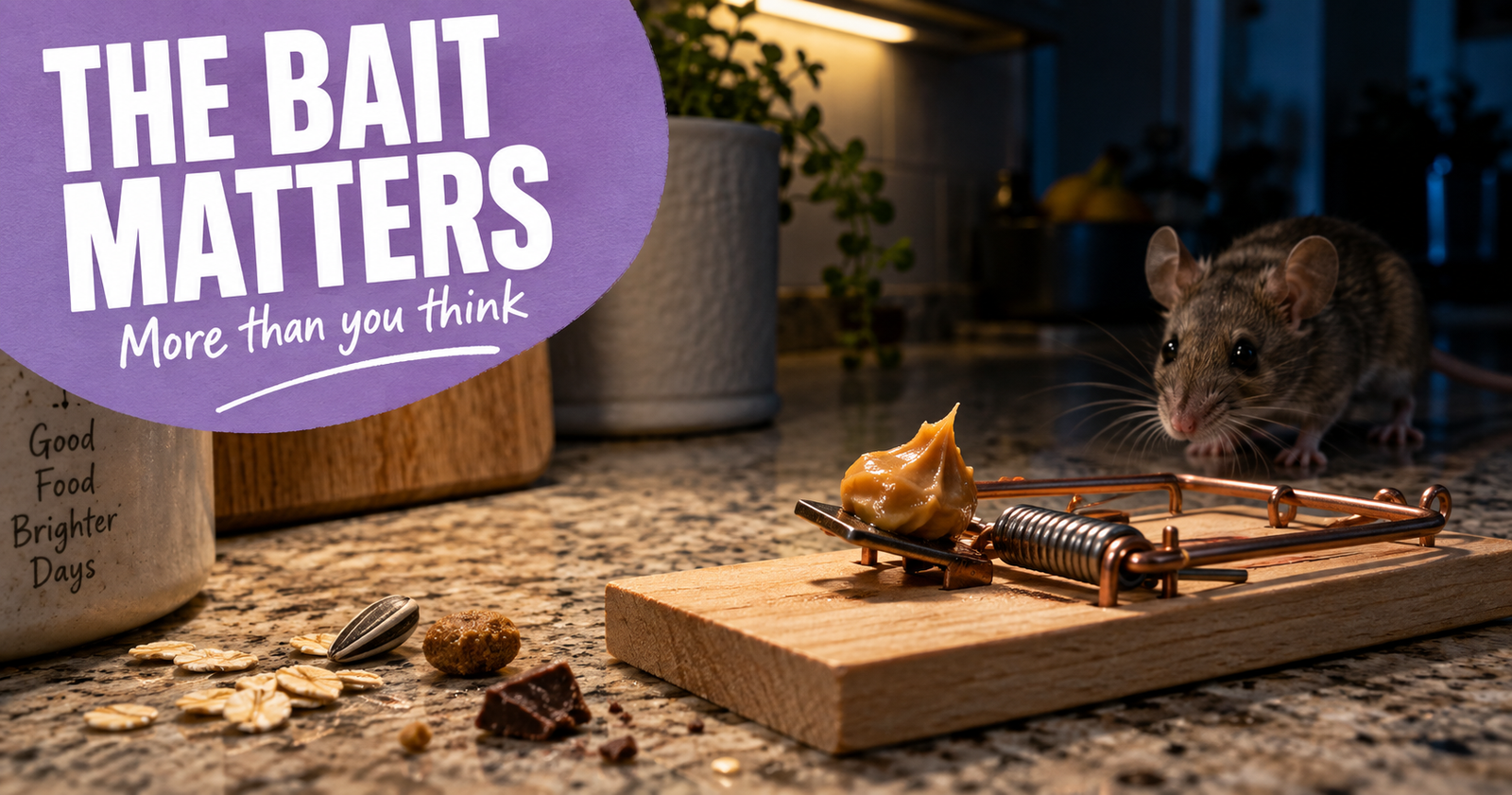
Con: Mouse Poison Is Still Poison
This sounds obvious, but marketing can make people forget it.
Rodenticide is designed to kill mammals.
That’s why placement and storage matter.
EPA warns that rat and mouse poison can harm people, children, and pets when misused and says pesticides should be stored out of their reach.
That immediately makes poison different from putting a simple mechanical trap behind an inaccessible appliance.
You have to think beyond:
Will a mouse find this?
You also have to think:
Who or what else could possibly get to it?
Pro: A Bait Station Can Reduce Access to the Poison
This is where bait stations become extremely important.
A proper bait station isn’t simply a decorative black box.
Its job is to allow the target rodent to reach the bait while reducing access by children and nontarget animals.
EPA explains that properly designed ready-to-use stations can reduce access to rodenticide by young children, pets, and nontarget wildlife when used as directed.
For bulk professional/agricultural bait products, the exact bait-station requirements come from the bait’s label and intended placement.
The Mouse Stations I’d Pair With a Compatible Bait
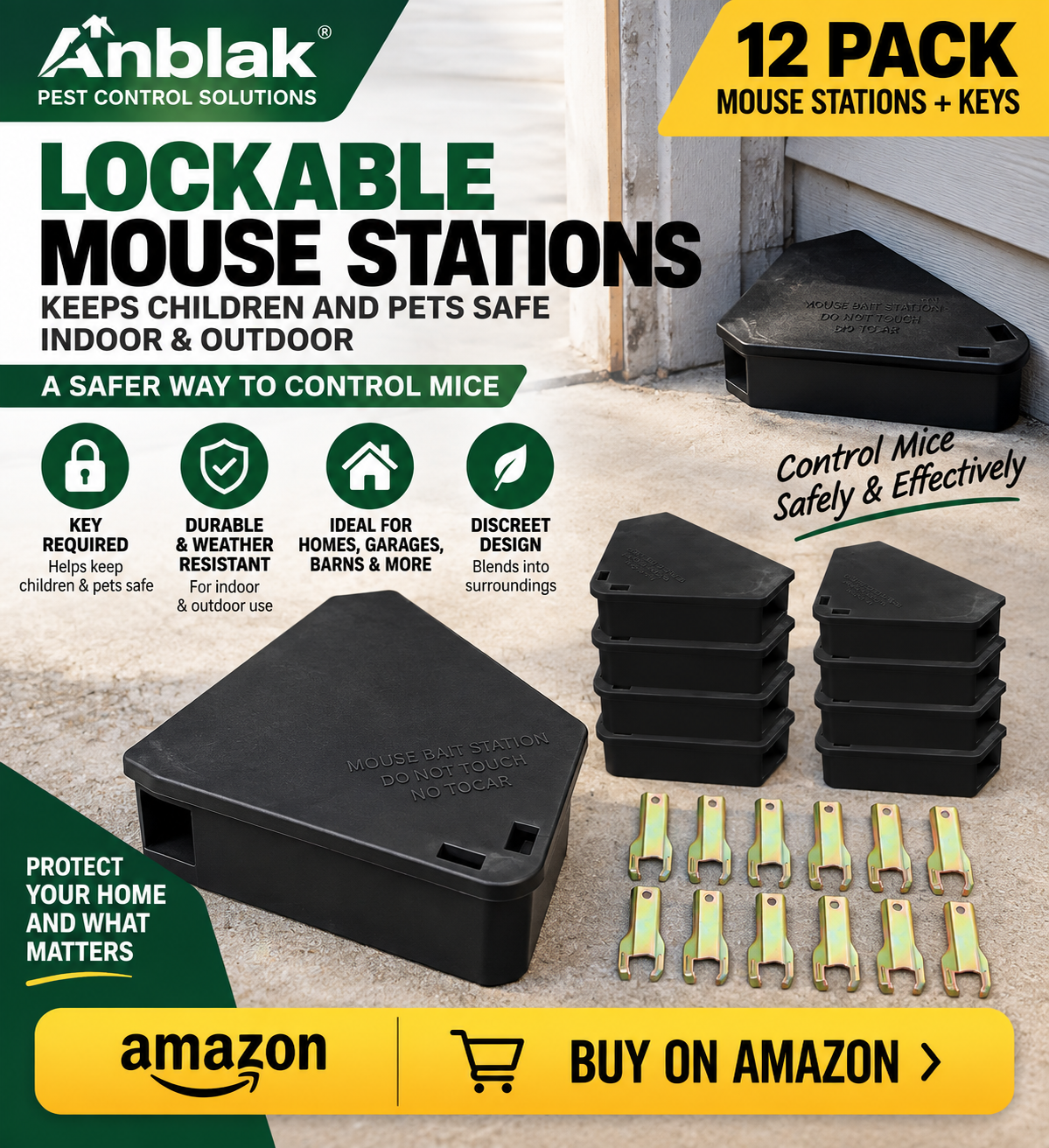
The Mouse Station with Keys Black 12 Pack you found is designed as a keyed station that requires a key to open.
That type of setup makes much more sense to me than leaving accessible poison blocks around an area.
Check the 12-Pack Keyed Mouse Stations on Amazon
But there’s an important distinction:
Owning a locking bait station does not automatically make every rodenticide legal or appropriate for every location. Local requirements and the site’s legal and safety guidance should be considered before using any rodenticide.
The poison’s EPA label still controls how that pesticide can be used.
So I would buy bait and stations as a compatible system, not two random products and assume that putting one inside the other makes everything okay.
Con: “Keeps Children and Pets Safe” Needs Some Context
This is one place where I’d be cautious about product marketing.
A locking station can reduce access to bait.
I wouldn’t interpret that as:
“Now the poison is harmless around children and pets.”
It isn’t.
EPA has specific standards for different levels of bait-station resistance, including resistance to tampering by young children and dogs. The permitted use depends on the station and product labeling.
So even with a keyed station, I would still place it thoughtfully.
A bait station is a safety measure.
It isn’t permission to become careless with poison.
Pro: Poison Doesn’t Depend on a Mouse Firing a Trap
A snap trap needs a particular interaction.
The mouse needs to approach it.
Enter the correct area.
Interact with the trigger.
And actually fire the trap.
Bait works differently.
The mouse feeds on the rodenticide.
That can make bait useful when traditional trapping isn’t getting control of a persistent population.
But there’s a tradeoff.
Con: You Lose Some Control Over Where the Mouse Dies
This is probably my biggest practical complaint about using poison indoors.
You know where a mouse is when a snap trap catches it.
It’s in the trap.
With poison, the mouse can eat bait and leave.
Where does it go afterward?
Maybe somewhere accessible.
Maybe not.
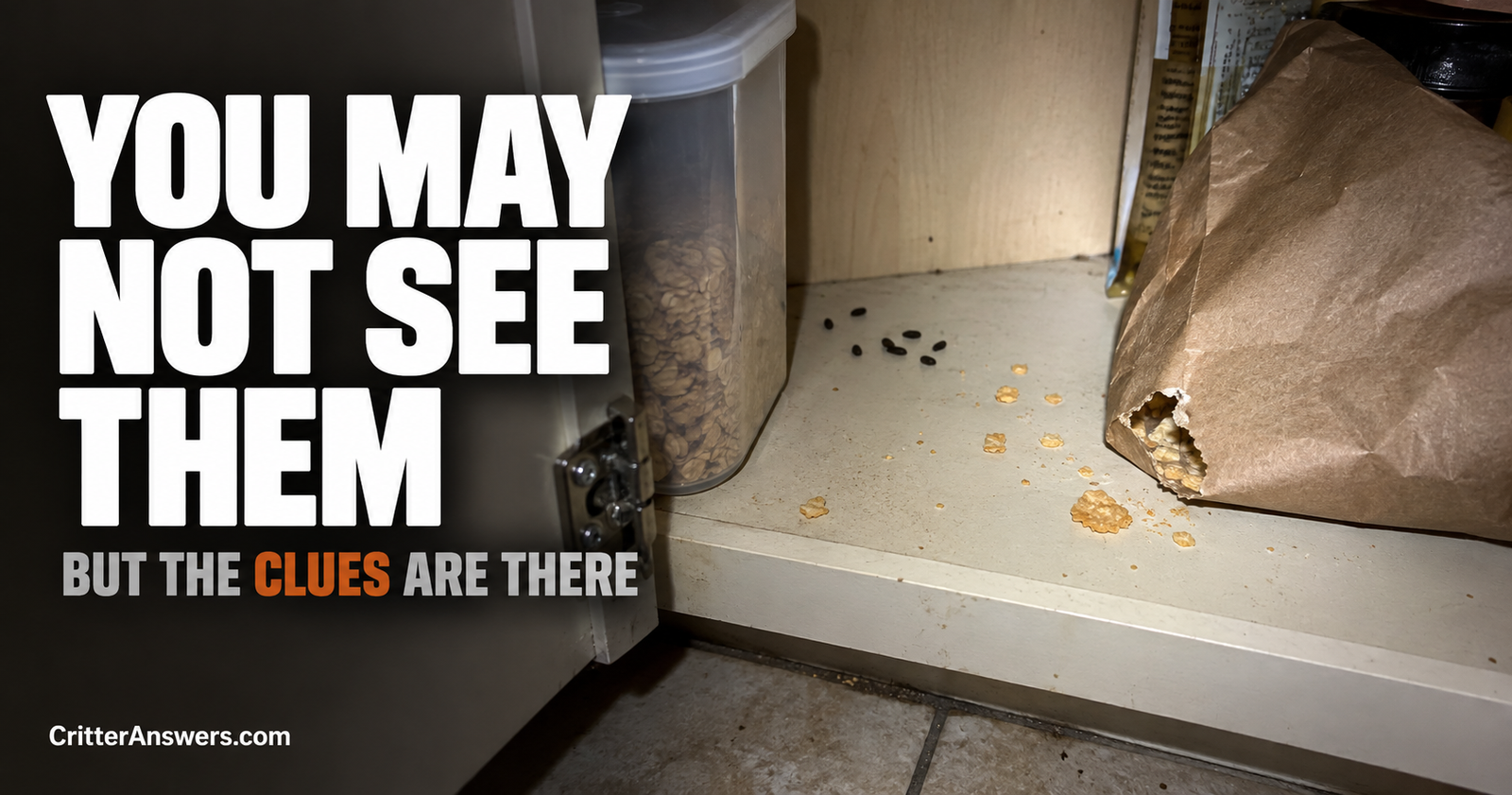
It could potentially die inside a wall, ceiling, cabinet void, insulation, crawl space, or another concealed location.
And then you may discover it with your nose.
Yes, Poison Can Lead to a Dead-Mouse Smell
This is a very real downside.
A dead mouse can smell surprisingly bad for something so small.
If it dies behind a refrigerator, you can retrieve it.
If it dies deep inside a wall cavity, your options are considerably worse.
You might locate the general area but still not be able to reach the carcass without opening the structure.
That’s one reason I generally prefer trapping for a straightforward indoor mouse problem.
I like knowing where the mouse ended up.
Pro: Poison Can Cover Persistent Mouse Activity
Imagine a barn, agricultural structure, outbuilding, or another appropriately labeled location with continuing rodent pressure.
That is a different situation from one mouse in a kitchen.
Properly deployed and maintained bait stations can provide another control tool where mice repeatedly enter or remain active.
That’s also where a larger bait supply may make considerably more sense.
The 4.25-pound Tomcat Bromethalin Bait Chunx pail is a bulk product.
See the current Tomcat Bait Chunx listing on Amazon
Again, make sure the actual product label permits your intended application.
The larger package does not make it an automatic choice for ordinary residential consumer use.
Con: Bromethalin Has Serious Pet-Poisoning Consequences
This one deserves special attention for dog and cat owners.
Bromethalin is a neurotoxic rodenticide.
The Merck Veterinary Manual describes bromethalin poisoning as potentially causing brain swelling and reports that it has become a common rodenticide exposure in companion animals.
This isn’t something I’d casually place where a dog might chew into it.
A keyed or otherwise appropriate tamper-resistant station can reduce access, but careful placement, storage, label compliance, and monitoring still matter.
If you suspect a pet has eaten bromethalin bait, treat that as a veterinary emergency rather than waiting for symptoms to appear.
Con: Wildlife Can Be Part of the Risk Too
The mouse isn’t necessarily the last animal in the food chain.
Owls.
Hawks.
Foxes.
Cats.
Other predators and scavengers.
EPA specifically warns that nontarget wildlife and pets can potentially be poisoned after eating rodents that have consumed certain poisons.
EPA therefore advises promptly finding and disposing of dead rodents when using rodent bait products.
Of course, that’s easier said than done when the poisoned mouse disappears.
That’s another tradeoff worth considering before choosing poison.
Pro: Bait Stations Help Keep Bait Where It Belongs
Loose poison scattered around a building is not how I’d want to approach mouse control.
A properly selected bait station helps contain the bait in a defined location.
It also lets you inspect a known station rather than wondering where loose bait has gone.
For situations where the rodenticide label requires an appropriate tamper-resistant station, that station isn’t an optional accessory.
It’s part of using the product correctly.
That’s why the 12-pack of keyed mouse stations makes sense as a companion purchase when it meets the requirements of the bait label and intended location.
Check the 12-Pack Keyed Mouse Stations on Amazon
Twelve stations also gives you flexibility when mouse activity is spread among several appropriate locations rather than concentrating everything in one spot.
Con: Poison Doesn’t Tell You How Many Mice You Have
This is something traps do better.
Suppose you put out six traps and catch:
Mouse one.
Mouse two.
Mouse three.
Mouse four.
Then nothing for a week and no fresh evidence appears.
You have useful information.
With poison, you can monitor bait consumption, but you don’t necessarily know how many individual mice fed from it or where all of them ended up.
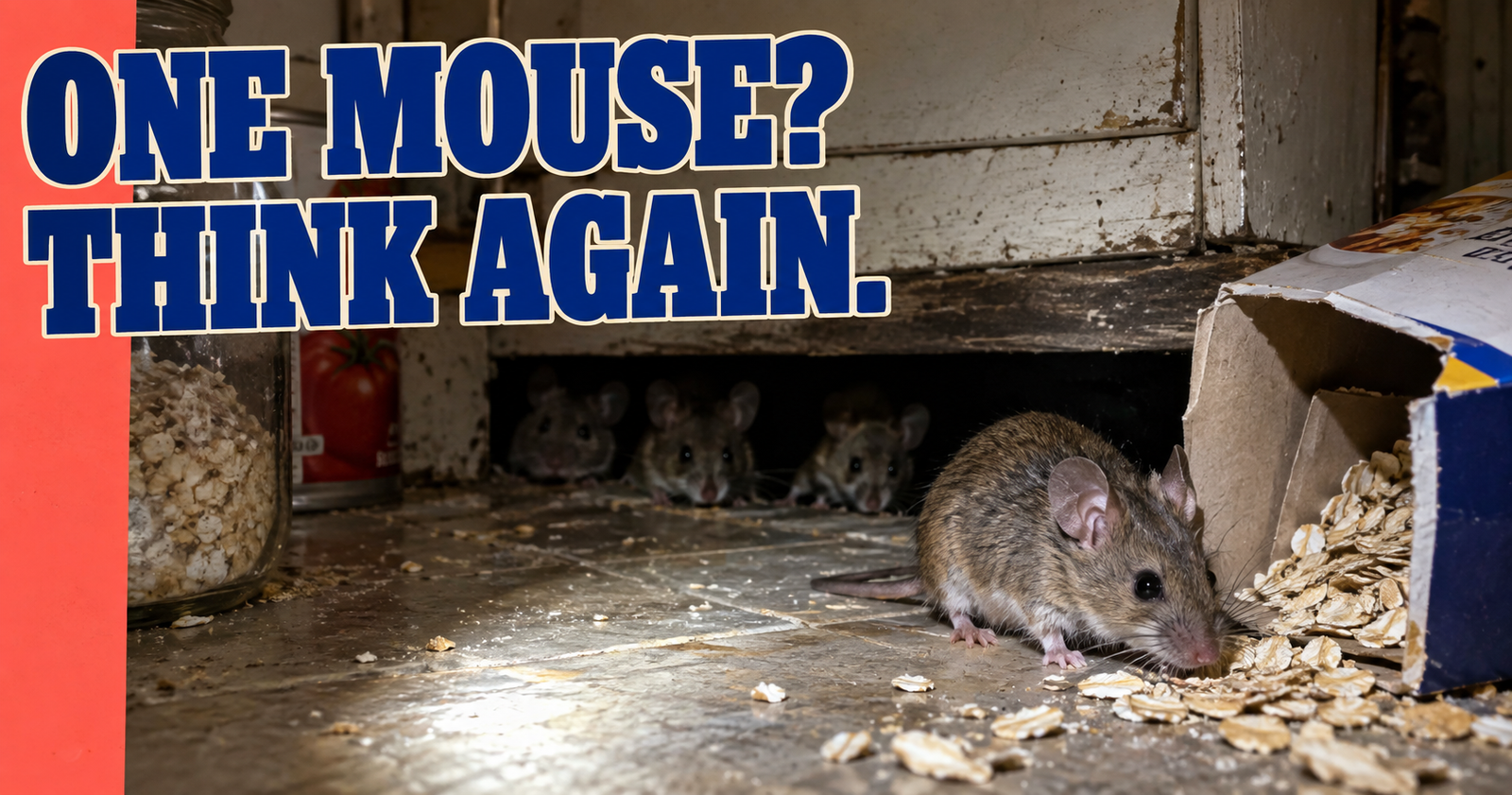
If you’re still trying to determine the extent of your problem, our guide on how many mice may be hiding after you see one explains why trapping results can be such valuable evidence.
Con: Poison Does Absolutely Nothing About the Hole
This may be the most important disadvantage of all.
You can kill every mouse currently living inside your house.
But if there’s still a 1/4-inch opening beside a utility line, the next mouse can come inside.
CDC says mice can fit through openings about the width of a pencil and recommends inspecting and sealing gaps inside and outside the home.
That’s why poison alone is not a complete mouse-control strategy.
Neither are traps.
You need exclusion.
Killing Mice Without Sealing Entry Points Can Become an Endless Cycle
Think about what happens.
Mouse enters.
Mouse eats poison.
Mouse dies.
Another mouse enters.
It eats poison.
It dies.
Another enters.
At that point, you aren’t mouse-proofing the house.
You’re operating a mouse toll booth with a fatal exit.
I’d rather stop the traffic.
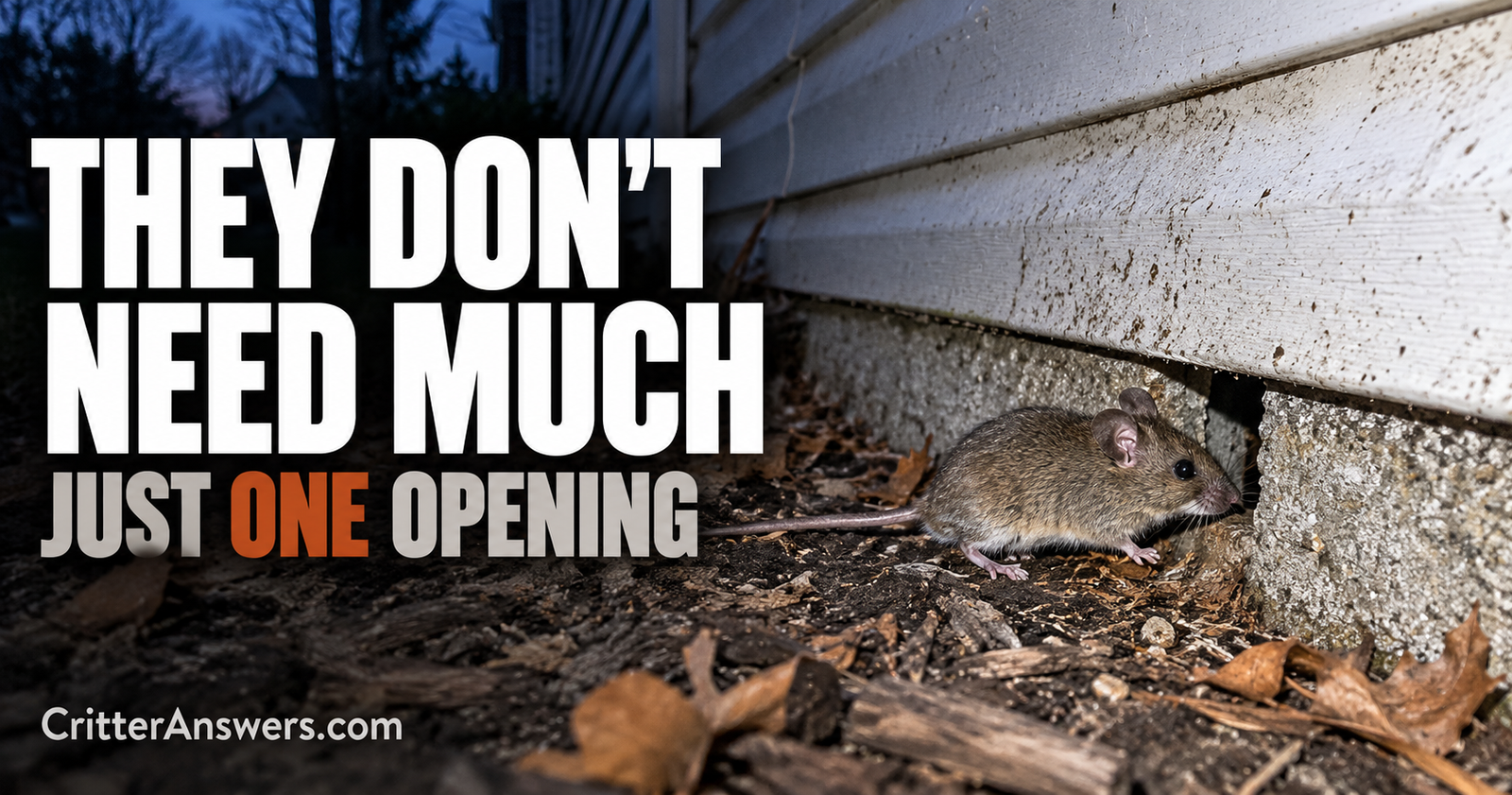
Our guide to finding where mice are getting into your house walks through the small openings I’d inspect around foundations, utilities, doors, garages, plumbing, vents, eaves, soffits, and other vulnerable areas.
Poison Also Doesn’t Remove Food
If mice have access to:
Pet food.
Bird seed.
Livestock feed.
Pantry food.
Crumbs.
Garbage.
Stored grain.
the underlying environment is still supporting rodents.
Poison may reduce the population.
It doesn’t make your property less attractive to the next mouse.
That’s why sanitation and food storage belong alongside whatever lethal control method you choose.
Mouse Poison vs. Snap Traps
For a normal mouse problem inside a house, I’d generally start with snap traps.
CDC currently recommends traditional snap traps for home rodent control and suggests poison or bait stations when infestations persist.
Snap traps have some major advantages.
You know when you’ve caught something.
You can remove the carcass.
There’s no poisoned mouse wandering away.
You can count captures.
And there’s no toxic bait for another animal to ingest.
But traps have disadvantages too.
They require good placement.
They need checking.
They may need resetting.
Some people hate seeing dead mice.
And an improperly placed trap may accomplish nothing.
Mouse Poison vs. Electric Traps
An electric mouse trap gives you another non-poison option.
The enclosed OWLTRA OW-2 Indoor Electric Mouse Trap we’ve discussed elsewhere in this mouse cluster is designed for indoor mouse control and offers more enclosed disposal than a traditional exposed snap trap.
That can appeal to homeowners who don’t want to see a mouse in an open trap.
Poison still has an advantage when you’re trying to control persistent rodents across certain larger or difficult environments.
But inside an ordinary house, I like the control that comes with retrieving the animal.
When Mouse Poison Makes More Sense to Me
I’d be more willing to consider rodenticide when:
- Proper trapping has not resolved persistent activity
- The environment and intended use match the product’s label
- Bait can be deployed in an appropriate bait station where required
- Children, pets, livestock, and wildlife can be adequately protected
- The stations can be regularly inspected
- The user understands that dead rodents need to be located and disposed of when possible
- Exclusion and sanitation are happening alongside baiting
- The scale or location of the problem makes a bait program practical
That’s a much better use case than automatically buying poison because you saw one mouse.
When I’d Prefer Traps Instead
I’d lean toward traps when:
- You have a small indoor mouse problem
- You want confirmation of each mouse caught
- You want to retrieve carcasses
- You’re worried about a mouse dying inside the wall
- Children or pets make poison especially concerning
- You can identify active mouse travel routes
- The infestation appears manageable with strategically placed traps
There isn’t one universal answer.
That’s why an honest pros-and-cons article matters.
What About Poison When You Have Dogs or Cats?
I become much more conservative.
EPA’s guidance is very clear that rodenticide should not be accessible to pets.
If I couldn’t confidently keep a particular bait setup inaccessible to an animal, I wouldn’t use it there.
Period.
Dogs especially can be persistent when they smell something interesting.
A station being difficult for you to open doesn’t automatically prove it’s appropriate for your particular application.
Read the station specifications.
Read the poison label.
Use both correctly.
What About Children?
Same principle.
Rodenticide should never be accessible to children.
EPA requires consumer bait products to meet specific packaging and bait-station requirements designed to reduce accidental exposure.
For bulk professional/agricultural products, follow the exact label requirements governing tamper-resistant bait stations and placement.
Don’t improvise.
Is Mouse Poison Humane?
This is one of the harder questions.
“Humane” gets used loosely in pest-control marketing.
Poison is not an instant disappearance button.
Different rodenticides work through different toxic mechanisms.
Bromethalin is a neurotoxin.
So I would not sell poison to readers as a painless or obviously humane solution.
If minimizing suffering is a major factor in your decision, that’s another reason to carefully compare control methods rather than assuming poison is automatically better because you don’t personally see the animal die.
Should You Put Mouse Poison Inside Your Walls?
I generally don’t like the idea of deliberately encouraging poisoned mice to die in inaccessible wall cavities.
You may solve the live-mouse problem and replace it with a dead-mouse odor problem.
Instead, I prefer identifying accessible routes where mice emerge.
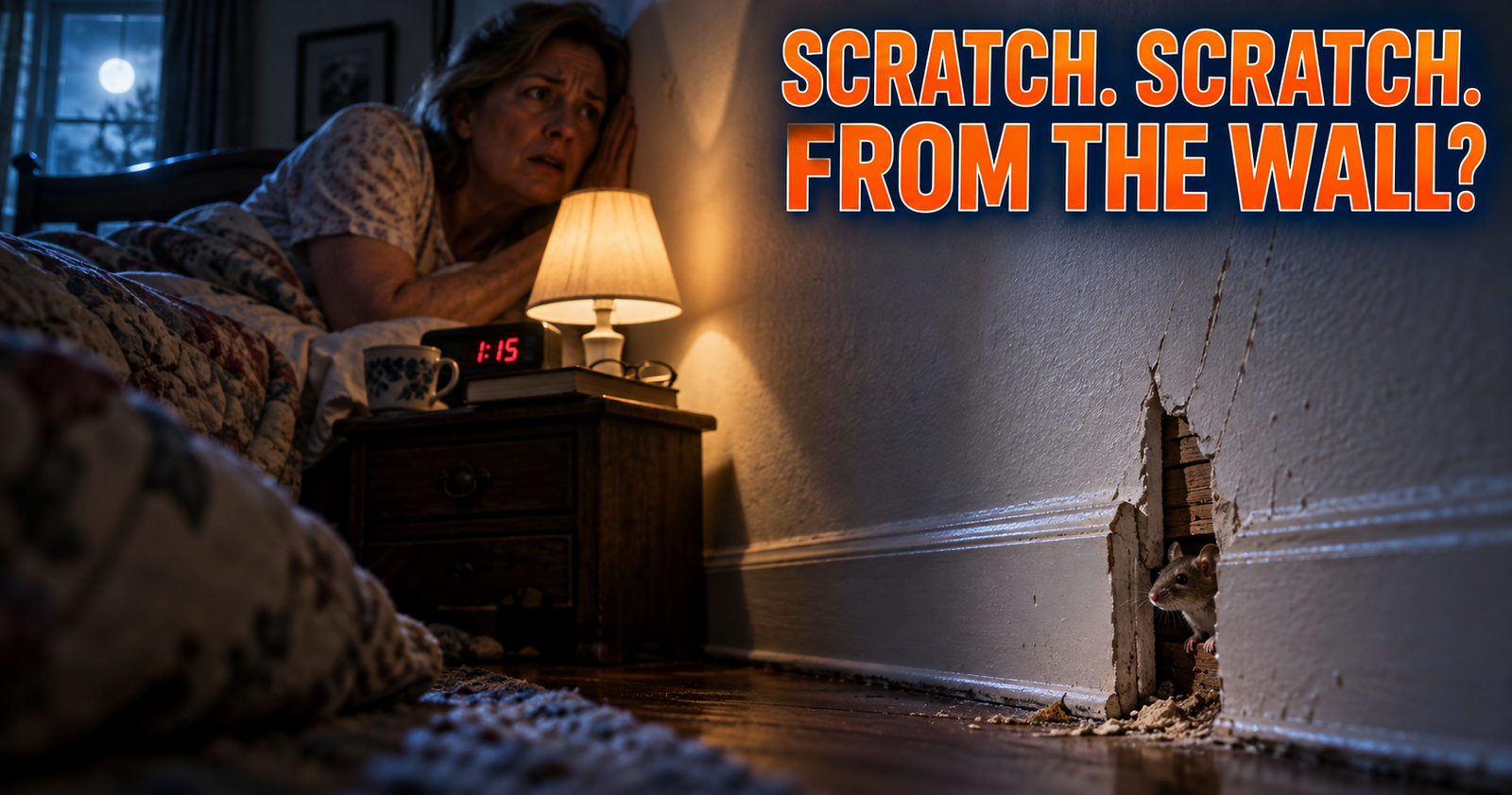
If you’re hearing them inside the structure, our article on mice scratching inside walls at night explains how to follow the evidence toward those routes.
You don’t necessarily need to put your control method inside the wall.
Intercept the mice where they come out.
Never Ignore the Product Label
This is probably the least exciting advice in this entire article.
It’s also some of the most important.
Rodenticides are pesticides regulated by EPA.
The label isn’t a suggestion.
EPA explicitly states that using a pesticide in a manner inconsistent with its labeling violates federal law.
That means:
Don’t assume.
Don’t copy what somebody did in a YouTube video.
Don’t assume a bait station overrides the bait’s restrictions.
Don’t use a product in a location simply because the container physically fits there.
Read the actual label for the exact product you bought.
An Important Warning About the Tomcat 4.25-Pound Pail
I want to make this particularly clear because it’s easy to miss while shopping online.
The Tomcat with Bromethalin Bait Chunx 4.25-pound pail is not the same thing as the small ready-to-use consumer bait stations you might grab from a retail shelf.
EPA classifies larger professional/agricultural bromethalin products differently from consumer rodenticide products. Consumer products are limited to ready-to-use bait-station configurations and much smaller quantities.
So don’t buy this specific bulk product unless its label and your intended use line up.
For the right situation:
Check the Tomcat Bromethalin Bait Chunx listing on Amazon
For an ordinary homeowner dealing with a mouse or two in the kitchen, I’d seriously consider starting with properly placed traps instead.
If You Use Bulk Bait, Don’t Skip the Station Requirements
The Tomcat label specifically warns against exposing children, pets, domestic animals, or nontarget wildlife and requires appropriate tamper-resistant stations in applicable locations.
That’s why I would consider a locking station alongside compatible bulk bait rather than treating the station as an afterthought.
See the 12-Pack Keyed Mouse Stations on Amazon
Again, verify that the station itself meets whatever requirements the rodenticide label imposes for your intended placement.
My Preferred Order for Dealing With Mice
For an ordinary mouse problem inside a home, I generally think about control in this order:
Confirm that you’re actually dealing with mice.
Look for droppings, gnawing, sightings, nesting material, and other evidence.
Find where they’re active.
Behind appliances, cabinets, garages, basements, attics, and other sheltered locations are worth inspecting.
Trap the active mice.
For many household situations, traditional snap traps are a sensible starting point.
Find and seal the entry points.
Otherwise you’re solving today’s mouse problem while leaving the door open for tomorrow’s.
Reduce food and shelter.
Secure food, pet food, bird seed, feed, and garbage.
Consider rodenticide when the problem persists or the situation makes bait appropriate.
Then use the right product, in the right place, in the right station when required, exactly according to its label.
That’s a mouse-control plan.
Simply throwing poison around isn’t.
So Is Mouse Poison Worth Using?
Sometimes, yes.
I’m not going to tell you poison doesn’t work just because traps are easier to recommend.
Rodenticide is a legitimate mouse-control tool, and for persistent infestations and certain agricultural, professional, outbuilding, or other labeled situations, a properly managed bait program can make sense.
But the downsides are real.
Pets.
Children.
Wildlife.
Dead rodents in inaccessible places.
Odor.
Less certainty about individual kills.
And absolutely no protection against new mice entering through an unsealed hole.
If the situation calls for a bulk bromethalin bait, Tomcat Bromethalin Bait Chunx is available here on Amazon, and these keyed mouse bait stations are available as a 12-pack.
Read the bait label before deciding that combination is appropriate for your property.
For a simple indoor mouse problem, I’d usually start with trapping and exclusion.
For a persistent problem where poison is appropriate, I wouldn’t be afraid to use it.
I’d just use it with the respect a toxic pesticide deserves.
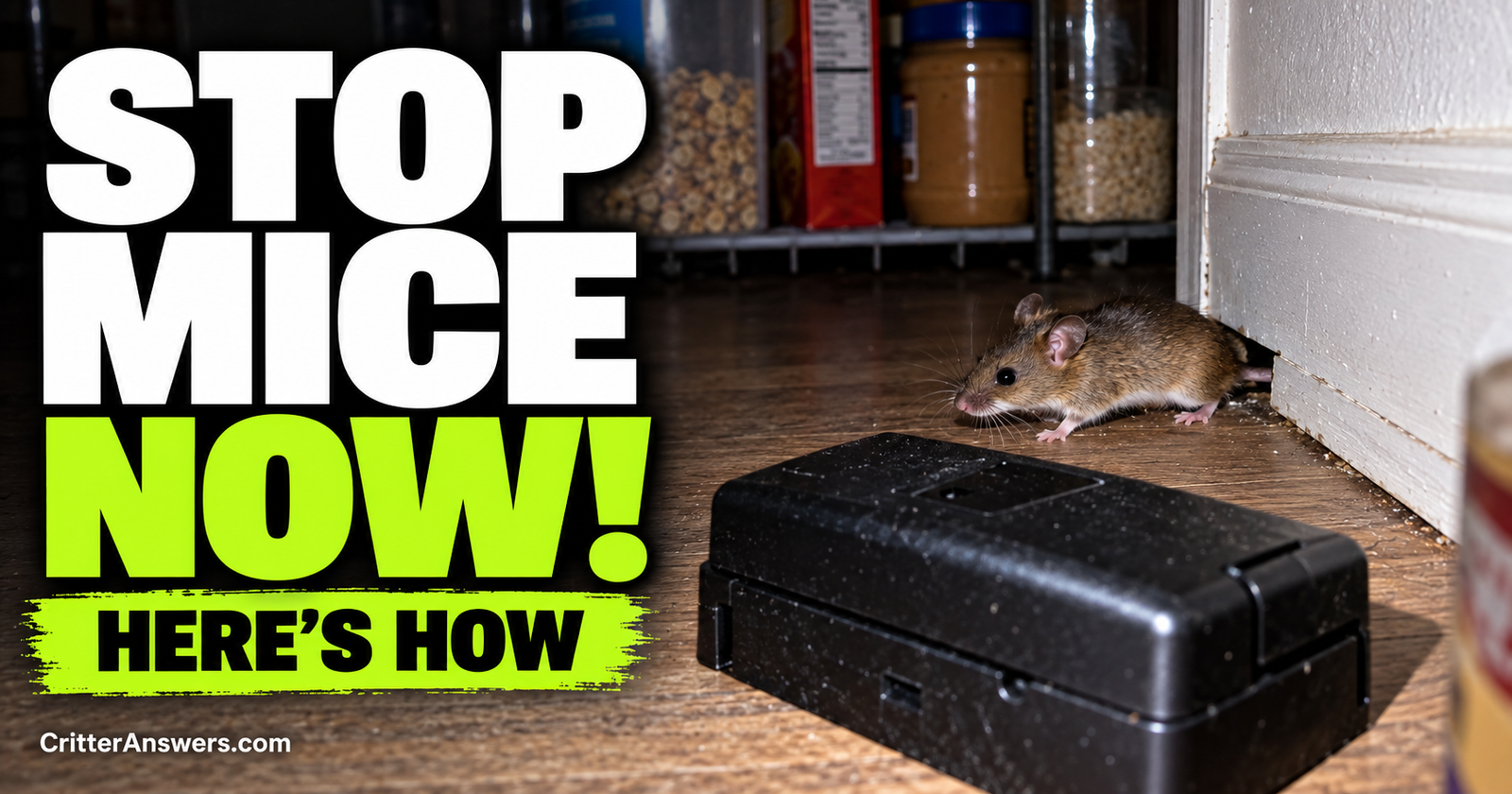
And regardless of which method you choose, don’t stop at killing mice. Our complete guide to getting rid of mice in your house for good covers the trapping, exclusion, sanitation, and monitoring pieces that keep you from solving the same infestation over and over.
About the author: Caleb Rourke researches how mice and other rodents get into homes, where they hide, and the practical steps homeowners can use to identify and prevent them. He writes straightforward rodent-control guides for Critter Answers.