
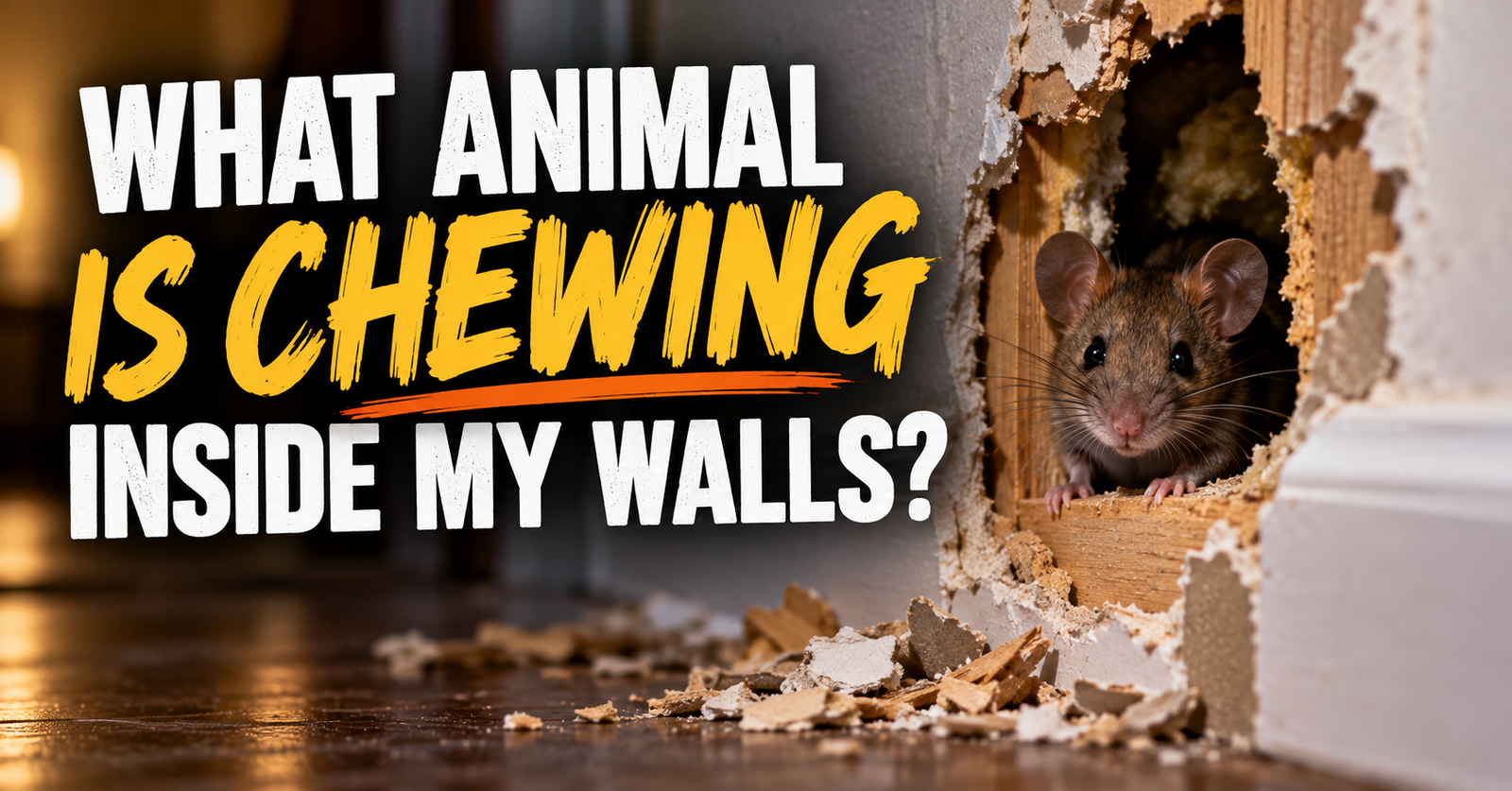
If you’re hearing what sounds like chewing inside a wall, mice and rats are two of the first animals I would suspect. Squirrels can gnaw inside homes too, particularly around attics and upper walls, and the location and time of the noise can help separate the possibilities. Because chewing alone cannot settle the identification, signs of mice inside a house shows which additional signs can strengthen the case for mice.
What concerns me more than the noise itself is what the animal may be chewing. Rodents can gnaw wood, plastic, food containers, insulation, and electrical wiring. That turns an annoying nighttime noise into something worth investigating.
I wouldn’t open the wall based on one strange sound, though. First, make sure you’re actually hearing chewing and then look for physical evidence that agrees with what you’re hearing.
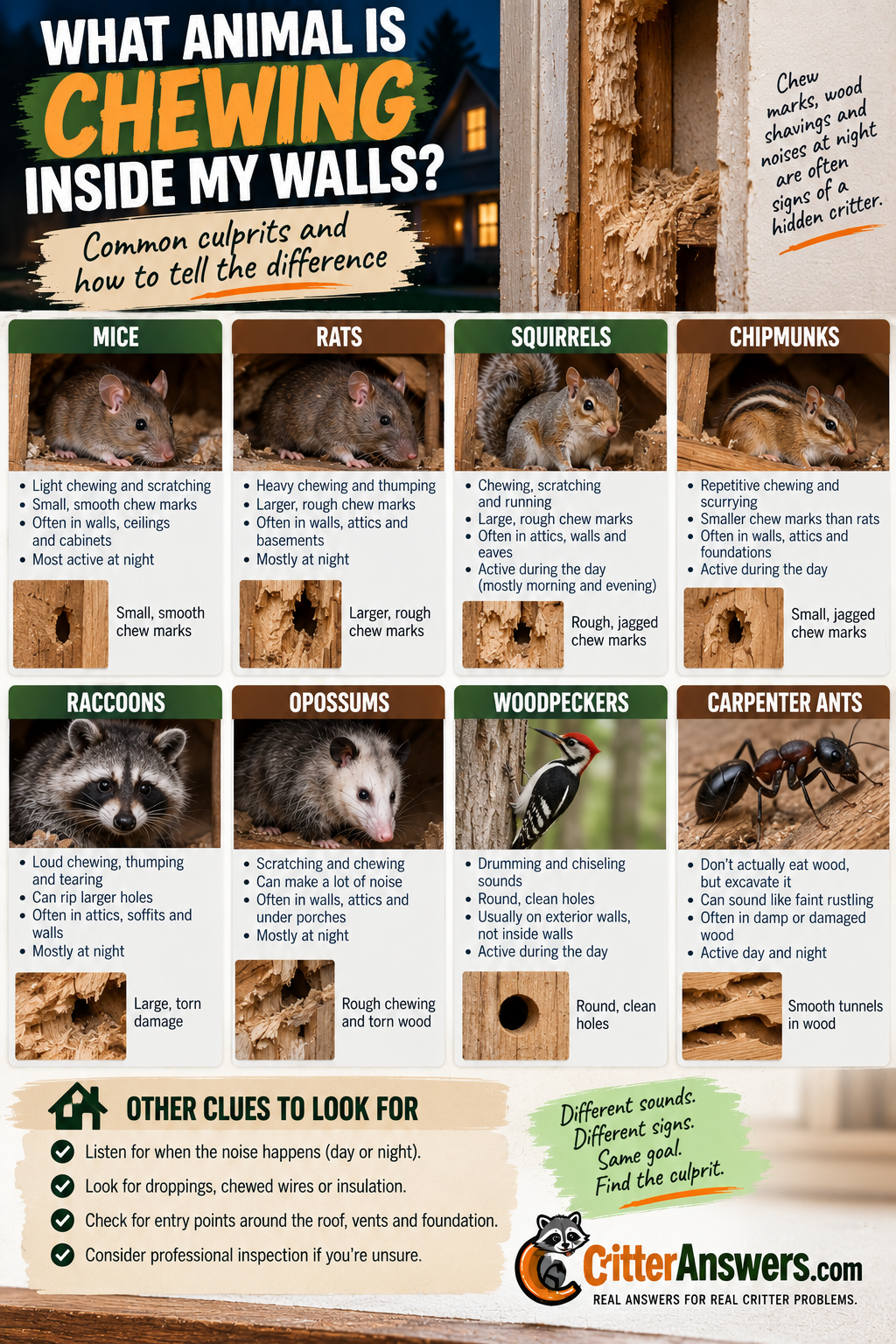
What Does Chewing Inside a Wall Sound Like?
Chewing doesn’t always sound the way people expect.
You probably aren’t going to hear a cartoon-style “chomp, chomp, chomp.”
Instead, it may sound like:
- Repetitive scraping
- Grinding
- Light crunching
- Rapid gnawing
- Scratching that stays in one spot
- Short chewing sessions followed by scurrying
- A faint rasping sound
The pattern can be more useful than the volume.
An animal traveling through a wall may produce a burst of scratching that moves from one location to another. An animal gnawing something may remain in roughly the same place while producing a more repetitive sound.
And sometimes you hear both.
Scratching…running…silence…gnawing.
That sequence makes rodents especially interesting.
Why Would an Animal Chew Inside a Wall?
Mice, rats, and squirrels are rodents, and gnawing is normal rodent behavior.
Their front incisors continue growing, so they need to wear them down. Gnawing also helps rodents enlarge openings, reach food or nesting areas, and work with materials around them.
The CDC lists gnaw marks and droppings as two important signs of rodent activity around homes.
That means repeated chewing isn’t necessarily an animal eating your wall.
It may be enlarging a route, working on nesting material, chewing an object inside the cavity, or simply doing what rodents naturally do.
Mice Are a Strong Possibility
If the chewing happens mostly after dark and is accompanied by light scratching or quick movement, mice move high on my list.
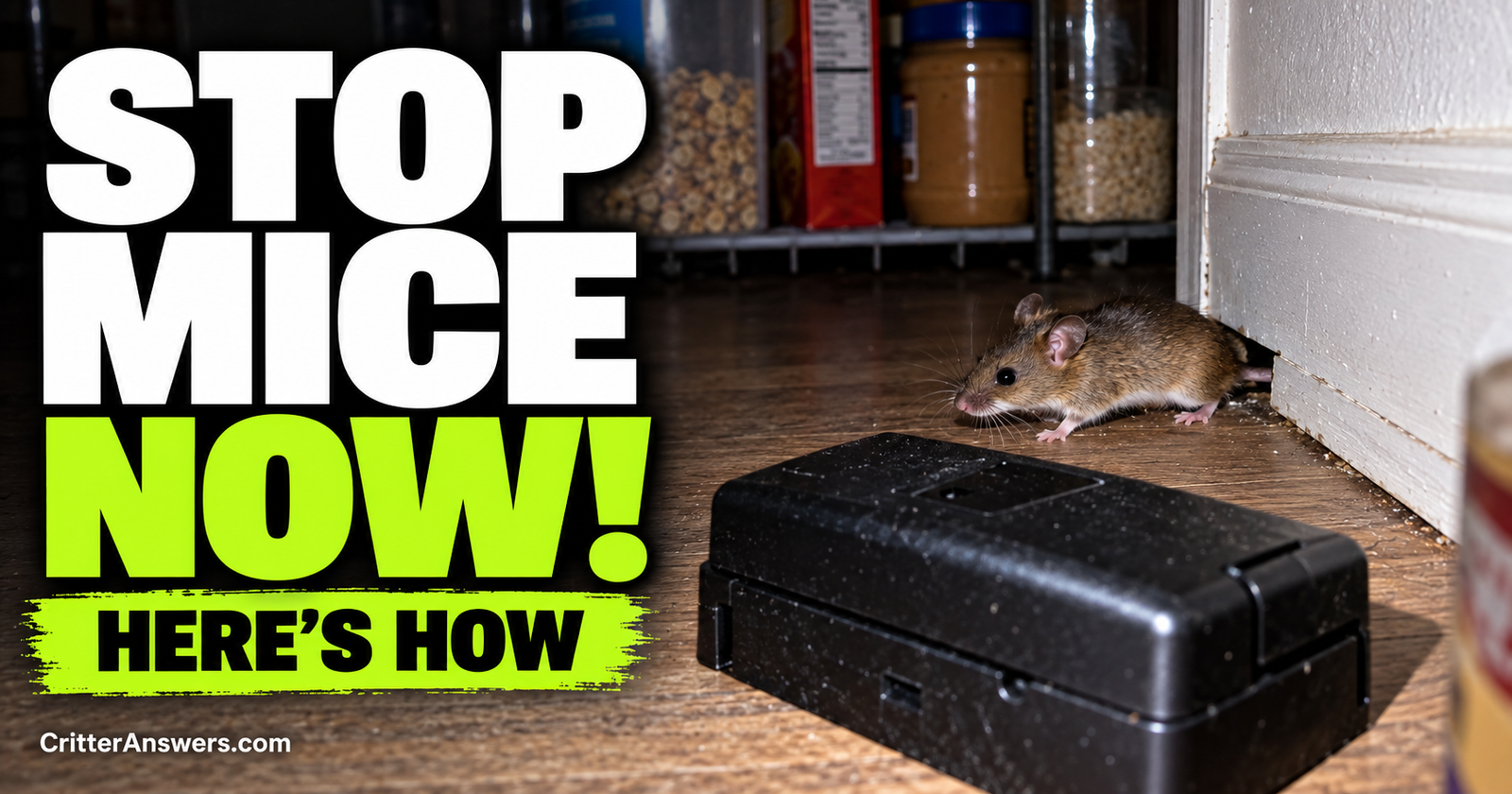
House mice are well adapted to living around people and can enter openings as small as about 1/4 inch. They can also gnaw electrical wires, appliance cords, gas lines, and structural materials. When those signs point to mice indoors, a mouse-control plan for your house can help organize exclusion, trapping, and cleanup.
You may hear a mouse chew for a little while, stop, scamper somewhere else, and begin again later.
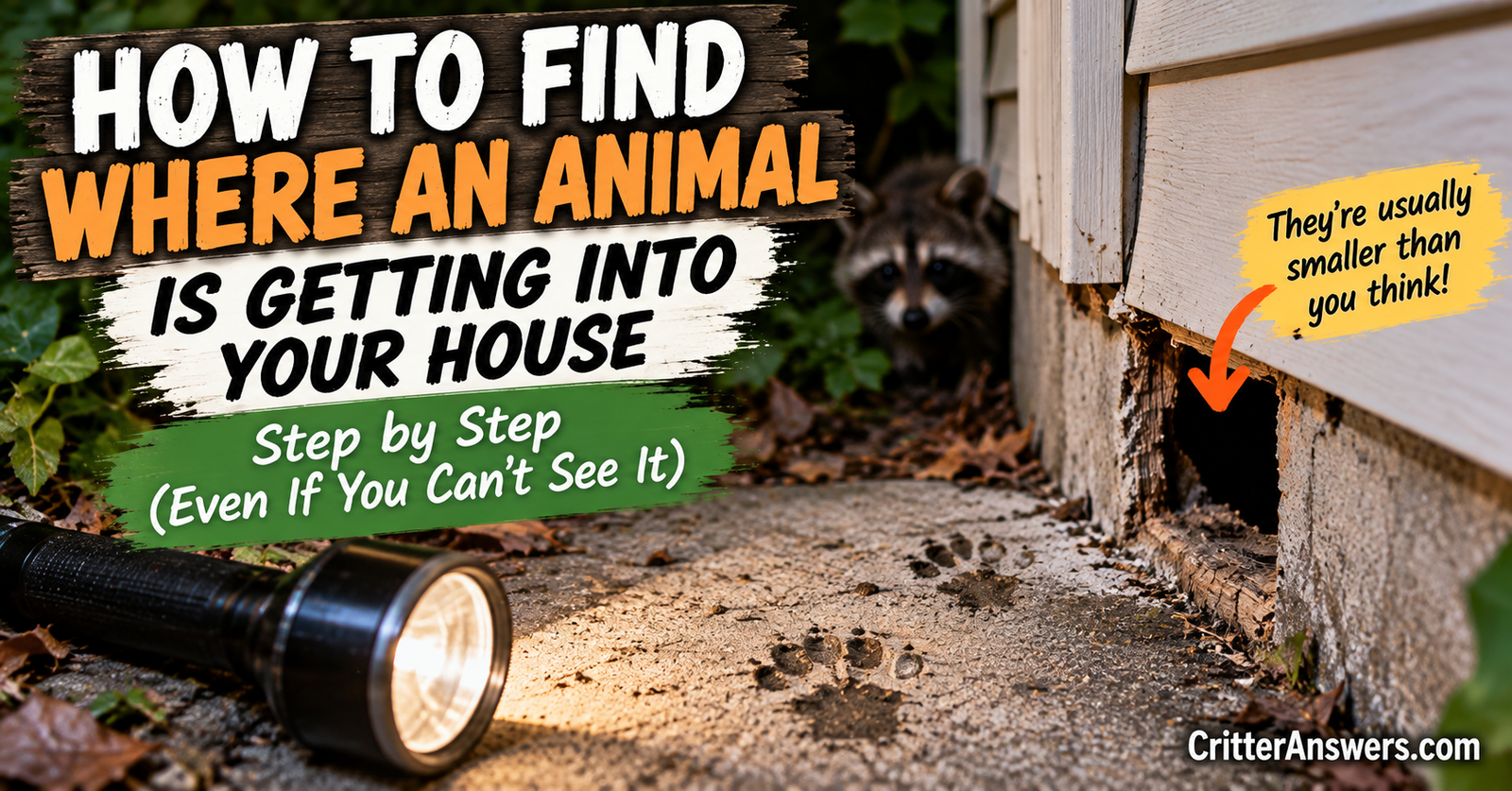
The animal doesn’t necessarily live inside the exact section of wall where you hear it. Wall cavities can be part of a larger route between nesting areas, food, water, attics, basements, crawl spaces, and other hidden parts of the structure. Tracing those connected areas inside the house can help you work backward toward the exterior entrance.
Look for mouse evidence elsewhere
Don’t start cutting drywall.
Look in accessible areas for:
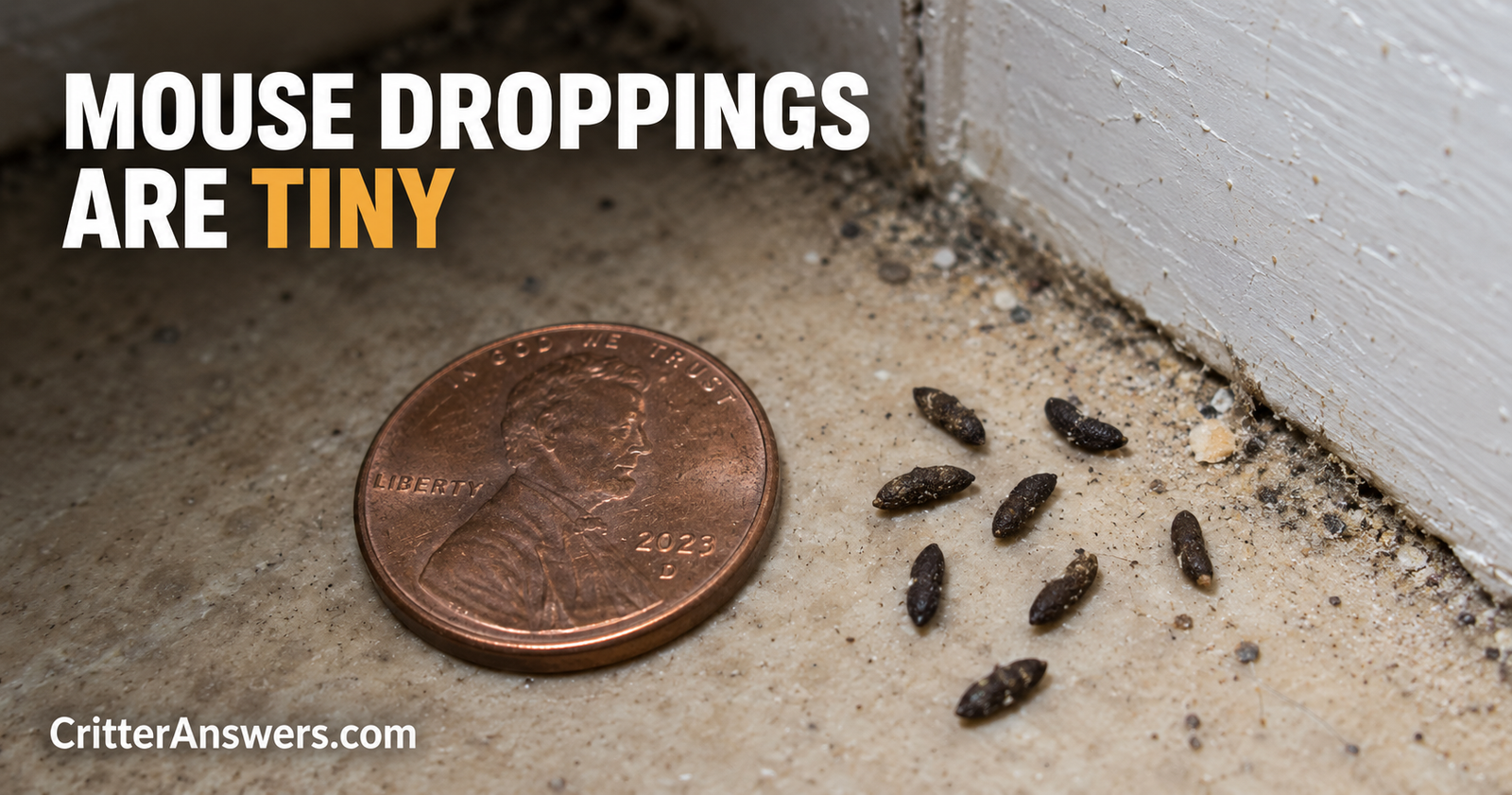
- Small droppings
- Gnawed food packages
- Shredded nesting material
- Small openings around pipes
- Evidence behind appliances
- Gnaw marks around cabinets or trim
- Nighttime activity in nearby walls or ceilings
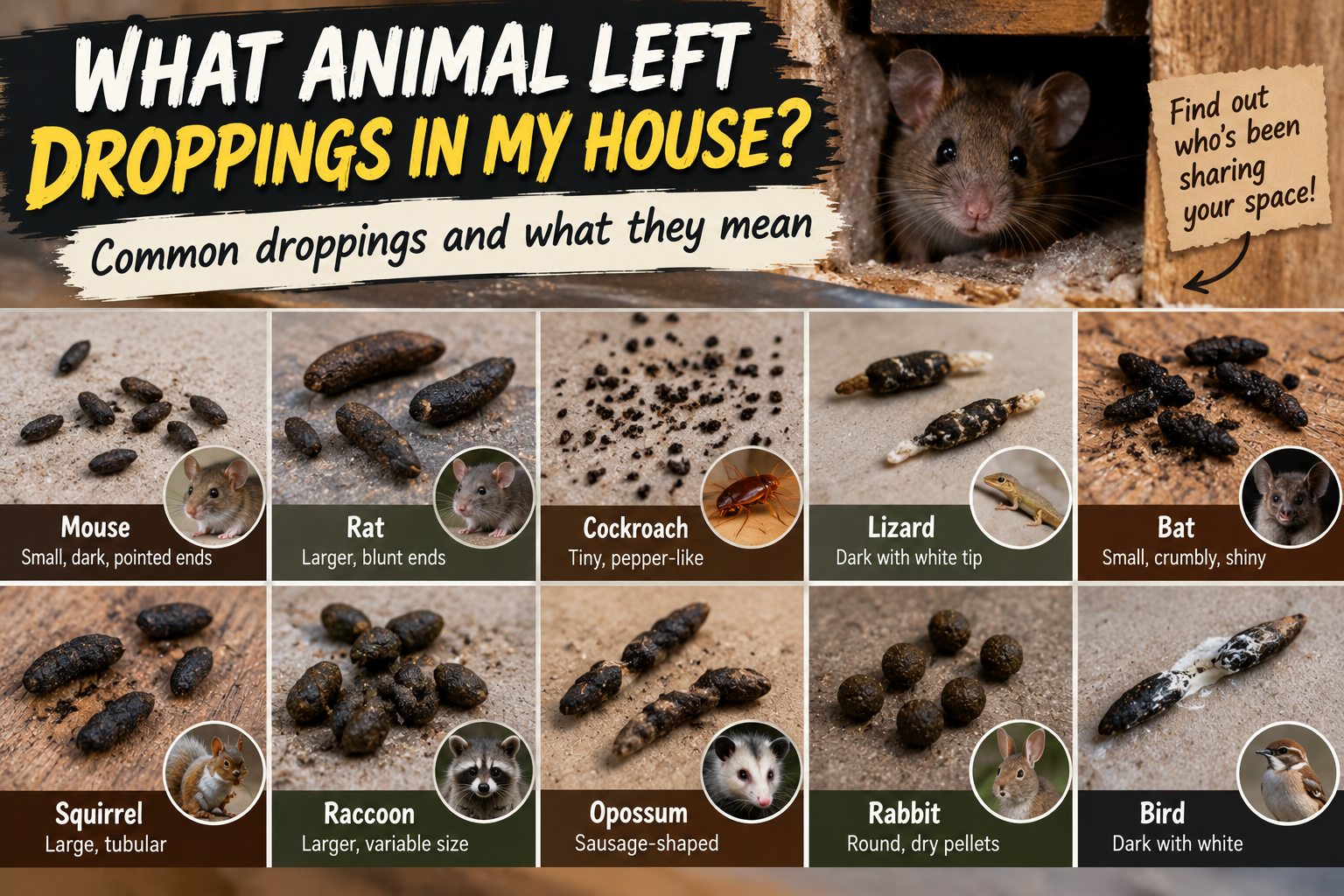
If you find droppings but aren’t sure what made them, my guide to identifying animal droppings found inside a house can help you compare the waste with the other evidence you’re finding.
One clue supporting another is much more useful than the chewing sound by itself.
Rats Can Make Heavier Gnawing Noises
Rats are another major possibility.
They can gnaw wood, plastic, electrical wiring, insulation, and even some softer metals. Roof rats can also occupy upper areas of buildings, while Norway rats are often associated more strongly with lower portions of structures and burrows.
Rat activity is commonly strongest after dark.
If I heard fairly substantial gnawing at night and also found larger rodent droppings or heavier physical damage, rats would move higher on my list.
But I still wouldn’t identify a rat just because the chewing sounds loud.
Your Wall Can Make a Mouse Sound Huge
This is something worth remembering throughout this entire cluster.
Houses amplify critter noises.
An animal may be gnawing directly against wood framing connected to drywall. Vibrations can travel through studs, joists, pipes, ducts, and other materials.
The room is also much quieter at night.
A tiny animal working on something six inches from your pillow can sound considerably more impressive than it really is.
So don’t use this rule:
Quiet chewing = mouse. Loud chewing = rat.
It isn’t reliable enough.
Use droppings, gnaw marks, tracks, activity time, entry points, and other physical evidence too. Those clues can be compared with more examples in physical evidence from critter signs.
Squirrels Can Chew Inside Homes
Squirrels shouldn’t be overlooked, especially when the noise comes from an attic, ceiling, soffit area, or upper exterior wall.
Missouri Extension notes that squirrels entering buildings may damage electrical wiring, siding, and insulation. Squirrels also gnaw on wires and can build nests in attics.
Timing becomes particularly helpful here.
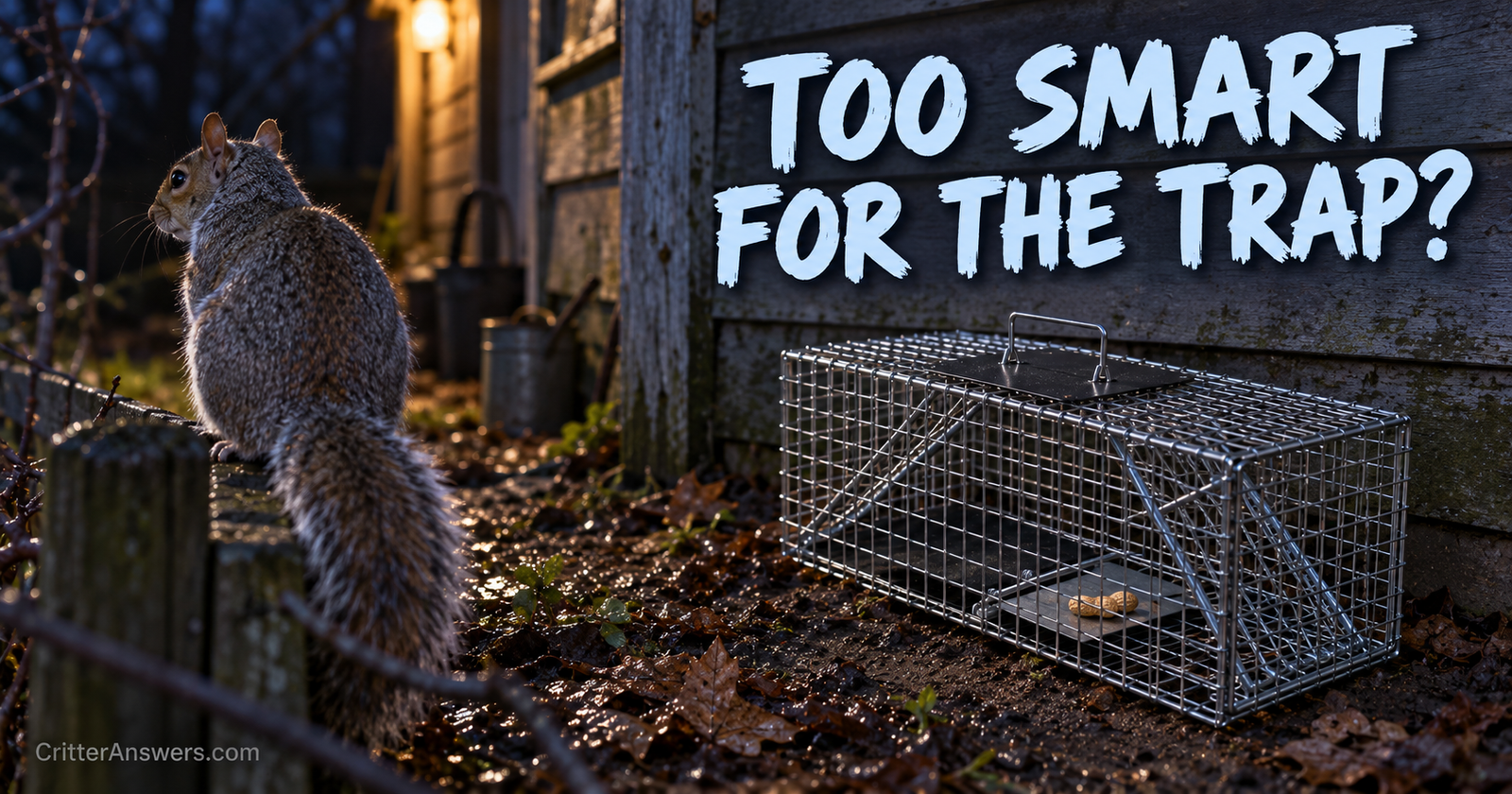
If you hear chewing and scampering mainly during daylight, common tree squirrels become more interesting.
If everything happens at midnight, mice and rats may fit better, although nocturnal flying squirrels are an exception.
Look at the roofline
Squirrel problems often give you something to inspect from outside.
During daylight, safely look at:
- Soffits
- Fascia
- Roof edges
- Gable vents
- Attic vents
- Chimney areas
- Damaged screens
- Chewed exterior wood
- Openings beneath eaves
You may discover that the chewing inside is only part of the damage.
Squirrels can gnaw building materials to enlarge access openings.
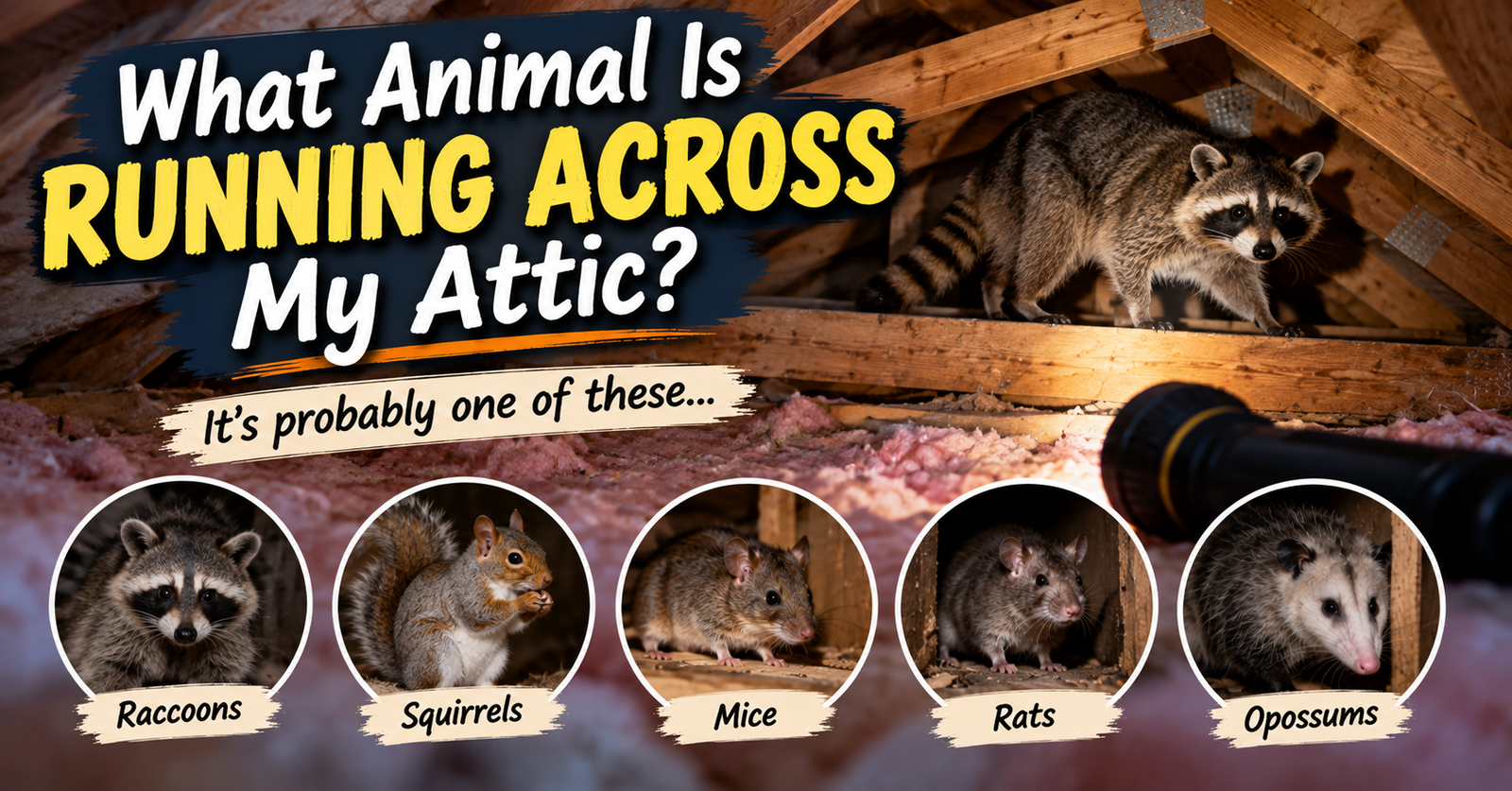
If you’ve also heard something running back and forth across the attic, combine the timing of that movement with the chewing evidence rather than treating them as separate mysteries.
Could It Be Something Besides a Rodent?
Yes.
That’s why I wouldn’t call every scraping noise in a wall “rodent chewing.”
Some animals scratch, peck, rub, or move against building materials in ways that can sound surprisingly similar from the other side.
Bird activity around a wall or soffit can produce pecking and scratching.
An animal attempting to climb through a tight cavity can create repetitive scraping.
Even non-animal sources can fool you.
Pipes can click. Ductwork can pop. Building materials can expand and contract. A branch against siding can produce repetitive noises.
The more rhythmic and mechanically predictable the noise is, the more I start questioning whether an animal is responsible at all.
Scratching and Chewing Aren’t Quite the Same Problem
These two noises overlap, but I separate them when I’m trying to identify what’s happening.
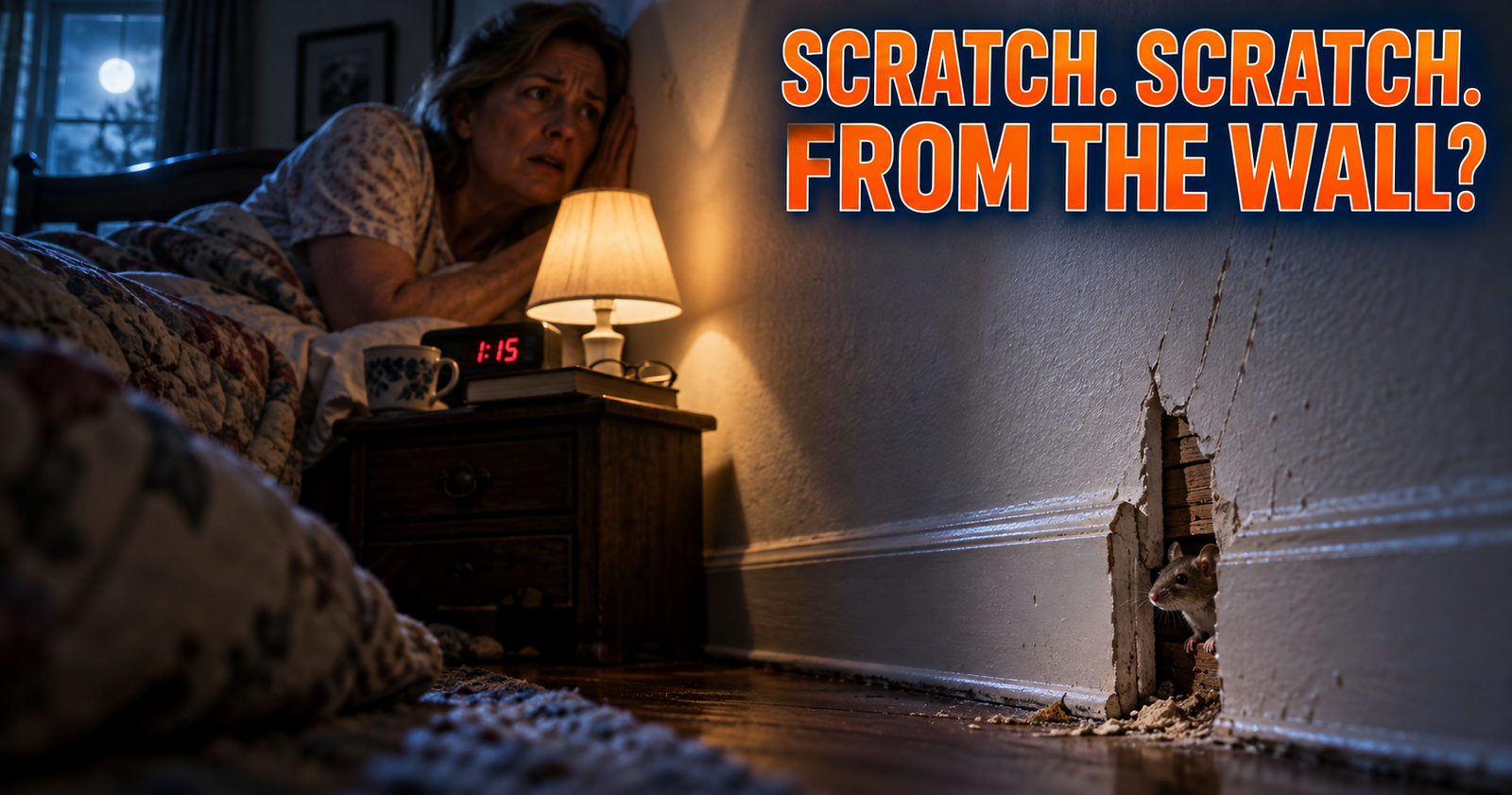
Scratching often sounds like claws moving against a surface, digging, climbing, or an animal traveling through a confined area.
Chewing tends to sound more repetitive and concentrated in one location.
You may hear both in the same night.
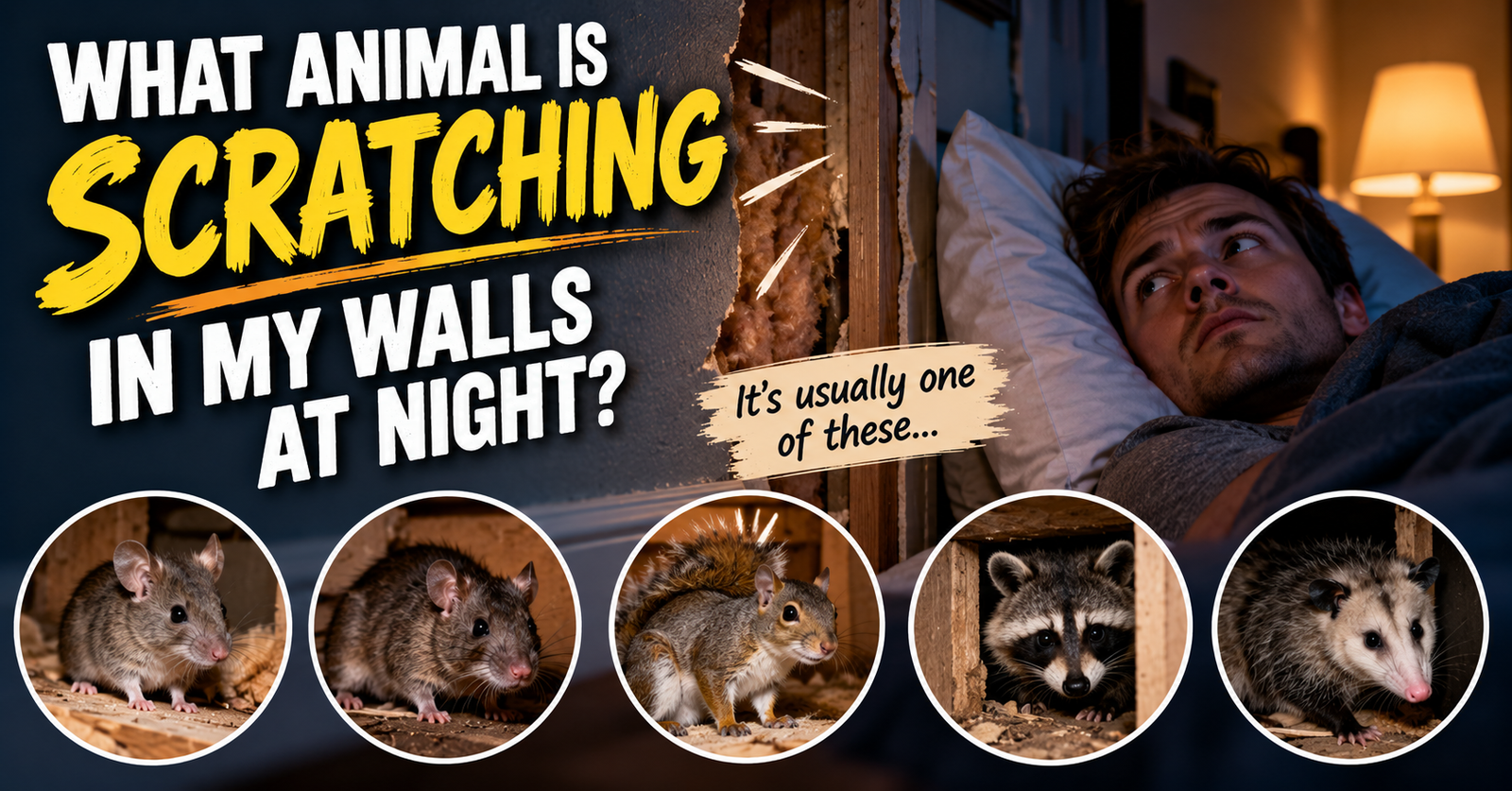
If the main thing you’re hearing is scratching rather than grinding or gnawing, our guide to nighttime scratching noises inside walls goes deeper into identifying that particular pattern.
This page is more concerning when the evidence actually points toward gnawing because the animal may be damaging something important.
Electrical Wiring Is the Part I Wouldn’t Ignore
This is where mysterious chewing inside a wall becomes more than a nuisance.
Mice, rats, and squirrels can all gnaw electrical wiring. UC IPM specifically identifies wire damage from house mice and rats, while wildlife-extension sources document the same problem with squirrels.
You probably can’t see the wiring inside a closed wall, so pay attention to anything unusual electrically.
Examples include:
- A breaker suddenly tripping
- Lights flickering unexpectedly
- An outlet or fixture suddenly not working
- Visible damaged wiring in an accessible area
- A burning or hot-plastic smell
- Unexplained electrical problems near the activity
Don’t start opening electrical boxes or reaching into a wall trying to catch the animal.
If you suspect wiring has been damaged, the electrical problem deserves appropriate professional attention regardless of which critter caused it.
A mouse is replaceable.
Your house is not.
Can Rodents Chew Through Wood?
Yes.
Both mice and rats can gnaw wood and other structural materials.
That doesn’t mean they’re eating the lumber for nutrition.
They may chew wood while enlarging an opening, maintaining their teeth, creating a route, or accessing another area.
Fresh gnawing may expose lighter-colored material underneath an older surface.
If you find a chewed opening, photograph it before repairing anything.
The size, location, surrounding droppings, tracks, and other evidence may help identify the animal.
Can They Chew Through Drywall?
Rodents can damage drywall and similar building materials, particularly when they’re trying to enlarge or create an opening.
If you see a suspicious hole appear near a baseboard, cabinet, pipe penetration, or another protected area, inspect the surrounding evidence.
Look for gnaw marks rather than assuming the drywall simply broke.
Also look nearby for droppings.
A chewed hole plus fresh rodent droppings is considerably more convincing than a mysterious damaged spot by itself.
Can Mice or Rats Chew Through Plastic?
They can damage many plastic materials.
That includes some food containers, packaging, pipes or tubing, and other softer plastic items depending on the circumstances.
Rats in particular can gnaw an impressive variety of materials, including plastic, wood, and softer metals.
This is why simply putting food into a thin plastic bag doesn’t make it rodent-proof.
Food sources should be kept in appropriately secure containers if rodents are active.
What About Pipes?
If the chewing seems to happen near a plumbing wall, don’t automatically assume the animal is chewing the pipe.
It could be moving around the pipe penetration or gnawing nearby material.
But accessible plumbing is worth inspecting for signs of damage or leaks.
Rodent damage to plastic and other softer materials is possible, and even a small leak hidden inside a wall can turn into a much larger repair.
If you notice unexplained moisture, water staining, falling water pressure, or an active leak near the same location, treat the plumbing issue separately rather than waiting until you’ve identified the animal.
Look for Gnaw Marks You Can Actually Reach
You don’t need access to the inside of the wall to find evidence.
Inspect nearby accessible areas.
I would check:
- Beneath sinks
- Behind appliances when safely accessible
- Inside cabinets
- Along baseboards
- Around pipe penetrations
- In the basement
- In the garage
- In the attic
- Around stored food
- Near suspected entry points
You’re looking for physical evidence that confirms the noise isn’t just your imagination.
Fresh gnawing plus droppings is especially useful because both are recognized signs of rodent activity.
Check What Time the Chewing Starts
Timing isn’t perfect, but it’s easy evidence to collect.
Mostly after dark
Mice and rats move higher on my list.
Flying squirrels are another nocturnal possibility in areas where they occur.
Mostly during daylight
Common tree squirrels become more interesting, particularly when the noise is high in the structure or connected with attic activity.
Birds and non-animal sources should also remain possibilities depending on what the noise actually sounds like.
At exactly the same time as your HVAC
Now I would investigate whether you’re hearing the house rather than an animal.
Don’t underestimate pipes and ductwork.
If the “gnawing” starts every single time the furnace runs and stops every single time it shuts off, that pattern deserves attention.
Follow the Noise Without Opening the Wall
The next time the chewing starts, stay quiet and listen.
Does it remain in exactly one spot?
Does it move upward?
Downward?
Toward the ceiling?
Does scratching follow it?
Does the animal suddenly run somewhere else?
Write the pattern down.
If you hear the same animal moving from an attic into a wall or from the wall toward the kitchen, you’ve learned something useful about its travel route.
You can use that information later when looking for entry points and physical evidence.
Look Outside for the Entrance
If a mouse, rat, or squirrel is chewing inside your house, it had to gain access somehow.
Walk around the exterior during daylight.
Inspect what you can safely see around:
- Utility lines
- Pipe penetrations
- Foundation gaps
- Crawl-space vents
- Garage doors
- Siding transitions
- Soffits
- Fascia
- Roof vents
- Gable vents
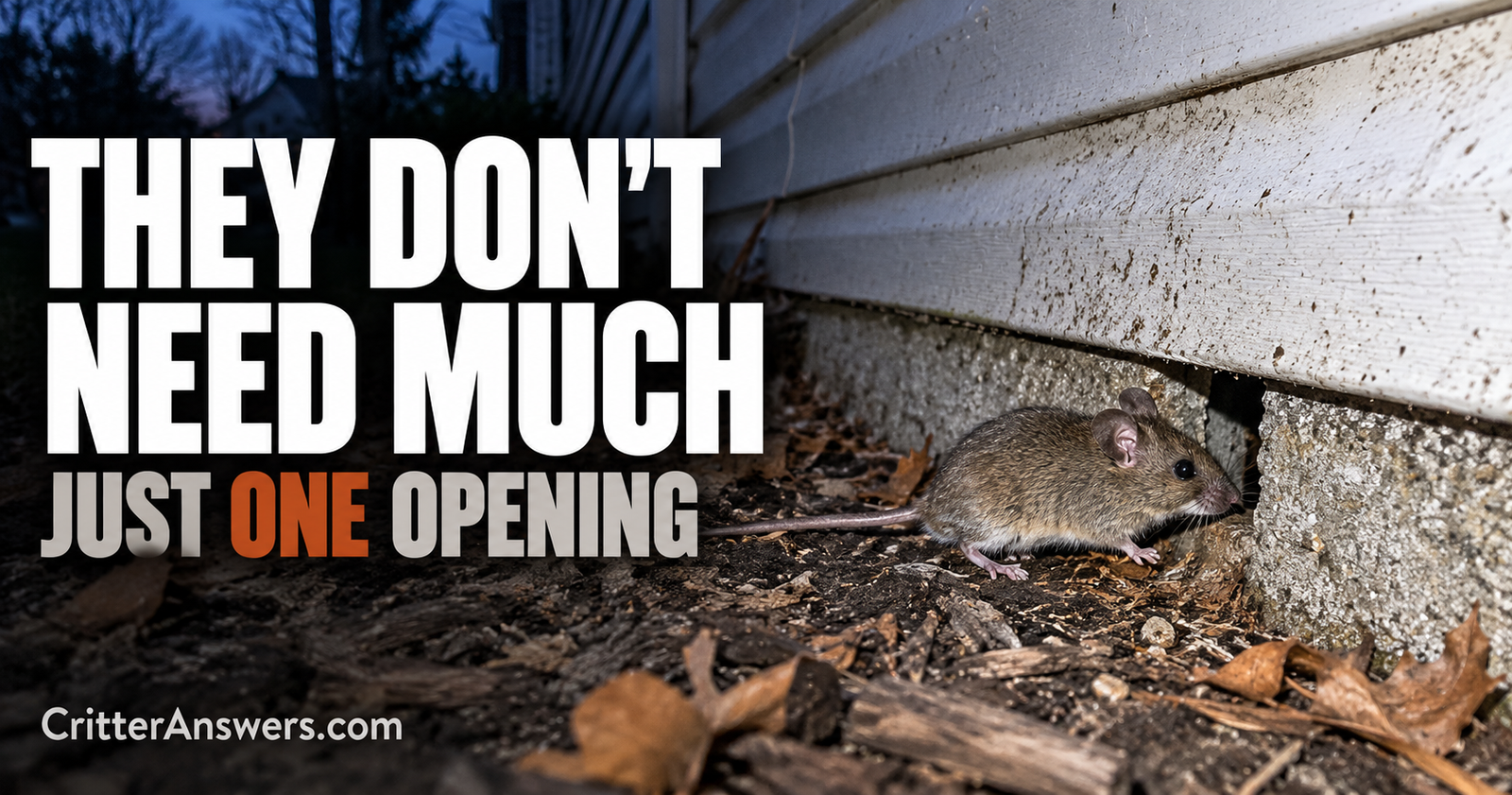
Mice don’t need an impressive hole. CDC guidance notes they can fit through an opening about 1/4 inch wide. A useful next step is checking mouse-sized openings around the house, especially where building materials meet.
Squirrels generally need more room but may enlarge existing openings by gnawing.
Finding the entrance can help explain the entire problem.
Don’t Just Fill a Rodent Hole With Foam
If rodents are actively using an opening, I wouldn’t assume ordinary expanding foam by itself will permanently stop them.
CDC exclusion guidance recommends durable materials such as steel wool secured with caulk for small holes and metal, hardware cloth, cement, or similar materials for larger openings.
The exact repair depends on the opening and building material.
More importantly, make sure you understand the infestation before sealing everything shut.
You don’t want to trap animals inside inaccessible portions of the house.
Don’t Seal an Active Wildlife Entrance With Babies Inside
This becomes especially important with squirrels and other wildlife.
An adult female may be entering and leaving while young remain inside.
If you permanently close the entrance while she’s outside, the babies can be stranded. If you trap the adult inside, she may create additional damage attempting to escape.
Before permanently excluding wildlife, determine what animal you’re dealing with and whether dependent young could be present.
That’s another reason identification comes before repair.
A Camera Can Help When the Wall Won’t
Obviously, a normal motion camera isn’t going to see through drywall.
But it may show you what’s entering the house.
Once you identify a suspected exterior route, a strategically placed camera can sometimes answer the question much faster than listening to the wall night after night.
You might catch a mouse traveling along the foundation or a squirrel repeatedly approaching an opening near the roof.
You don’t necessarily need footage of the animal inside the wall.
You need enough evidence to identify who’s using the route.
What I Would Do If I Heard Chewing Tonight
I wouldn’t start with a hammer.
I’d start with evidence.
- Note the exact time.
- Listen for scratching or running before and after the chewing.
- Determine whether the noise stays in one spot.
- Check accessible nearby areas for droppings.
- Look for gnaw marks.
- Inspect stored food and pet food.
- Check accessible wiring for obvious damage without handling questionable electrical components.
- Inspect the exterior during daylight.
- Photograph suspected entry points.
- Use all of those clues to narrow down the animal.
If several clues point toward rodents, you have a much stronger basis for dealing with the problem.
When I Would Take the Chewing Seriously
Repeated chewing inside a wall isn’t something I’d ignore for weeks just because the animal hasn’t entered the living room.
The biggest reason is hidden damage.
Rodents may be chewing harmless material, but they may also be damaging wiring, insulation, wood, or other parts of the house.
I’d move faster if the chewing happens repeatedly, you find fresh droppings or gnaw marks, electrical problems appear, you smell something burning, an animal seems trapped, or the activity is getting worse.
If you smell burning or see evidence of an active electrical problem, the immediate issue isn’t identifying whether you have a mouse or rat. It’s electrical safety.
Otherwise, start by figuring out whether you’re actually hearing gnawing and then combine that sound with droppings, damage, timing, location, and entry evidence.
In many cases, the animal leaves clues outside the wall long before you ever see what’s making that aggravating little chewing sound.
About the author: Nolan Mercer researches the clues nuisance animals leave around homes and translates them into practical identification steps for homeowners. His guides for Critter Answers focus on using several pieces of evidence together instead of making a species identification from one mysterious noise.