
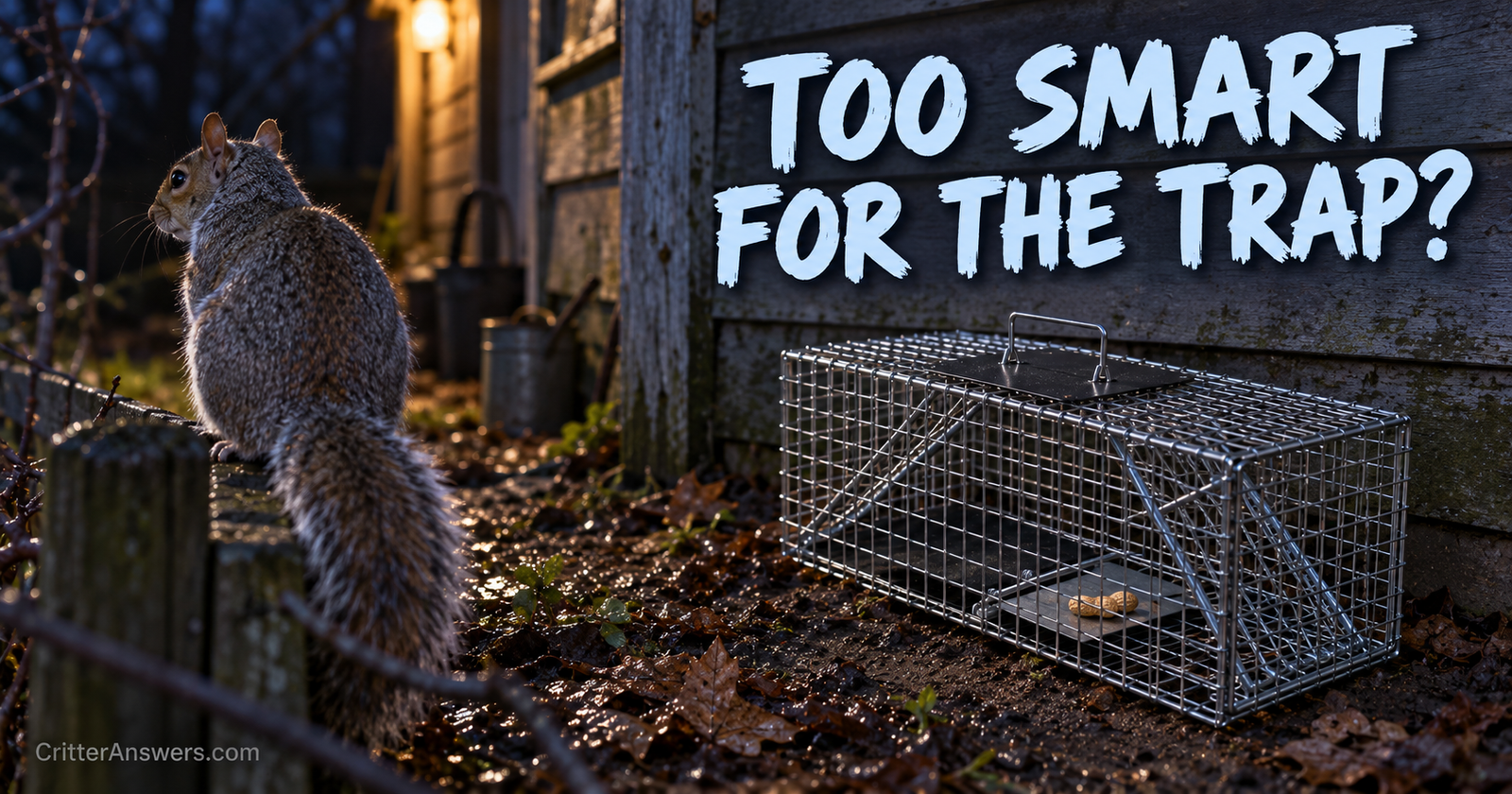
The bait disappears everywhere except inside the trap.
You see the squirrel run right past it.
The chipmunk circles it and leaves.
Your camera catches an animal sniffing around the cage at 2 a.m., but the next morning the door is still wide open.
So why won’t an animal go into your live trap?
Don’t immediately blame the bait.
An empty live trap can tell you quite a bit if you pay attention to what’s happening around it.
The trap may be in the wrong place. It may move when the animal steps on it. The animal may be suspicious of a brand-new object. Food outside the trap may be better than what’s inside. The bait may be reachable through the wire. The cage may be the wrong size.
Or you may be trying to trap the wrong animal entirely.
Instead of throwing increasingly weird foods into the cage, here’s how I’d figure out what the animal is actually telling you.
First, Figure Out Which Kind of Failure You Have
An empty trap isn’t enough information.
Before changing anything, look closely at what happened overnight.
I divide an unsuccessful live trap into a few basic situations:
- The animal never approached the trap.
- The animal approached but wouldn’t enter.
- The animal entered partway and backed out.
- The bait disappeared without the trap closing.
- The trap closed but nothing was inside.
- The animal repeatedly walks around the cage.
- Nothing has touched the trap or bait at all.
Those are different problems.
And they don’t all need different bait.
If the Animal Never Approaches, Your Location May Be Wrong
This is where I’d start.
A cage sitting in the yard doesn’t attract animals like a magnet.
You want to put it somewhere the target animal already wants to travel.
University of Florida wildlife guidance specifically recommends placing cage traps in areas nuisance wildlife is known to use, including near burrows and established travel paths.
Look for evidence.
Tracks.
Droppings.
A worn path.
A burrow entrance.
A fence the animal follows.
A particular corner of the shed.
Camera footage showing the same route night after night.
Don’t make the animal find your trap.
Put the trap where the animal finds you.

Stop Putting the Trap Where It’s Convenient for You
This is probably one of the easiest mistakes to make.
There’s a nice level spot beside the garage.
So that’s where the trap goes.
Except the animal travels along the back fence 40 feet away.
Convenience doesn’t beat behavior.
If I’m deciding between the perfect-looking location and an awkward location where I repeatedly see fresh tracks, I’m much more interested in the tracks.
For chipmunks, Missouri Extension recommends putting traps where the animals travel or feed. Squirrel trapping guidance similarly recommends placing cages directly in established travel lanes.
Follow the animal.
If You Need a Cage, Match It to the Animal
This article contains an Amazon affiliate link. Critter Answers may earn a commission from qualifying purchases at no additional cost to you. For details about how referral activity and related information may be handled, see affiliate and referral practices.
Sometimes the problem starts before the trap ever gets set.
The cage itself needs to be appropriate for the target animal.
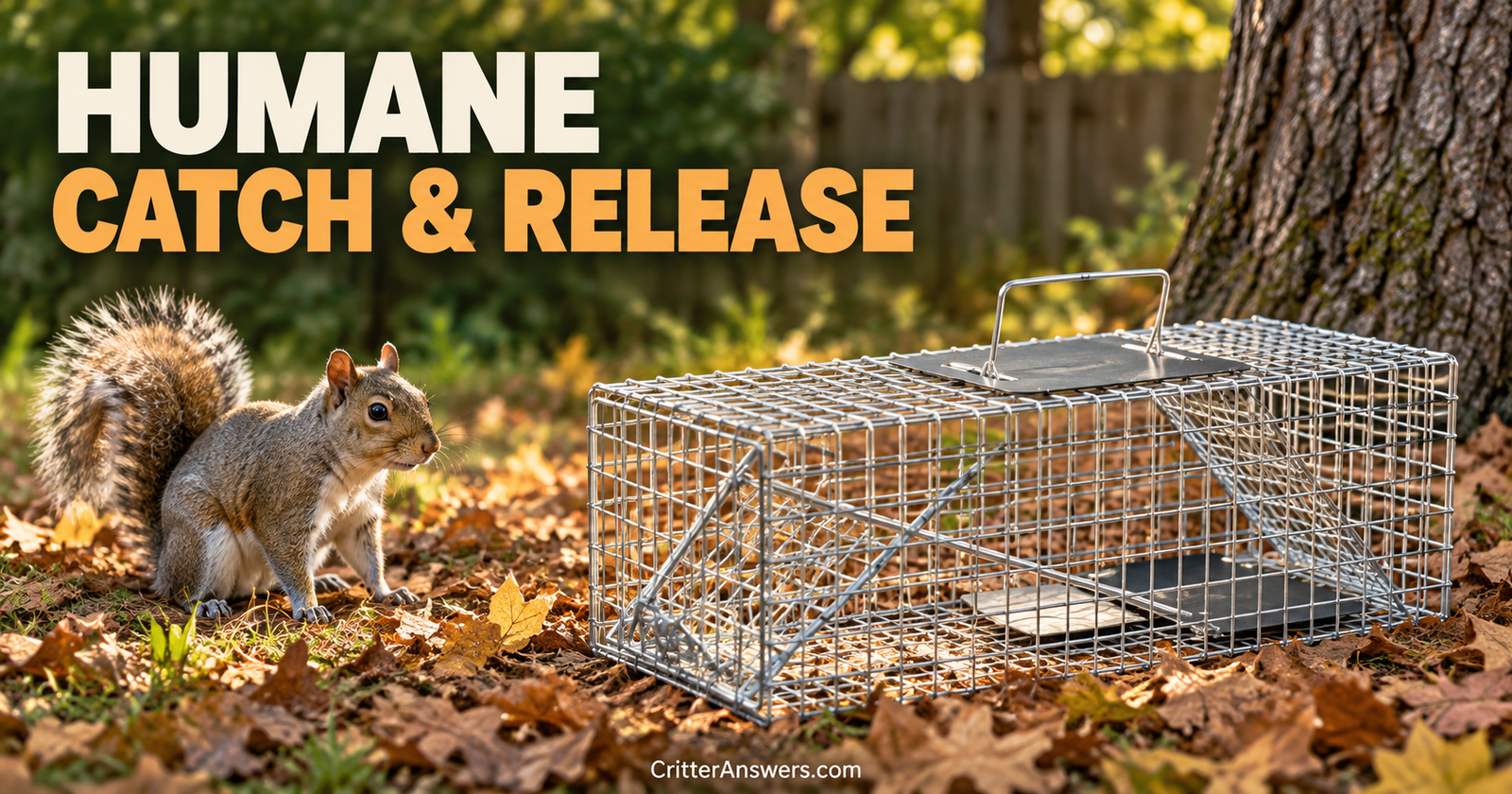
If you’re dealing with squirrels and other similarly sized small nuisance animals, I’ve covered the heavy-duty humane live trap I’d consider for this size range.
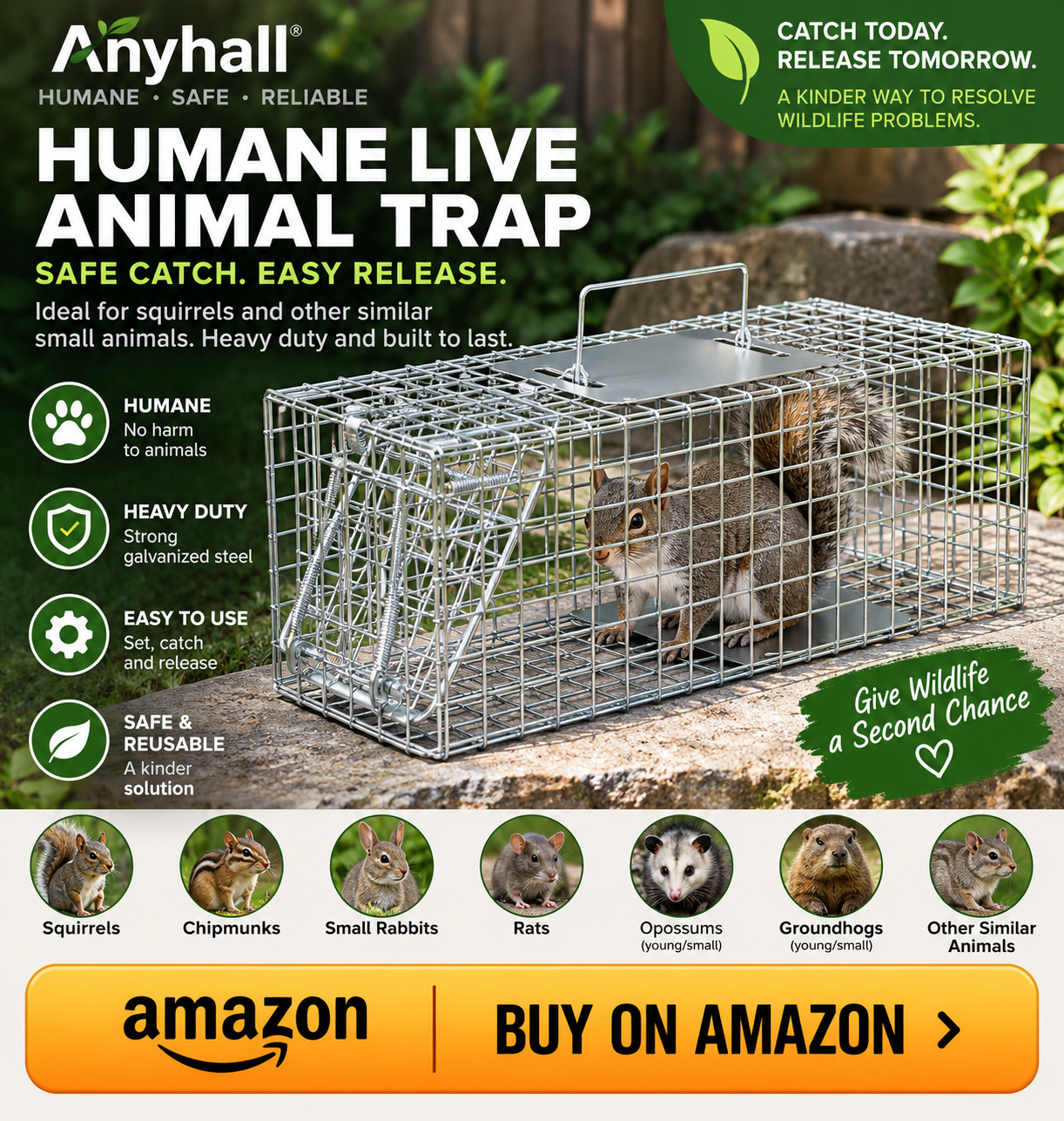
You can also check the current price and specifications for the small-animal live cage trap on Amazon.
Don’t choose solely by price or because the cage looks big enough in a photograph.
Check its actual dimensions and intended animal-size range.
A Bigger Trap Isn’t Automatically Easier to Enter
There’s a tendency to assume a giant cage gives the animal more room and therefore must work better.
That’s not necessarily how trap selection works.
The cage has to fit the target species and allow the trigger system to function properly when that animal enters.
A squirrel and a raccoon aren’t interchangeable.
Neither are a chipmunk and a groundhog.
University of Florida Extension specifically advises choosing a cage appropriate for the animal being targeted rather than treating cage traps as one-size-fits-all equipment.
If you’ve misidentified the animal, you can have the wrong trap and the wrong bait at the same time.
The Animal May Be Afraid of the Trap
Imagine the situation from the animal’s perspective.
Yesterday:
Normal path.
Today:
Metal box.
Animals don’t know that you ordered a humane live cage from Amazon.
They know something unfamiliar suddenly appeared in an area they know well.
Some individuals will investigate quickly.
Others won’t.
This is especially important with animals that are cautious around new objects.
If camera footage shows your target animal approaching, sniffing, circling, and refusing to enter, trap shyness moves high on my list.
That’s when I’d consider pre-baiting.
Pre-Baiting Is Basically Teaching the Animal That the Cage Means Food
Pre-baiting is simple.
Instead of immediately trying to capture the animal, you first let it become comfortable with the cage.
For example, Missouri Extension recommends wiring cage-trap doors open for a couple of days when trapping nuisance chipmunks. The chipmunks learn to associate the cage with food before the trap is actually activated. Similar acclimation is recommended for squirrels.
The sequence becomes:
New cage = suspicious.
Then:
New cage = food.
Eventually:
New cage = place I routinely enter for food.
That’s a much easier animal to trap.
How I Would Pre-Bait a Live Cage
Follow the instructions for your particular trap, but conceptually I’d keep this very simple.
Secure the door so the trap cannot accidentally close.
Put appropriate bait in the normal bait location.
Leave the cage where you intend to use it.
Monitor the area.
You’re looking for evidence that the target animal is comfortably entering and feeding.
That might be:
- Missing bait
- Tracks through the cage
- Camera footage
- Direct observation
Once the animal is confidently entering, the trap can be returned to its normal operating configuration and set according to the manufacturer’s directions.
Don’t create an accidental trapping situation while you’re supposedly pre-baiting.
Make sure that door is actually secured open.
But Don’t Pre-Bait Before Identifying the Animal
There’s another side to this.
Food can attract wildlife you weren’t trying to catch.
If you aren’t sure what’s visiting the property, randomly putting food into an open cage can introduce more confusion.
First identify the target.

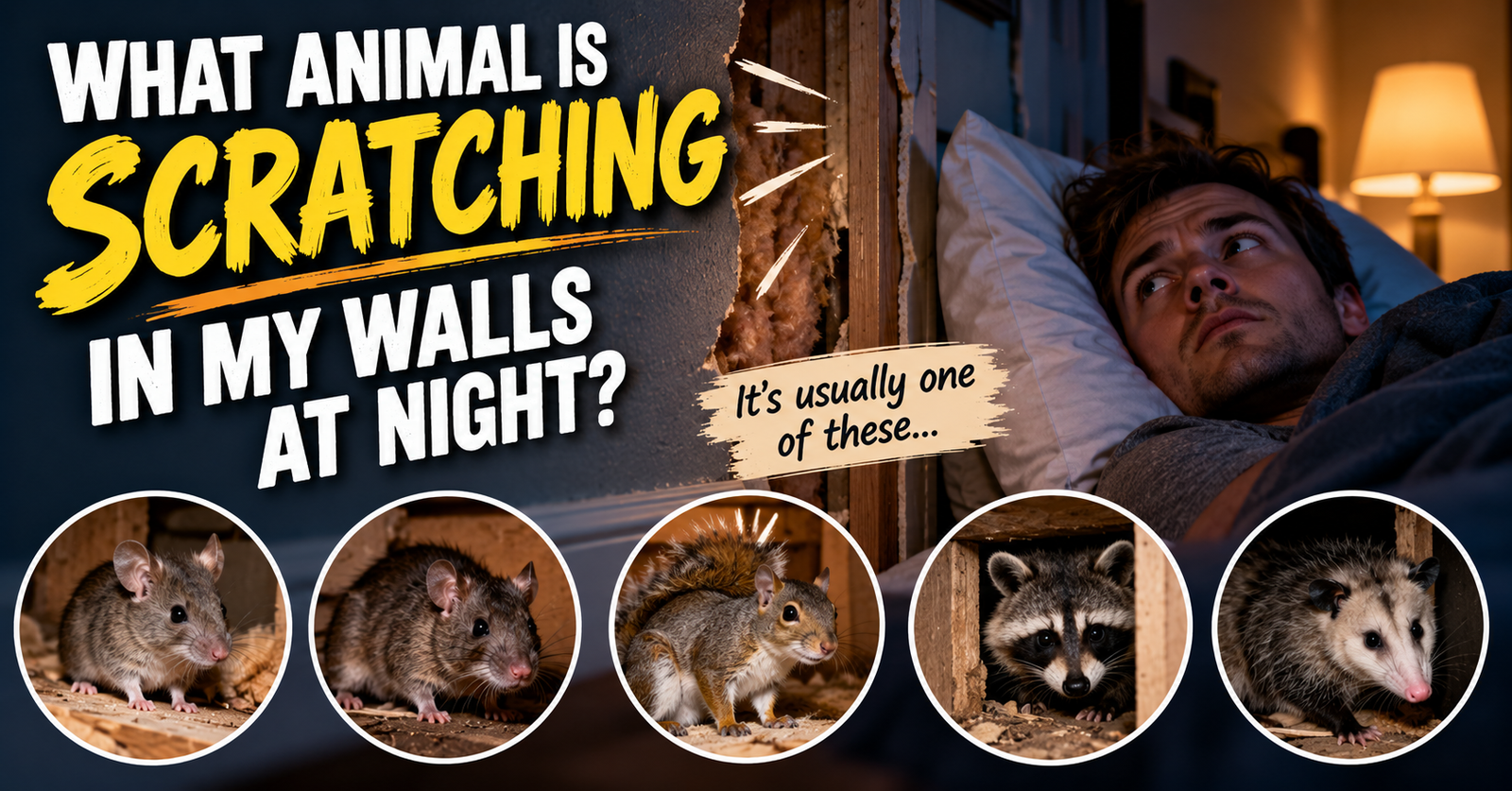
If all you know is that something is making noise or digging around the property, start with the evidence. If the evidence includes an overturned can or scattered food, what animal is getting into your trash offers a focused way to narrow down the visitor before choosing a trap.
For example, if your problem begins with an unknown burrow, the hole and surrounding dirt can help identify the animalbefore you decide that cage trapping is even appropriate.
Identification comes first.
The Animal May Have Better Food Somewhere Else
This is a huge one.
You put six sunflower seeds in the cage.
Meanwhile, a bird feeder 20 feet away is dumping sunflower seeds all over the ground.
Why enter the weird metal box?
Or perhaps there’s:
- Open chicken feed
- Livestock grain
- Pet food
- Fallen fruit
- Nuts
- Compost
- Garbage
- Garden produce
- Spilled bird seed
Your bait isn’t operating in a vacuum.
It’s competing against every other available food source.
Look Around Before You Change the Bait
Before deciding the bait “doesn’t work,” walk the property.
Where else could this animal eat?
Sometimes the problem becomes painfully obvious.
There’s a bag of sunflower seed sitting open in the shed.
Chicken feed is spilled around the coop.
The squirrel has an entire oak tree raining food into the yard.
A pet bowl stays outside all night.
You may not be able to eliminate every natural food source, and you shouldn’t start stripping your property bare just to make a cage more attractive.
But obvious human-provided food sources can often be reduced.
Make your bait worth investigating.
Use What the Animal Already Likes
If you know what the animal is stealing, you’ve been handed a clue.
Don’t ignore it.
A squirrel raiding sunflower seed has already demonstrated a preference.
A chipmunk carrying away spilled grain has done the same.
For squirrels, Missouri Extension lists foods including apple, orange, walnuts, pecans, peanut butter, sunflower and corn as useful live-trap baits. Chipmunk recommendations include nut meats, sunflower seeds, raisins and cereal grains.
But don’t turn this article into another giant bait discussion.
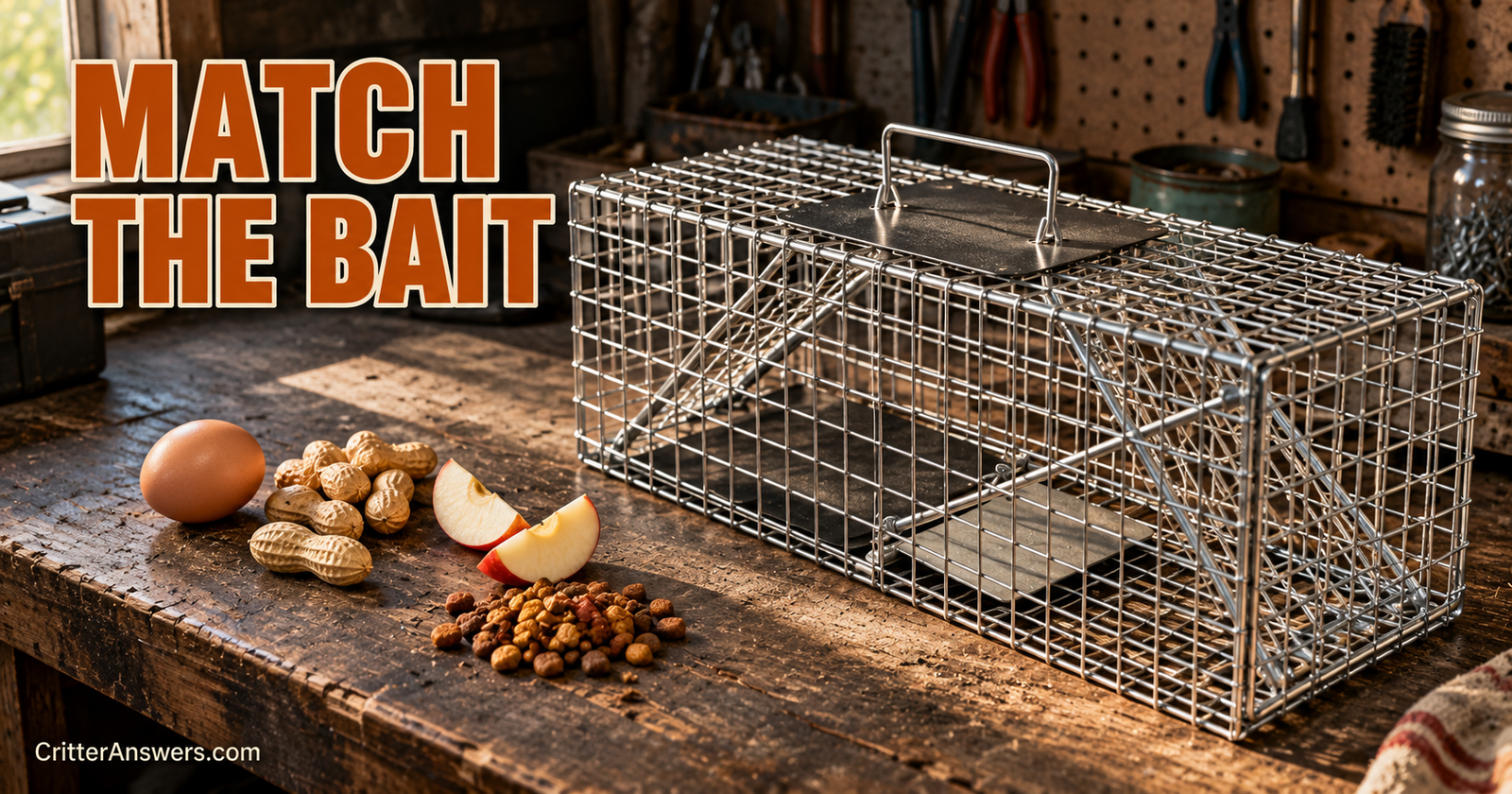
We’ve already built a complete guide to choosing the best bait for a live animal trap.
If the animal won’t enter despite using an appropriate bait, keep troubleshooting.
Your Bait May Be in the Wrong Place
This is different from using the wrong bait.
The food can be perfect and still be positioned badly.
For a cage trap to work, the animal needs to travel far enough inside to activate the trigger and allow the door to close properly.
University of Florida Extension recommends putting cage-trap bait on or behind the trigger mechanism so the animal is encouraged to step completely inside.
That’s the goal.
You don’t want:
nose in cage → snack → animal leaves.
You want:
animal enters → moves into proper position → trigger activates.
Don’t Feed the Animal at the Door
Putting a giant pile of food right inside the entrance can defeat the purpose.
If the animal can stand outside and eat, why go farther?
A small amount of bait leading toward the trap may sometimes help, depending on the species and setup.
But the meaningful reward should require commitment.
Think about what you’re asking the animal to do.
The bait isn’t merely supposed to attract it to the cage.
It’s supposed to get it to the correct place inside the cage.
If the Bait Disappears, You May Be Getting Robbed Through the Wire
This is one of my favorite trap mysteries because the evidence is easy to misread.
Yesterday:
Trap baited.
Today:
Bait gone.
Door open.
The first assumption is often:
“The trap didn’t trigger.”
Maybe.
But perhaps the animal never entered.
Small animals can sometimes reach through cage wire and pull food toward themselves.
University of Florida Extension specifically recommends considering screening around the bait end of a single-door cage to prevent animals from reaching through the sides and stealing bait.
That’s not a bait failure.
That’s a burglary.
Move the Bait Away From the Cage Wall
Before modifying anything, start simple.
Look at where the bait sits.
Can an animal reach it through:
- The side?
- The back?
- The top?
Move it farther from reachable wire while keeping it correctly positioned relative to the trigger.
If screening is appropriate for the trap, use a safe setup that doesn’t interfere with the trigger, door, ventilation, or animal.
Then test the cage.
You don’t want your anti-theft modification becoming the reason the door can’t close.
Check the Ground Under the Trap
A cage that rocks when stepped on can make a cautious animal even more suspicious.
University of Florida recommends placing cage traps as level as possible, which also helps reduce the chance that a captured animal can roll the trap while trying to escape.
Push lightly on the corners.
Does it wobble?
Does it tip?
Does the trigger behave differently depending on how the cage sits?
Fix the foundation before changing anything else.
A flat board or another suitable stable surface may work in certain locations, while other traps can be positioned directly on firm ground.
Follow the trap manufacturer’s directions.
The Wire Floor May Feel Unnatural
Some animals hesitate when stepping from natural ground onto exposed wire mesh.
One technique discussed by University of Florida Extension is placing soil or leaves over the cage floor for species that are reluctant to enter, provided the material does not interfere with the trap mechanism.
The key phrase there is does not interfere.
Don’t bury the trigger.
Don’t jam leaves beneath the door.
Don’t turn the trap into a planter.
You’re simply trying to make the transition into the cage less obvious where that technique is appropriate.
Camouflage Can Help, but Don’t Smother the Trap
A little natural blending is one thing.
Building a shrub pile around the cage is another.
You need the:
- Door clear
- Trigger clear
- Cage stable
- Animal visible enough to monitor
- Trap accessible for checking
- Ventilation unobstructed
Use common sense.
The goal isn’t to make the cage invisible.
It’s to make it less disruptive to the animal’s normal travel pattern.
A Wall or Fence Can Do Some of the Work for You
Animals often travel along edges.
Walls.
Fence lines.
Building foundations.
Brush edges.
University of Florida notes that two-door traps can work particularly well along walls, fences and other barriers that naturally encourage animals to move in a straight line.
That’s a very useful idea.
Instead of convincing the animal to walk across an open area toward a random cage, put the cage into a route it already follows.
Again:
behavior beats convenience.
A Burrow Gives You Another Obvious Travel Point
If you’ve positively identified an active burrow and trapping that species is appropriate and legal, the entrance gives you valuable information.
You know where the animal passes.
For certain species, wildlife guidance recommends positioning cage traps near or facing active burrow entrances.
But don’t assume every hole belongs to an animal that should be live-trapped.
Moles, for example, call for very different control methods than squirrels or chipmunks.
And a burrow may have multiple entrances.
Know what lives there first.
Your Trap Could Be Too Close to Human Activity
Wildlife around homes often tolerates us surprisingly well.
That doesn’t mean every animal wants to enter a cage beside a door that opens every five minutes.
Think about disturbance.
Dogs running past.
Kids playing.
A lawn mower.
Vehicles.
People repeatedly walking up to “see if anything’s in it yet.”
If you have camera evidence showing the animal uses a quieter route, that’s probably where I’d rather put the trap.
Once it’s set, give the animal some peace.
Stop Checking It Every Ten Minutes
Yes, live traps need responsible monitoring.
No, that doesn’t mean standing beside the cage all afternoon.
There is a difference between checking the trap often enough to protect a captured animal and constantly disturbing the trapping area.
Use visual checks from a reasonable distance where practical.
A camera can also help you understand what’s happening when you aren’t nearby.
Maybe the animal approaches every night and backs away.
Maybe a different species steals the bait.
Maybe nothing has visited at all.
That’s valuable evidence.
A Wildlife Camera Can Tell You Why the Trap Is Failing
This is one situation where I think a camera can save an enormous amount of guessing.
Point it toward the trapping area.
Then watch what actually happens.
You may discover:
Animal never appears: wrong location or animal no longer present.
Animal approaches but won’t enter: possible trap shyness.
Animal reaches through cage: bait-placement problem.
Animal enters but trap doesn’t fire: mechanical/setup problem.
Different animal appears: identification problem.
Animal walks past trap on the same side every time: repositioning opportunity.
That’s far more useful than waking up, seeing an empty cage, and assuming the peanut butter failed.
Test the Trigger Yourself
This seems obvious.
It still gets skipped.
Before blaming wildlife, test the trap according to its instructions.
Does the trigger release?
Does the door close completely?
Is anything rubbing?
Did dirt get into the mechanism?
Did leaves block something?
Did you put bait where it interferes with the trigger?
Is the trap bent?
Does the mechanism work while the cage is sitting in its actual outdoor position?
A trap that worked perfectly on the garage floor may behave differently when one corner is sitting on a rock.
The Animal May Be Too Light for Your Setup
Another reason trap size matters.
If you’re trying to catch an animal much smaller than the cage was designed around, the trigger setup may not respond the way you expect.
Don’t start modifying trigger mechanisms randomly.
Check the trap’s intended species or weight range and follow its instructions.
This is another reason I like using a small-animal-sized cage for a small-animal problem instead of assuming the biggest trap in the store can catch everything.
Equipment should match the animal.
The Animal Could Be Too Big for the Trap
The opposite happens too.
Maybe the animal can stick its head into the opening but doesn’t want to squeeze farther.
Maybe your identification was wrong.
If you’re trying to use a squirrel-sized cage for a groundhog or raccoon, stop.
This isn’t a matter of finding more irresistible bait.
It’s the wrong equipment.
Larger animals require appropriately sized and constructed traps. Missouri Extension, for example, recommends a substantially larger cage for woodchucks than it does for tree squirrels.
Don’t force the issue.
You May Be Targeting the Wrong Animal Entirely
This one can waste days.
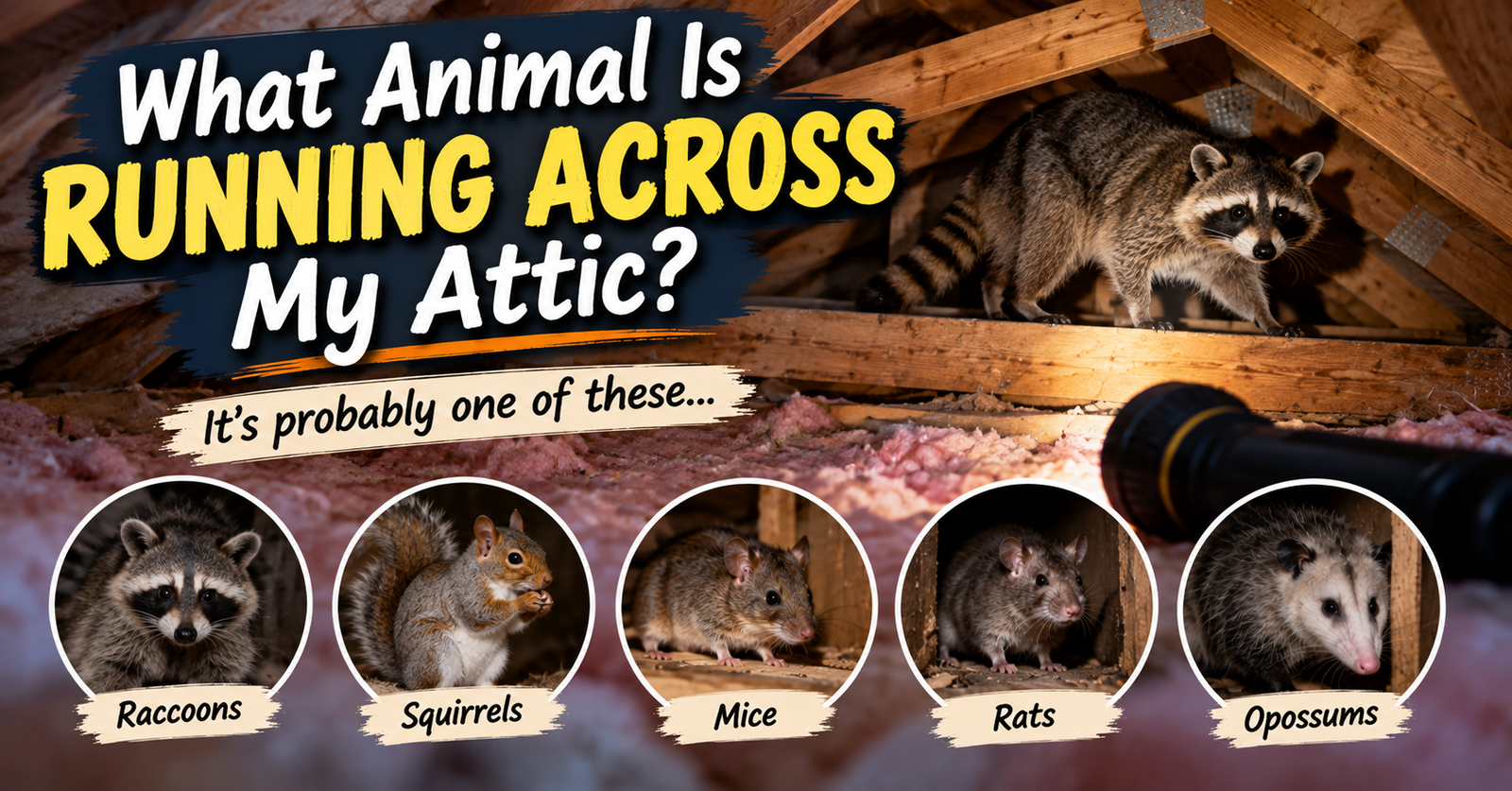
Something is scratching under the shed.
You see squirrels in the yard.
Therefore, squirrel.
Not necessarily.
The squirrel may simply be the animal you happen to see during daylight.
If your cage remains untouched, revisit your identification.
Look for:
- Tracks
- Droppings
- Burrows
- Gnaw marks
- Hair
- Feeding damage
- Activity time
- Camera footage
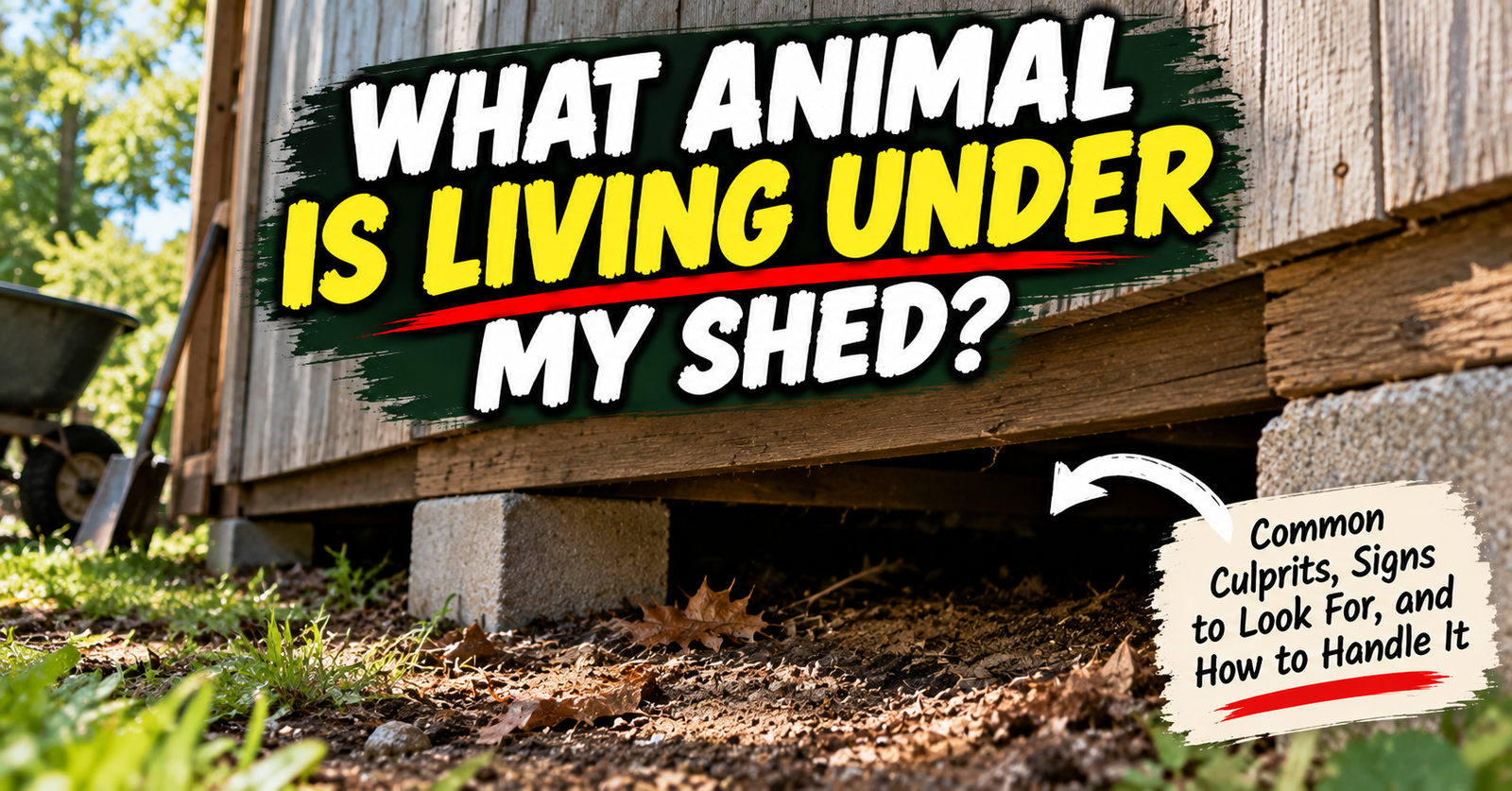
If the problem is underneath an outbuilding, work through the signs of animals living beneath sheds before assuming the most visible animal is responsible.
The wrong animal leads to the wrong trap, wrong bait, wrong placement and a lot of wasted time.
One Empty Night Doesn’t Mean the Trap Failed
Give the evidence time.
Wildlife doesn’t operate on our schedule.
An animal may use part of its territory one night and a different area the next.
Weather can alter activity.
Available food changes.
Disturbance changes.
If the trap is correctly placed and you’re confident the animal remains active, one empty morning isn’t necessarily meaningful.
Repeated patterns are.
That’s why cameras, tracks and bait condition are so useful.
But Ten Empty Nights Should Make You Reevaluate
There’s patience, and then there’s stubbornness.
If nothing has interacted with the trap for an extended period while fresh damage continues elsewhere, something is wrong.
Don’t keep resetting the exact same configuration indefinitely.
Reevaluate:
Animal.
Location.
Trap.
Bait.
Trigger.
Competing food.
Travel route.
Change something based on evidence.
Don’t Keep Moving the Cage Every Few Hours Either
The other extreme isn’t helpful.
Morning: shed.
Afternoon: fence.
Evening: garden.
Next morning: porch.
Now the trap itself never becomes a normal part of any location.
If you’ve identified a strong travel route, give the setup a reasonable opportunity to work.
Constant movement can make it harder to tell what actually improved or hurt your results.
Make deliberate changes.
Not random ones.
Watch Out for Non-Target Animals
Maybe your target won’t enter.
Something else might.
That’s one reason trap location, bait, timing and trap size matter.
University of Florida recommends considering the target animal’s active period when setting traps because doing so can reduce the chance of capturing unintended species.
Pets matter too.
So do children.
Don’t set an armed cage where a curious dog, cat or child is likely to interfere with it.
A live trap isn’t something to set and forget.
Check It Frequently Once You Actually Set It
Pre-baiting with a securely disabled trap is one thing.
An armed live trap is another.
Once it can capture an animal, you have a responsibility to monitor it.
University of Florida recommends checking cage traps at least daily and preferably more often, and positioning them under vegetation when possible to protect captured animals from sun and rain.
Your state or locality may impose additional requirements.
Check those before trapping.
Hot weather, cold weather and storms can also make frequent monitoring especially important.
Know What Happens After the Door Closes
This needs to be decided before trapping.
Wildlife laws vary.
Species protections vary.
Relocation rules vary.
Legal methods vary.
Don’t assume a live cage gives you permission to catch an animal and release it wherever you want.
For example, Missouri Extension’s nuisance-wildlife guidance notes that trapping regulations can dictate which traps are allowed for various wildlife species and recommends checking with wildlife authorities before beginning a nuisance-wildlife trapping program. The site’s wildlife-use terms provide an additional reminder that readers should verify local requirements before acting.
Know your legal next step before you have a live animal waiting for one.
Don’t Forget Why the Animal Is There
Even when the trap finally works, you’re not necessarily finished.
Ask why the animal was using that location.
Food?
Shelter?
A hole into the attic?
Space beneath the shed?
Spilled feed?
Bird seed?
A garden?
Removing one animal without addressing the attraction can leave the same opportunity open for the next one.
This is especially important with structural wildlife problems.
A captured squirrel doesn’t repair a soffit.
A captured chipmunk doesn’t seal a foundation opening.
The cage handles an individual animal.
Prevention handles the property.
My Empty Live Trap Checklist
If an animal refuses to enter my cage, I wouldn’t immediately buy five new baits.
I’d work through this order:
- Confirm the animal. Am I targeting the right species?
- Confirm activity. Is it still using this location?
- Find its route. Where does it actually travel?
- Check trap size. Is this cage appropriate for that animal?
- Stabilize the cage. Does it rock or shift?
- Check competing food. Why enter when dinner is available outside?
- Use appropriate bait. Match the food to the species.
- Position the bait correctly. Make the animal enter far enough.
- Check for bait theft. Can it reach through the wire?
- Test the trigger. Does the cage actually work?
- Consider pre-baiting. Let a wary animal become comfortable entering.
- Use a camera. See what happens when you’re gone.
That’s a much better troubleshooting process than:
Day 1 peanut butter.
Day 2 marshmallows.
Day 3 hot dog.
Day 4 existential crisis.
The Empty Trap Is Giving You Clues
This is the part I’d remember.
An animal refusing to enter a live trap doesn’t automatically mean the trap is junk or the bait is bad.
Watch how it fails.
If the animal never approaches, investigate placement.
If it circles the cage, consider trap shyness.
If the bait disappears, investigate theft.
If it enters but nothing happens, test the mechanism.
If fresh damage continues but your camera never sees the species you’re targeting, revisit the identification.
And if the animal already confidently eats inside an unset cage?
You’re probably much closer than you think.
For squirrels and other appropriately sized small nuisance animals, check this heavy-duty humane live cage trap on Amazon if you still need a properly sized cage.
But don’t expect a new trap to compensate for bad placement.
The best live trap setup is the one built around what the animal is already doing.
About the author: Nolan Mercer researches the tracks, feeding habits, travel routes, burrows, and other clues nuisance wildlife leaves around homes. At Critter Answers, he focuses on figuring out what the animal is actually doing before choosing a way to deal with it.