
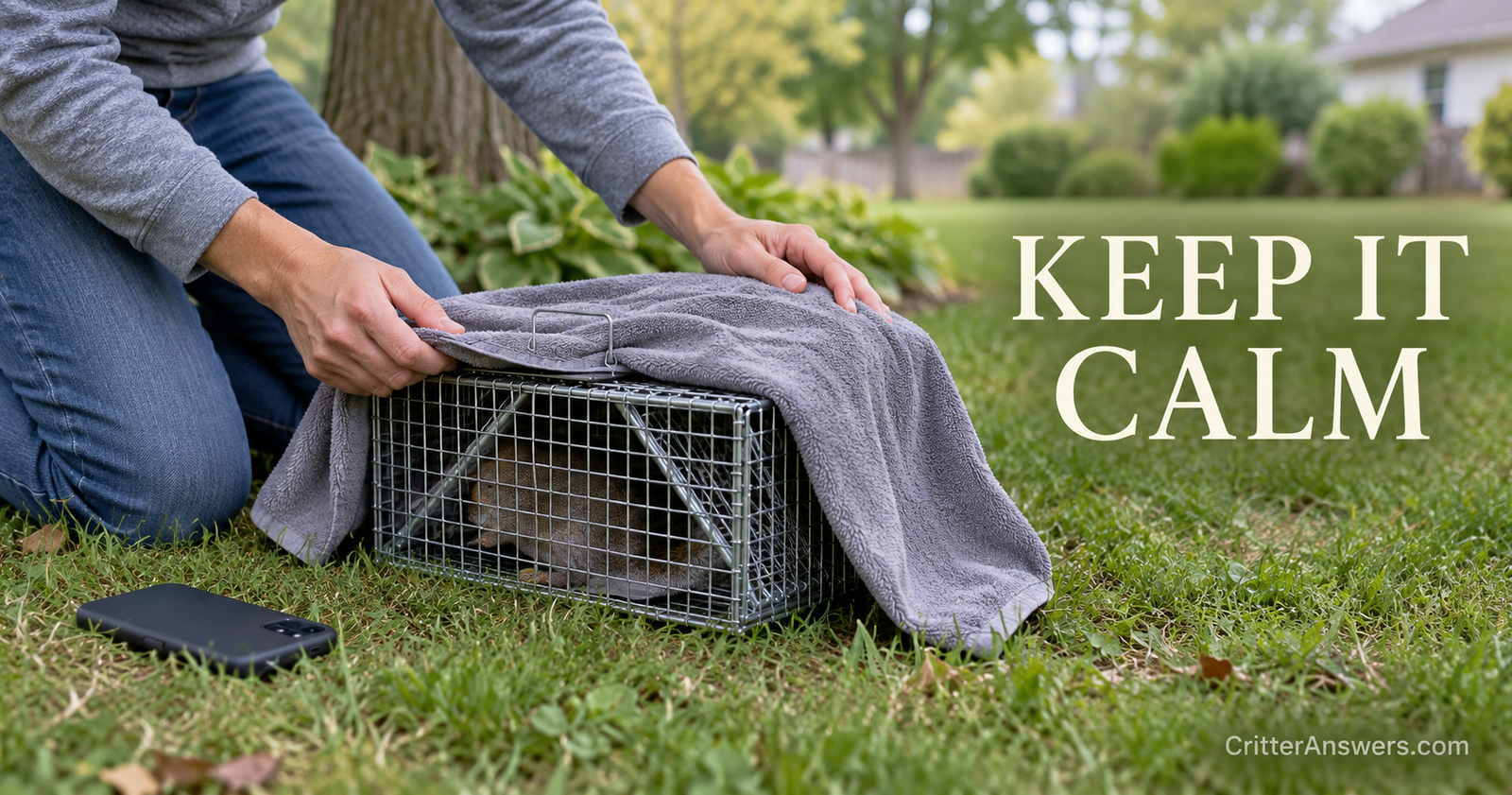
The trap worked.
Yesterday you had an empty cage and a nuisance animal problem.
Today you have a nuisance animal problem inside a cage.
Now what?
This is the part of live trapping that doesn’t get nearly enough attention.
People spend days researching the right trap, finding the best bait, and figuring out where to put the cage. Then the door finally shuts and suddenly there’s a frightened wild animal staring back at them.
Don’t immediately grab the cage and throw it in the truck.
And don’t automatically open the door, either.
What you should do after catching an animal in a live trap depends on what you caught, where you live, why it was trapped, local wildlife laws, weather conditions, and whether dependent young could still be nearby.
Your first job is much simpler:
Keep yourself safe.
Keep pets and children away.
Keep the animal from suffering unnecessarily.
Then figure out the correct legal next step.
First, Don’t Panic and Don’t Put Your Hands Near the Cage
Even a small wild animal can defend itself when frightened.
A squirrel that normally runs away from you no longer has that option.
A raccoon inside a cage can’t retreat.
A trapped rat isn’t going to understand that you’re trying to help.
Don’t reach through the wire.
Don’t try to pet the animal.
Don’t put your fingers near the door.
Don’t let children gather around it.
Don’t let the dog sniff it.
Give the animal space.
The cage has already done its job. You don’t need to physically interact with the animal to prove it worked.
Keep Children and Pets Away
This would be one of my first moves.
Bring dogs inside or secure them somewhere away from the trap.
Keep cats away.
Don’t let kids stand around the cage.
Besides the obvious bite and scratch risk, having people and pets surrounding a trapped wild animal adds stress to an already stressful situation.
Treat the cage as temporarily off-limits.
If you need to approach it, do so calmly and deliberately.
Make Sure You Know What You Caught
Hopefully you identified the animal before setting the trap.
Now confirm it.
This matters because the correct next step can vary tremendously between species.
Don’t assume every brown furry animal in a cage is interchangeable.
Look at:
- Body size
- Tail
- Face
- Ears
- Coloration
- Markings
- Feet
- Overall shape
Observe from a safe distance.
You don’t need to kneel beside the cage with your face against the wire.
If you’re uncertain about the identification, take clear photographs from a safe position and consult an appropriate wildlife professional or agency. For more context on handling uncertainty and deciding when local help is appropriate, see Critter Answers’ approach to uncertain animal identification.
If You Caught the Wrong Animal, Don’t Improvise
Non-target captures happen.
Maybe you were targeting a squirrel and caught something else.
Maybe the nighttime visitor wasn’t what you thought.
Don’t assume that because you intended to catch one species, the same rules apply to whatever ended up inside.
Some wildlife is regulated differently.
Some species require specialized handling.
And some animals create much greater risks when approached.
Before handling or releasing an animal you didn’t intend to capture, identify it and check the appropriate wildlife regulations or contact your state wildlife agency. You can also review the website’s legal and safety guidance before relying on general trapping information.
This is one reason identification should always come before trapping whenever possible.
Get the Trap Out of Dangerous Weather
A live cage doesn’t provide much protection.
If the animal is sitting in intense sun, heavy rain, severe cold, or another dangerous condition, that becomes an immediate concern.
Don’t leave a captured animal baking in direct summer sunlight while you spend four hours researching what to do.
If it can be done safely and legally without unnecessary handling of the animal, protect the cage from dangerous exposure while you determine the next step.
Don’t cover it in a way that eliminates ventilation.
And don’t move the cage somewhere that creates a new danger for you, the animal, or other people.
Don’t Leave the Animal Sitting There All Day
A live trap is temporary confinement.
It isn’t housing.
Once you’ve made a capture, deal with the situation promptly.
This is one reason I always recommend figuring out the legal plan before setting a live trap.
You don’t want to be standing in the yard at 6:30 a.m. Googling:
“Where am I supposed to put this thing?”
with an increasingly unhappy squirrel watching from the cage.
Know what you’ll do if the trap succeeds.
If You’re Still Shopping for a Cage, Plan the Ending Before the Beginning
This article contains an Amazon affiliate link. Critter Answers may earn a commission from qualifying purchases at no additional cost to you. The site's Amazon affiliate disclosure provides additional context about qualifying purchases and affiliate compensation.
If you’re reading this before you’ve actually trapped anything, you’re in the best position.
Make your plan now.
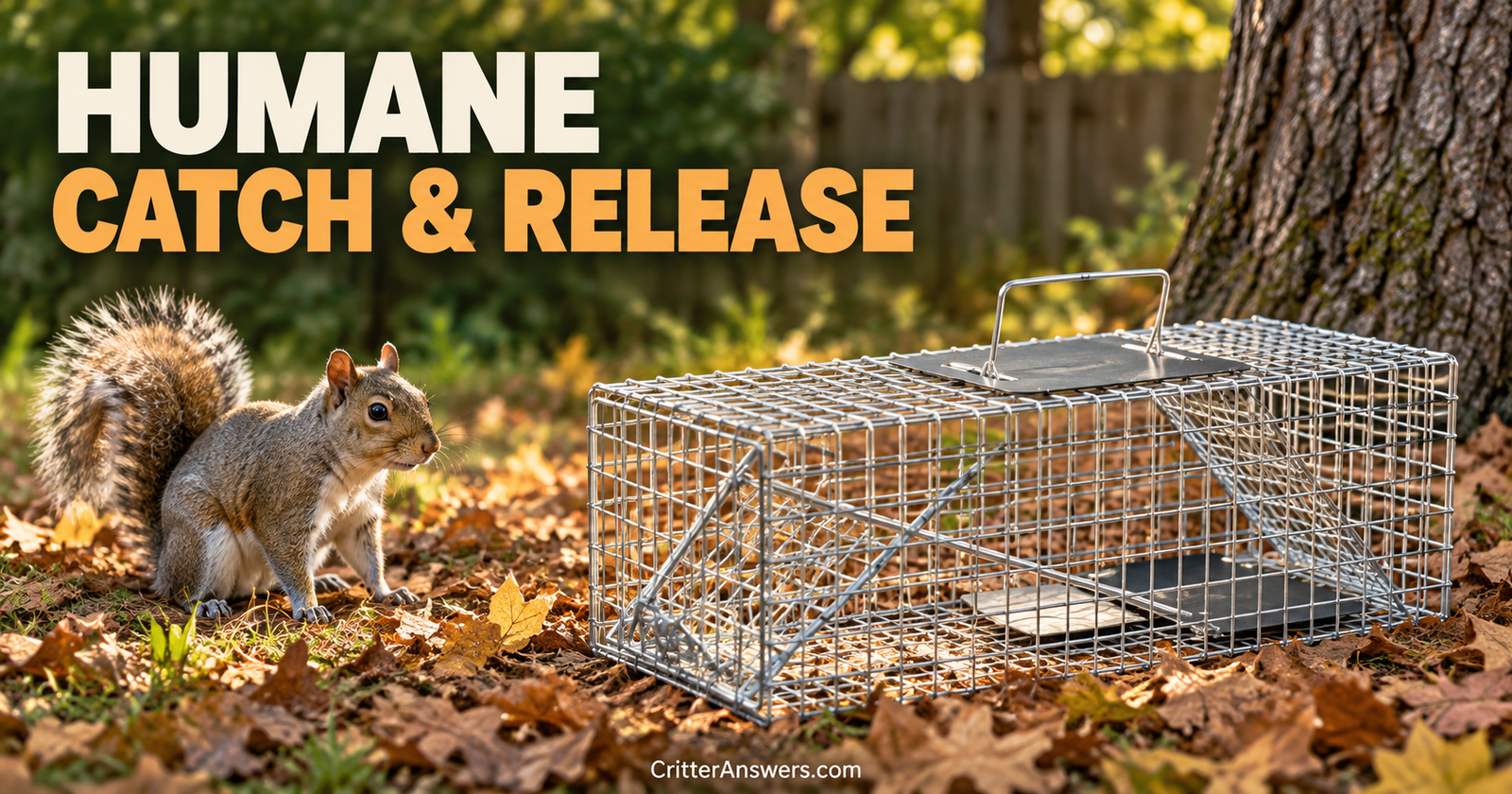
For squirrels and similarly sized small nuisance animals, I’ve covered the heavy-duty humane live cage trap I’d consider for this size range.
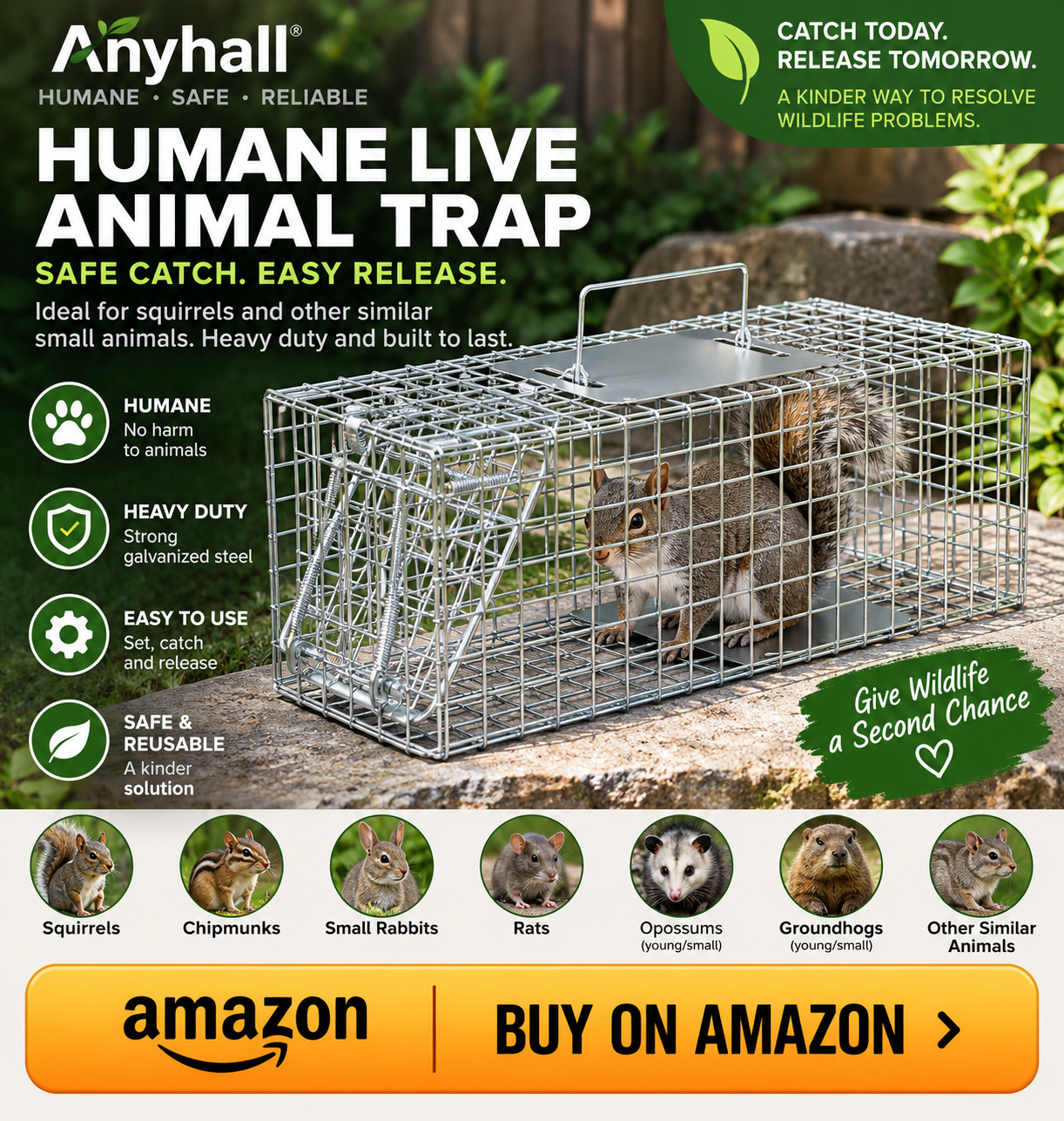
You can also see the current price and specifications for the small-animal live trap on Amazon.
But don’t set any cage until you know:
- What you’re targeting
- Whether trapping it is legal
- How frequently the trap needs to be checked
- What you’ll do after capture
- Whether relocation is permitted
- Whether dependent young may be present
Buying the cage is the easy part.
Having a plan for the animal inside it is what matters.
Can I Just Drive the Animal Somewhere Else and Release It?
Don’t assume you can.
This is probably the biggest misconception surrounding humane live traps.
The cage captures the animal alive.
That doesn’t automatically give you permission to transport that wildlife across town, across county lines, onto public land, or onto somebody else’s property.
Wildlife regulations vary by:
- State
- Local jurisdiction
- Species
- Time of year
- Property status
- Method of capture
Some wildlife can be legally relocated under certain circumstances.
Some cannot.
Some jurisdictions discourage or restrict relocation.
Other situations may require permission from a landowner or wildlife authority.
There is no responsible universal rule that says:
“Drive it five miles away and let it go.”
Why Wildlife Relocation Isn’t Always the Happy Ending It Sounds Like
I understand why relocation sounds humane.
You catch the animal.
You drive it to some beautiful wooded spot.
You open the cage.
It runs away.
Problem solved.
Except we only saw the first 30 seconds.
Relocated wildlife can face unfamiliar food and water sources, lack of shelter, established territorial animals, roads, predators, and other survival problems.
There are disease concerns too.
Missouri Extension specifically notes opposition to relocating raccoons and other wildlife because relocation can move disease between populations, and relocated animals may also face competition from animals already occupying the release area.
So “alive when released” and “successful humane outcome” aren’t necessarily the same thing.
Check Your State Wildlife Rules Before Transporting Anything
This should happen before the cage goes into your vehicle.
Look up current information from your state wildlife agency.
Not a random forum post from 2014.
Not somebody on social media saying what they did.
Not a trapping rule from another state.
Your state. Your species. Current rules.
Rules change, and different species can be treated differently within the same state. Because legal requirements and risks vary by species and situation, review the wildlife laws and safety limitations before acting.
MU Extension’s current nuisance-wildlife guidance likewise stresses that trapping regulations dictate what types of traps may be used for various wildlife and recommends contacting wildlife authorities before beginning a trapping program. Readers weighing capture or relocation can also review answers about wildlife trapping laws before taking action.
When in doubt, call.
Don’t Release Wildlife on Somebody Else’s Property Without Permission
Even if relocation is legal in your particular situation, somebody else’s farm, woods, vacant lot, or back forty isn’t automatically your wildlife release area.
You’re potentially moving your nuisance problem onto another person’s property.
There may also be landowner-permission requirements.
Don’t assume a place is fair game simply because it looks empty.
And don’t dump animals near another house.
You wouldn’t appreciate someone repeatedly releasing nuisance wildlife beside your property.
Extend the same courtesy.
What If It’s a Squirrel?
Squirrels are one of the animals people commonly capture in small cage traps.
If you’ve caught one, keep your hands away from the cage and check the current wildlife rules where you live before deciding what happens next.
There’s another important question if the squirrel came from your house:
Could there be babies inside?
This matters enormously.
If you’ve trapped a mother squirrel while dependent young remain in an attic, soffit, wall cavity, or nest, you’ve created a second problem.
Don’t rush to seal the entry point.
Look for Dependent Young Before Closing an Entry
This applies to more than squirrels.
Wild animals frequently use protected spaces around houses to raise young.
If you’ve trapped an adult that was repeatedly entering:
- An attic
- A wall
- A soffit
- A chimney
- Beneath a porch
- Beneath a shed
- Another protected cavity
consider whether young may remain.
Listen.
Look for nesting material.
Consider the season.
Review any camera footage.
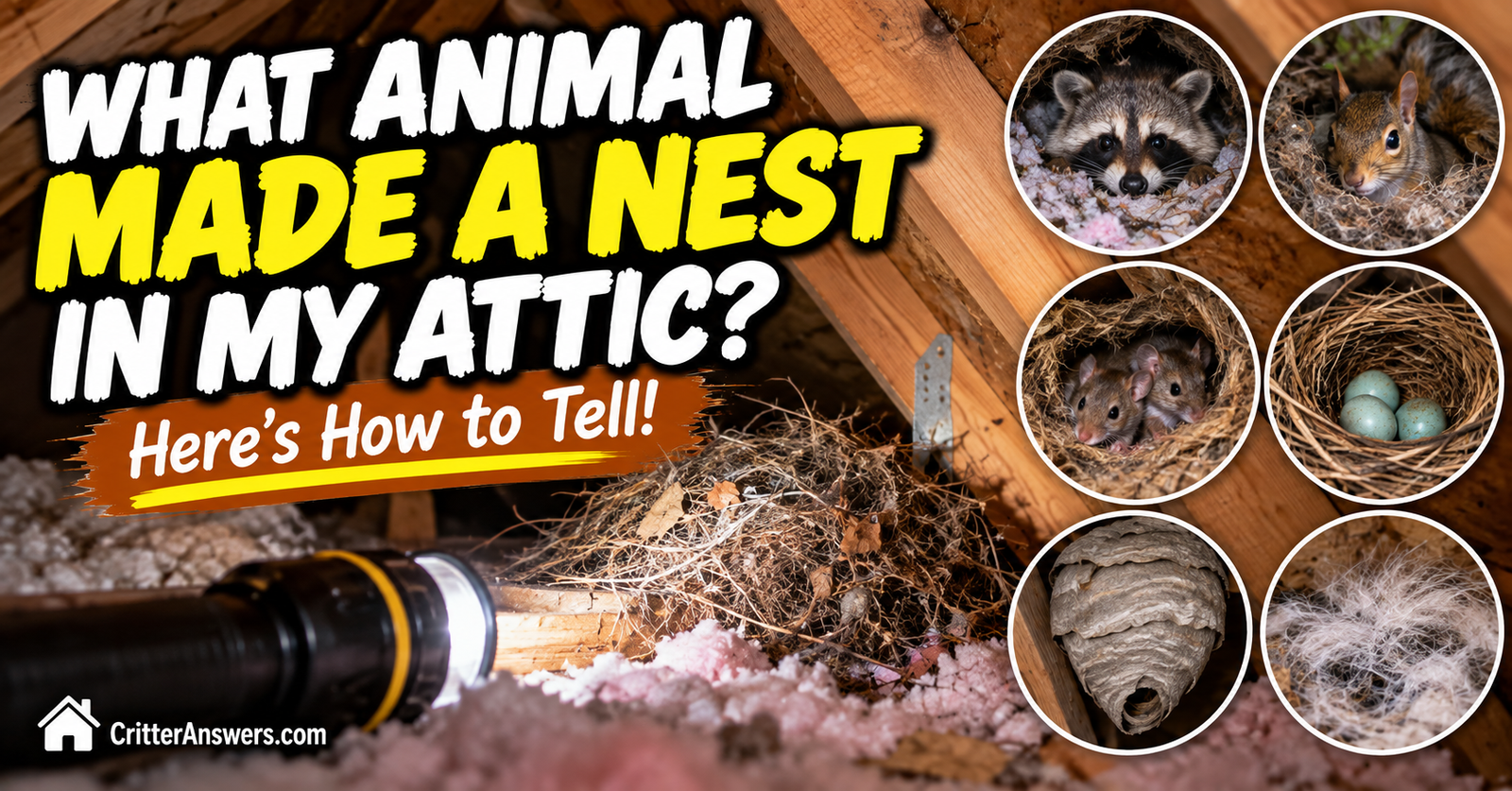
If you’ve found an actual nest upstairs, my guide to figuring out what animal made a nest in your attic can help you interpret the other evidence before permanently closing anything.
Removing Mom and sealing the door behind her isn’t a humane solution if her babies are still inside.
What If It’s a Chipmunk?
The same basic safety rule applies.
Don’t handle it.
Don’t stick your fingers through the cage.
Confirm your local regulations.
And if chipmunks repeatedly cause trouble in the same spot, investigate why.
A cage can remove an individual animal.
It doesn’t remove:
- Spilled bird seed
- Accessible food
- Protective cover
- Structural gaps
- Attractive landscaping
- Existing burrows
If you catch one chipmunk and another appears a week later, the trap may not be the problem.
The property may simply remain extremely attractive to chipmunks.
What If It’s a Rat?
This is one situation where I’d be especially careful about assuming live capture and relocation is the best strategy.
Rats can carry pathogens and contaminate areas with urine and droppings.
Don’t handle a captured rat directly.
Don’t put your hands through the cage.
Keep pets away.
And check local rules and authoritative pest-management recommendations before deciding what to do next.
Live trapping isn’t automatically the preferred control method for every rodent just because a cage can physically catch it.
The right control method depends on the species and situation.
What If It’s a Raccoon?
A raccoon changes the situation considerably.
A raccoon is much larger and stronger than a squirrel or chipmunk.
Don’t try to handle it.
Don’t put your hands near the cage.
Don’t allow pets close.
Don’t attempt some improvised transfer into another container.
If you accidentally catch a raccoon in equipment you didn’t intend to use for one, I’d be particularly inclined to contact your wildlife agency or a qualified wildlife-control professional for guidance.
Proper raccoon cage traps themselves need to be substantially larger and sturdier than squirrel cages. Missouri Extension, for example, recommends raccoon cages of at least 12 by 12 by 36 inches and heavy construction.
That alone shows why “live animal trap” isn’t one universal equipment category.
What If It’s a Skunk?
Now we’re having fun.
Actually, no.
This is precisely the kind of non-target capture I’d rather prevent.
A live-trapped skunk can spray.
Approaching, handling, transporting, and releasing one requires considerably more thought than dealing with a squirrel.
Don’t start experimenting because you watched somebody walk toward a skunk cage with a blanket in an online video.
Keep people and pets away and consult current wildlife guidance for your location.
If you’re uncomfortable handling the situation, call a wildlife professional.
There’s no prize for turning a nuisance-wildlife problem into a story your family tells for the next 20 years.
Don’t Open the Door While Standing in Front of It
If you reach the point where release is legal and appropriate, follow the cage manufacturer’s release instructions.
Think about where the door opens.
Don’t put your:
- Face
- Hands
- Feet
- Dog
- Child
in the animal’s exit path.
A frightened animal may leave quickly.
Give it room.
You’re trying to create an easy route away from you, not force the animal to run between your legs.
Don’t Shake the Cage to Make the Animal Leave
Once the door is legally and appropriately opened, give the animal an opportunity to exit.
Don’t immediately kick, shake, roll, or jab the cage because it doesn’t leave in two seconds.
A frightened animal may freeze.
It may take a moment to recognize that an exit is available.
Keep your distance and allow the animal to leave without being chased.
Again, use the trap manufacturer’s instructions for your particular cage.
Don’t Reach Inside if the Animal Won’t Leave
This shouldn’t need saying.
I’m saying it anyway.
Never reach into the cage to pull a wild animal out.
Not with gloves.
Not because “it’s just a squirrel.”
Not because it looks tired.
Not because it won’t leave.
If the animal appears injured, sick, unable to move, or otherwise abnormal, contact the appropriate wildlife authority, wildlife rehabilitator where applicable, animal control agency, or wildlife professional for guidance.
Your hand is not a wildlife extraction tool.
What If the Animal Looks Sick?
Take that seriously.
Don’t handle it.
Keep people and pets away.
Depending on the species and symptoms, contact your state wildlife agency, local animal-control authority, public-health department, or other appropriate local authority for guidance.
Concerning signs can include:
- Severe disorientation
- Inability to stand
- Unusual aggression
- Paralysis
- Significant visible injury
- Extreme lethargy
- Other obviously abnormal behavior
Don’t try to diagnose rabies or another disease by looking at an animal.
Just increase your distance and get appropriate guidance.
What If Someone Was Bitten or Scratched?
That’s no longer primarily a trapping question.
Wash the wound thoroughly with soap and water and seek prompt medical guidance.
If a person or pet had potentially significant contact with a wild mammal, don’t release the animal before speaking with the appropriate medical, veterinary, animal-control, or public-health authority.
The animal’s availability may matter for disease evaluation.
Don’t make that decision based on an internet article.
What If My Dog or Cat Got Near the Animal?
Separate them.
If there was no physical contact, that’s one thing.
If your pet was bitten, scratched, mouthed the animal, or otherwise had meaningful contact, contact your veterinarian promptly.
Keep your pet’s rabies vaccination current.
And don’t handle the wild animal yourself trying to inspect it for disease.
After the Animal Is Gone, Don’t Forget the Trap
Your job isn’t finished when the cage becomes empty.
Wildlife can leave behind:
- Urine
- Feces
- Saliva
- Hair
- Food
- Dirt
- Parasites
- Other biological material
Wear appropriate protection when handling a dirty trap.
Clean it according to the manufacturer’s instructions and any relevant public-health guidance for the species involved.
Wash your hands afterward.
Then inspect the cage before storing or resetting it.
Inspect the Trigger and Door
A captured animal may push, bite, scratch, pull, or throw its weight against the cage.
Before using the trap again, inspect:
- Door alignment
- Trigger operation
- Wire condition
- Latches
- Moving parts
- Sharp or damaged areas
- Bent components
Test it.
A trap that successfully caught one animal isn’t automatically ready for the next one.
Don’t Automatically Reset It
This is where I want people to think.
You caught the animal causing the problem.
Do you actually need to catch another?
If the answer is no, take the trap up.
Leaving a baited live trap operating indefinitely increases the chance of catching animals you never intended to capture.
Remember what the goal was.
Solve a wildlife problem.
Not collect wildlife.
Figure Out Why the Animal Was There
This is the step that determines whether you’re actually finished.
Why did you catch that animal there?
Was it:
- Eating bird seed?
- Getting into chicken feed?
- Living under the shed?
- Entering the attic?
- Raiding garbage?
- Eating garden produce?
- Using a hole beneath the porch?
- Following a rodent population?
- Taking pet food?
If you don’t address the attraction, another animal may eventually fill the vacancy.
MU Extension recommends an integrated approach to wildlife damage that starts with identifying the species, understanding its habitat requirements, and combining appropriate prevention and control techniques rather than relying on a single method.
That matters after trapping just as much as before it.
If It Came From the House, Find the Opening
Catching an animal inside or around a house isn’t the same thing as fixing the wildlife problem.
If a squirrel entered through a broken soffit, the soffit is still broken.
If something squeezed through an attic vent, the vent is still vulnerable.
If an animal found a foundation opening, another animal may find it too.
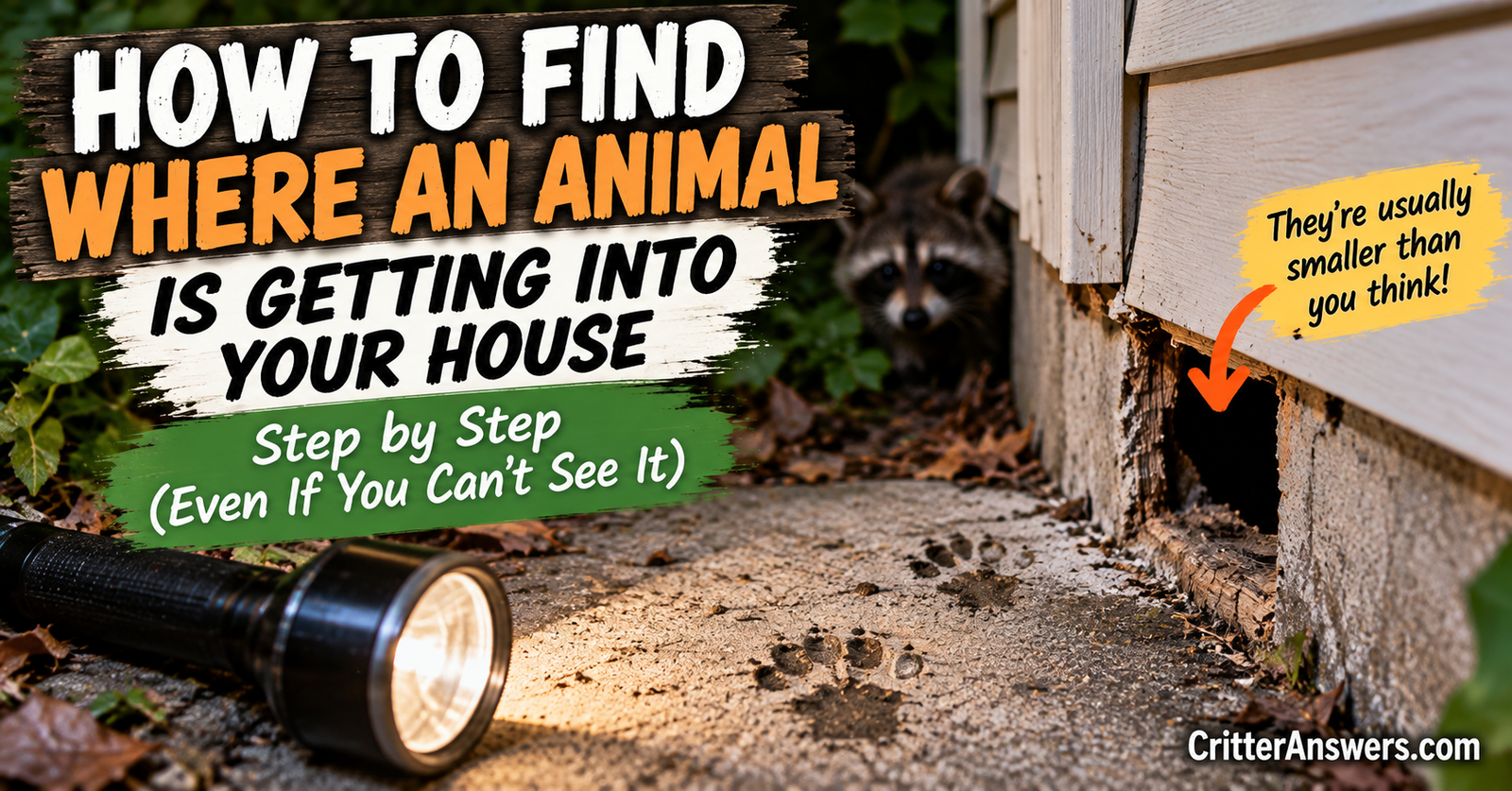
Once you’re certain no animals or dependent young remain, use the clues around the structure to find where wildlife is getting into your house.
Then fix the access appropriately.
That’s what turns a capture into an actual solution.
If It Came From Under the Shed, Check the Burrow Again
A similar rule applies outdoors.
Maybe the trap caught an animal that had been disappearing beneath your shed.
Great.
But is that the only animal using the space?
Is the hole still active?
Are there multiple entrances?
Was the captured animal actually the one that dug it?
Some animals reuse abandoned burrows.
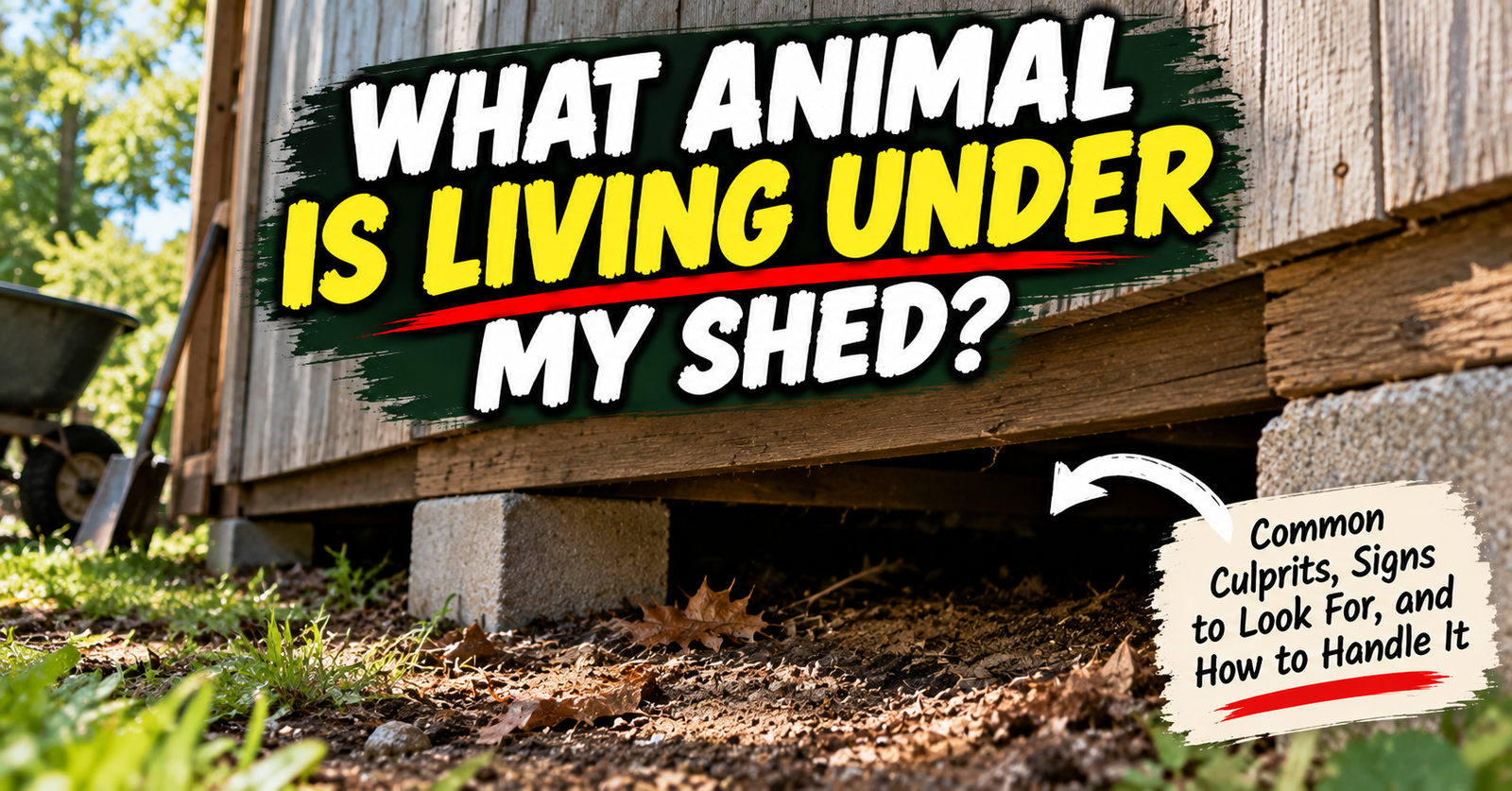
Before closing access, look at the evidence around whatever is living under the shed and make sure the space is actually vacant.
A successful capture doesn’t prove an entire den is empty.
Remove the Reason Another Animal Would Move In
This is where trapping becomes prevention.
Clean up spilled feed.
Secure bird seed.
Manage garbage.
Don’t leave pet food outside unnecessarily.
Repair structural openings.
Address accessible shelter where appropriate.
Protect gardens.
Fix damaged vents.
Clean up fallen food.
MU Extension notes that food, water, cover, and space are the major habitat components that attract wildlife and recommends modifying these conditions as part of nuisance-wildlife prevention.
That’s the long game.
If Your Trap Worked, Remember What Worked
Before changing everything, make a mental note.
Where was the cage?
What bait did you use?
Where was the bait positioned?
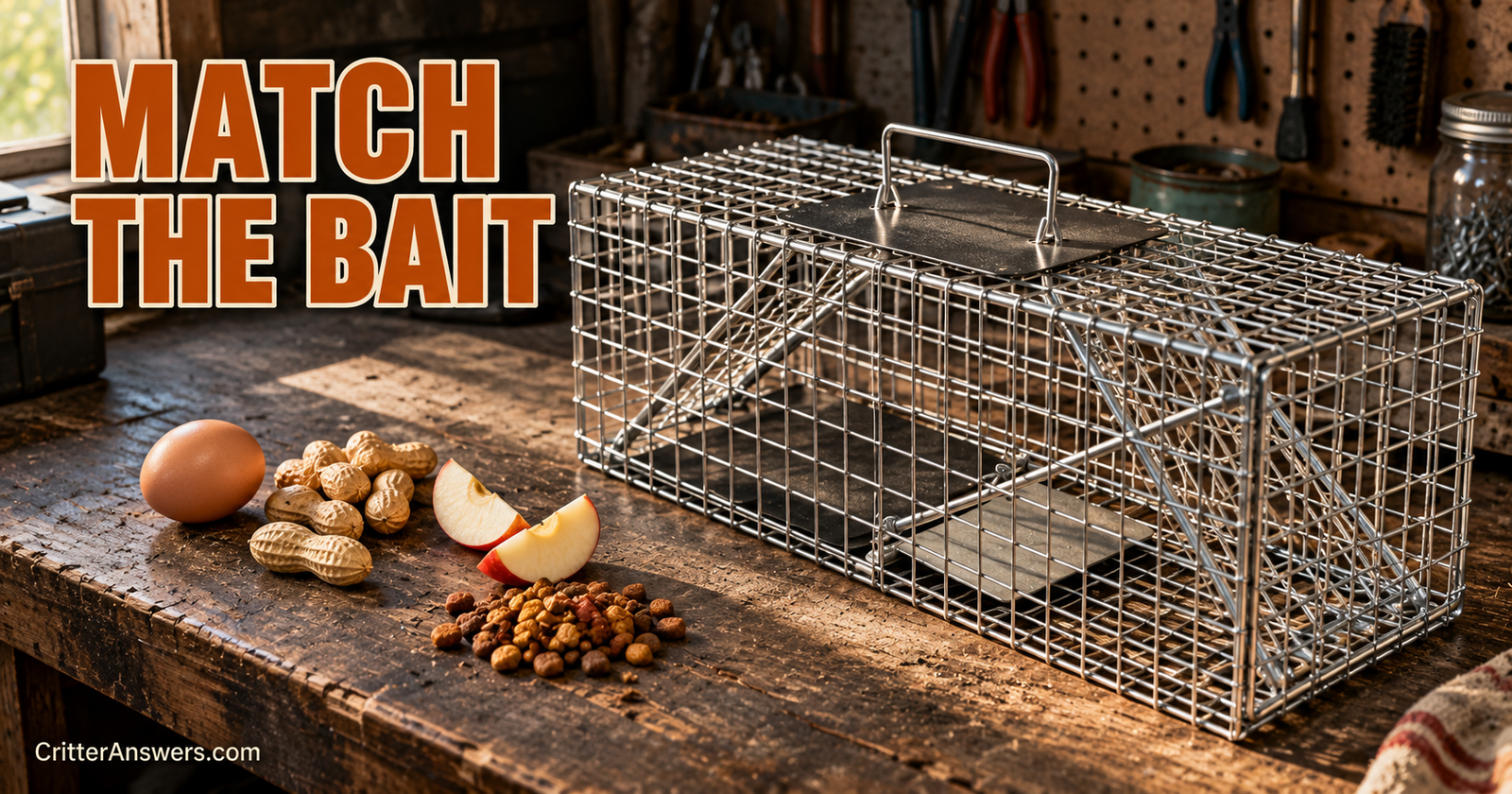
Was the trap pre-baited?
What time was the animal captured?
Which travel route was active?
If you ever have a legitimate reason to trap the same species again, that information is useful.
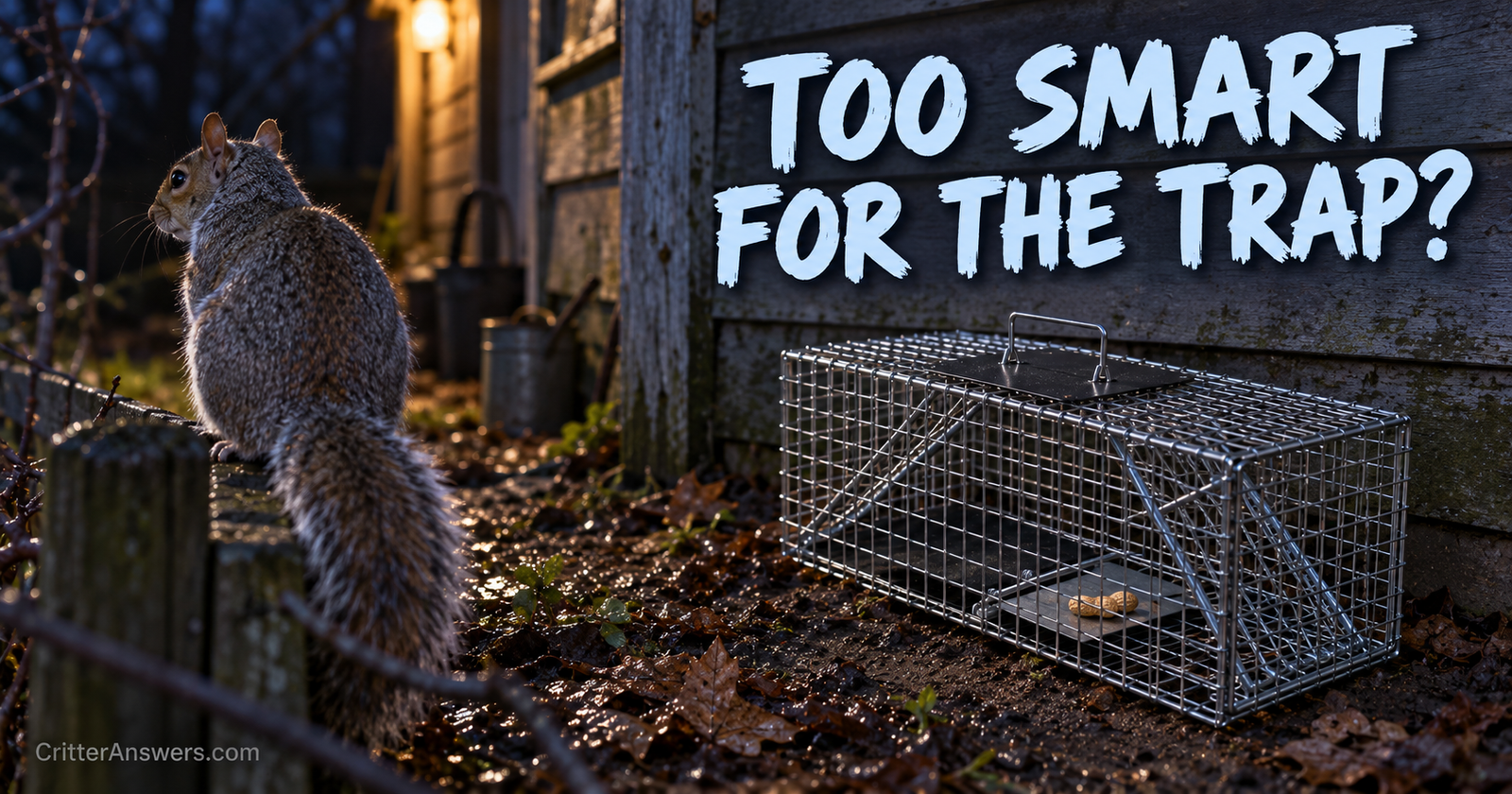
And if you struggled for days before making the capture, our guide to why an animal won’t go into a live trap can help you understand which part of the successful setup probably made the difference.
Wildlife leaves clues before, during, and after trapping.
Use them.
My Live-Trap “Now What?” Checklist
When I find a captured animal, here’s the order I’d work through:
- Keep people and pets away.
- Don’t put hands or fingers near the cage.
- Confirm which animal was caught.
- Protect it from dangerous weather and exposure.
- Check current laws for that species and location.
- Do not assume relocation is automatically legal.
- Consider whether dependent young could remain behind.
- If release is legal and appropriate, follow the trap manufacturer’s instructions and give the animal a clear exit away from people.
- Never reach inside to force an animal out.
- Clean and inspect the trap afterward.
- Don’t automatically reset it.
- Fix the food, shelter, burrow, or entry point that caused the problem.
The last step is the one that keeps the cage from becoming a permanent fixture in your yard.
A Successful Capture Isn’t the End of the Wildlife Problem
That’s the biggest lesson here.
The door closing feels like success.
Sometimes it is.
But catching one animal is only one part of responsible wildlife management.
You still need to know what you caught.
You need to follow the law.
You need to deal with the animal humanely.
You need to make sure you haven’t left dependent young behind.
And then you need to figure out why that animal was causing trouble on your property in the first place.
Maybe the answer is a hole in the soffit.
Maybe it’s spilled chicken feed.
Maybe it’s a perfect den beneath the shed.
Maybe it’s garbage.
Whatever it is, fixing that is what finishes the job.
Because the best outcome isn’t catching animal number two next week.
It’s not needing to.
About the author: Nolan Mercer researches the behavior, tracks, burrows, feeding patterns, and other clues behind nuisance-wildlife problems. At Critter Answers, he focuses on identifying the animal first and finding practical ways to solve the problem without creating another one.