
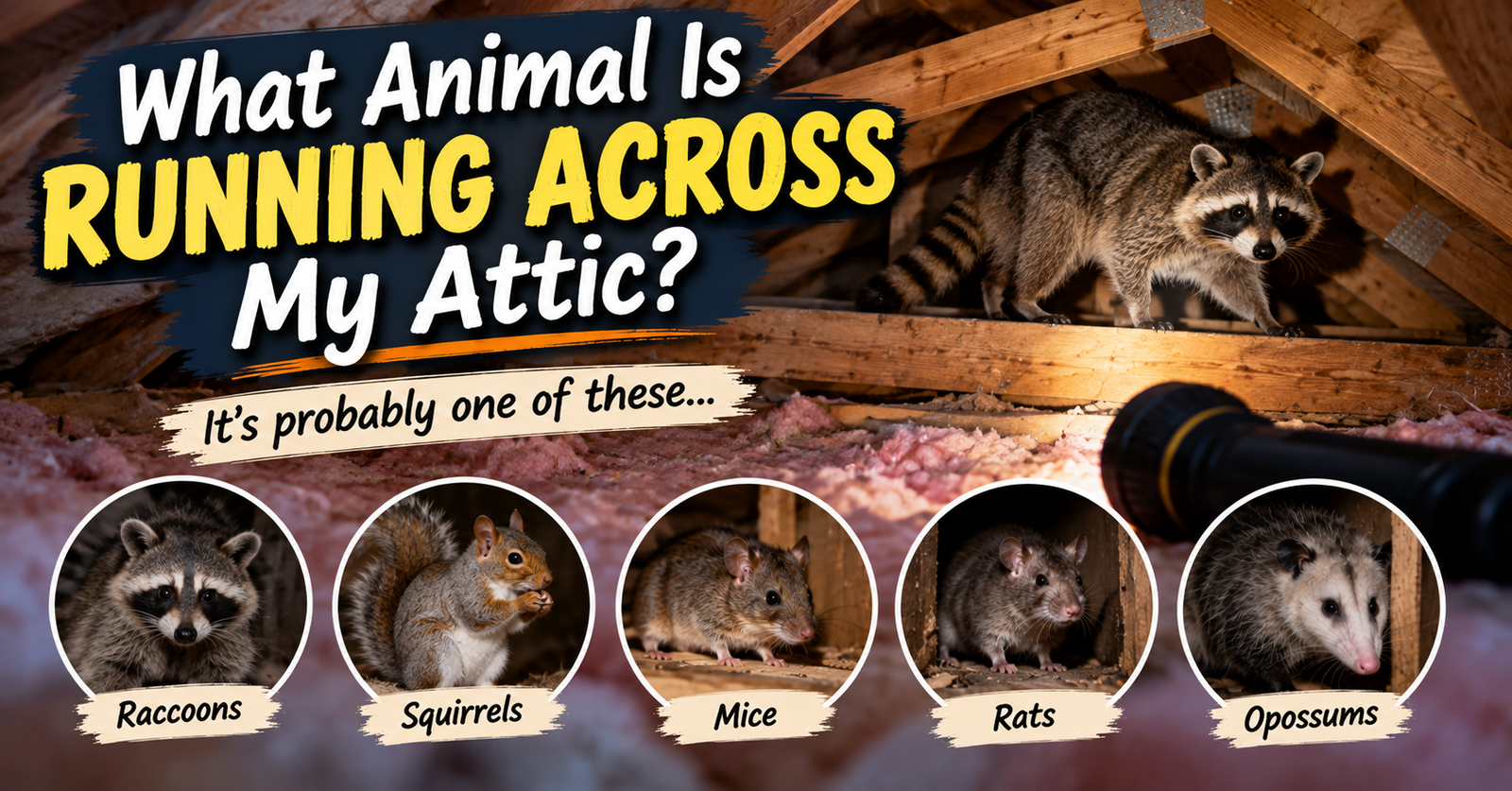
Hearing something suddenly race across the attic can make a pretty small animal sound like it weighs 30 pounds. Squirrels, mice, rats, raccoons, flying squirrels, and occasionally other animals can all create movement overhead, but the time of day and the way the animal moves can narrow the list considerably.
Fast running during daylight makes me think about squirrels early in the investigation. Light scampering after dark puts mice, rats, and flying squirrels higher on the list. Slow, heavy footsteps or thumping at night make a larger animal such as a raccoon more plausible.
The trick is not judging the animal by volume alone. Attic framing and the ceiling below it can turn tiny footsteps into surprisingly loud noises.
Start With the Time You Hear It
Before worrying about droppings, tracks, or entry holes, start watching the clock.
The time the animal becomes active is one of the easiest clues you can collect without going anywhere near it.
Running during the day
If I repeatedly heard fast running across my attic during daylight hours, tree squirrels would be one of my first suspects.
Gray and fox squirrels are generally active during the day, with much of their activity occurring in the morning and again later in the afternoon.
You might hear quick scampering followed by scratching or gnawing. The activity may disappear for hours while the squirrel is outside and then return later.
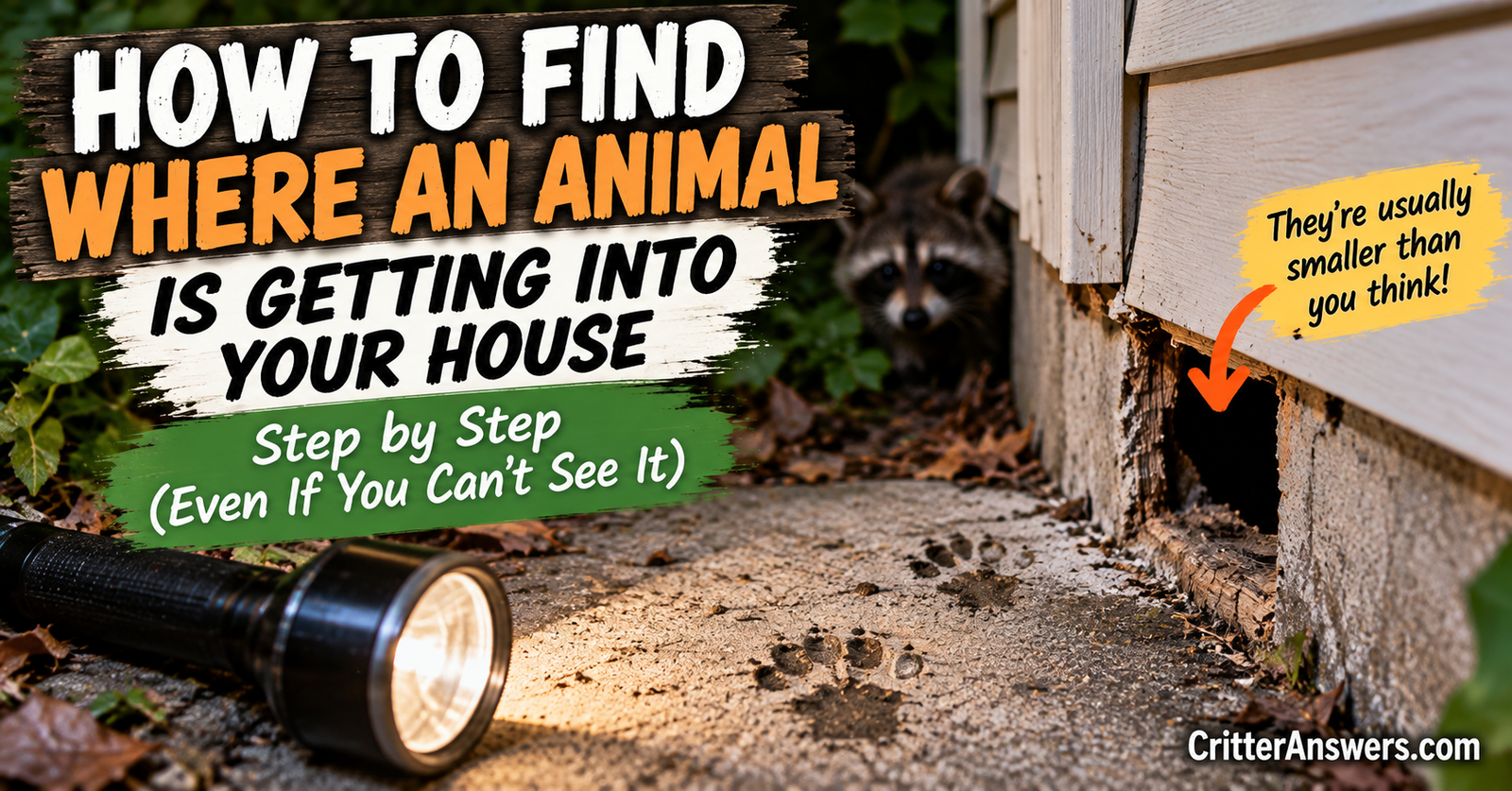
Look outside for another clue. A squirrel using an attic has to get in somehow, so damage or an opening around the roofline, fascia, soffit, or vent can make the squirrel explanation much stronger.
Running after dark
Nighttime changes the possibilities.
Mice and rats commonly produce light nighttime movement. Flying squirrels are also nocturnal, which is why simply saying “squirrels are only active during the day” can lead you in the wrong direction.
Raccoons are primarily nocturnal too, although their movement usually sounds much heavier than a tiny rodent racing across the attic.
Activity around dusk
Dusk is particularly useful because several animals begin moving around this time.
If you notice noises near the roofline and suspect bats, safely watching the outside of the house around sunset can be much more useful than trying to identify them from noises.
Actually seeing animals leave an opening gives you far better evidence.
Squirrels Can Sound Like They’re Having a Race
If the noise is fast, energetic, and clearly travels across the attic, squirrels deserve serious consideration.
A squirrel may scamper across rafters, scratch around an entry point, move nesting material, or gnaw.
Sometimes the movement is so quick that it sounds as though something ran from one side of the house to the other.
That pattern is especially interesting when it happens during the morning or afternoon.
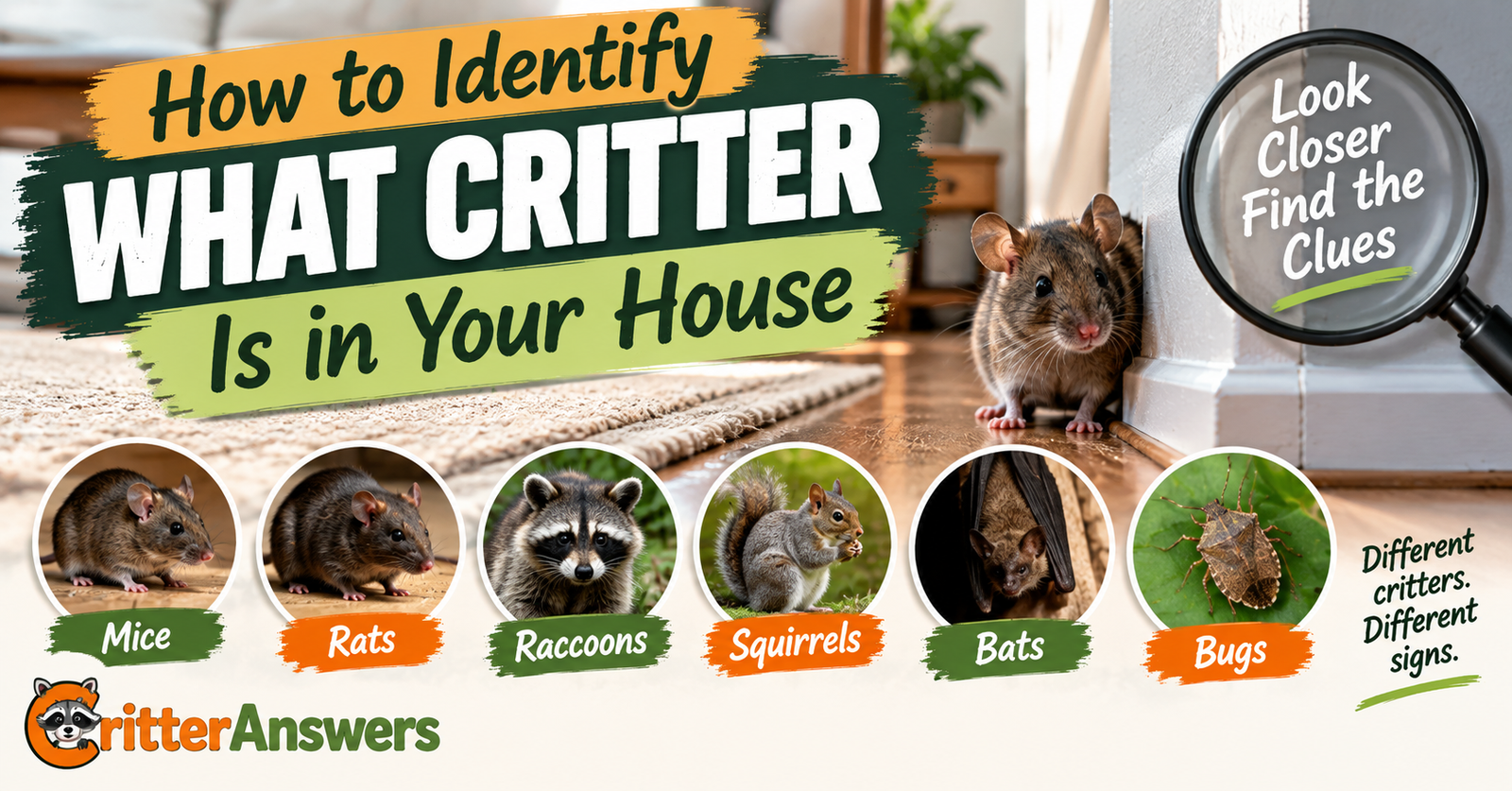
If you’re still unsure whether you’re dealing with an attic animal, wall animal, or something moving between the two, my broader guide to identifying what critter is inside your house explains how I combine location, droppings, noises, smells, damage, and entry points instead of relying on sound alone.
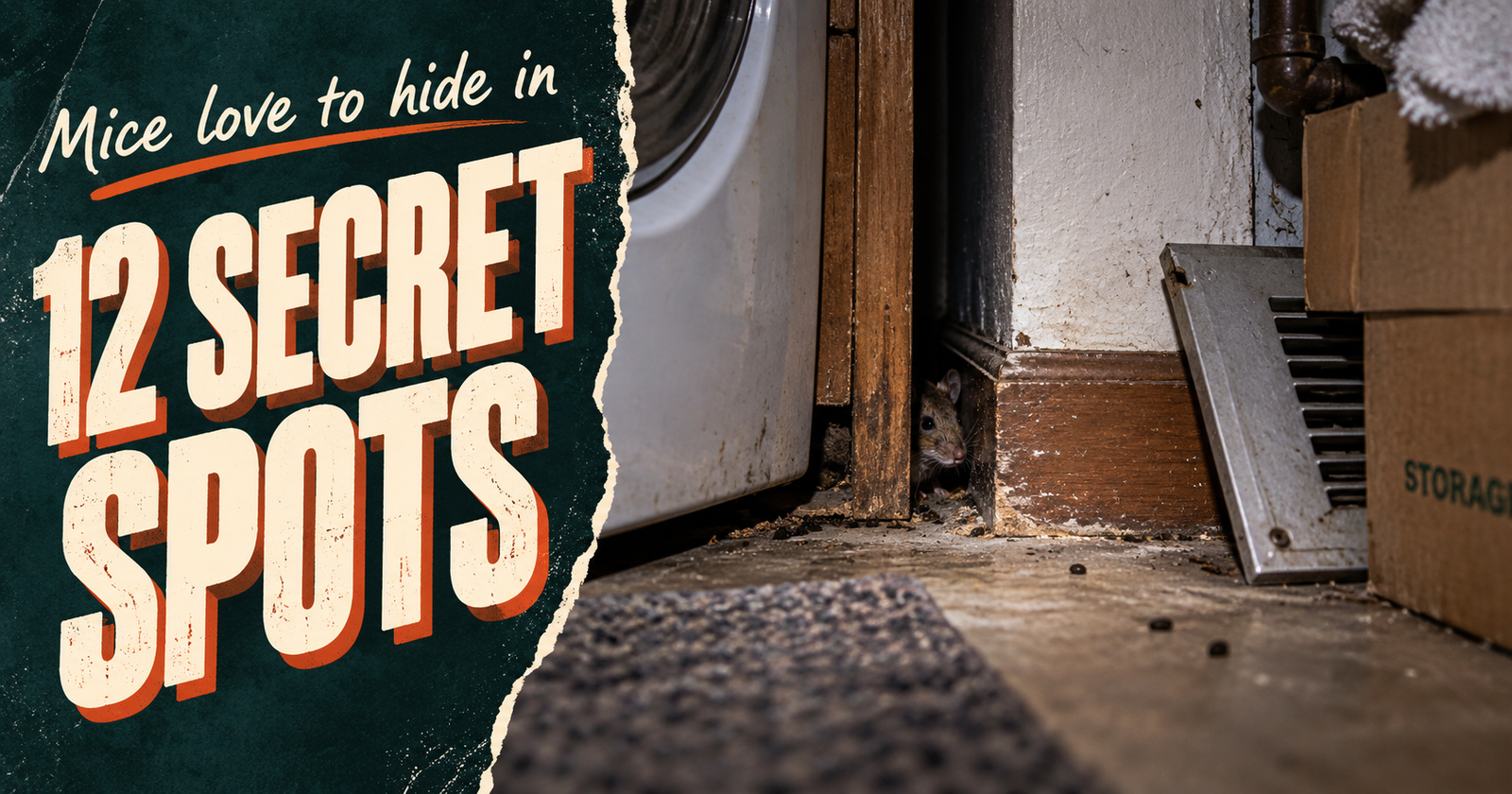
Mice Can Sound Much Bigger Than They Are
This catches a lot of people off guard.
A mouse running across a surface directly above drywall can sound surprisingly loud in the quiet of your house at night.
You might hear:
- Quick bursts of tiny footsteps
- Light scratching
- Scurrying that stops suddenly
- Gnawing or scraping
- Movement that seems to disappear into a wall
If the attic noise seems to continue downward into a wall cavity, mice become even more interesting.
Look for evidence elsewhere in the house, particularly around accessible food-storage areas, garages, basements, utility penetrations, and other places rodents can travel.
Droppings and gnaw marks can tell you much more than how loud the footsteps seemed.
Rats Can Also Use Attics
Rats are another possibility, although which rat species are likely depends partly on where you live.
As with mice, nighttime activity is an important clue.
Rat movement may sound heavier than mouse movement, and you may hear scratching or gnawing along with running.
But I wouldn’t try to separate a mouse from a rat based solely on your ears.
Building materials change sound dramatically.
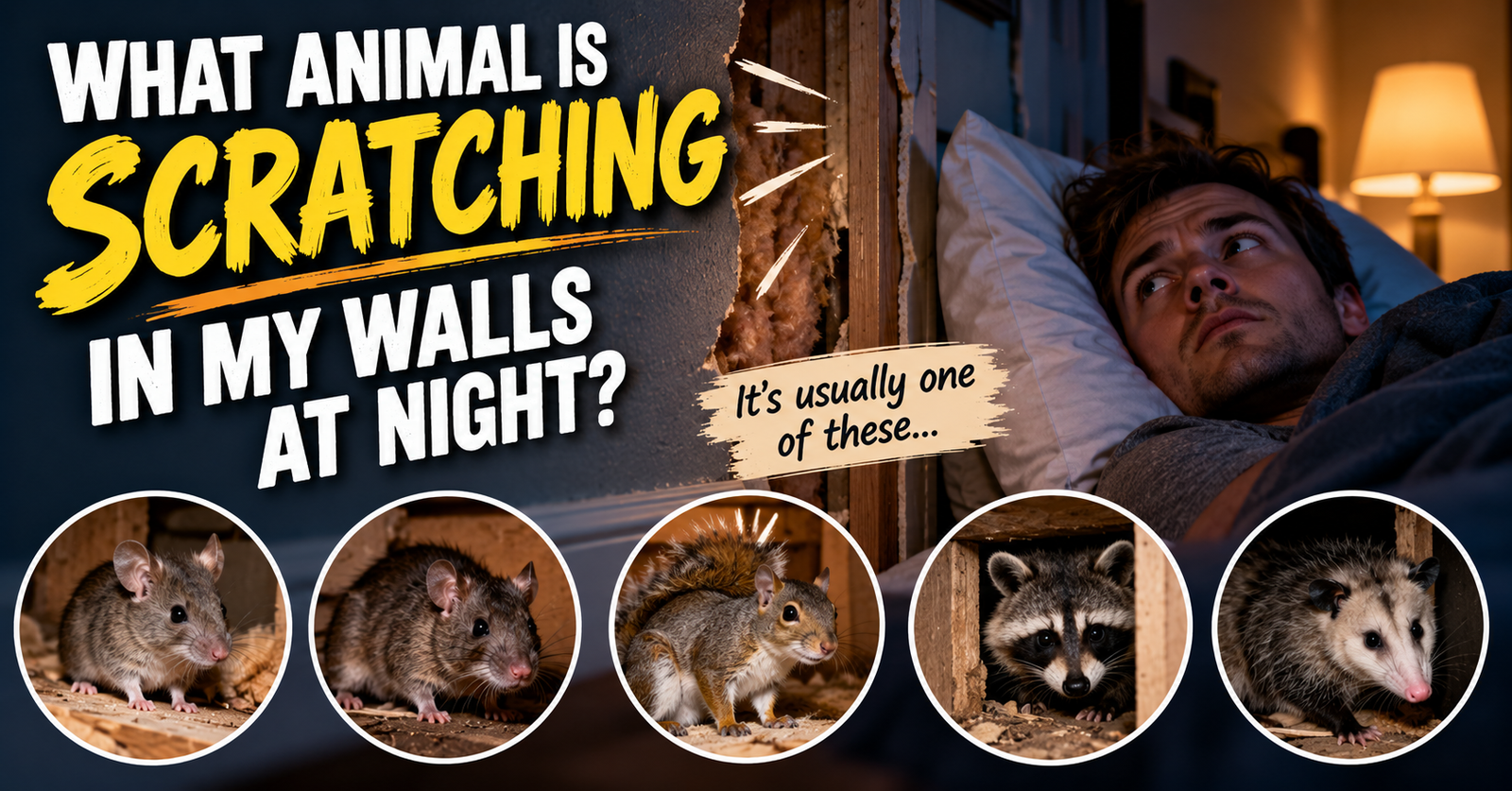
If you suspect rodents and you’ve also been hearing scratching inside the walls at night, pay attention to whether the two noises seem connected. An animal may be using the attic and wall cavities as parts of the same travel route.

Heavy Walking Is Different From Scampering
There is a noticeable difference between:
skitter-skitter-skitter
and
thump…shuffle…thump.
You don’t need perfect hearing to notice that one sounds more substantial.
Slow, heavy movement across an attic makes me more suspicious of a larger animal such as a raccoon or opossum. Research-based wildlife identification guidance similarly associates running in attics with squirrels while heavier walking can point toward raccoons or opossums.
Still, use this as a clue rather than a guaranteed identification.
A squirrel landing hard on something can make a thump. A mouse directly over thin drywall can sound ridiculous for its size.
Look for evidence that matches the apparent weight.
Raccoons Usually Don’t Sound Subtle
If a raccoon gets into an attic, the experience can be quite different from hearing a mouse.
Raccoons are large enough to produce noticeable footsteps, thumping, shifting, or dragging sounds. You may also hear vocalizations, particularly when young are present.
They can damage fascia, shingles, and other exterior areas while gaining access to an attic.
If the activity is heavy, mainly at night, and you find substantial roofline damage, raccoons move much higher on my list.
This isn’t an animal I would corner in an attic to get a better look.
A female protecting young can be defensive, and an attic is a terrible place to discover that you’ve blocked the animal’s escape route.
Flying Squirrels Can Complicate the Day vs Night Rule
Here’s an easy identification mistake.
Someone hears attic running at midnight and thinks:
“Squirrels are awake during the day, so it can’t be a squirrel.”
That’s true for common gray and fox squirrels, but flying squirrels are nocturnal.
Depending on where you live, flying squirrels can use buildings and may produce light nighttime scampering.
Their presence is one reason I wouldn’t identify an attic animal solely by activity time.
Time helps narrow the possibilities. It doesn’t finish the identification.
Bats Usually Sound Different
Bats can occupy attics, but I wouldn’t put them at the top of my list when someone describes an animal obviously running back and forth across the attic floor.
Bats may produce scratching, squeaking, rustling, or fluttering sounds around a roost. Penn State Extension also notes that squirrels and mice can make scurrying and squeaking noises that homeowners mistake for bats.
That’s an important distinction.
If bats are a possibility, watching the suspected exterior area around dusk may provide much better evidence than listening from inside.
Never handle a bat with bare hands. If a bat enters an occupied living space and there may have been direct contact, a bite, a scratch, or an exposure where someone could not reliably know whether contact occurred, seek appropriate public-health or medical guidance.
Birds Can Fool You Too
Bird activity in or around an attic may involve fluttering, scratching, pecking, chirping, or brief bursts of movement.
I would pay particular attention to the roofline, vents, soffits, and chimney areas.
Daytime activity accompanied by obvious fluttering or chirping changes the possibilities quite a bit.
Don’t start removing nests or blocking openings until you know what you’re dealing with. Some native birds and their active nests are federally protected, and the right response can depend on the species and nesting status.
Listen for More Than Running
The running gets your attention, but the noises before and after it may actually tell you more.
Running followed by gnawing
Rodents and squirrels all gnaw.
If you hear movement followed by repeated chewing or scraping, inspect accessible areas for physical damage.
Running followed by silence
This could simply mean the animal stopped moving.
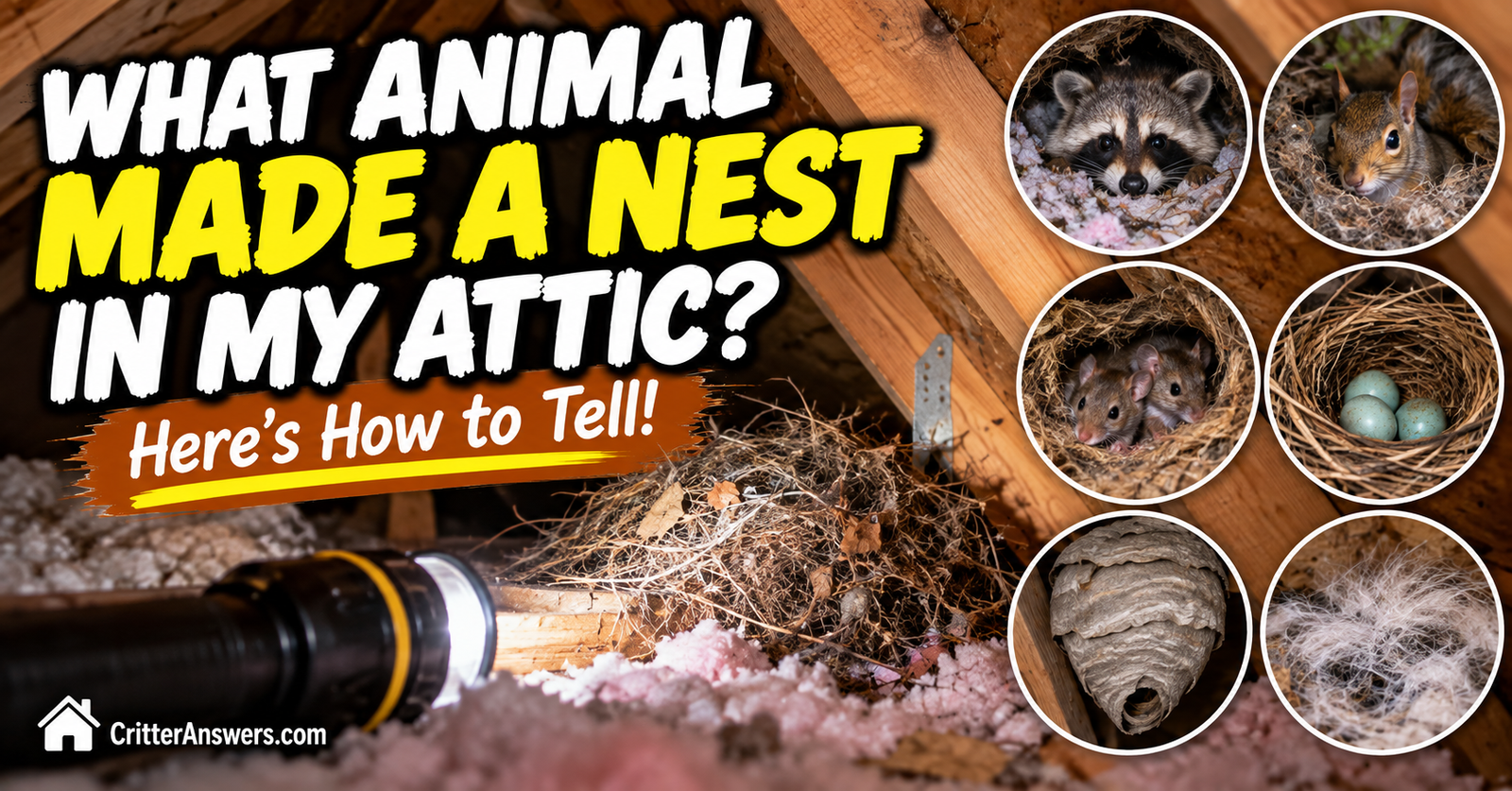
But if the sound consistently seems to end at exactly the same part of the attic, that location becomes worth investigating from a safe distance. There could be a nest, resting area, or route into another part of the structure. If that spot contains nesting material, identify an attic nest can help connect the location with the animal's other signs.
Running followed by chirping
Vocalizations introduce another clue.
Young squirrels, raccoons, rodents, birds, and bats can all produce sounds, so don’t identify the animal from a chirp alone.
Running followed by wall scratching
Now you may be hearing an animal moving between spaces.
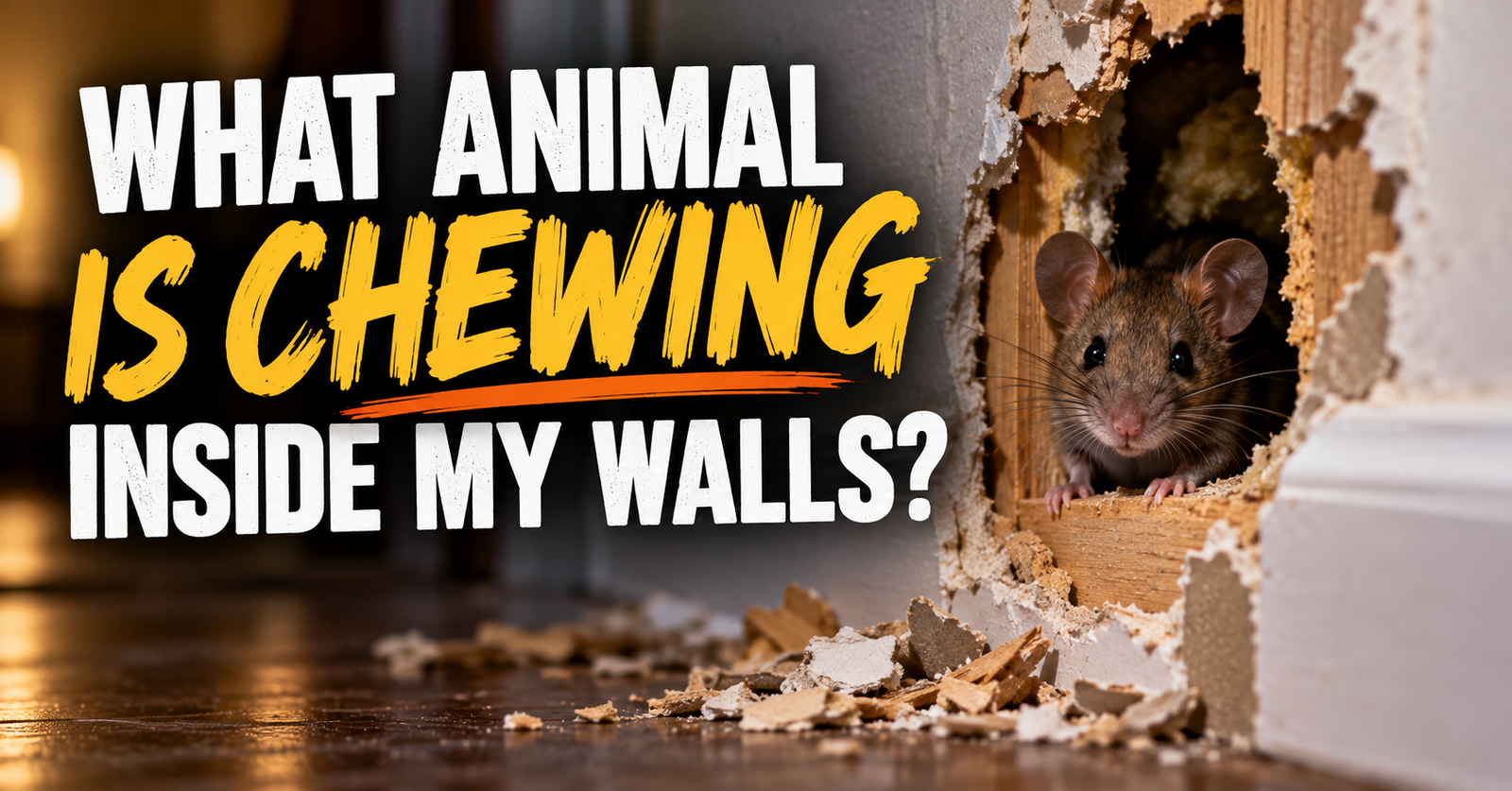
An attic can connect with wall cavities, soffits, chases, and other hidden routes. The “two animals” you’re hearing may actually be one animal traveling around the structure. Those connected spaces can also carry gnawing sounds, so wall cavities and other hidden routes can help you interpret activity that seems to shift around the house.
Look for Evidence in the Attic Only if It’s Safe
You don’t have to crawl through insulation to investigate.
If your attic has safe, accessible flooring or a proper walkway, you may be able to inspect portions of it without getting close to the animal.
Look for:
- Droppings
- Gnaw marks
- Disturbed insulation
- Nesting material
- Tracks in dusty areas
- Damaged ductwork
- Chewed wiring
- Daylight around an entry opening
- Staining near frequently used gaps
- Concentrated areas of waste
Don’t step between ceiling joists where there isn’t proper flooring. Drywall is not a floor, and falling through the ceiling is a much bigger problem than not identifying your squirrel tonight.
If you can’t inspect the attic safely, don’t.
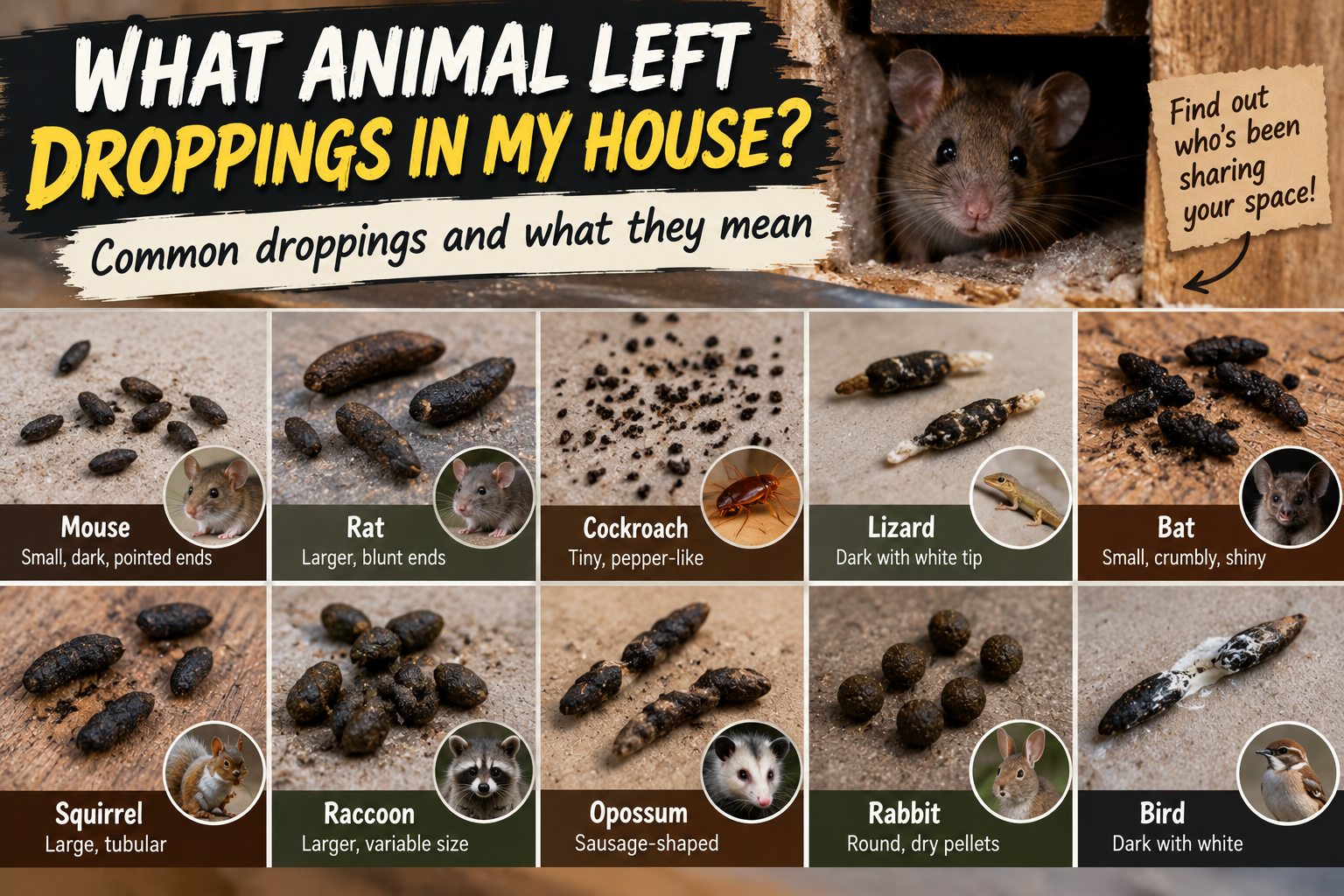
Droppings Can Narrow Things Down
Finding waste can be much more informative than listening from the bedroom below.
Look at the approximate size, shape, location, and amount without touching it.
Small rodent droppings point you in a different direction from larger wildlife waste.
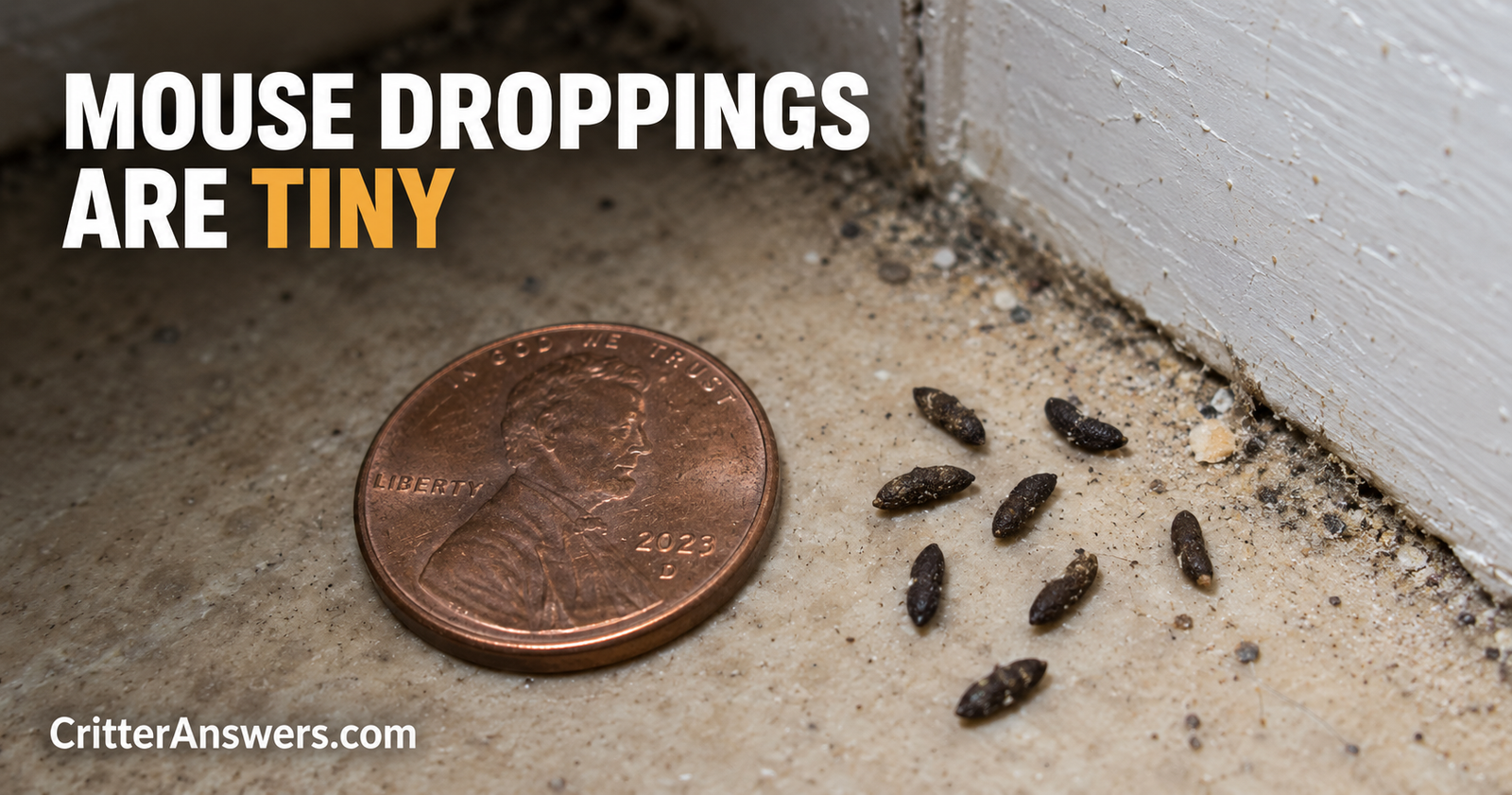
But don’t assume every dark object in attic insulation is a dropping, and don’t identify a species with certainty from one questionable piece of waste. When you do find suspected droppings, one questionable piece of waste can help you evaluate their size, shape, and appearance more carefully.
If rodent contamination is present, avoid dry sweeping or vacuuming the material. Appropriate cleanup precautions matter because disturbing contaminated waste can put particles into the air.
Heavy contamination is another situation where professional cleanup may make more sense than treating the attic like an ordinary dusty room.
Check the Insulation
Attic insulation can preserve clues surprisingly well.
You may see compressed pathways, nesting areas, disturbed sections, tunnels, droppings, or material that has been gathered into a particular spot.
The scale of the disturbance can be useful too.
A tiny travel route through insulation doesn’t tell the same story as a broad flattened area where something much larger appears to have been spending time.
Again, none of these clues should stand alone.
Combine them with timing and sound.
Look Outside Before You Look Deeper Inside
I would much rather spend 15 minutes walking around the house in daylight than crawl blindly through an attic looking for an animal.
The exterior can tell you how the animal is getting in.
From the ground, look carefully at:
- Soffits
- Fascia boards
- Roof edges
- Gable vents
- Roof vents
- Chimney areas
- Damaged screens
- Gaps where roof sections meet
- Tree limbs close to the roof
- Areas with obvious chewing or tearing
Binoculars or the zoom on your phone can help inspect high areas without climbing onto the roof.
If you find a suspicious opening, photograph it.
Don’t seal it yet.
Why You Shouldn’t Immediately Seal the Attic Hole
This is worth repeating because an obvious hole makes people want to fix it immediately.
An entry point and an empty attic are not the same thing.
The animal could still be inside.
There may also be dependent young that aren’t making the same obvious running noises as the adult.
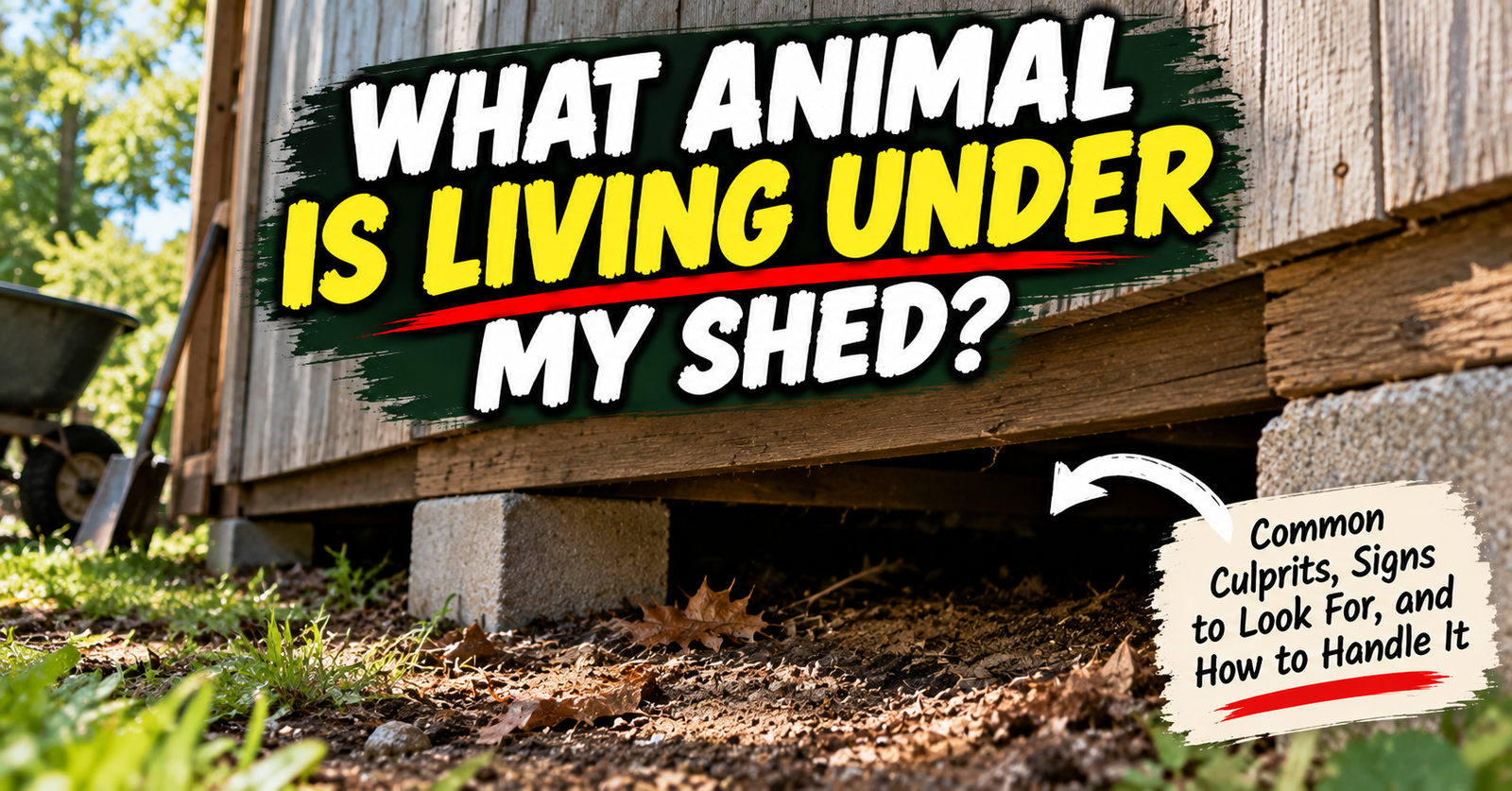
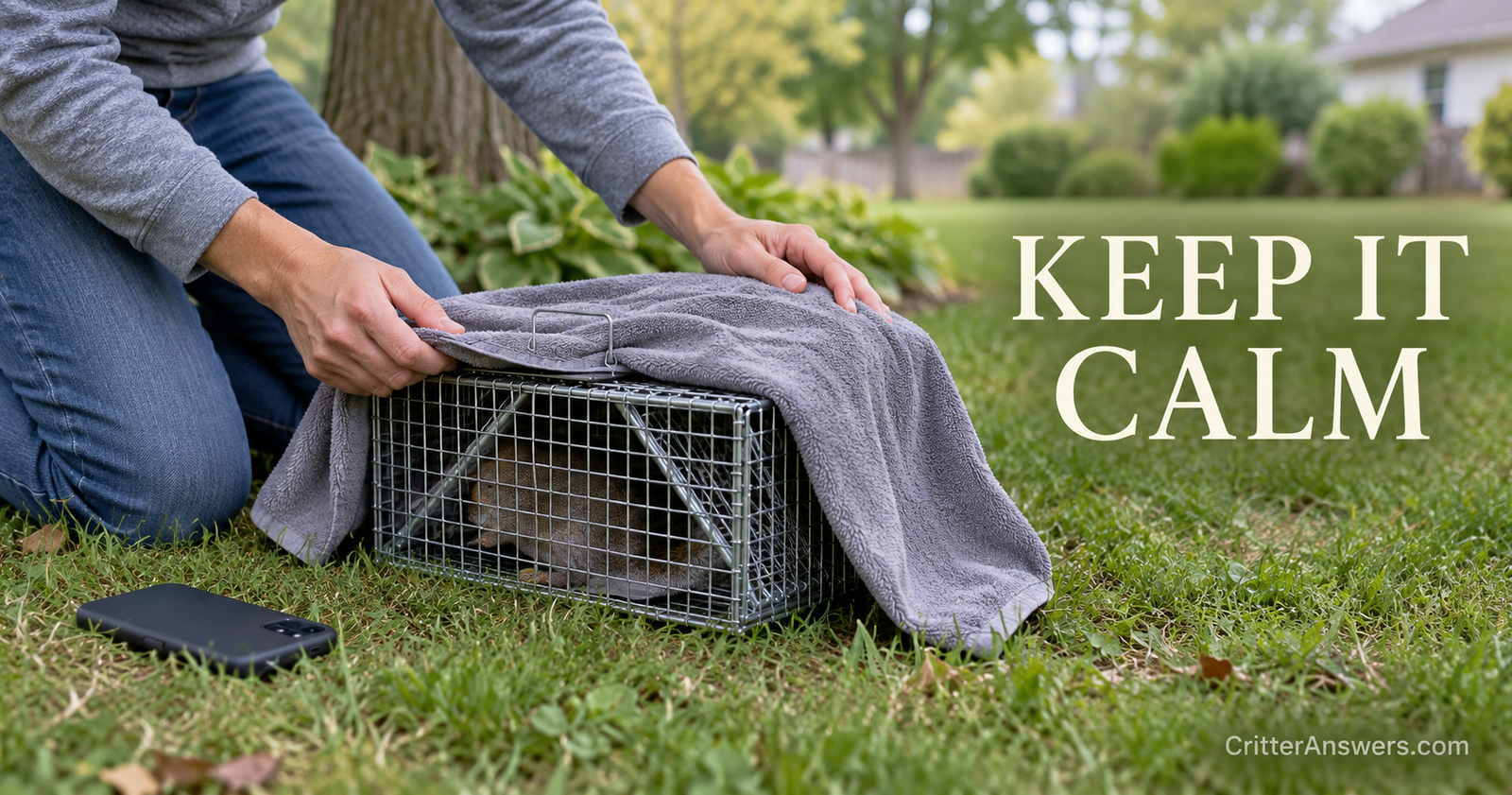
Closing the entrance too early can trap wildlife inside, separate a mother from her young, lead to an animal dying inside the structure, or cause additional damage as an animal attempts to escape. The same caution applies when you suspect an animal under your shed; identification and observation should come before blocking the opening.
Figure out what is using the opening and whether the animals are out before permanently closing an active entry.
Use a Camera if the Evidence Doesn’t Add Up
A motion-activated camera can take a lot of guessing out of this problem.
You don’t necessarily need to put it deep inside the attic.
If you have identified a likely exterior route, a camera placed safely outside may show exactly what is approaching or leaving the house.
This can be especially useful when you’re trying to distinguish between animals with overlapping noises.
A clear picture beats another three nights of arguing with yourself about whether those footsteps sound “mouse-sized.”
Don’t Trust the Volume Too Much
One of the biggest mistakes with attic noises is trying to estimate the animal’s body size from how loud it sounds.
Attics are excellent noise amplifiers.
An animal may be running across wood framing directly connected to the ceiling below. Hollow cavities transmit vibrations. Different amounts of insulation can make the same animal sound completely different from one part of the house to another.
Research-based wildlife identification guidance specifically warns that noises alone are not a very accurate way to determine which species is causing a problem.
That’s why I want at least a few clues pointing in the same direction.
A Simple Way to Narrow It Down
Instead of asking yourself:
“What runs around in attics?”
Build a much more specific description:
“I hear fast running across the attic at 8 a.m., then again around 4 p.m., and I found a chewed area near the soffit.”
That pattern makes a daytime squirrel much more interesting.
Or:
“I hear light scampering after midnight, scratching continues into the wall, and I’m finding small droppings in the garage.”
Now rodents deserve much more attention.
Or:
“I hear slow heavy footsteps and thumping after dark, and part of the fascia near the roof looks damaged.”
That is a very different investigation.
The combination is what matters.
What I Would Do the Next Time You Hear It
Don’t immediately run into the attic.
Instead:
- Check the exact time.
- Listen to whether the movement is fast or slow.
- Notice whether it sounds light or genuinely heavy.
- Listen for gnawing, chirping, fluttering, or scratching afterward.
- Note where the movement starts and stops.
- Check accessible areas for droppings and damage.
- Inspect the outside during daylight.
- Photograph possible entry points.
- Watch a suspected exterior opening from a safe distance when appropriate.
- Use a camera if you still can’t identify the visitor.
Do that for several activity periods and you’ll have a much better picture of what is happening.
When Running in the Attic Deserves Professional Help
I wouldn’t ignore repeated attic activity.
Even if the animal isn’t bothering you much, wildlife and rodents can damage insulation, contaminate attic spaces, chew materials, and sometimes damage electrical wiring.
Professional help becomes especially worthwhile when the animal appears large, the attic isn’t safely accessible, there’s significant contamination, you find damaged wiring, bats may be involved, young animals may be present, or you can’t determine how the animal is getting inside.
Heavy nighttime footsteps deserve more caution than a faint occasional scratch.
And if you’re hearing activity every day, there’s no reason to wait until you actually see the animal running through your living room.
Start with time of day, speed of movement, apparent weight, additional sounds, droppings, attic damage, and exterior entry points. Those clues together will usually get you much closer to identifying what’s running above your ceiling than volume alone ever will.
About the author: Nolan Mercer researches the signs and behavior of nuisance wildlife to help homeowners make sense of unexpected visitors around the house. He writes practical, carefully researched guides for Critter Answers without pretending every scratch, track, or dropping gives an instant answer.