
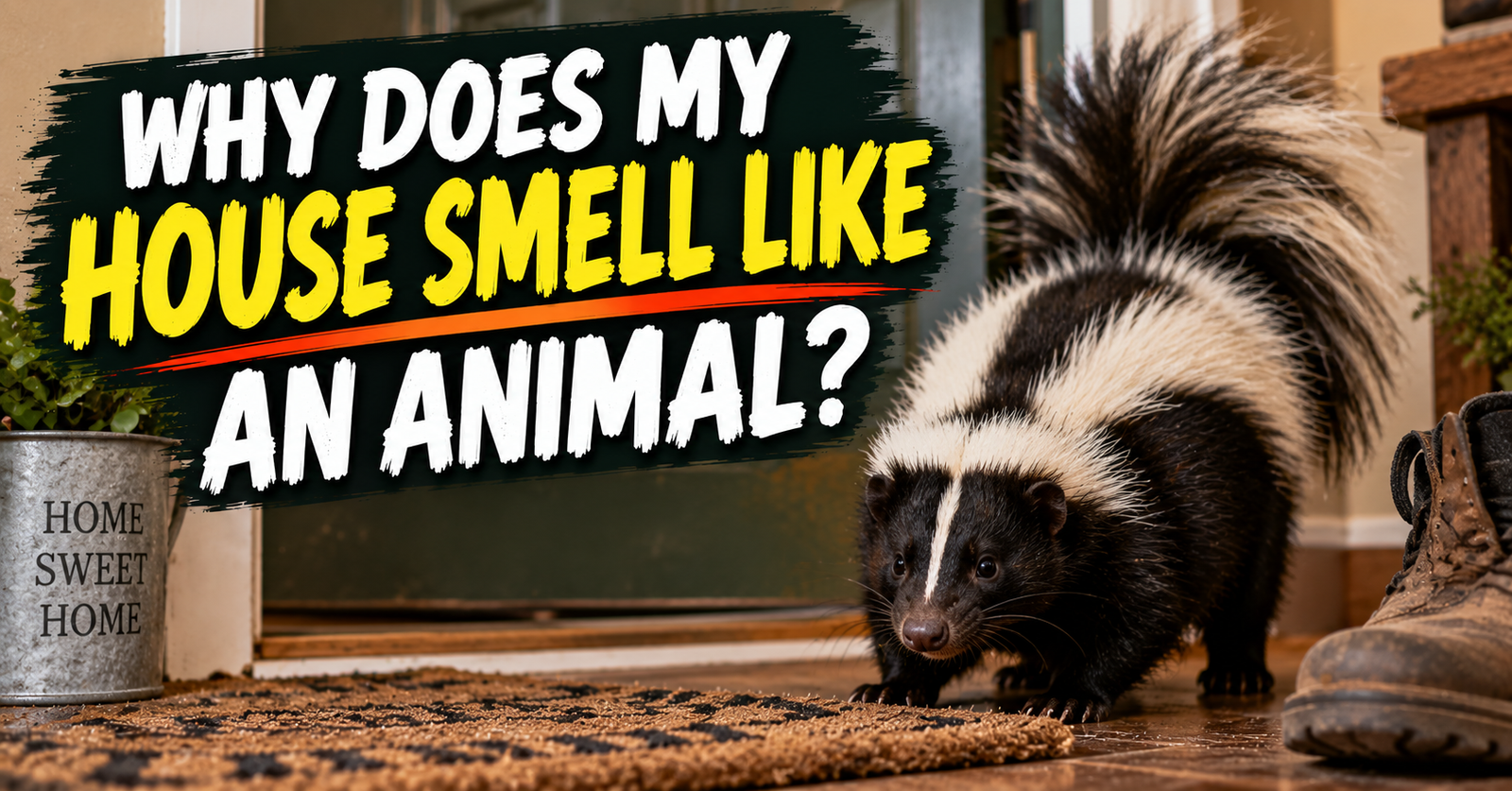
A strange animal smell in the house can be harder to figure out than scratching in the wall because you can’t exactly ask an odor which direction it came from.
Sometimes the explanation is fairly obvious. A mouse or rat may be urinating in a hidden area. Wildlife could be living in the attic or crawl space. A skunk may have sprayed close to the house. And, unfortunately, an animal sometimes dies somewhere you can’t easily see it.
The kind of smell matters, but I wouldn’t identify an animal by odor alone. I also want to know where the smell is strongest, whether it appeared suddenly or gradually, whether it comes and goes, and what other animal evidence is nearby.
First, Figure Out What the Smell Reminds You Of
You don’t have to describe it perfectly.
I’d put it into one of a few broad groups:
- Sharp or urine-like
- Musty or musky
- Rotten or putrid
- Skunky
- Fecal
- Sour
- Strange but difficult to describe
Then think about how the odor behaves.
Did you notice it overnight?
Has it slowly become stronger?
Is it limited to one room?
Does it seem strongest near the ceiling?
Does it come through a vent?
Is it noticeable near the floor?
Those details can be surprisingly helpful.
A Strong Urine Smell Can Point Toward Rodents or Wildlife
If the odor is sharp and reminds you of urine, I start looking for evidence of an animal actively using the house.
Mice and rats can contaminate areas with urine and droppings. Other wildlife using attics and structural spaces can do the same thing.
The smell may be strongest around a nesting or frequently traveled area, but don’t assume the exact spot where your nose detects it is where the animal lives.
Air moves through houses.
Wall cavities, attic spaces, HVAC systems, gaps around plumbing, and other openings can allow odors to travel.
That’s why I look for physical evidence too.
Check for Droppings
Droppings are one of the most useful clues you can find alongside an animal odor.
Look in safely accessible areas such as:
- Beneath sinks
- Inside lower cabinets
- Behind accessible appliances
- Along basement walls
- In the garage
- Around stored food
- Near pet food
- In accessible attic areas
- Near suspected entrances
Don’t handle unknown droppings with bare hands.
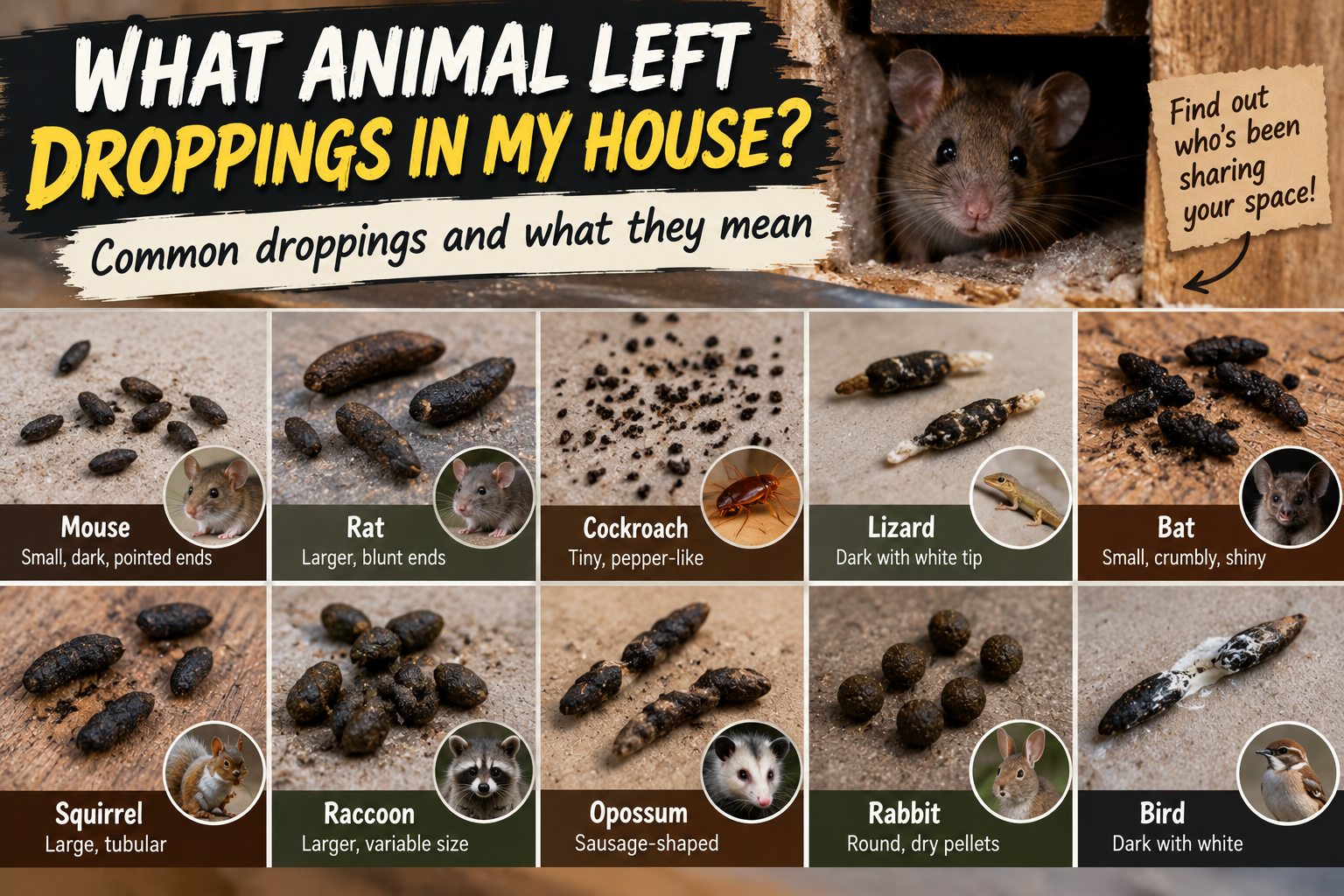
If you find them, the size, shape, quantity, and location may help narrow the animal down. I’ve put those clues together in my guide to figuring out what animal left droppings inside your house.
Droppings plus a urine-like odor give you considerably more information than the smell by itself.
Mice Can Create More Odor Than You’d Expect
Mice are tiny.
Their smell doesn’t necessarily stay tiny.
If mice repeatedly use an enclosed area, urine and droppings can accumulate. The odor may eventually become noticeable in cabinets, wall cavities, attics, garages, basements, and other protected spaces.
Look for additional mouse evidence:
- Small droppings
- Gnaw marks
- Shredded nesting material
- Damaged food packages
- Nighttime scratching
- Small entry openings
If those clues appear alongside the odor, mice become much more plausible.
Rats Can Create Similar Odor Problems
Rats can also leave urine and droppings in the areas they occupy.
As with mice, I wouldn’t diagnose rats from smell alone.
Look at the scale of the evidence.
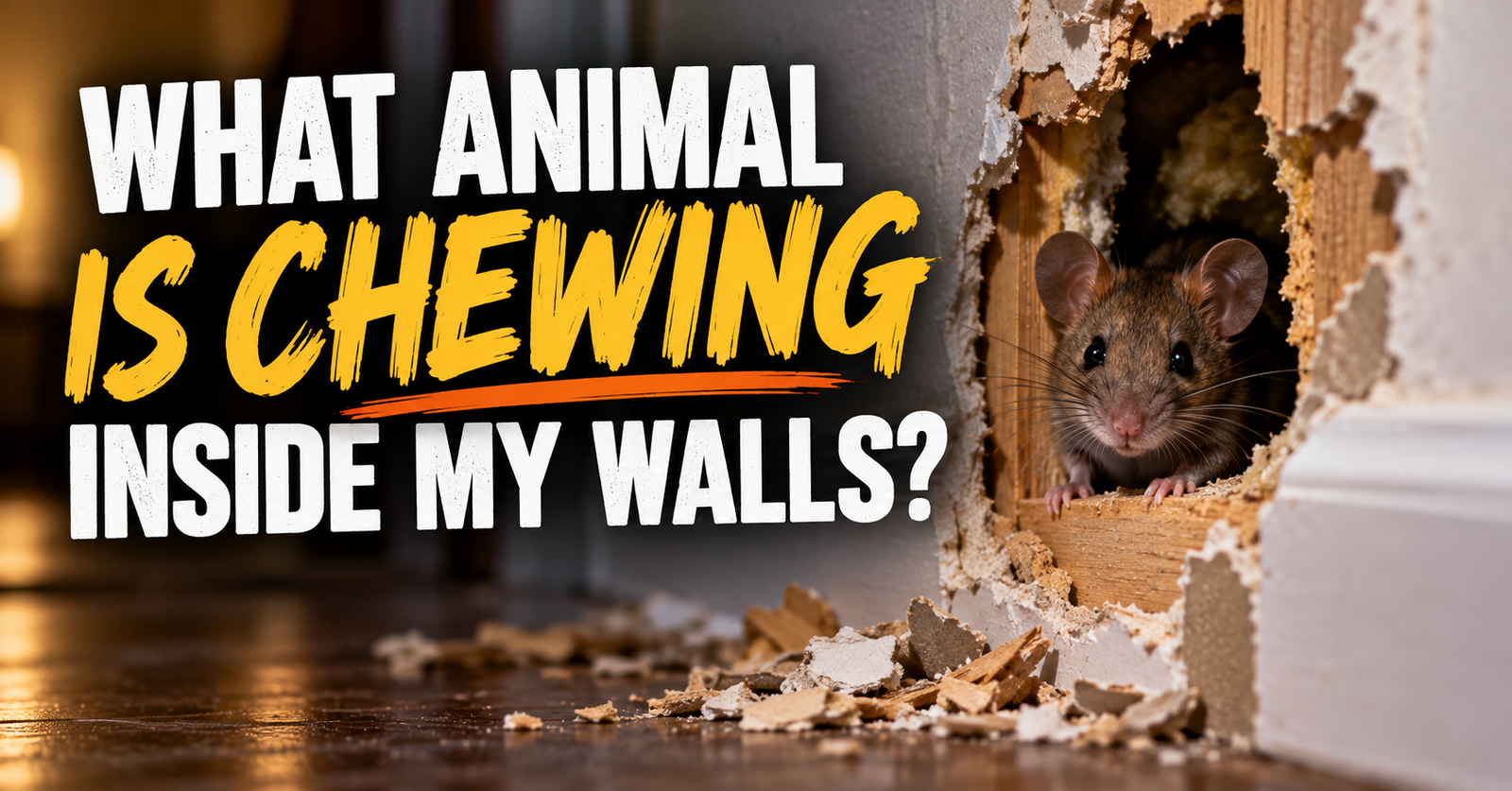
Larger rodent droppings, heavier gnaw marks, nighttime activity, rub marks, tracks, and larger openings can help separate a possible rat problem from mice. Those clues can be compared with the sound patterns discussed in figuring out what animal is chewing inside your walls.
The location can help too.
Depending on the rat species, activity may be concentrated in lower areas, upper portions of buildings, or both.
An Attic Smell Deserves a Closer Look
If the smell seems strongest upstairs or near the ceiling, the attic becomes an obvious place to investigate.
That doesn’t mean you need to crawl into it.
If there’s a safe attic access point, you may be able to look from there with a flashlight.
Watch for:
- Droppings
- Disturbed insulation
- Nesting material
- Staining
- Obvious waste accumulation
- Tracks
- Damaged materials
- Flies
- A visible dead animal
Also think about what you’ve been hearing.
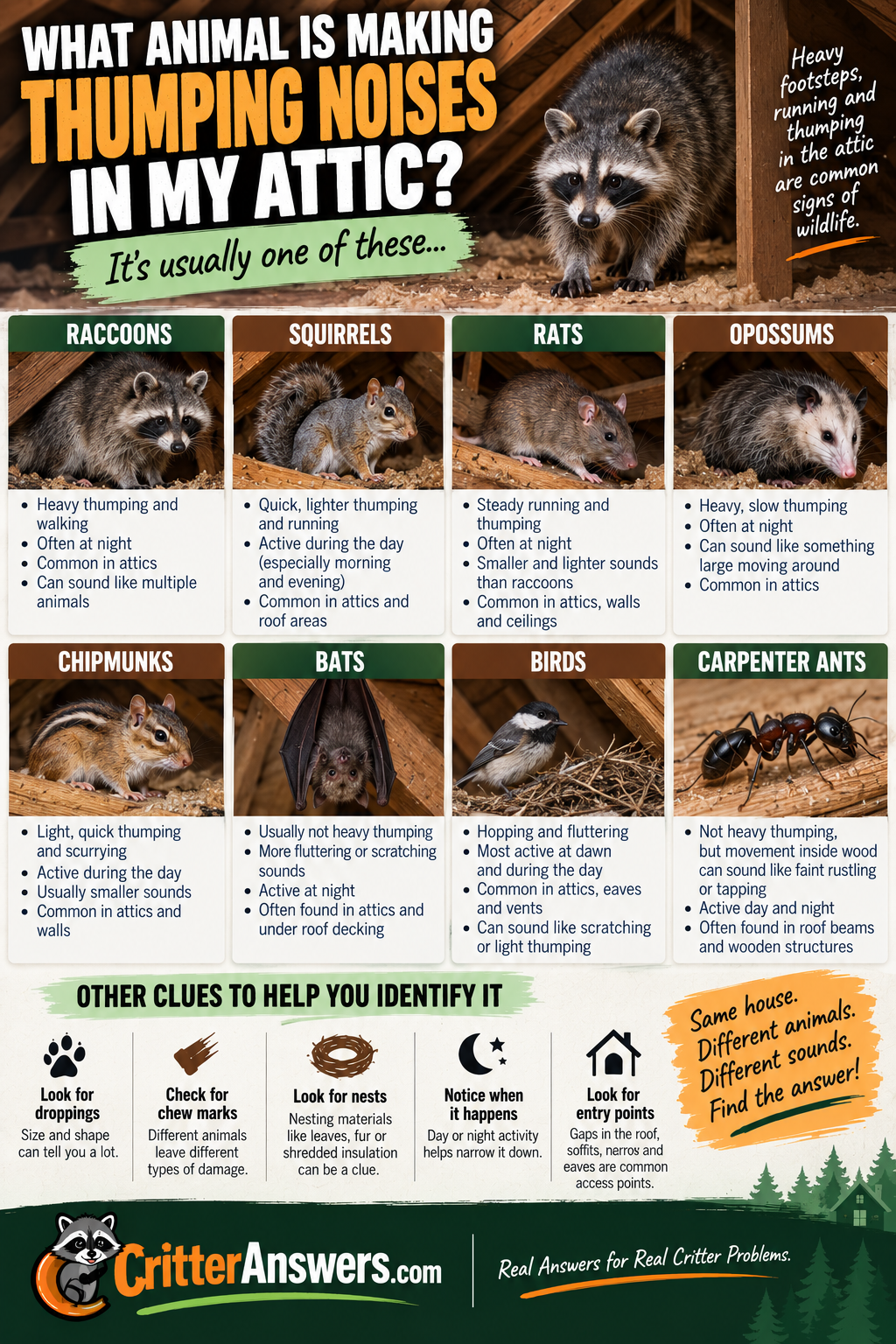
If you’ve recently noticed heavy thumping noises coming from your attic, a new odor gives you another piece of the same puzzle.
Heavy nighttime movement plus substantial waste or disturbed insulation tells a different story from a faint urine smell plus tiny rodent droppings.
Raccoons Can Make an Attic Smell Bad
Raccoons are large enough to create a substantial mess when they repeatedly occupy an attic.
One particularly important clue is a concentrated area of raccoon feces.
Raccoons may repeatedly defecate in particular locations called latrines. Suspected raccoon feces deserve caution because they can contain Baylisascaris procyonis, the raccoon roundworm.
I wouldn’t dig through or disturb a suspected raccoon latrine to satisfy my curiosity.
If you have heavy attic activity, larger waste, and a strong odor concentrated in the same area, professional assessment starts making a lot of sense.
Bats Can Create Odor in an Attic Too
A bat roost can produce accumulated guano and urine.
That may eventually create a noticeable odor, particularly with a substantial or long-standing roost.
The evidence may be concentrated beneath a roosting location rather than scattered throughout the attic.
You may also notice bat activity around an exterior opening near dusk.
Large accumulations of bat or bird droppings shouldn’t be casually disturbed. Certain fungi can grow in material enriched by bird or bat droppings, and disturbing contaminated material can create an inhalation hazard.
This isn’t a situation where I’d take a shop vacuum upstairs and start cleaning.
A Rotten Smell Can Mean an Animal Died
This is the smell nobody wants to find.
A dead mouse, rat, squirrel, bird, or larger animal inside a wall, attic, chimney, crawl space, or another hidden location can produce a powerful odor while decomposing.
Even a relatively small animal can smell surprisingly bad.
A dead-animal odor often becomes stronger as decomposition progresses and then eventually fades.
Other clues can include:
- A sudden unexplained odor
- One area smelling substantially worse
- Flies appearing indoors
- Previous animal activity that suddenly stopped
- A smell concentrated near a wall or ceiling
- Insects gathering near a particular location
If you were hearing scratching for several nights and then the scratching suddenly stopped around the same time a rotten smell appeared, I’d take that sequence seriously.
The Strongest-Smelling Spot May Help You Find It
When I’m trying to locate an odor, I don’t start tearing into walls.
I map it first.
Walk from room to room.
Is it stronger upstairs?
Near one wall?
Inside a cabinet?
Near an attic hatch?
Beside a fireplace?
Near a crawl-space entrance?
Around a vent?
Try again at different times of day.
Airflow can move smells around, so the source won’t always be directly behind the place where you smell it. But a consistent hotspot can still narrow the search considerably.
Watch for Flies
Flies can provide an important clue when you suspect a dead animal.
A sudden increase in flies around one window, wall, ceiling area, or room may indicate something decomposing nearby.
The flies don’t tell you which animal died.
They tell you the rotten odor may have a biological source worth investigating.
If the smell and fly activity both concentrate around the same wall, I’d be much more suspicious of a carcass inside that area.
Don’t Start Cutting Holes Everywhere
This is where frustration can get expensive.
You smell something awful near a wall.
You assume there’s a dead mouse.
You cut open the wall.
Nothing.
Now you still have the smell plus a drywall repair.
Before opening anything, use all the non-destructive clues you can.
A small inspection camera may sometimes be useful through an existing opening or a carefully selected access point, particularly when there’s good reason to suspect a wall cavity.
A wildlife professional may also have better tools for locating a hidden carcass without turning your hallway into Swiss cheese. That is also why Critter Answers’ limits on remote identification explains what written guidance can and cannot determine from a distance.
What If the Smell Is Coming From the Crawl Space?
Crawl spaces are another common place for wildlife activity.
Skunks, opossums, rodents, and other animals may use accessible areas beneath houses.
A crawl-space odor may enter the living area through floor penetrations, plumbing openings, ductwork, or other gaps.
Don’t crawl into a confined area when you know a wild animal may still be inside.
First look for evidence from outside.
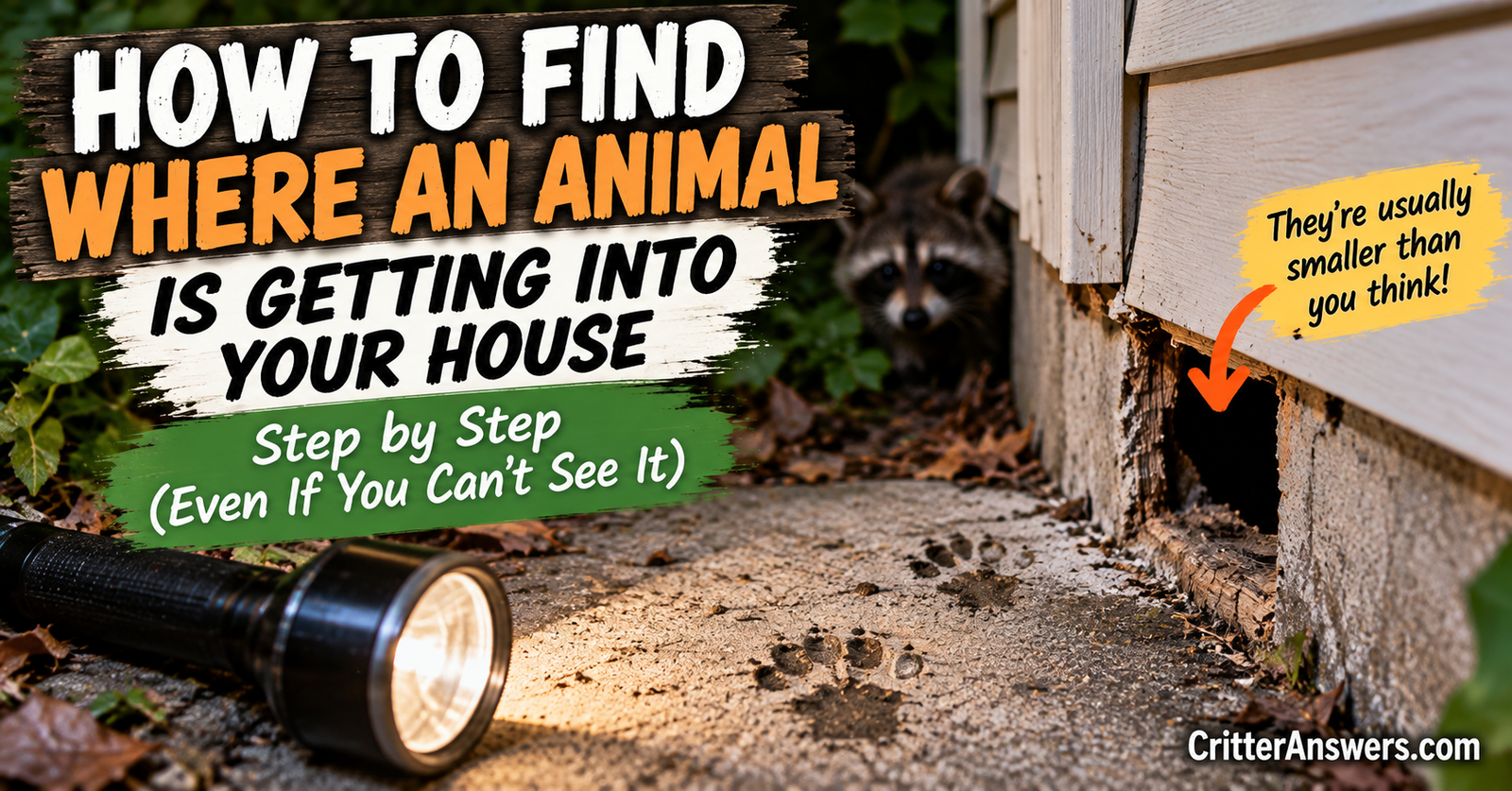
Check accessible foundation vents, openings, disturbed soil, tracks, and other possible entrances. For a more complete inspection, foundation vents and openings shows how to work upward from the foundation instead of stopping at the first clue.
A camera placed outside a suspected entrance can be much safer than crawling underneath the house hoping to meet whatever lives there.
A Skunk Smell Doesn’t Necessarily Mean a Skunk Is Inside
Skunk odor travels extremely well.
A skunk can spray outside, beneath a porch, near a foundation, under a deck, or around a crawl space and make the inside of the house smell terrible.
Skunks commonly shelter beneath structures when access is available.
So if your entire house suddenly smells unmistakably skunky, don’t assume the animal is walking around inside the walls.
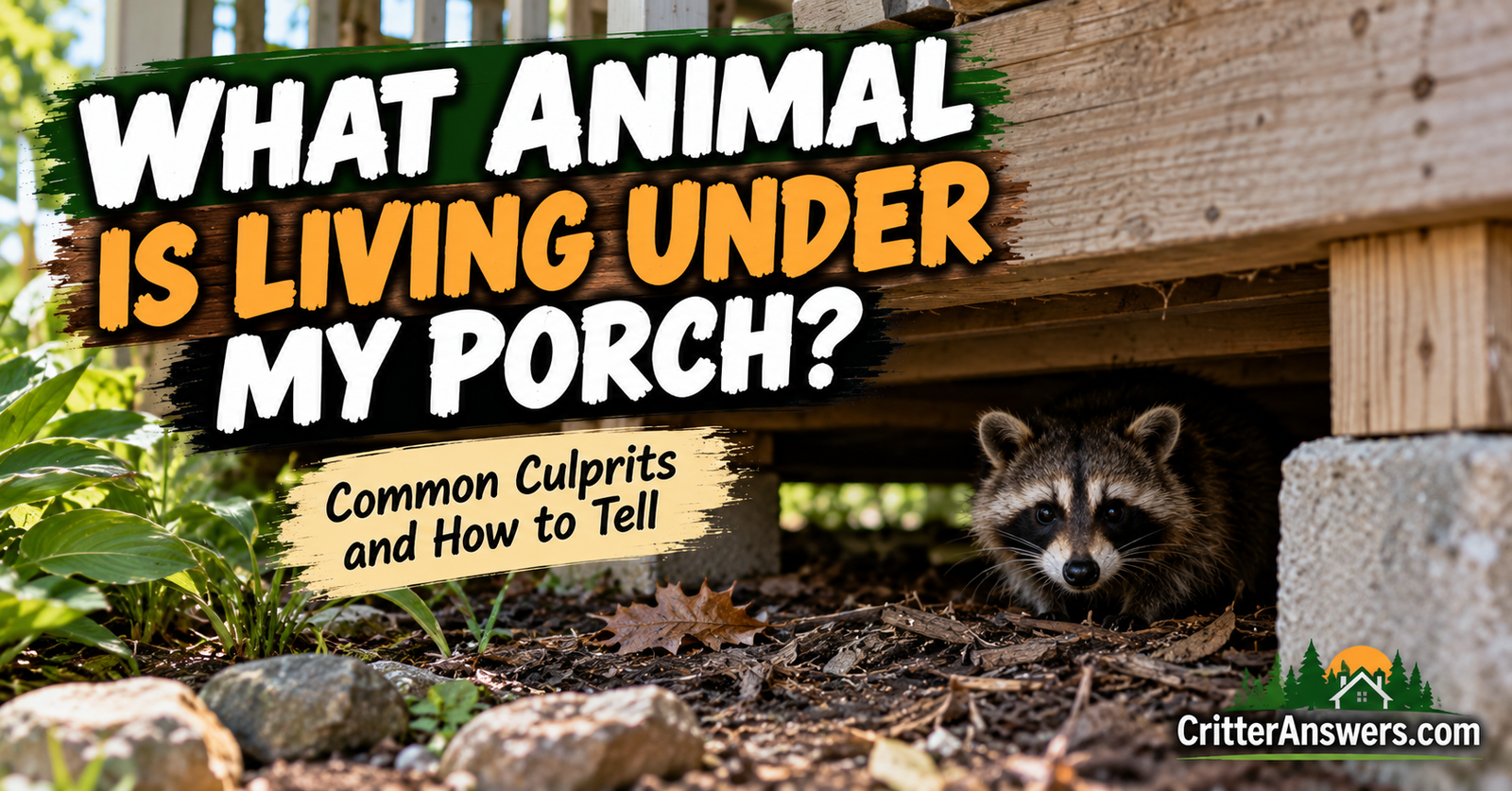
Go outside when it’s safe and see whether the odor is even stronger near one side of the house, porch, deck, shed, or crawl-space opening. If the smell points toward the porch, an animal beneath your porch may help narrow down the possibilities.
That may tell you considerably more.
Be Careful With a “Skunky” or Rotten-Egg Smell
This is one situation where I don’t want you becoming so focused on wildlife that you overlook something more serious.
Some gas or sewer odors can be mistaken for animal smells.
Natural gas is odorized so people can detect leaks, and some people describe that odor as rotten eggs or even skunk-like.
If there’s any reasonable possibility that what you’re smelling could be natural gas, don’t keep searching the house for a critter.
Leave the area and follow your gas utility or emergency-service instructions for a suspected gas leak.
That’s a completely different level of problem.
Sewer Gas Can Fool You Too
Plumbing odors are another wildlife impostor.
A dry drain trap, damaged drain line, venting issue, or other plumbing problem can create unpleasant odors that people sometimes interpret as a dead animal.
Think about location and timing.
If the smell is concentrated around a rarely used drain, bathroom, basement floor drain, or plumbing fixture, investigate the plumbing possibility.
If the odor changes when water is run or is closely associated with drains, that makes me even less confident that wildlife is responsible.
A bad smell doesn’t automatically mean a badger is living in your wall.
Sometimes your house just smells bad for an entirely different reason.
HVAC Can Move an Animal Smell Around the House
This is another reason locating the source can be difficult.
An odor originating in one part of the structure may become noticeable elsewhere when the heating or cooling system operates.
Pay attention to whether the smell gets stronger when the blower starts.
That doesn’t necessarily mean an animal is inside the duct.
The system may simply be moving air that picked up odor from another area.
If the smell seems strongly connected to HVAC operation, accessible ductwork and areas around the air handler may deserve inspection.
If the Smell Is Coming From a Wall
Combine smell with everything else you’ve noticed.
Have you heard scratching?
Chewing?
Running?
Did those noises suddenly stop?
Are there droppings in the nearby room?
Is there an exterior entry point on the other side of the wall?
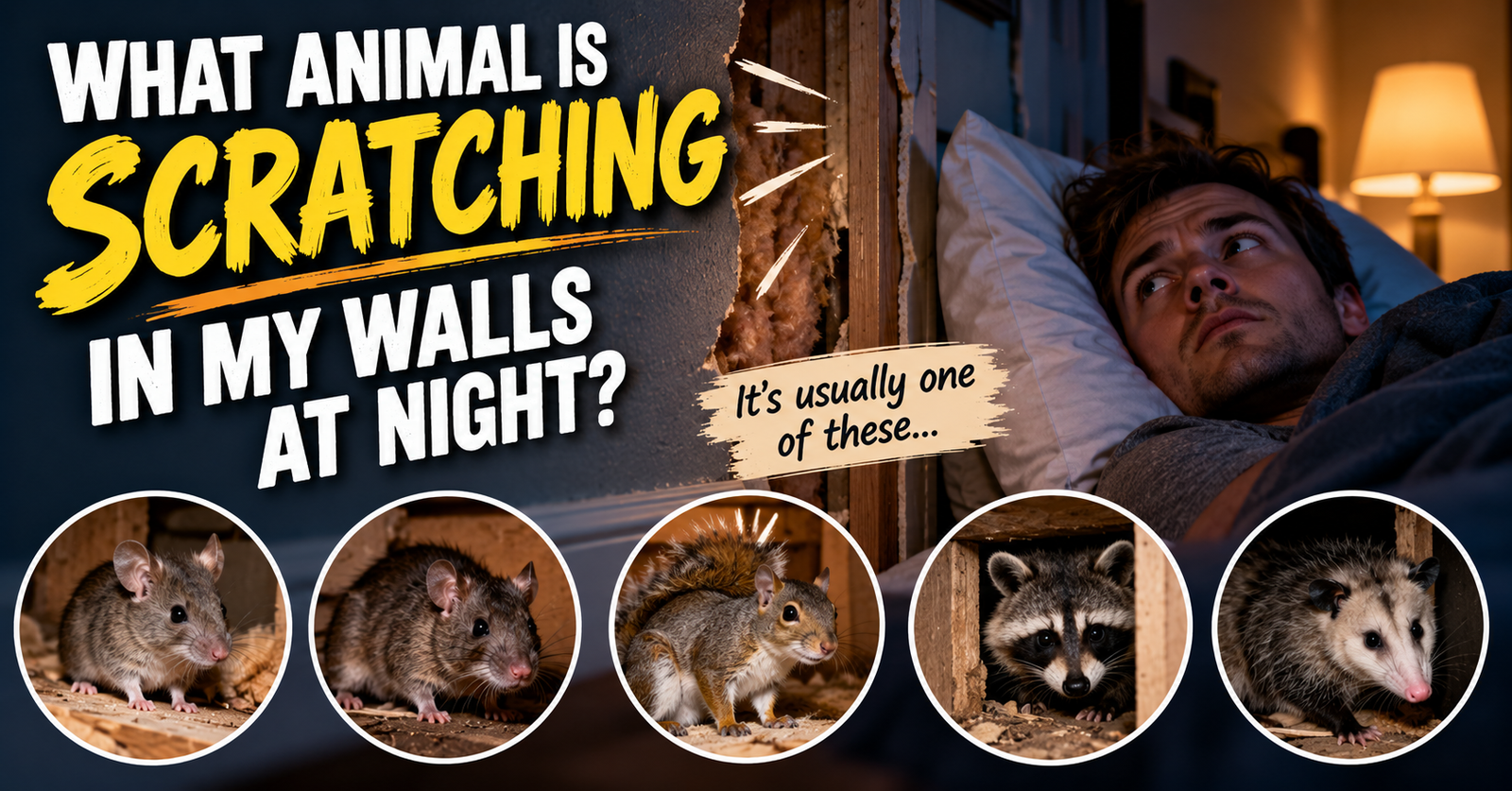
If you’ve been hearing scratching inside the wall at night, that history becomes especially useful now.
A new odor following days of animal activity could mean contamination has accumulated, or in some cases that an animal has died.
The sequence of events matters.
Don’t Dry Vacuum Rodent Waste to Get Rid of the Smell
If you locate mouse or rat droppings and urine, don’t immediately vacuum everything.
CDC guidance specifically says not to sweep or vacuum rodent urine, droppings, or nesting material before proper disinfection, because doing so can put contaminated particles into the air.
Wear appropriate gloves and follow current wet-disinfection and cleanup guidance instead.
Heavy contamination, particularly in insulation or enclosed spaces, can require additional precautions.
The goal isn’t merely to make the room smell better.
You want to clean the contamination safely.
Removing the Animal Isn’t Always the End of the Smell
This surprises homeowners.
You can remove or exclude the animal and still have odor.
Urine, feces, nesting material, contaminated insulation, or a carcass may remain behind.
That means solving an established wildlife problem can involve three separate jobs:
- Identify and remove or exclude the animal.
- Correct the entry point.
- Address contaminated material and lingering odor.
Skipping number three may leave you wondering why your supposedly animal-free attic still smells terrible.
Don’t Cover Up the Smell Before You Find the Cause
Air freshener has its place.
Wildlife diagnosis isn’t it.
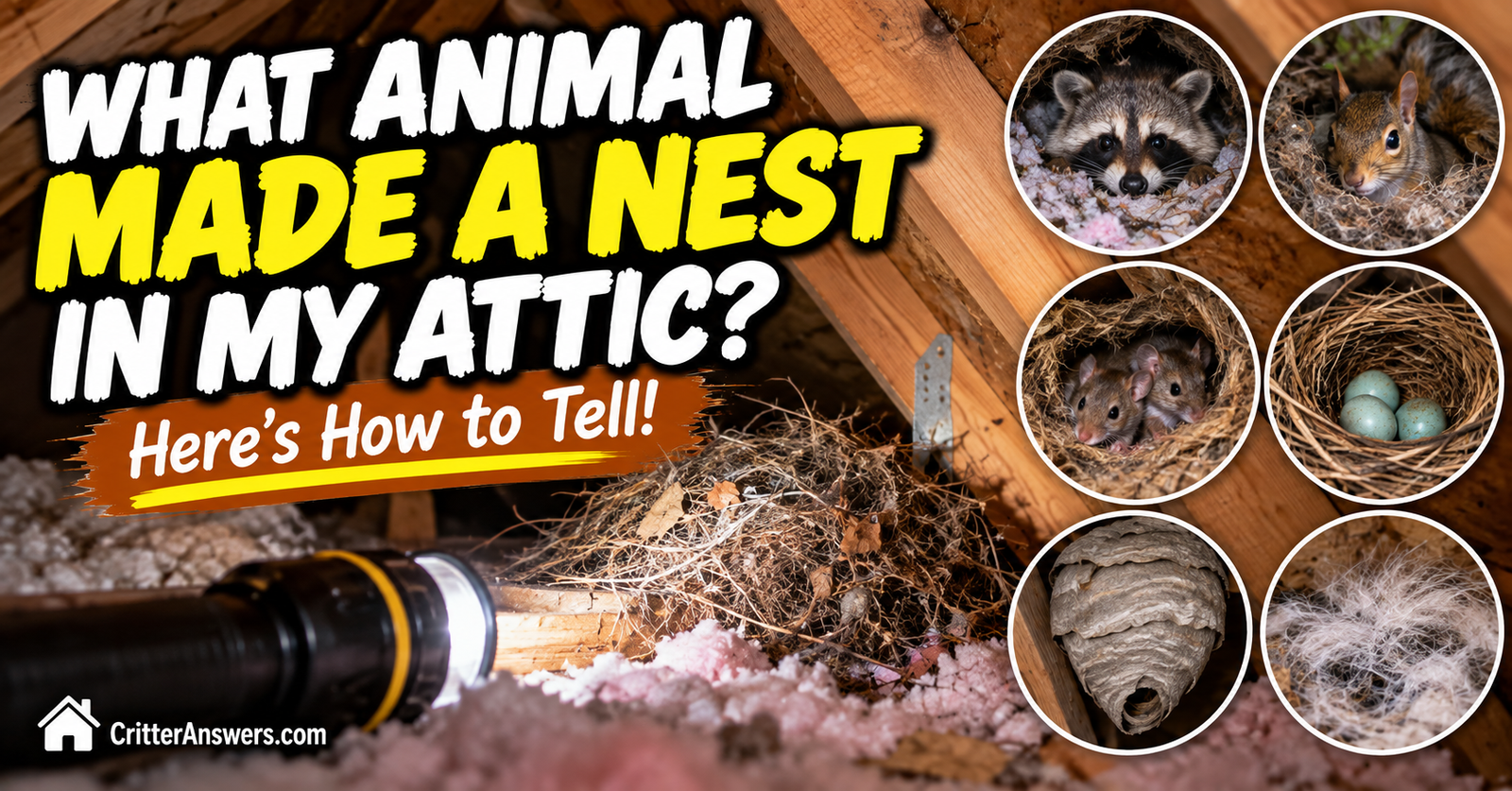
If the smell is helping you locate a urine-soaked nesting area, dead animal, contaminated attic, or active den, masking it immediately makes the investigation harder. For an attic nesting area, investigate an attic nesting area can help you assess what may be living there before disturbing the material.
Find the source first.
Then deal with the contamination and odor appropriately.
Otherwise you’re essentially putting perfume on the clue.
Look Outside for More Evidence
Even though the smell is indoors, I still inspect outside.
Look for:
- Open soffits
- Damaged vents
- Foundation gaps
- Crawl-space openings
- Disturbed soil
- Tracks
- Droppings
- Damaged fascia
- Openings around utilities
- Evidence beneath decks or porches
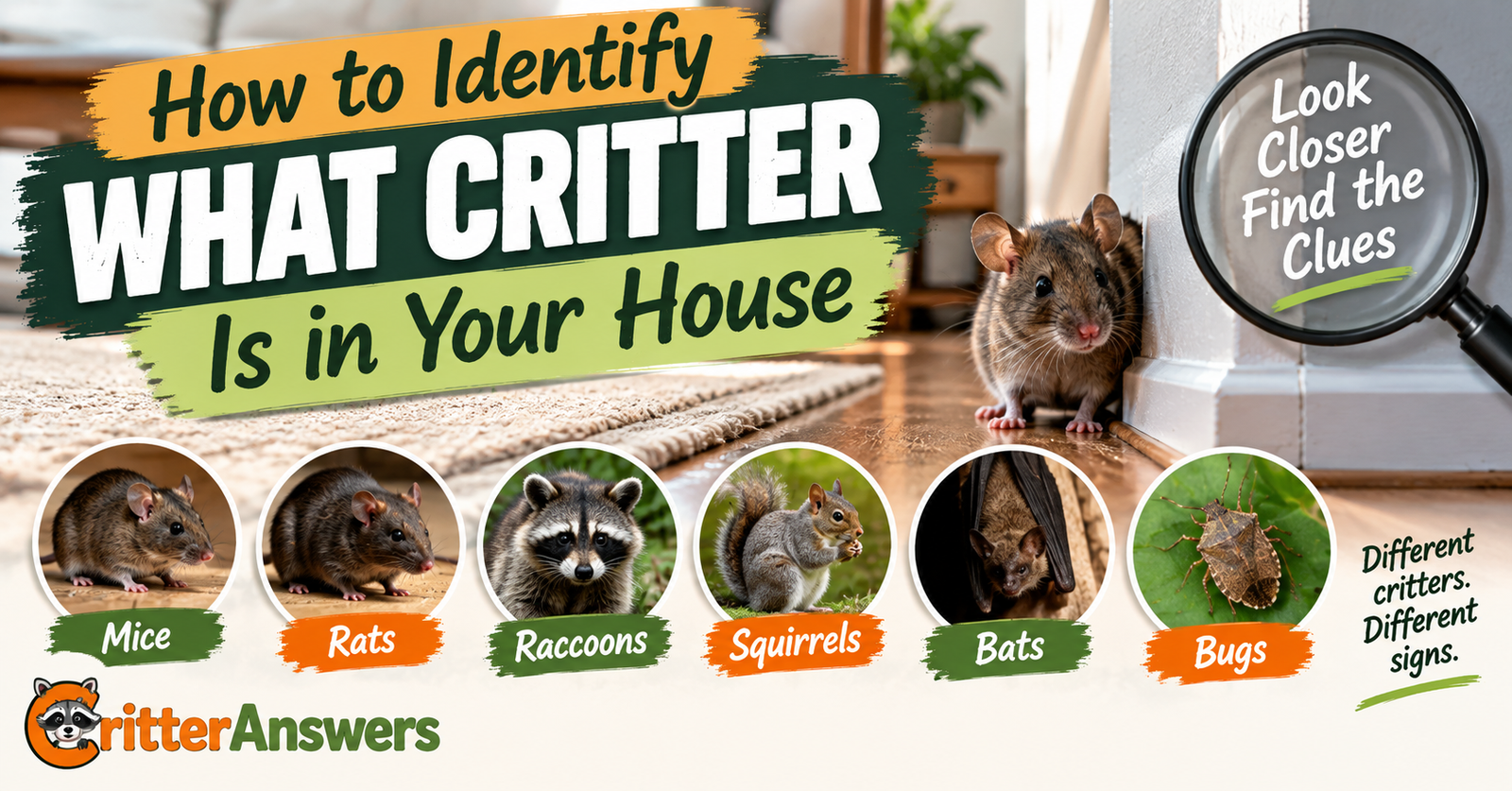
If you aren’t sure what type of visitor you’re dealing with, my broader guide to identifying a mystery critter inside your house explains how I combine sounds, damage, activity time, nesting evidence, droppings, and entrances.
The smell should become one clue among several.
What I’d Check First When a House Suddenly Smells Like an Animal
I wouldn’t randomly start pulling things apart.
I’d work through the house in roughly this order:
- Decide whether the odor could be gas or another urgent non-animal problem.
- Identify which room or level smells strongest.
- Decide whether it smells like urine, decay, musk, feces, or skunk.
- Look for droppings and gnaw marks.
- Think about recent scratching, running, or thumping noises.
- Check accessible attic, basement, garage, and crawl-space areas from safe locations.
- Watch for unusual fly activity.
- Inspect the exterior for possible entrances.
- Use a camera when you suspect an active animal.
- Get professional help if the source can’t be safely located or contamination is substantial.
You’re trying to establish a pattern.
When the Smell Is Worth Calling Someone About
A faint mousey smell in a garage and a powerful decomposition odor coming through the bedroom wall are very different situations.
I’d be more inclined to get professional help when:
- The smell is severe.
- You suspect a large dead animal.
- You can’t reach the source safely.
- A wild animal may still be inside.
- There’s substantial urine or fecal contamination.
- You suspect a raccoon latrine.
- Bat or bird waste has accumulated.
- Contaminated insulation may need removal.
- The smell is entering through HVAC.
- You can’t determine whether the problem is wildlife, plumbing, or something else.
And again, if there’s any possibility you’re smelling a fuel-gas leak, handle that as a potential gas emergency rather than a wildlife problem.
Let the Smell Lead You to the Other Clues
An animal odor can tell you something is wrong, but it rarely gives you the animal’s name by itself.
A urine smell plus tiny droppings and nighttime scratching points you in one direction.
A foul attic odor plus heavy nighttime movement and substantial waste points somewhere else.
A sudden rotten smell after several nights of scratching may raise the possibility that an animal died.
And an unmistakable skunk odor that’s strongest beside the porch may tell you to stop searching the attic altogether.
Use the smell to decide where to look next. Then let droppings, noises, tracks, damage, nesting material, and entry points help finish the identification.
That’s much more reliable than trying to identify an unwanted houseguest with your nose alone.
About the author: Nolan Mercer researches the clues wildlife leaves in and around homes and turns them into practical identification guidance for homeowners. His work for Critter Answers focuses on combining sounds, smells, damage, droppings, and other evidence instead of relying on a single clue.